

China's Zuchongzhi 3.2 Breaks Google's Hold on Key Quantum Computing Threshold
Chinese researchers have achieved a critical milestone in quantum computing with their Zuchongzhi 3.2 processor, reaching the fault-tolerant threshold. They are now the second team globally, after Google, to clear this hurdle, intensifying the tech race.
The quantum computing race is no longer a one-horse show. Chinese researchers have become the first team outside the United States to cross a critical threshold for building practical quantum machines, a milestone previously achieved only by Google.
Zuchongzhi 3.2 Reaches Fault-Tolerant Milestone
A team led by Pan Jianwei at the University of Science and Technology of China announced that their superconducting quantum computer, 'Zuchongzhi 3.2', has reached the 'fault-tolerant threshold'. This is the crucial point where a quantum computer can correct its own errors, enabling it to perform reliable calculations at a large scale.

Quantum computers are notoriously fragile; their quantum bits, or qubits, are easily disturbed, leading to errors. Without effective error correction, simply adding more qubits doesn't lead to more powerful computers. Crossing this threshold is therefore a significant step toward building machines that can solve real-world problems.
The US-China Quantum Race Heats Up
Until now, Google stood alone in having publicly demonstrated it had crossed this line. The achievement from Pan's team signals that China is a formidable competitor in a field widely seen as critical for future economic and national security. The race for quantum supremacy between the two tech giants is set to intensify.
Authors
Related Articles

China is restricting AI researchers and startup founders from traveling abroad as the U.S.-China AI performance gap narrows to just 2.7%. What Beijing's talent lockdown means for the global AI race.

In a post-Google I/O interview, Sundar Pichai acknowledged flawed search results, real AI anxiety, and an AGI timeline that makes the label irrelevant. Here's what he said — and what it means.
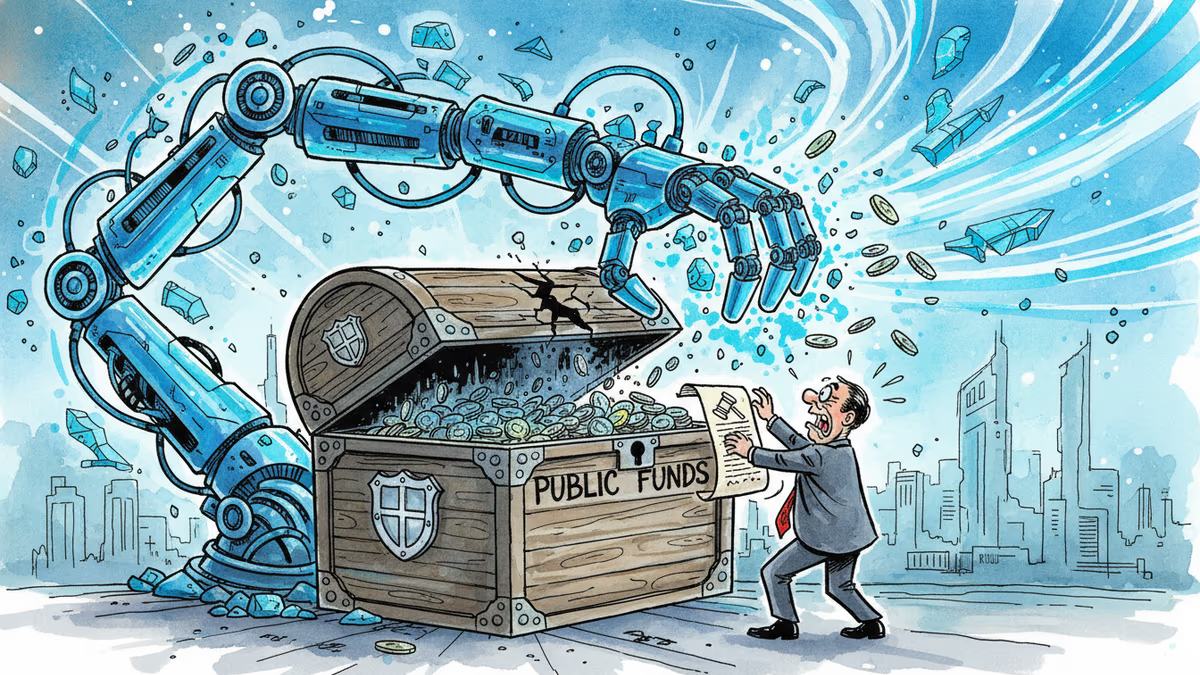
The US government invested $2 billion in quantum computing startups, but Congress says the money was never authorized for that purpose. The fate of IBM-backed Anderon hangs in the balance.
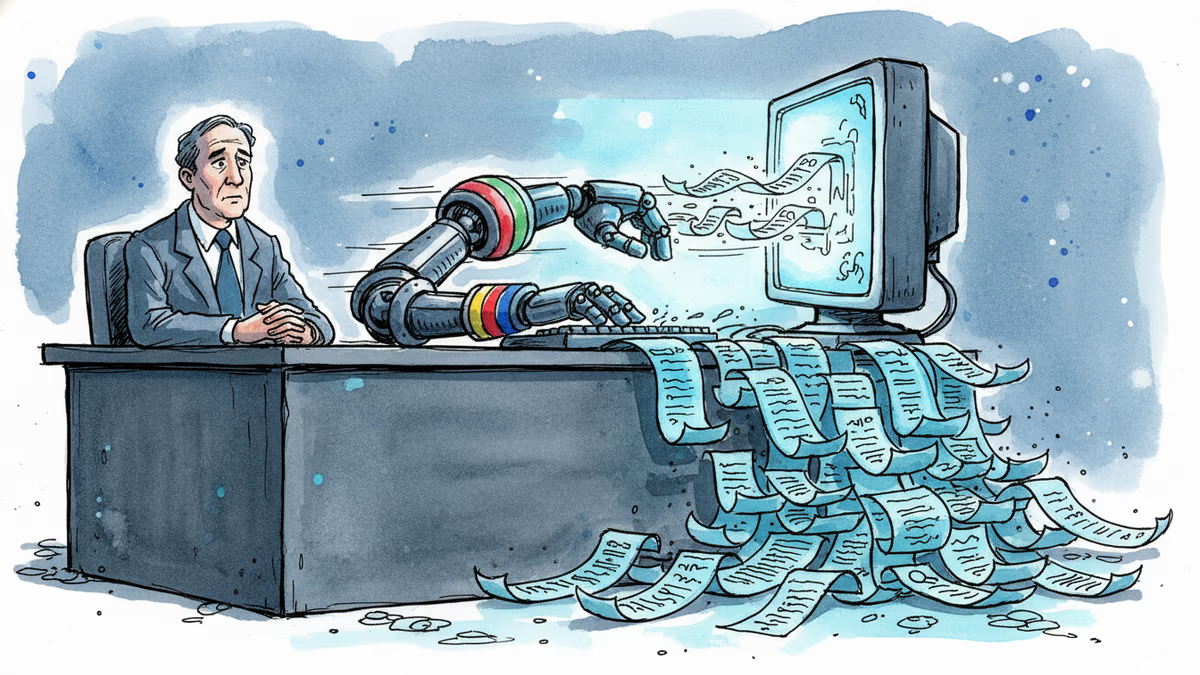
Google is building AI agents that search the web proactively, without user prompting. That's not just a product update — it's a fundamental shift in who controls the information you receive.
China is restricting AI researchers and startup founders from traveling abroad as the U.S.-China AI performance gap narrows to just 2.7%. What Beijing's talent lockdown means for the global AI race.
In a post-Google I/O interview, Sundar Pichai acknowledged flawed search results, real AI anxiety, and an AGI timeline that makes the label irrelevant. Here's what he said — and what it means.
The US government invested $2 billion in quantum computing startups, but Congress says the money was never authorized for that purpose. The fate of IBM-backed Anderon hangs in the balance.
Google is building AI agents that search the web proactively, without user prompting. That's not just a product update — it's a fundamental shift in who controls the information you receive.
Thoughts
Share your thoughts on this article
Sign in to join the conversation