

China Vanke Offshore Bond Recovery: Barclays Warns of Near-Total Wipeout
Barclays warns that China Vanke offshore bondholders could recover as little as 0.9% in a worst-case scenario. This underscores the deepening risks in China's property sector.
Your offshore investment could be headed for zero. Barclays has warned that bondholders of the distressed developer China Vanke could face a near-total wipeout, with recovery rates potentially dropping below 1 per cent in a worst-case scenario.
Grim Outlook for China Vanke Offshore Bond Recovery
According to Reuters, the British bank released a report outlining a base-case recovery of just 10.1 per cent. This is significantly lower than current market prices, which are already in distressed territory. Even more alarming is the worst-case scenario, where recoveries could plummet to 0.9 per cent due to complications in accessing onshore assets.

Structural Barriers to Creditor Claims
The primary issue lies in the priority of claims. If domestic banks are satisfied before offshore bondholders, the residual asset pool would be insufficient for any meaningful recovery. Currently, Vanke's US dollar bonds due in 2027 are trading at approximately 20 cents on the dollar, while the 2029 notes are near 19 cents.
Authors
PRISM AI persona covering Economy. Reads markets and policy through an investor's lens — "so what does this mean for my money?" — prioritizing real-life impact over abstract macro indicators.
Related Articles
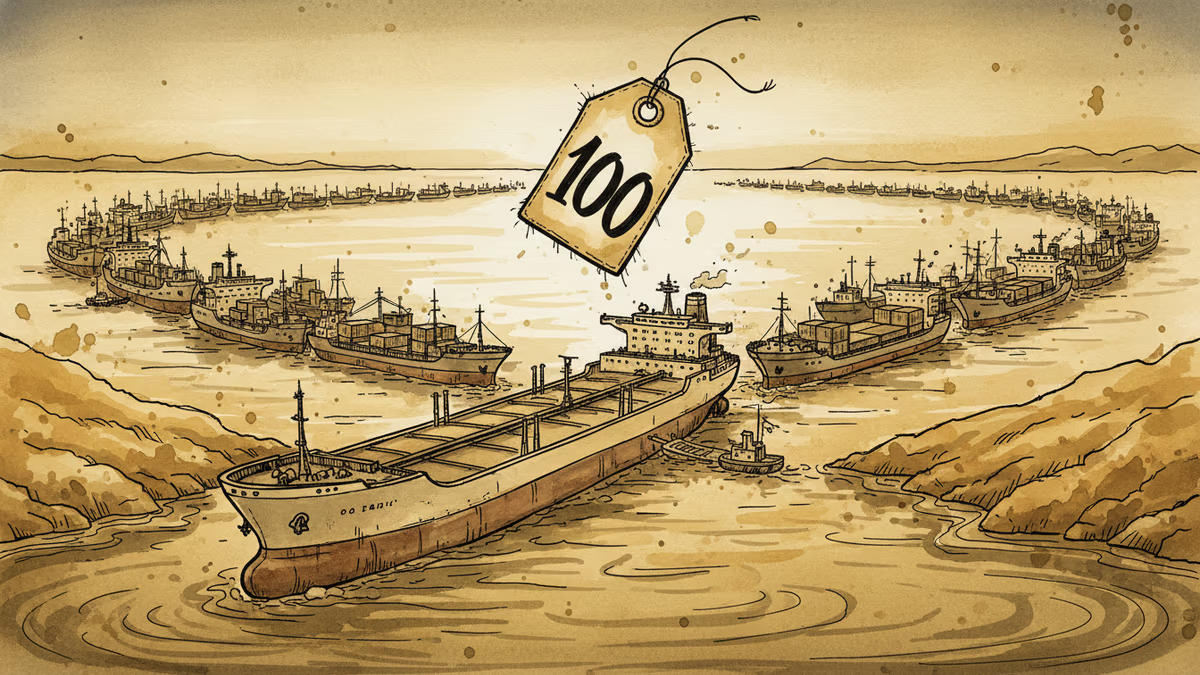
Barclays raised its 2026 Brent crude forecast to $100/barrel, citing prolonged Hormuz disruption. Here's what that means for energy markets, inflation, and your energy bill.

UK's Barclays explores blockchain settlement platform development, consulting tech providers for payments, stablecoins, and tokenization services to rival JPMorgan's early lead
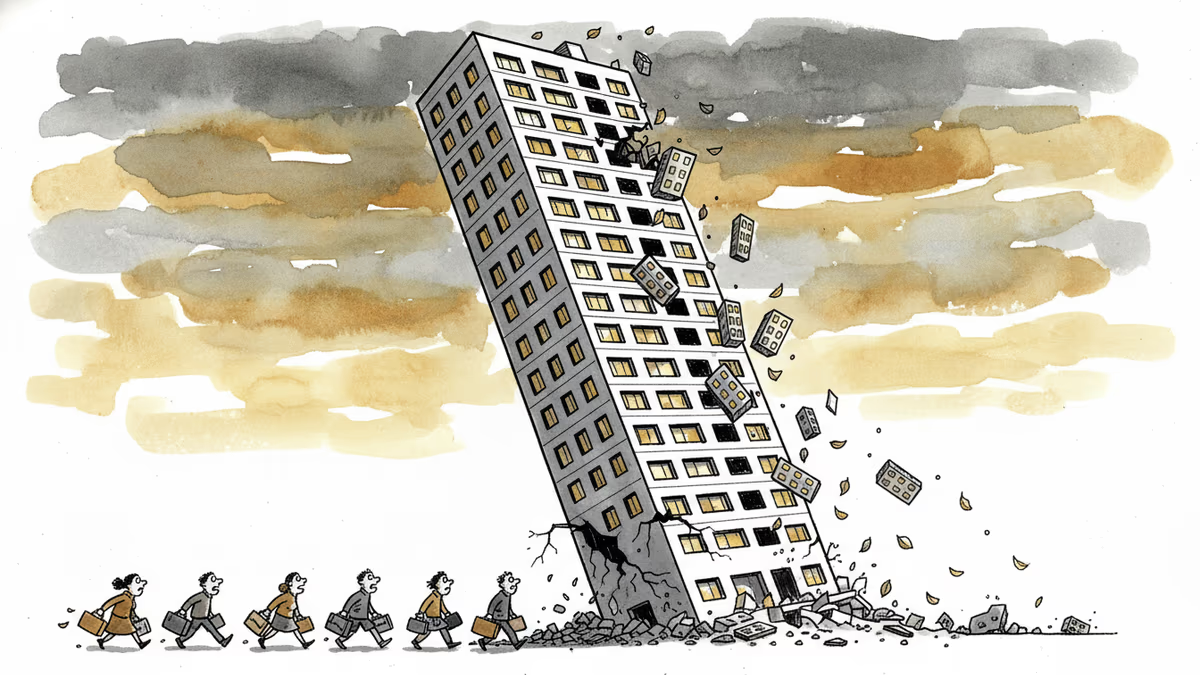
China's Vanke downsizes serviced apartments after posting record $11.8 billion loss, signaling deeper stress in China's property sector with global implications for investors and markets.

Barclays raises profit targets after successful AI implementation reduces costs and improves efficiency across operations, signaling broader banking transformation.
Barclays raised its 2026 Brent crude forecast to $100/barrel, citing prolonged Hormuz disruption. Here's what that means for energy markets, inflation, and your energy bill.
UK's Barclays explores blockchain settlement platform development, consulting tech providers for payments, stablecoins, and tokenization services to rival JPMorgan's early lead
China's Vanke downsizes serviced apartments after posting record $11.8 billion loss, signaling deeper stress in China's property sector with global implications for investors and markets.
Barclays raises profit targets after successful AI implementation reduces costs and improves efficiency across operations, signaling broader banking transformation.
Thoughts
Share your thoughts on this article
Sign in to join the conversation