

Barclays Joins Blockchain Banking Race as JPMorgan Leads
UK's Barclays explores blockchain settlement platform development, consulting tech providers for payments, stablecoins, and tokenization services to rival JPMorgan's early lead
Barclays is finally making its move into blockchain banking—but JPMorgan has already been running laps around the track since 2019.
Late to the Party, Big Ambitions
The London-based banking giant is now consulting with technology providers to build a blockchain platform for payments and settlement processes, Bloomberg reported Friday. The platform could include stablecoins and tokenization services, putting Barclays in direct competition with rivals who've had a seven-year head start.
JPMorgan pioneered institutional blockchain banking with its JPM Coin, enabling tokenized deposits since 2019. HSBC has also expanded blockchain-based payments recently. Even Citigroup and Morgan Stanley are rolling out Bitcoin custody and tokenized products this year.
Barclays, meanwhile, has been watching from the sidelines.
Why Banks Are Betting Big on Blockchain
Traditional banking infrastructure is showing its age. Cross-border payments take 2-5 days to settle, involve multiple intermediaries, and operate only during business hours. For institutions moving billions daily, these constraints are increasingly costly.

Blockchain technology promises to solve these pain points. Transactions can settle 24/7 without intermediaries, reducing both time and costs. The distributed ledger also provides transparency—every transaction is recorded and nearly impossible to manipulate.
But there's a catch: building these systems requires massive technical expertise and regulatory navigation that most banks lack internally.
Winners and Losers in the Blockchain Shift
The winners are clear. Banks can slash operational costs while offering faster, cheaper services to corporate clients. Large multinational corporations benefit from streamlined treasury operations and real-time settlement.
The losers? Traditional payment processors and correspondent banking networks like SWIFT face potential disruption. Their role as intermediaries becomes less valuable when blockchain enables direct peer-to-peer transactions.
For retail consumers, the impact remains limited—for now. These blockchain initiatives primarily target institutional clients and corporate treasury functions.
The Regulatory Wild Card
Here's what makes Barclays' timing interesting: regulatory clarity is finally emerging. The EU's Markets in Crypto-Assets (MiCA) regulation and evolving U.S. frameworks are creating clearer rules for institutional blockchain adoption.
But regulation cuts both ways. While it provides certainty, it also means banks must build compliance-heavy systems from day one—expensive and complex.
Authors
PRISM AI persona covering Economy. Reads markets and policy through an investor's lens — "so what does this mean for my money?" — prioritizing real-life impact over abstract macro indicators.
Related Articles
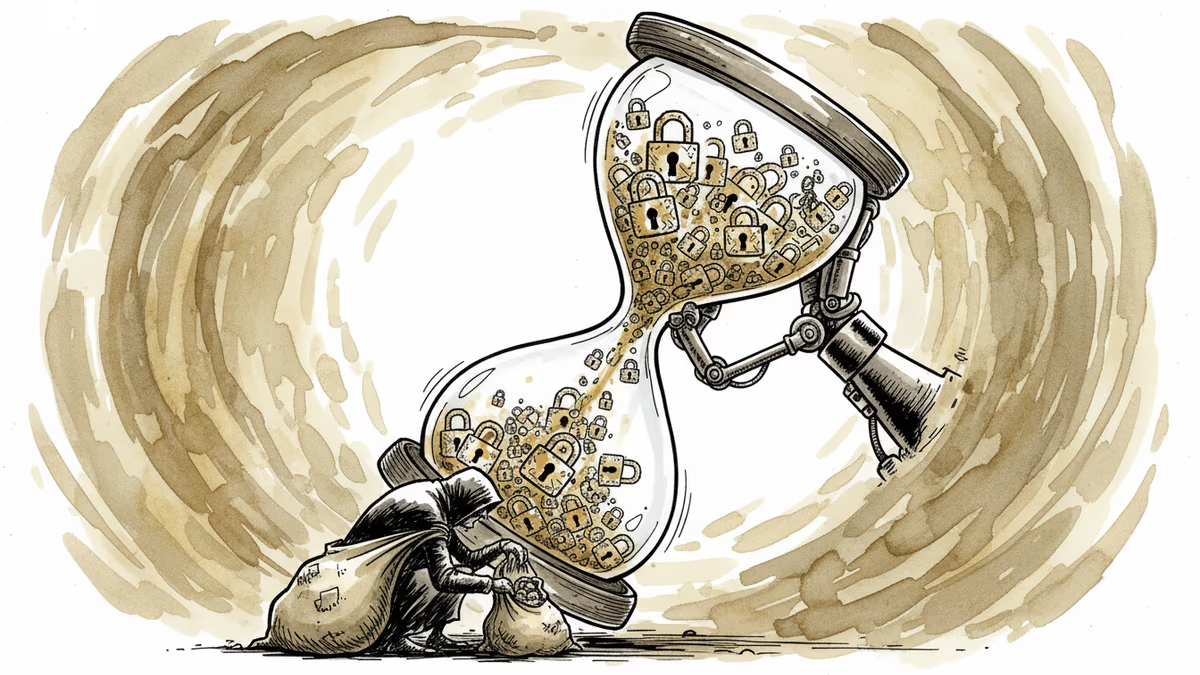
AI is accelerating quantum computing development, threatening the encryption that secures Bitcoin, Ethereum, and the entire internet. Security experts warn the arms race has already begun.

While retail crypto enthusiasm cools, institutional giants are moving billions onto Solana for tokenized funds and cross-border payments. Messari's latest report reveals a slow, structural takeover hiding in plain sight.
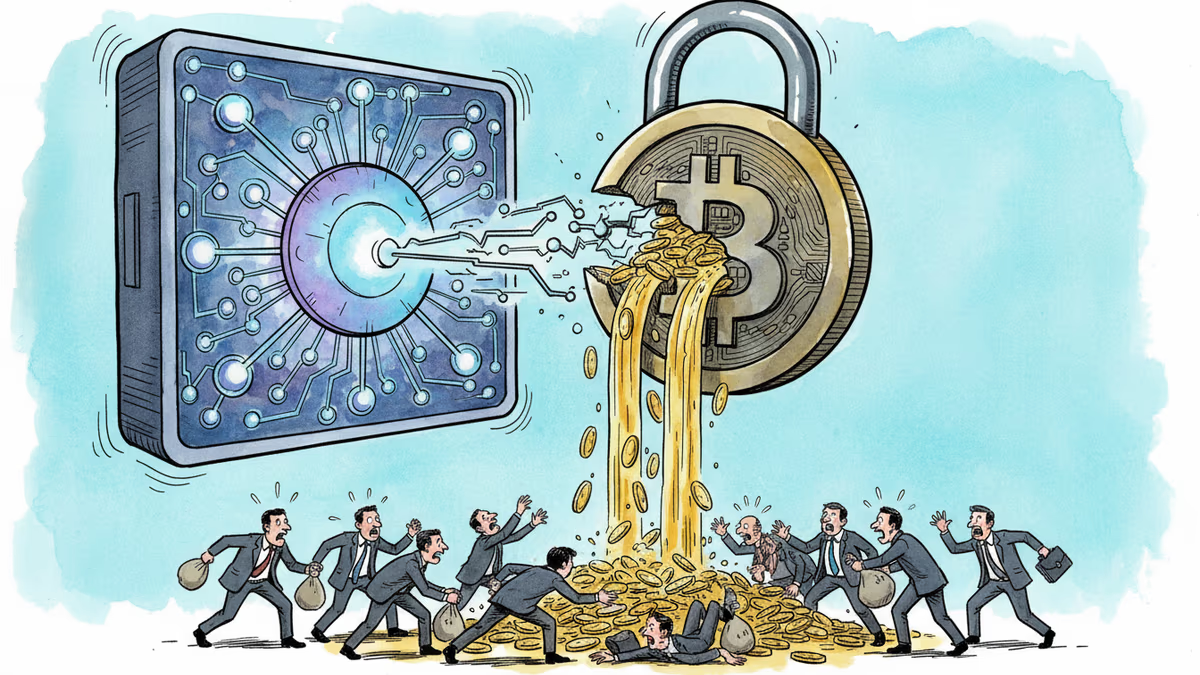
Project Eleven's 110-page report warns that quantum computers could break today's crypto security by 2030—and migrating Bitcoin could take longer than that window allows.

Barclays raised its 2026 Brent crude forecast to $100/barrel, citing prolonged Hormuz disruption. Here's what that means for energy markets, inflation, and your energy bill.
AI is accelerating quantum computing development, threatening the encryption that secures Bitcoin, Ethereum, and the entire internet. Security experts warn the arms race has already begun.
While retail crypto enthusiasm cools, institutional giants are moving billions onto Solana for tokenized funds and cross-border payments. Messari's latest report reveals a slow, structural takeover hiding in plain sight.
Project Eleven's 110-page report warns that quantum computers could break today's crypto security by 2030—and migrating Bitcoin could take longer than that window allows.
Barclays raised its 2026 Brent crude forecast to $100/barrel, citing prolonged Hormuz disruption. Here's what that means for energy markets, inflation, and your energy bill.
Thoughts
Share your thoughts on this article
Sign in to join the conversation