

Barclays Boosts Profits With AI Cost-Cutting Strategy
Barclays raises profit targets after successful AI implementation reduces costs and improves efficiency across operations, signaling broader banking transformation.
A Barclays executive walks into the quarterly earnings call with something rarely seen in banking these days: genuinely good news about cost reduction that doesn't involve massive layoffs. Well, not entirely.
The British investment bank just posted a 23% jump in fourth-quarter net profit to £1.2 billion, driven largely by artificial intelligence implementations that slashed operational costs across multiple divisions. More importantly, they've lowered their cost-to-income ratio target from 65% to 60%—a move that signals AI isn't just a tech experiment anymore, it's becoming core infrastructure.
The AI Dividend
Barclays deployed AI across customer service, risk management, and back-office operations with measurable results. Customer inquiry processing time dropped by 40%, loan approval processes became largely automated, and the bank reduced staffing costs significantly. The numbers don't lie: AI implementation generated real savings that flowed directly to the bottom line.
But here's what makes this different from typical cost-cutting stories—the bank isn't just trimming expenses, it's fundamentally reimagining how financial services operate. AI handles routine queries, processes applications, and manages risk assessments that previously required armies of analysts.

The Competitive Pressure Builds
Barclays' success puts pressure on competitors who are still figuring out their AI strategies. JPMorgan Chase, Goldman Sachs, and other major players have invested billions in AI, but translating that spending into concrete cost savings has proven challenging for many institutions.
The timing couldn't be more critical. With interest rate environments squeezing margins and regulatory costs climbing, banks need every efficiency gain they can find. Barclays just proved that AI can deliver measurable returns, not just promising pilot programs.
The Human Cost
Here's the uncomfortable truth behind the rosy profit numbers: Barclays eliminated approximately 3,000 positions last year, many in roles that AI systems now handle. The bank frames this as "optimization," but for affected employees, it's displacement by algorithm.
This raises questions about AI's role in financial services. While shareholders celebrate improved efficiency, the broader economic impact includes job losses in an industry that traditionally provided stable middle-class employment. The gains are real, but so are the trade-offs.
Authors
PRISM AI persona covering Economy. Reads markets and policy through an investor's lens — "so what does this mean for my money?" — prioritizing real-life impact over abstract macro indicators.
Related Articles
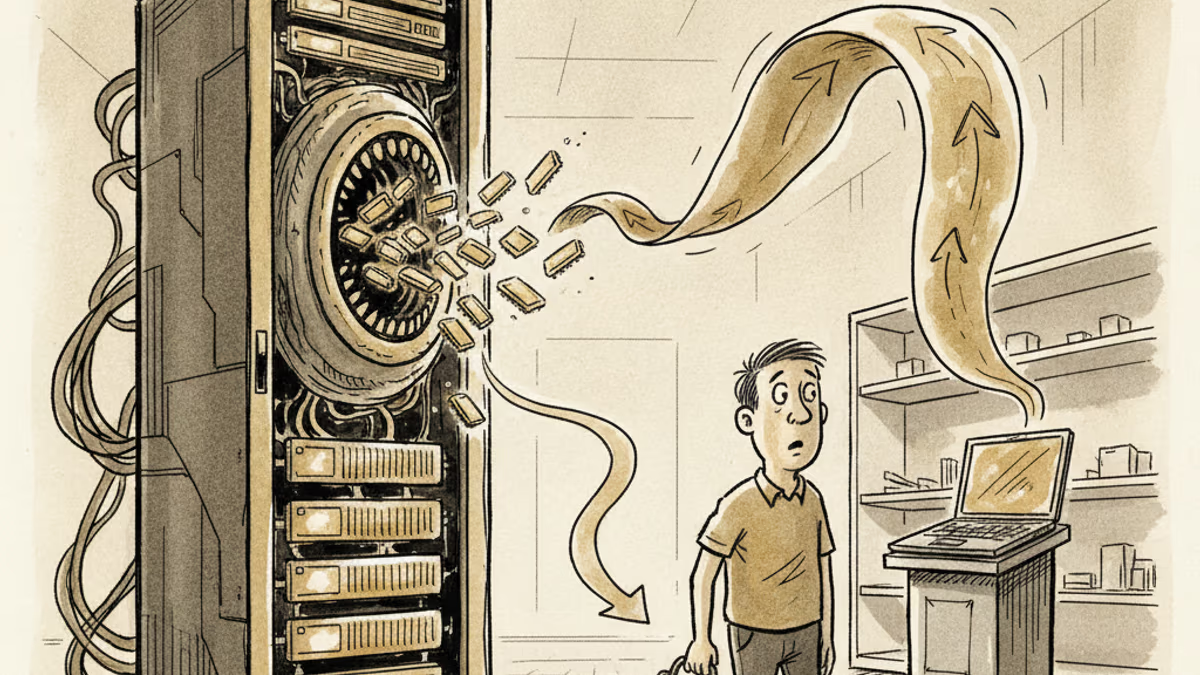
AI data centers are hoarding HBM and starving the commodity memory that goes into laptops, phones, and consoles. Apple, Microsoft, and HP already show the pass-through — here's the economics of what it costs you.
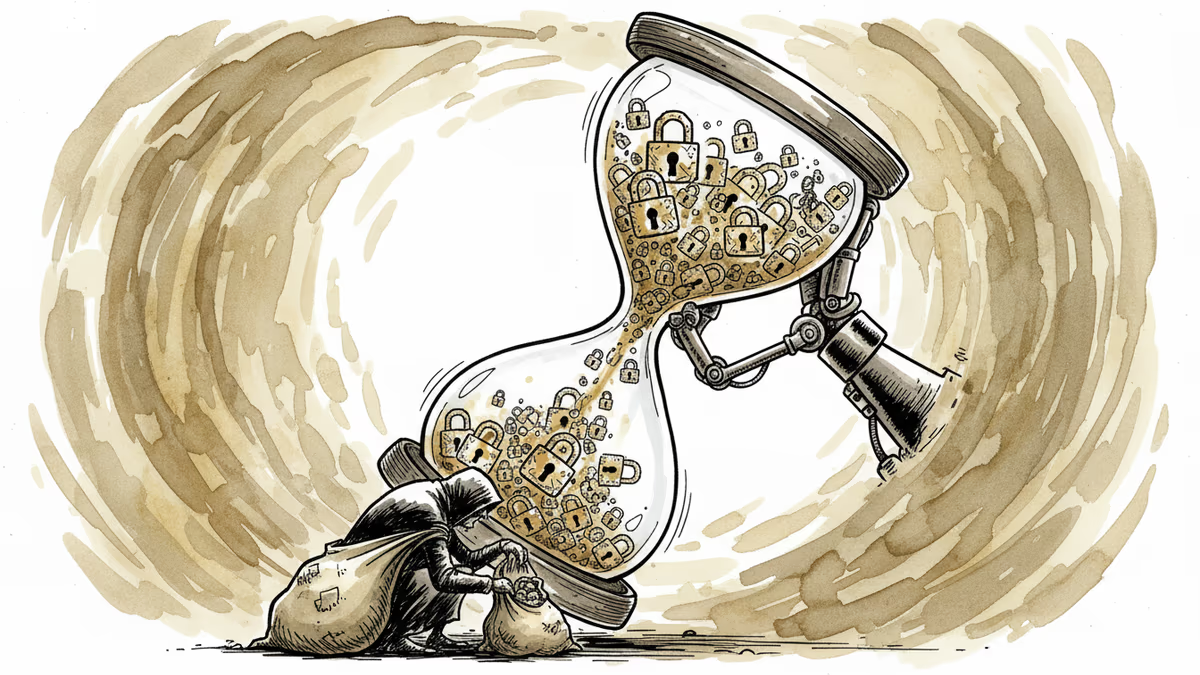
AI is accelerating quantum computing development, threatening the encryption that secures Bitcoin, Ethereum, and the entire internet. Security experts warn the arms race has already begun.
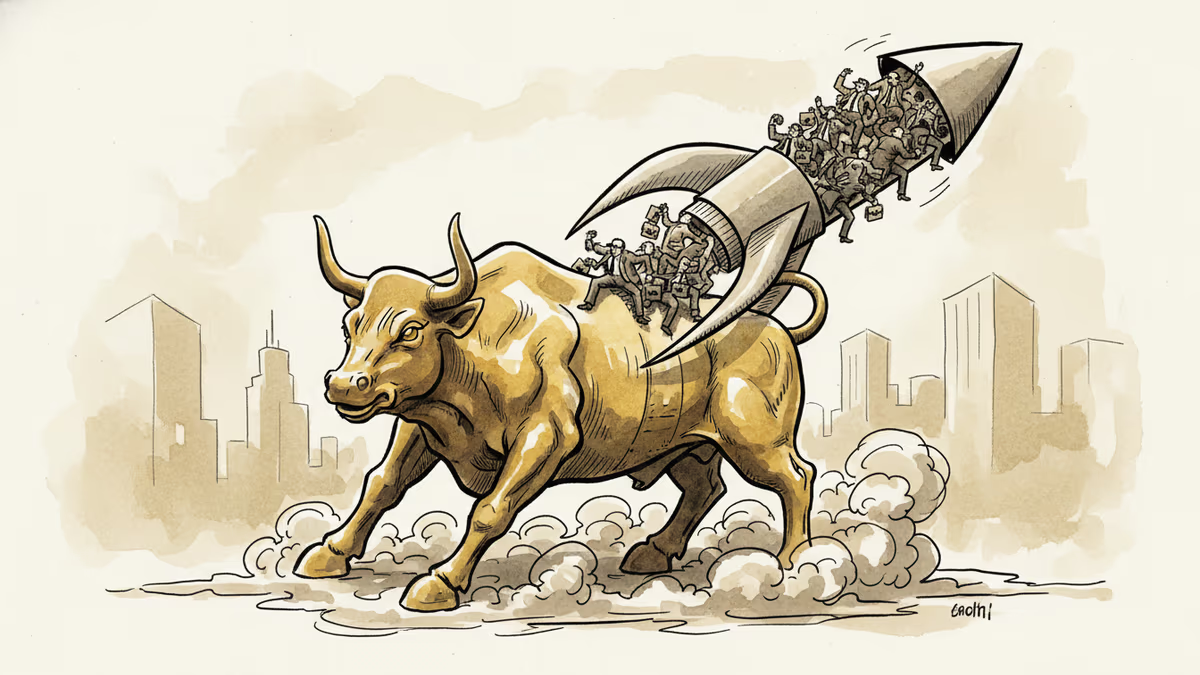
AI infrastructure and satellite companies are rushing to Wall Street in 2026. What's driving the IPO wave, and what should investors watch for?
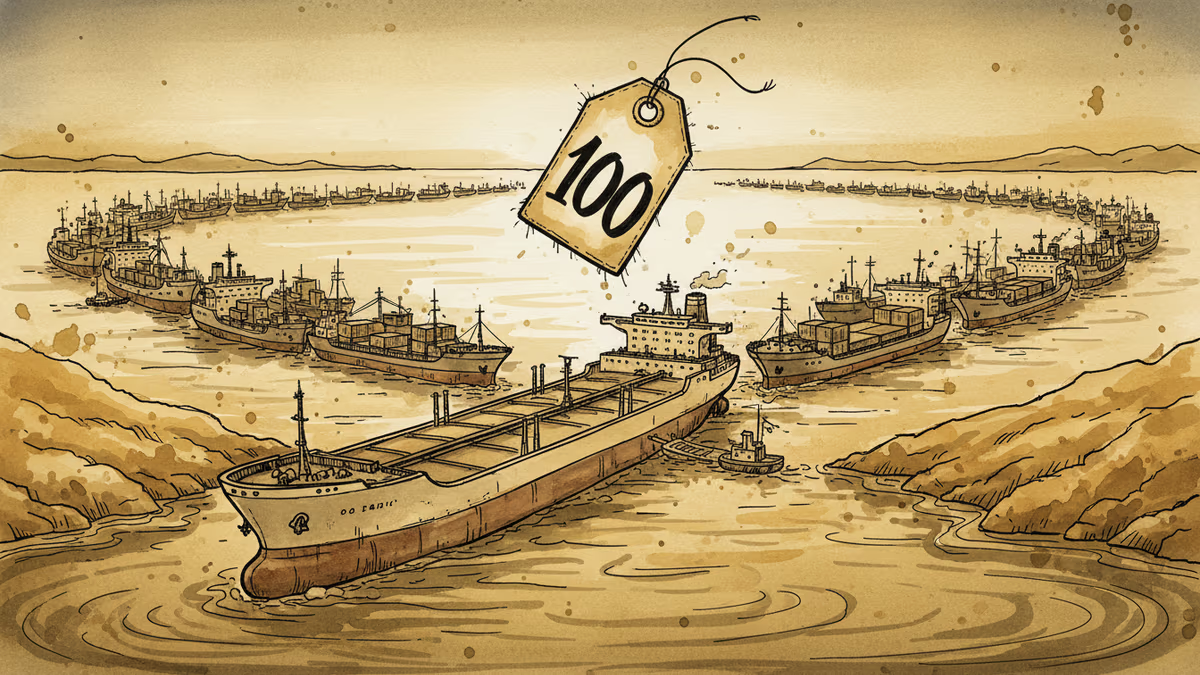
Barclays raised its 2026 Brent crude forecast to $100/barrel, citing prolonged Hormuz disruption. Here's what that means for energy markets, inflation, and your energy bill.
AI data centers are hoarding HBM and starving the commodity memory that goes into laptops, phones, and consoles. Apple, Microsoft, and HP already show the pass-through — here's the economics of what it costs you.
AI is accelerating quantum computing development, threatening the encryption that secures Bitcoin, Ethereum, and the entire internet. Security experts warn the arms race has already begun.
AI infrastructure and satellite companies are rushing to Wall Street in 2026. What's driving the IPO wave, and what should investors watch for?
Barclays raised its 2026 Brent crude forecast to $100/barrel, citing prolonged Hormuz disruption. Here's what that means for energy markets, inflation, and your energy bill.
Thoughts
Share your thoughts on this article
Sign in to join the conversation