

The 40% Premium: China AI Company IPO 2026 Frenzy Begins
Chinese AI stocks are trading 40% above the Nasdaq 100, fueling a massive IPO frenzy in 2026. Explore how DeepSeek and semiconductor players are leading the rally.
It's a massive 40% gap. China's valuation-driven stock rally, fueled by AI optimism, is set to stretch the fundraising frenzy well into 2026. Tech companies on the Shanghai and Shenzhen exchanges are now trading significantly higher than their peers on the Nasdaq 100, making domestic IPOs more attractive than ever.
China AI Company IPO 2026: Outpacing the Nasdaq
According to the South China Morning Post, mainland China's tech boards are seeing valuations that exceed the Nasdaq 100 by nearly 40%. This surge is galvanizing equity financing as companies rush to raise funds for research and expansion. UBS Group technology analyst Randy Abrams noted in a recent interview that capital markets remain highly supportive of AI technology, particularly in sectors like chip manufacturing and packaging tests.

A Wave of Semiconductor Listings
- Approximately 30 to 40 Chinese semiconductor companies are on track for IPOs this year.
- Key industry players like Moore Threads Technology and Zhipu AI are leading the charge.
- The success of DeepSeek has spurred a massive re-rating of Chinese tech stocks.
The rise of DeepSeek wasn't just a flash in the pan; it served as a catalyst for investors to recognize China's dominant position in AI infrastructure and humanoid robotics. This has led to a flurry of listings, both domestically and in Hong Kong, as companies capitalize on the rich valuations to fund the escalating tech race against the US.
Authors
Related Articles
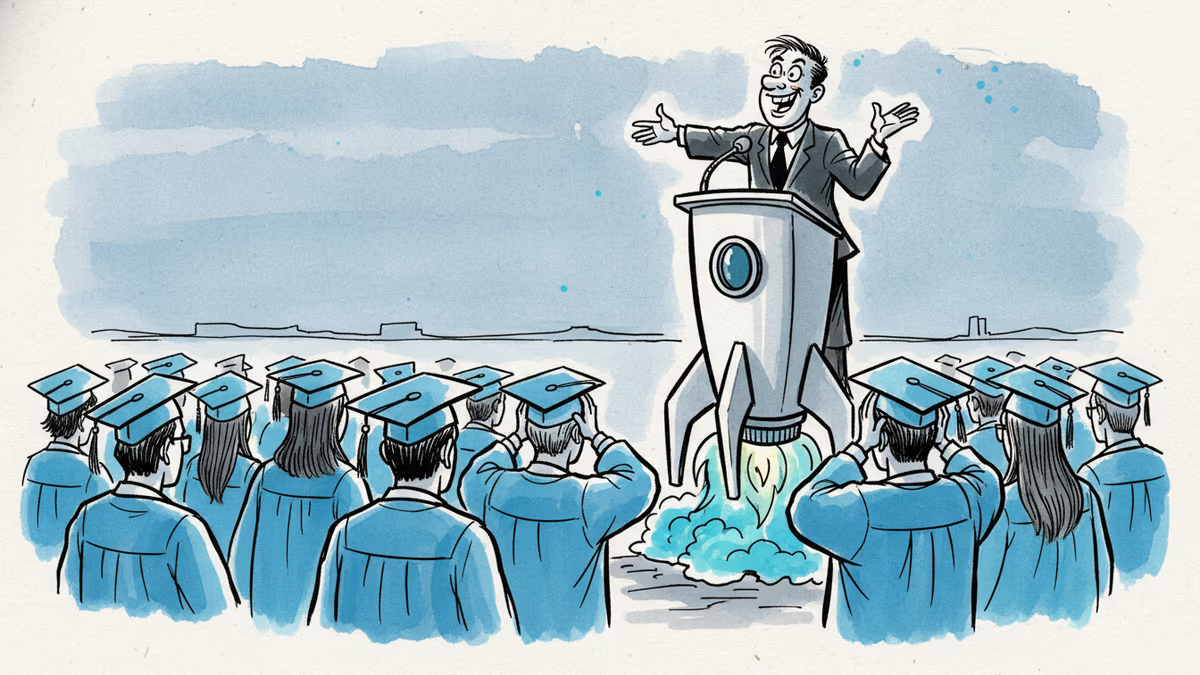
Two commencement speakers learned the hard way that AI enthusiasm doesn't land well with today's graduates. The backlash reveals a widening gap between tech optimism and Gen Z's economic reality.

At his OpenAI trial, Elon Musk testified under oath about a falling-out with Larry Page over AI safety. The story reveals how personal philosophy shapes billion-dollar industries.
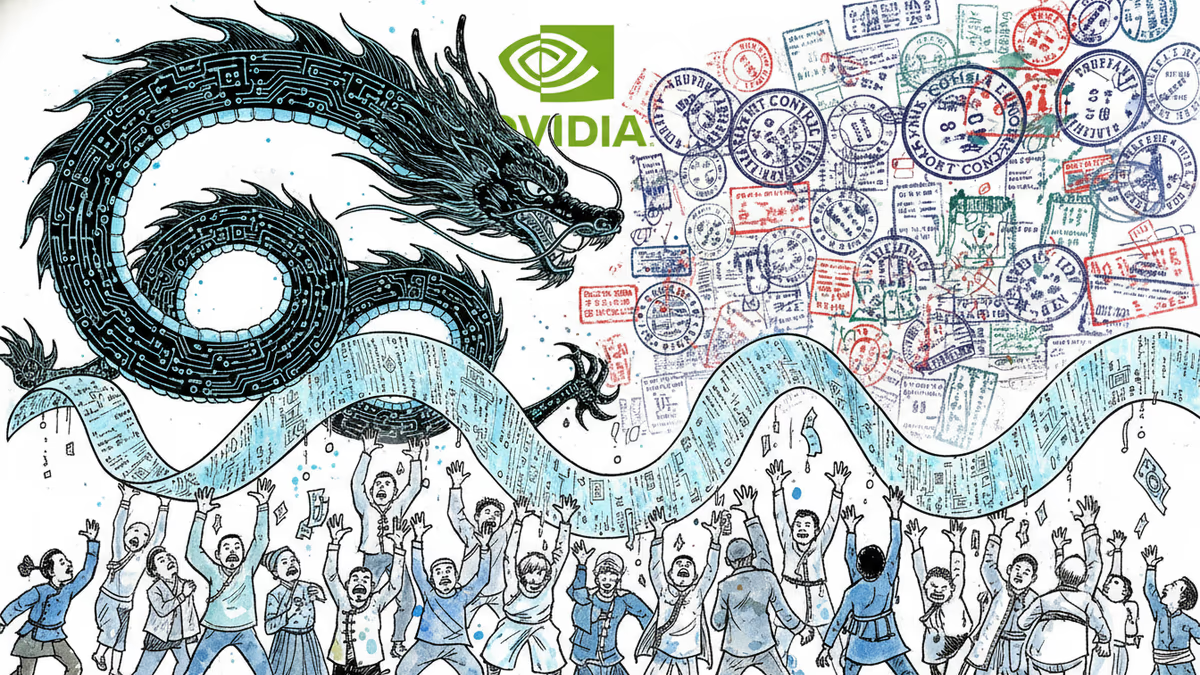
DeepSeek's V4 won't replicate the R1 shock—but it redraws the open-source AI map on pricing, long-context efficiency, and China's push to ditch Nvidia. Here's what's worth watching.

Sam Altman, Dario Amodei, and Demis Hassabis all appear in a new documentary about AI's future. The access is impressive. The answers are not. A critical look at what the film reveals—and avoids.
Two commencement speakers learned the hard way that AI enthusiasm doesn't land well with today's graduates. The backlash reveals a widening gap between tech optimism and Gen Z's economic reality.
At his OpenAI trial, Elon Musk testified under oath about a falling-out with Larry Page over AI safety. The story reveals how personal philosophy shapes billion-dollar industries.
DeepSeek's V4 won't replicate the R1 shock—but it redraws the open-source AI map on pricing, long-context efficiency, and China's push to ditch Nvidia. Here's what's worth watching.
Sam Altman, Dario Amodei, and Demis Hassabis all appear in a new documentary about AI's future. The access is impressive. The answers are not. A critical look at what the film reveals—and avoids.
Thoughts
Share your thoughts on this article
Sign in to join the conversation