

China's Humanoid Robot Dominance Is Real—And It's Just Getting Started
Chinese humanoid robot companies shipped 36 times more units than US rivals last year. Behind the numbers lies a strategic advantage that could reshape the global robotics landscape.
36x More: The Number That Changes Everything
Last year, China's Unitree shipped roughly 36 times more humanoid robots than Figure and Tesla combined. This isn't just a manufacturing flex—it's a signal that China has achieved something the West is still struggling with: turning humanoid robots from expensive demos into mass-market reality.
The kung fu-flipping robots that captivated audiences at China's Spring Festival Gala weren't just entertainment. They were a declaration. While Honor prepares to unveil its first humanoid robot at MWC in Spain, Chinese companies are already scaling production at unprecedented rates.
The Hardware Advantage
"China has a more robust hardware supply chain—much of it built up through the EV sector, from sensors to batteries—and the world's strongest manufacturing base," explains Selina Xu, China and AI policy lead at Eric Schmidt's office. This isn't theoretical. It's allowing Chinese companies to iterate "far faster than Western competitors."
The results speak for themselves. Chinese robots aren't just cheaper—they're faster to market. Global humanoid robot shipments totaled just 13,317 units last year, but the industry is expected to nearly double annually, reaching 2.6 million units by 2035. Chinese companies are positioning themselves to capture the lion's share of this explosive growth.
The 2025 shipment leaders tell the story: Agibot, Unitree, UBTech, Leju Robotics, Engine AI, and Fourier Intelligence—all Chinese. Beijing's early dominance isn't accidental; it's strategic.
From Demo to Deployment
"The biggest shift recently has been from 'demo-driven excitement' to 'operations-driven adoption,'" says Yuli Zhao, chief strategy officer at Galbot. Customers are asking harder questions: "Can the robot run stably in real environments and actually take work off people's plates?"

This practical pull is amplified in China, where policy and industrial strategy actively encourage automation upgrades. The manufacturing ecosystem enables "extremely fast" iteration, creating a feedback loop that Western competitors struggle to match.
The funding follows the momentum. Unitree closed its Series C at around $3 billion valuation, with IPO ambitions reaching $7 billion. Galbot raised over $300 million, reportedly pushing its valuation to $3 billion—one of the largest financings in China's humanoid robotics sector.
The Software Reality Check
But here's where the story gets complicated. When it comes to AI systems and integrated software, "it's still unclear where Chinese humanoid firms truly stand," Xu notes. The industry is betting on vision-language-action models and "world models," but both technologies remain nascent.
Nvidia currently leads with its end-to-end humanoid software stack, meaning most Chinese humanoid startups rely on Nvidia's Orin chips. The fundamental challenge? Unlike large language models that can scrape internet data, humanoid robotics companies face severe data scarcity, forcing reliance on synthetic simulation data.
"Because of the data scarcity problem, humanoids are still far away from autonomy," Xu explains. "The hardware is currently ahead of the software—the robot body can handle much more dexterity today than years ago, but the brain is still nascent."
Beyond the Two-Horse Race
This isn't just US versus China. Japan's robotics ecosystem—from startups to semiconductor giants—targets humanoid mass production by 2027. Long a pioneer through Honda's Asimo and SoftBank Robotics' Pepper, Japan brings precision engineering and a unique focus: eldercare applications.
"There are three factors likely to drive robotics adoption in Japan," says Coral Capital CEO James Riney. "Labor shortage, cultural view of robots as friends rather than threats, and existing dominance in robotics supply chains."
Hyundai Motor's Boston Dynamics unit plans to produce up to 30,000 Atlas humanoid units annually in the US by 2028, part of its AI-driven robotics push.
The humanoid robot revolution is happening now, not in some distant future. The question is whether the West can catch up to China's head start—or if they're already playing a different game entirely.
Authors
Related Articles
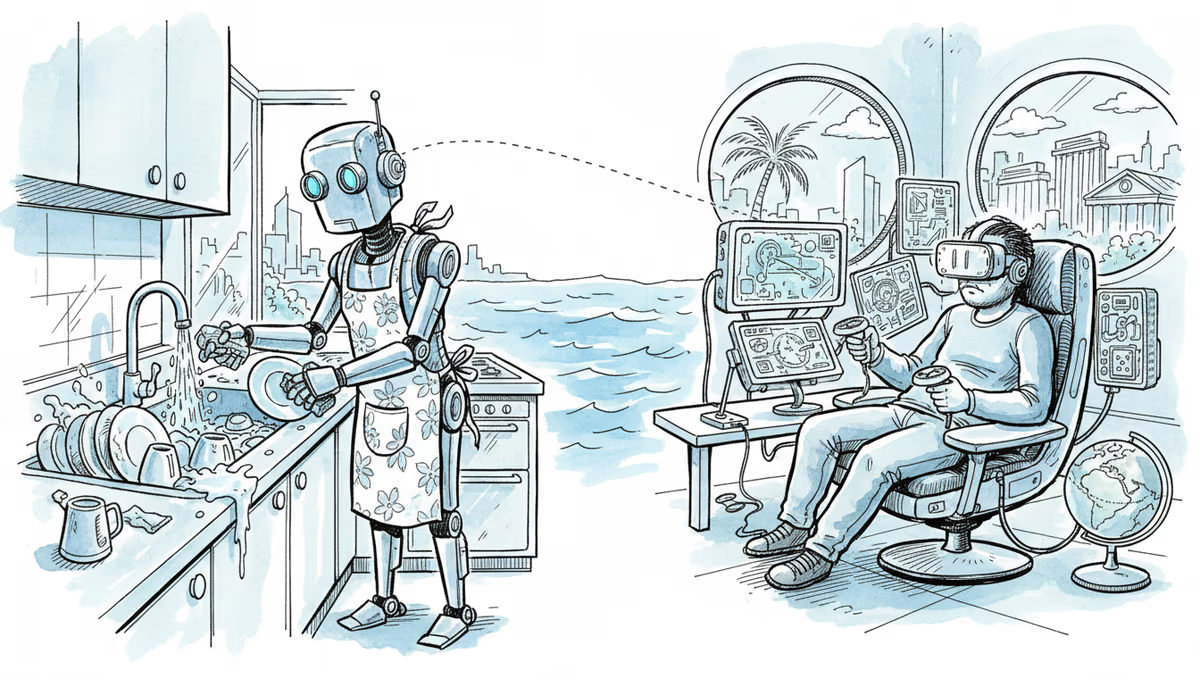
Behind the flashy demos of humanoid robots lie hidden human workers. Exploring new forms of labor and privacy concerns in the age of physical AI.
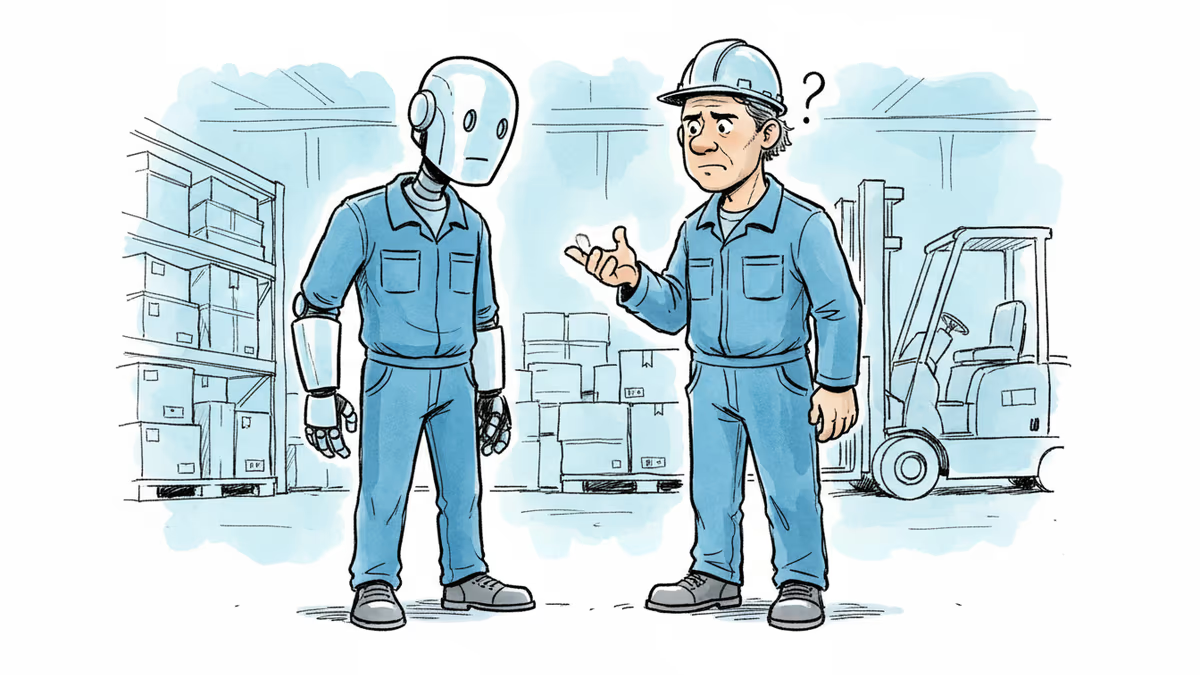
Apptronik raised $935M in Series A extensions, tripling its valuation in a year. But technical limits and social acceptance remain major hurdles for humanoid robots.
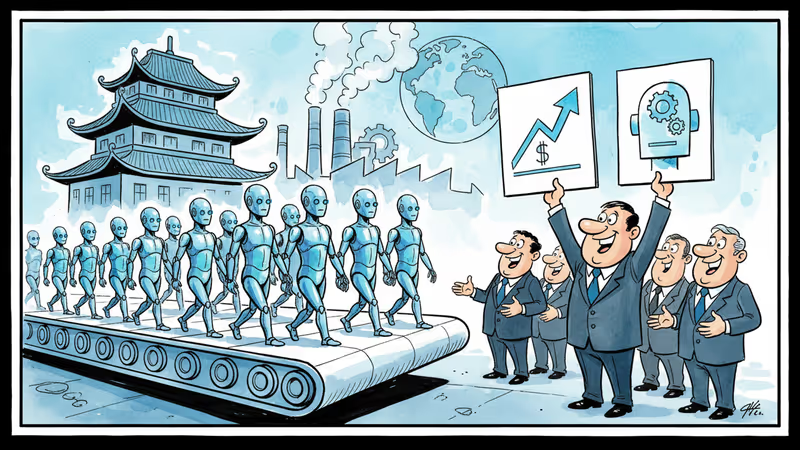
Chinese companies dominated 2025 humanoid robot sales with 90% market share. Unitree and Agibot outsold Tesla's entire production target, signaling a new industrial shift.
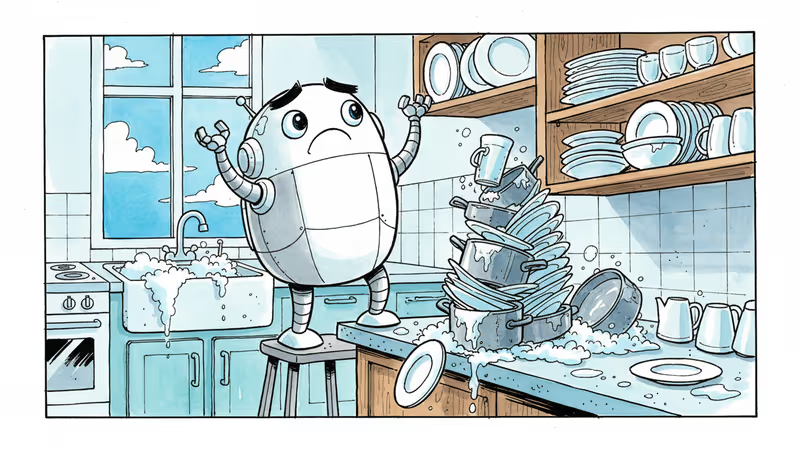
Fauna Robotics unveils Sprout, a compact humanoid robot inspired by Baymax. But can its cute design overcome the practical limitations of its size?
Behind the flashy demos of humanoid robots lie hidden human workers. Exploring new forms of labor and privacy concerns in the age of physical AI.
Apptronik raised $935M in Series A extensions, tripling its valuation in a year. But technical limits and social acceptance remain major hurdles for humanoid robots.
Chinese companies dominated 2025 humanoid robot sales with 90% market share. Unitree and Agibot outsold Tesla's entire production target, signaling a new industrial shift.
Fauna Robotics unveils Sprout, a compact humanoid robot inspired by Baymax. But can its cute design overcome the practical limitations of its size?
Thoughts
Share your thoughts on this article
Sign in to join the conversation