

Why the China Are You Dead Yet App Viral Success is Topping Charts
Explore the viral success of China's 'Are You Dead Yet' app, a safety tool for solo dwellers that reached #1 on the App Store in early 2026.
A simple app that bluntly asks "Are You Dead Yet?" is taking China by storm. Known locally as si le ma, this indie sensation has climbed to the #1 spot on the paid App Store charts. It’s not a game or a social media platform, but a survival check for the growing number of young people living alone who fear vanishing without a trace.
Inside the China Are You Dead Yet App Viral Phenomenon
The mechanics are deceptively simple. Users must tap a giant green button once every 24 hours. If they miss the check-in for two consecutive days, the app automatically sends an emergency email to a designated contact. According to developer Guo from Moonscape Technologies, the app only cost $200 to build but has already attracted interest from over 60 investors.

This sudden success reflects a deeper demographic shift. China's 2020 census revealed that 25.4% of households are now single-person homes. While the app originally cost only 1 RMB(14 cents), its price was recently hiked to 8 RMB($1.15) as it gained viral traction on platforms like RedNote.
Rebranding for Global Markets: Meet Demumu
To better serve international users, the developers announced a name change to Demumu on January 13, 2026. The new name blends "death" with the naming style of the viral plushie monster Labubu. However, fans on Weibo aren't thrilled, claiming the original blunt title was the primary reason for the app's viral appeal. Despite the backlash, the team plans to integrate AI to create an "AI safety companion" in future updates.
Authors
Related Articles

Samsung Electronics' union branch revealed that 84% of survey respondents oppose the government's roughly $290 billion (₩400 trillion) semiconductor megaproject in Gwangju. Government, management, the union and shareholders are all reading the same national project in sharply different ways.
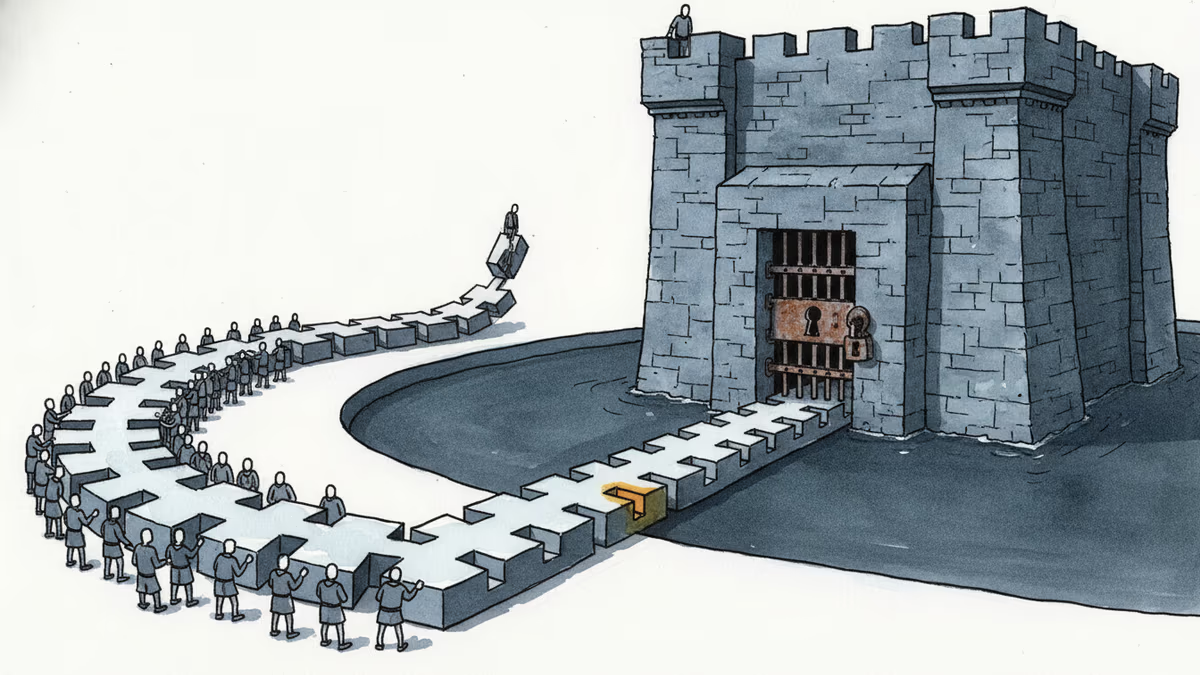
Nvidia shipped roughly a billion RISC-V cores in 2024, then announced it would run CUDA on the open standard. We break down how royalty-free instruction sets and open software stacks are trying to route around CUDA's lock-in. Part 2 of the Semiconductor Sovereignty series.
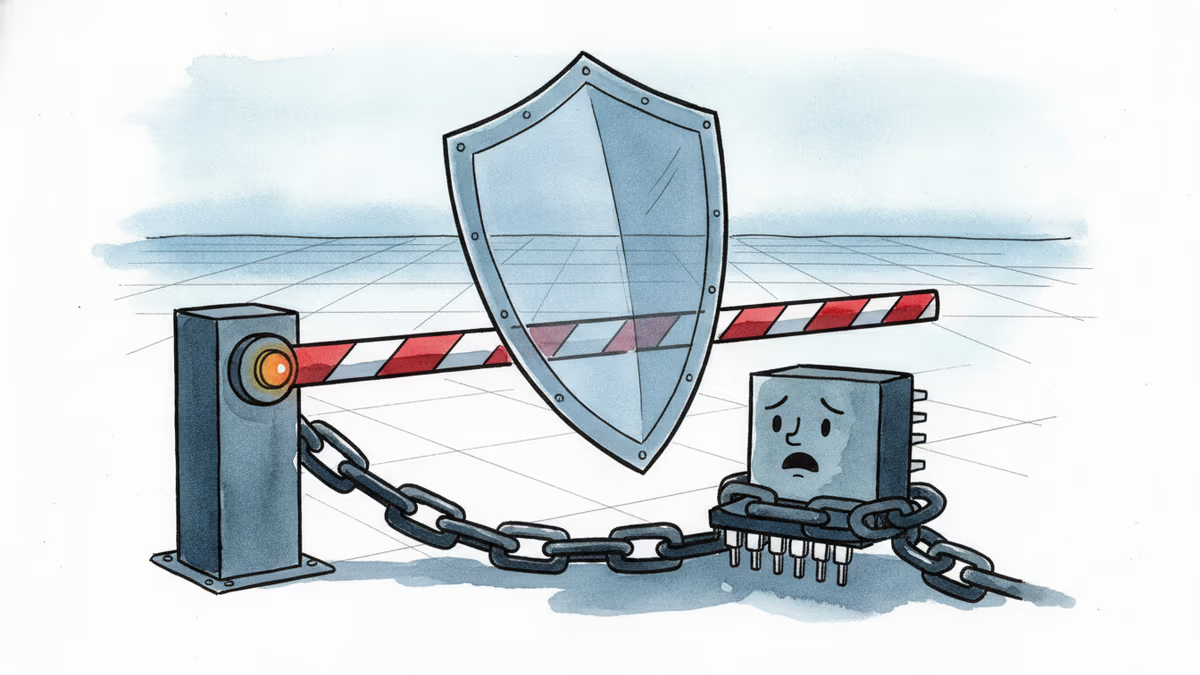
US AI-chip export controls split into three layers in the first half of 2026 — January easing, a May crackdown on circumvention, and a pending bill. Nvidia erased China from its guidance and still posted a record $81.6 billion quarter. A look at the export policy that both shields and cages it.
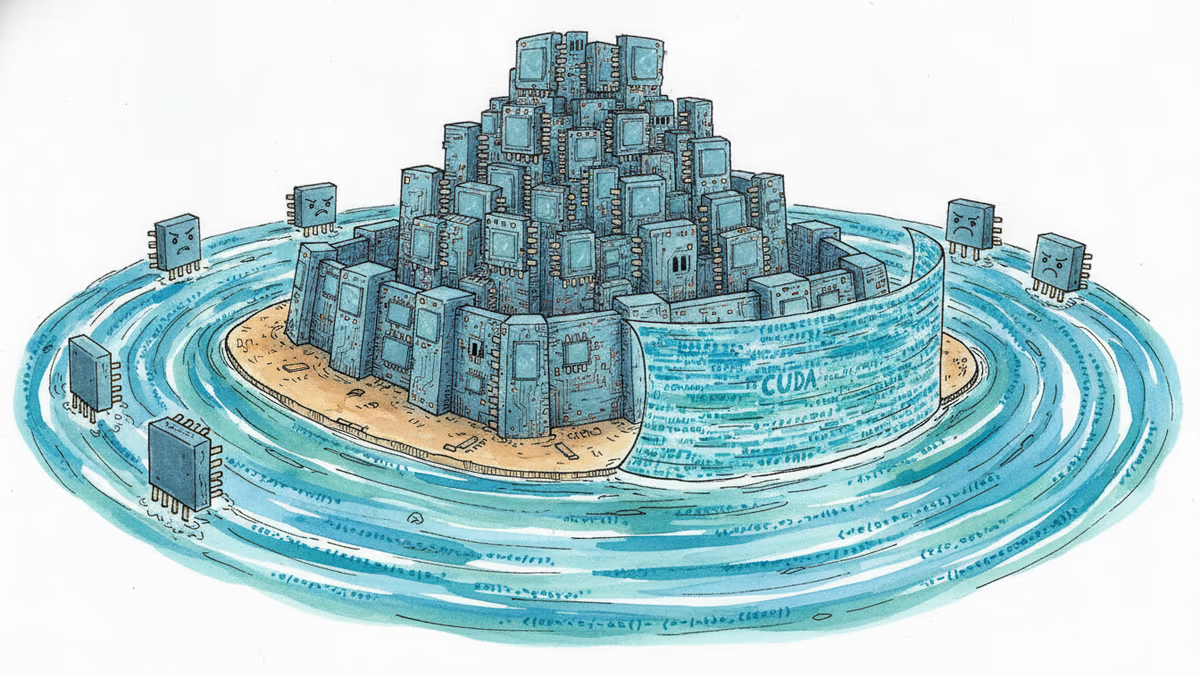
AMD's MI325X matches or beats Nvidia on memory and bandwidth — yet Nvidia's 86-92% share holds. The real moat is CUDA, 20 years in the making. Part 1 of 4.
Samsung Electronics' union branch revealed that 84% of survey respondents oppose the government's roughly $290 billion (₩400 trillion) semiconductor megaproject in Gwangju. Government, management, the union and shareholders are all reading the same national project in sharply different ways.
Nvidia shipped roughly a billion RISC-V cores in 2024, then announced it would run CUDA on the open standard. We break down how royalty-free instruction sets and open software stacks are trying to route around CUDA's lock-in. Part 2 of the Semiconductor Sovereignty series.
US AI-chip export controls split into three layers in the first half of 2026 — January easing, a May crackdown on circumvention, and a pending bill. Nvidia erased China from its guidance and still posted a record $81.6 billion quarter. A look at the export policy that both shields and cages it.
AMD's MI325X matches or beats Nvidia on memory and bandwidth — yet Nvidia's 86-92% share holds. The real moat is CUDA, 20 years in the making. Part 1 of 4.
Thoughts
Share your thoughts on this article
Sign in to join the conversation