
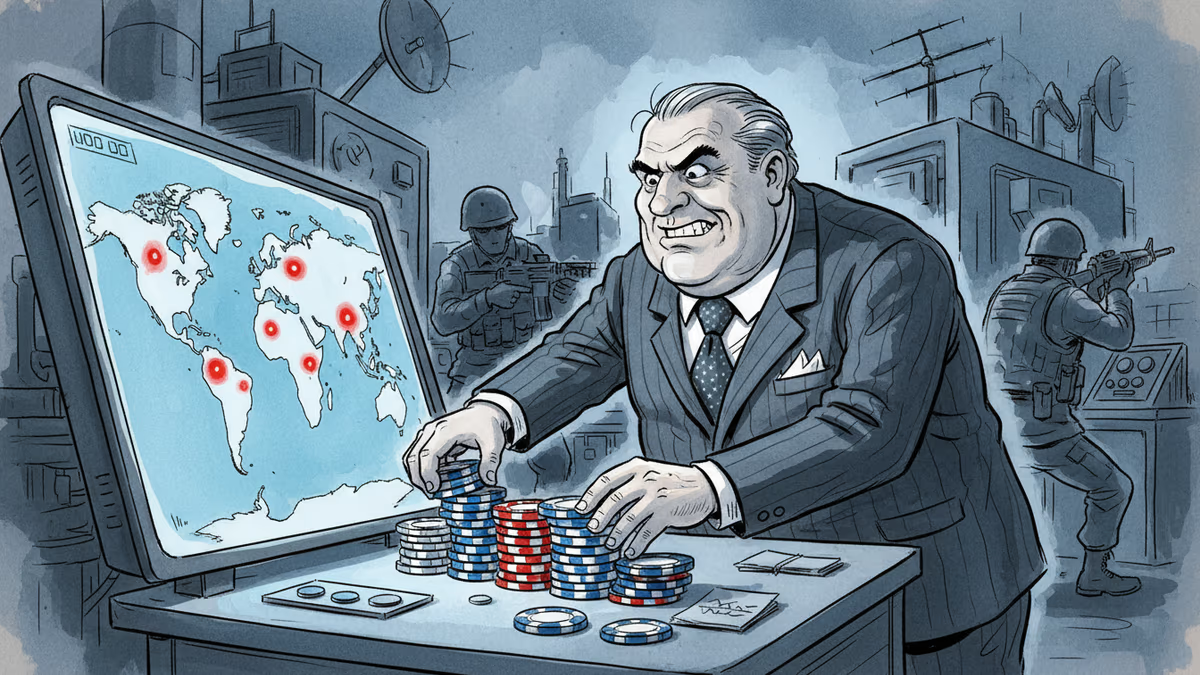
The Insider Who Bet on a Secret He Helped Plan
A US official involved in the operation to capture Venezuelan president Nicolás Maduro made over $400,000 on Polymarket bets days before it happened. Now he has a name.
On January 5, 2026, Nicolás Maduro landed at a Manhattan helipad in handcuffs. Months later, the world learned someone had known it was coming — and cashed in. Now we have a name.
A $400,000 Secret
The US Attorney for the Southern District of New York announced Thursday that Gannon Ken Van Dyke is in custody, facing multiple charges including using confidential government information for personal financial gain. According to the indictment, prosecutors allege Van Dyke was directly involved in planning and executing "Operation Absolute Resolve" — the covert mission to capture Venezuelan president Nicolás Maduro.
In the days before the operation, Van Dyke allegedly purchased $33,934 worth of "YES" shares on prediction market platform Polymarket, betting that Maduro would be captured. His total profit: over $400,000.
It was, in effect, a bet he already knew the answer to — because he helped write it.
How Polymarket Became the Evidence
Polymarket is a crypto-based prediction market where users wager on the probability of real-world events: elections, economic indicators, geopolitical outcomes. It operates in a regulatory gray zone — officially inaccessible to US retail users, yet widely used. Its blockchain infrastructure records every transaction publicly and permanently.
That transparency is what caught Van Dyke. The suspicious betting pattern around Maduro's capture had already drawn attention weeks earlier, when analysts noticed someone had made over $400,000 on the trade. The identity was the missing piece. Blockchain's pseudonymity didn't hold up under a federal investigation.

The irony: the same decentralized ledger that was supposed to protect anonymity became the paper trail.
Where Law Hasn't Caught Up
Insider trading law in the US has been refined over decades for stocks and securities. But prediction markets occupy different legal terrain. The CFTC has maintained a long, unresolved tension with Polymarket over whether its contracts constitute regulated financial instruments.
What makes this case different from a rogue trader front-running an earnings call is the nature of the information itself. Van Dyke didn't exploit a corporate secret — he allegedly exploited a classified national security operation. The capture of a foreign head of state. That's a category of information no existing insider trading statute was written to address.
The gap between what the law covers and what's now technically possible just got very visible.
Three Ways to Read This
Regulators will see this as a long-overdue argument for bringing prediction markets under formal oversight. The CFTC has signaled interest in expanding its authority over event contracts. This case hands them a concrete, high-profile example of what unregulated access enables.
Prediction market advocates will counter that this story actually demonstrates the system working. The blockchain record made the suspicious activity detectable and prosecutable. Compare that to traditional OTC markets, where similar trades would have been far harder to trace. Transparency caught the bad actor.
The national security community faces a more uncomfortable question: if personnel with access to classified operations can monetize that access through financial instruments — crypto-based or otherwise — what does that mean for operational security screening? This isn't a tech problem. It's a human vetting problem.
Authors
Related Articles
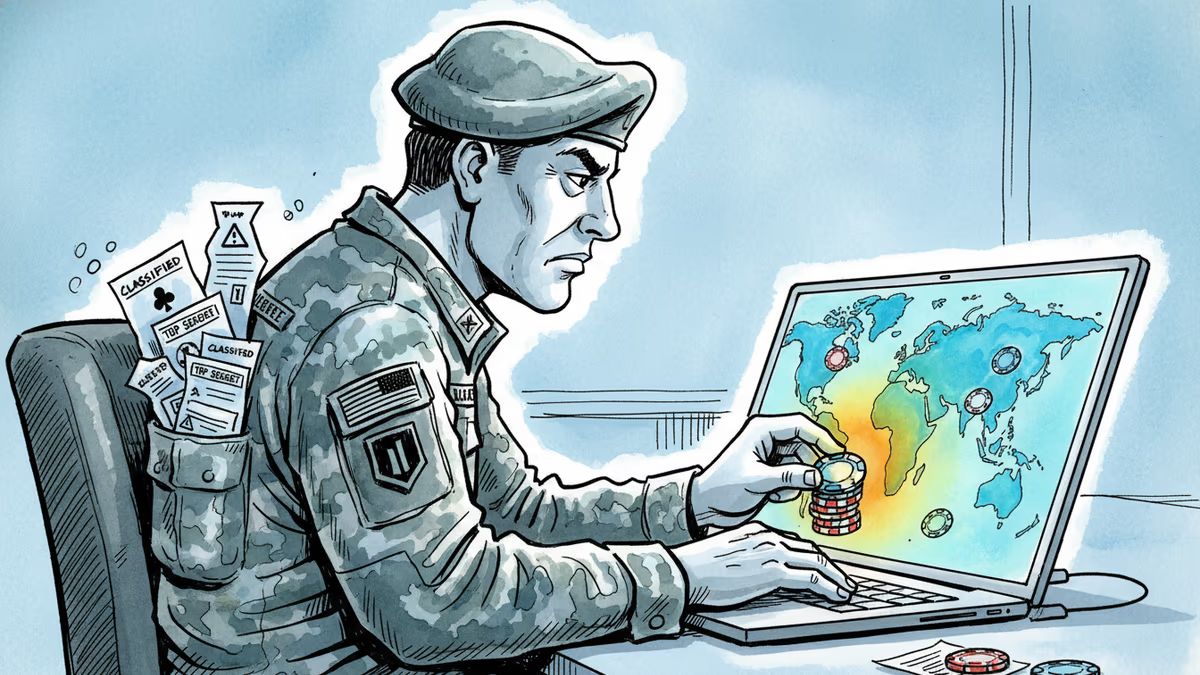
A US special forces soldier involved in the operation that captured Venezuela's Maduro allegedly used classified intel to bet on Polymarket, pocketing over $400,000. The case exposes a gaping hole in how prediction markets are regulated.
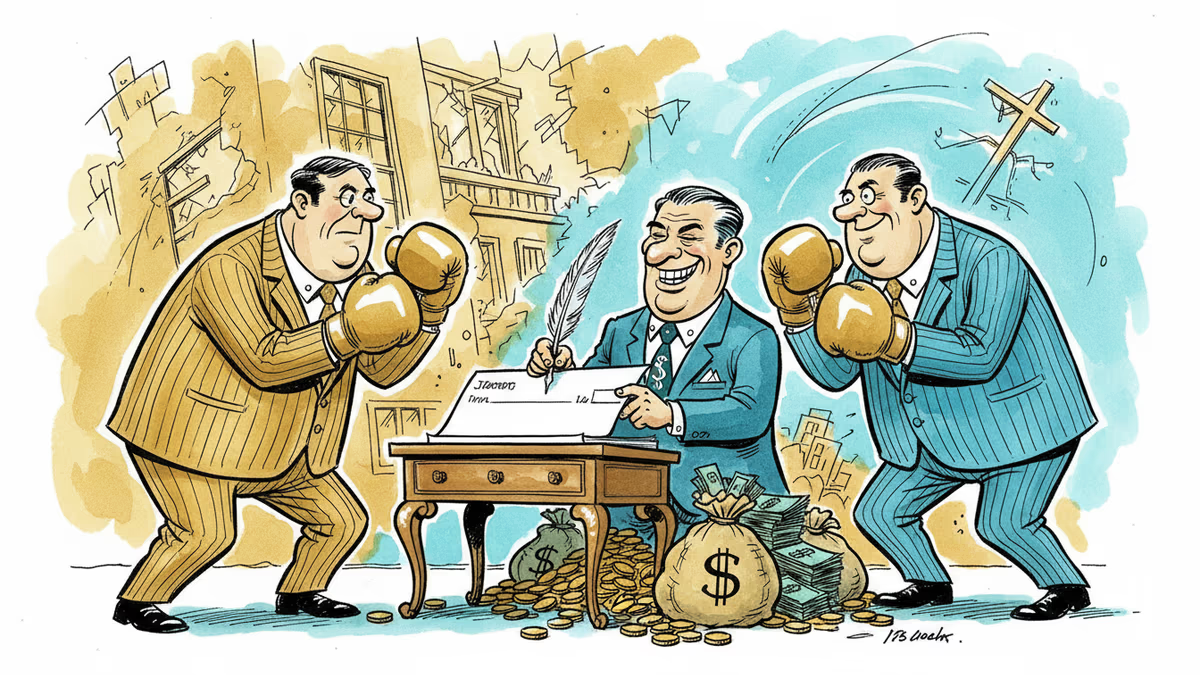
Despite fierce competition, the CEOs of Polymarket and Kalshi have co-invested in 5(c) Capital, a $35M VC fund targeting prediction market infrastructure. What this signals for the industry.
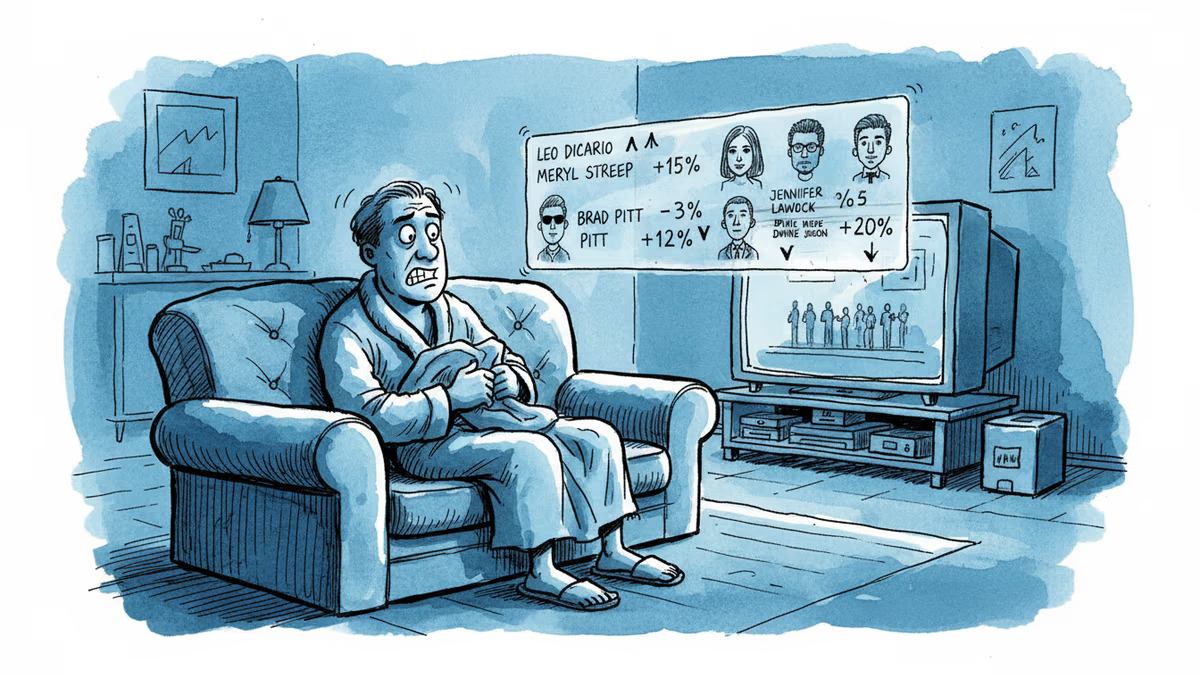
The Golden Globes partnered with Polymarket. From war timelines to Nobel Prizes, prediction markets now price every uncertainty. What does that do to the way we experience the world?
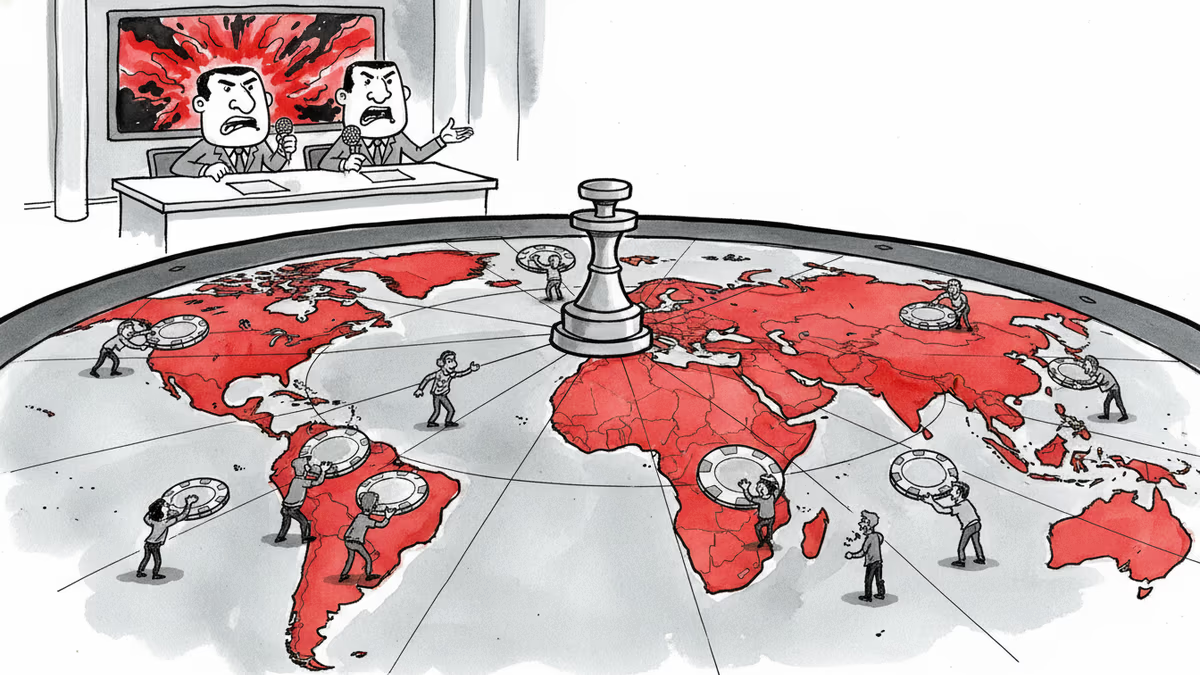
Polymarket faces backlash for allowing bets on US-Iran strikes. The prediction market blurs lines between news and gambling as real conflicts unfold.
A US special forces soldier involved in the operation that captured Venezuela's Maduro allegedly used classified intel to bet on Polymarket, pocketing over $400,000. The case exposes a gaping hole in how prediction markets are regulated.
Despite fierce competition, the CEOs of Polymarket and Kalshi have co-invested in 5(c) Capital, a $35M VC fund targeting prediction market infrastructure. What this signals for the industry.
The Golden Globes partnered with Polymarket. From war timelines to Nobel Prizes, prediction markets now price every uncertainty. What does that do to the way we experience the world?
Polymarket faces backlash for allowing bets on US-Iran strikes. The prediction market blurs lines between news and gambling as real conflicts unfold.
Thoughts
Share your thoughts on this article
Sign in to join the conversation