

China Weighs Nvidia H200 Purchase Rules 2026 to Shield Domestic AI Sector
Beijing is drafting rules to limit purchases of Nvidia H200 chips as of Jan 15, 2026. Discover how this impacts the US-China AI rivalry and domestic chip growth.
Washington said yes, but Beijing is saying "not so fast." In a surprising tactical shift, China is drafting new rules to limit how many advanced NvidiaH200 chips its domestic tech giants can acquire, aiming to force-feed its local semiconductor industry.
China Nvidia H200 Purchase Rules 2026: A Strategic Brake
According to reports from Nikkei Asia on January 15, 2026, Beijing's move addresses a growing dilemma. While the U.S. has cleared Nvidia to export the H200 to the Chinese market, the Chinese government hasn't yet issued its own green light for large-scale procurement.

Chinese tech titans like Alibaba and Tencent desperately need the world's most advanced hardware to keep pace with global AI benchmarks. However, the authorities are prioritizing national self-reliance, fearing that a total reliance on Nvidia will leave their AI sector vulnerable to future sanctions and stifle the growth of domestic contenders like Biren or Moore Threads.
Authors
Related Articles

Nvidia shipped roughly a billion RISC-V cores in 2024, then announced it would run CUDA on the open standard. We break down how royalty-free instruction sets and open software stacks are trying to route around CUDA's lock-in. Part 2 of the Semiconductor Sovereignty series.
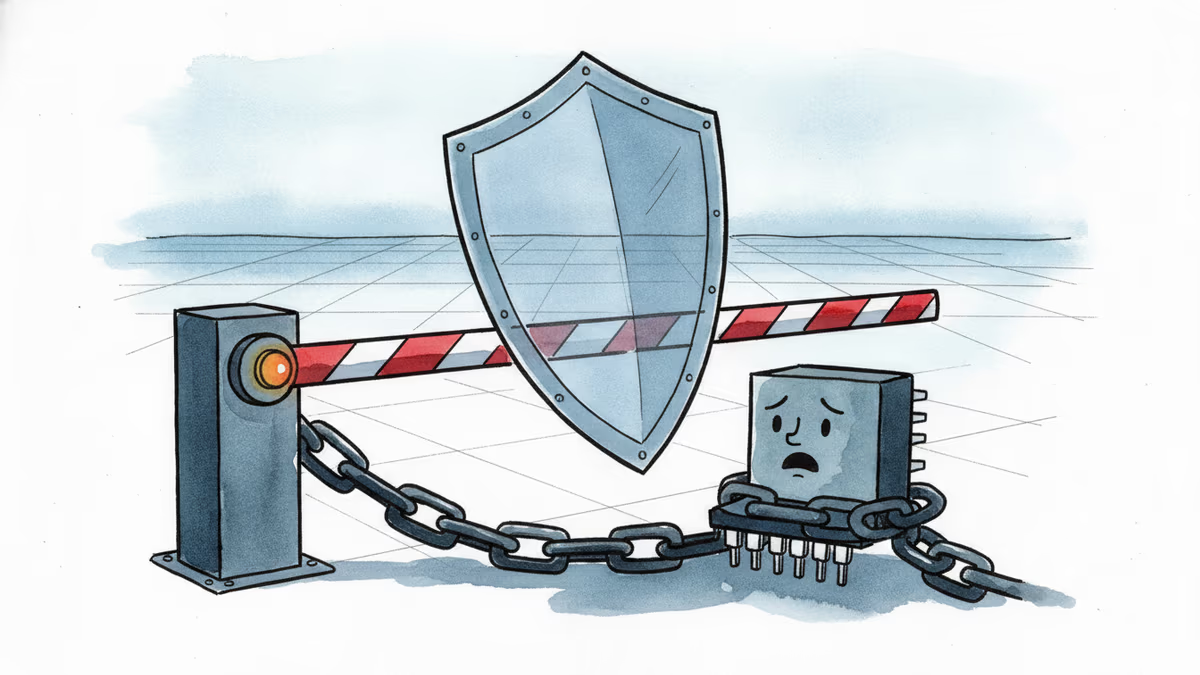
US AI-chip export controls split into three layers in the first half of 2026 — January easing, a May crackdown on circumvention, and a pending bill. Nvidia erased China from its guidance and still posted a record $81.6 billion quarter. A look at the export policy that both shields and cages it.

AMD's MI325X matches or beats Nvidia on memory and bandwidth — yet Nvidia's 86-92% share holds. The real moat is CUDA, 20 years in the making. Part 1 of 4.

Snowflake's new $6 billion AWS contract is about more than cloud spending. It signals a shift in AI infrastructure—away from Nvidia GPUs and toward cheaper, homegrown chips for the agent era.
Nvidia shipped roughly a billion RISC-V cores in 2024, then announced it would run CUDA on the open standard. We break down how royalty-free instruction sets and open software stacks are trying to route around CUDA's lock-in. Part 2 of the Semiconductor Sovereignty series.
US AI-chip export controls split into three layers in the first half of 2026 — January easing, a May crackdown on circumvention, and a pending bill. Nvidia erased China from its guidance and still posted a record $81.6 billion quarter. A look at the export policy that both shields and cages it.
AMD's MI325X matches or beats Nvidia on memory and bandwidth — yet Nvidia's 86-92% share holds. The real moat is CUDA, 20 years in the making. Part 1 of 4.
Snowflake's new $6 billion AWS contract is about more than cloud spending. It signals a shift in AI infrastructure—away from Nvidia GPUs and toward cheaper, homegrown chips for the agent era.
Thoughts
Share your thoughts on this article
Sign in to join the conversation