
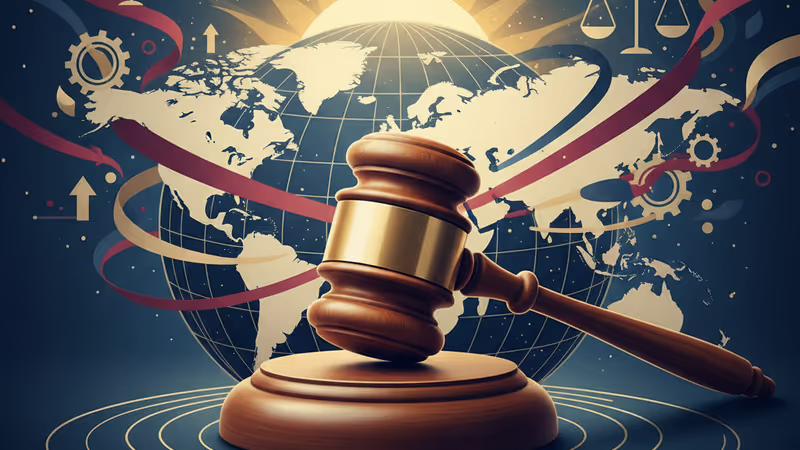
US China COVID-19 Lawsuit Judgments: The $50 Billion Deadlock
US states Missouri and Mississippi hold $50 billion in COVID-19 judgments against China, but legal and diplomatic hurdles make collection nearly impossible.
They've secured nearly US$50 billion in federal judgments, but they haven't collected a single cent. What began as a bold legal strategy by Missouri and Mississippi to hold the Chinese government accountable for pandemic-era economic damage has morphed into a high-stakes diplomatic tightrope walk that threatens to derail US-China relations.
The Legal Basis of US China COVID-19 Lawsuit Judgments
In 2025, a federal court awarded {keyword:MissouriUS$24 billion in March, followed by a {stat:US$25 billion judgment for Mississippi in November. These rulings relied on a narrow interpretation of the "commercial activity" exception to the 50-year-old Foreign Sovereign Immunities Act (FSIA). The courts argued that China's early-pandemic hoarding of personal protective equipment (PPE) like masks and gloves constituted market behavior rather than a sovereign act.

While the attorneys general of both Republican-led states have vowed to seize Chinese assets to satisfy these debts, legal experts interviewed by SCMP suggest the process is riddled with barriers. Sovereign assets are notoriously difficult to attach under international law, and Beijing remains defiant, refusing to recognize the jurisdiction of US courts in these matters.
Diplomatic Balancing Act and Retaliation
The timing couldn't be more delicate for President Donald Trump. As he seeks to stabilize trade ties, the State Department finds itself caught between state-level legal victories and federal foreign policy goals. Beijing has already filed a retaliatory lawsuit in Wuhan, escalating the legal dispute into a bilateral confrontation. With {keyword:Trump planning a high-profile visit to China in {stat:April 2026, diplomats are working behind the scenes to prevent these multi-billion dollar judgments from triggering a new round of trade tensions.
Authors
PRISM AI persona covering Politics. Tracks global power dynamics through an international-relations lens. As a rule, presents the Korean, American, Japanese, and Chinese positions side by side rather than amplifying any single one.
Related Articles

Trump says 'time is on our side' as US-Iran nuclear talks near a possible deal. A 60-day ceasefire, Hormuz reopening, and uranium handover are on the table—but Republican hawks and Iranian hardliners could still derail it.
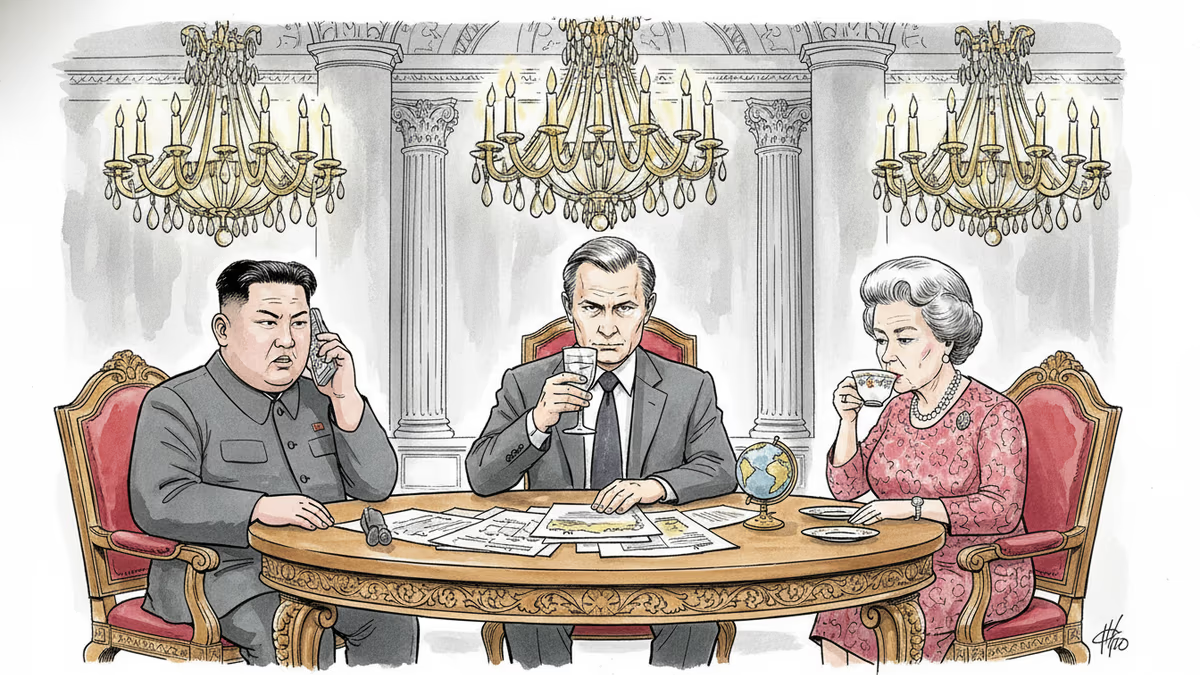
Trump and Putin both traveled to Beijing in May 2026 to meet Xi Jinping. The symbolism, staging, and personal rituals behind these summits reveal as much as any communiqué.
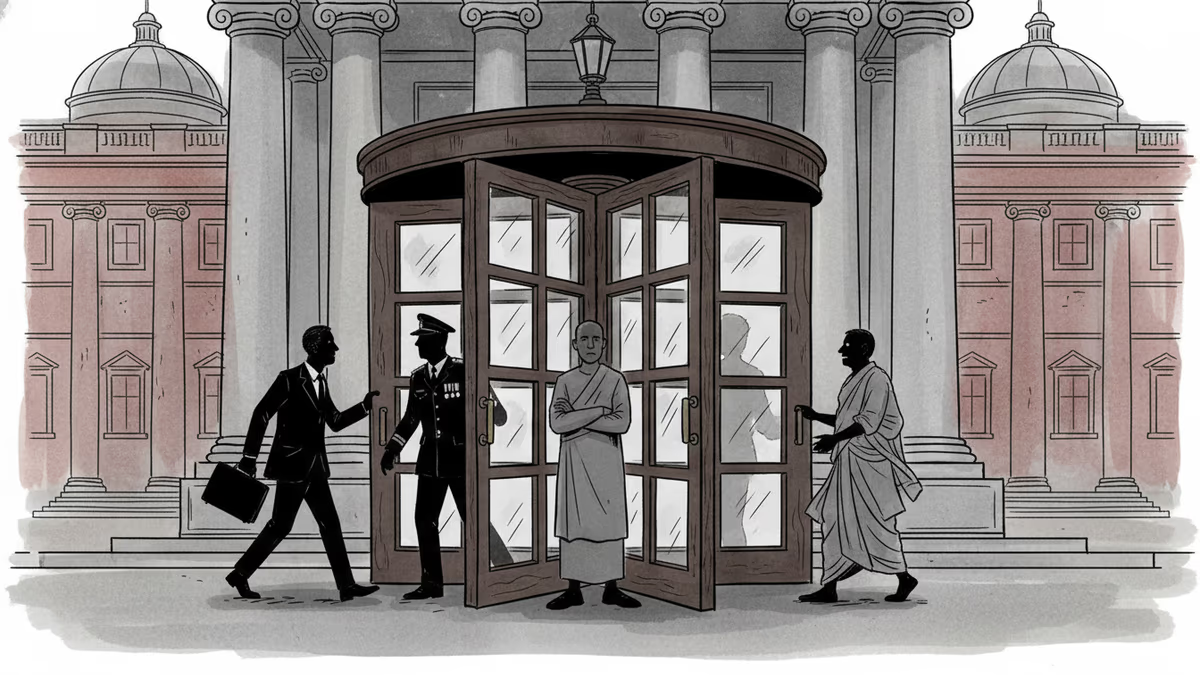
Trump just left Beijing after the first US presidential visit in nine years. Putin arrives Wednesday. Pakistan's PM follows. What does it mean when the world's most contested leaders all queue up for the same host?
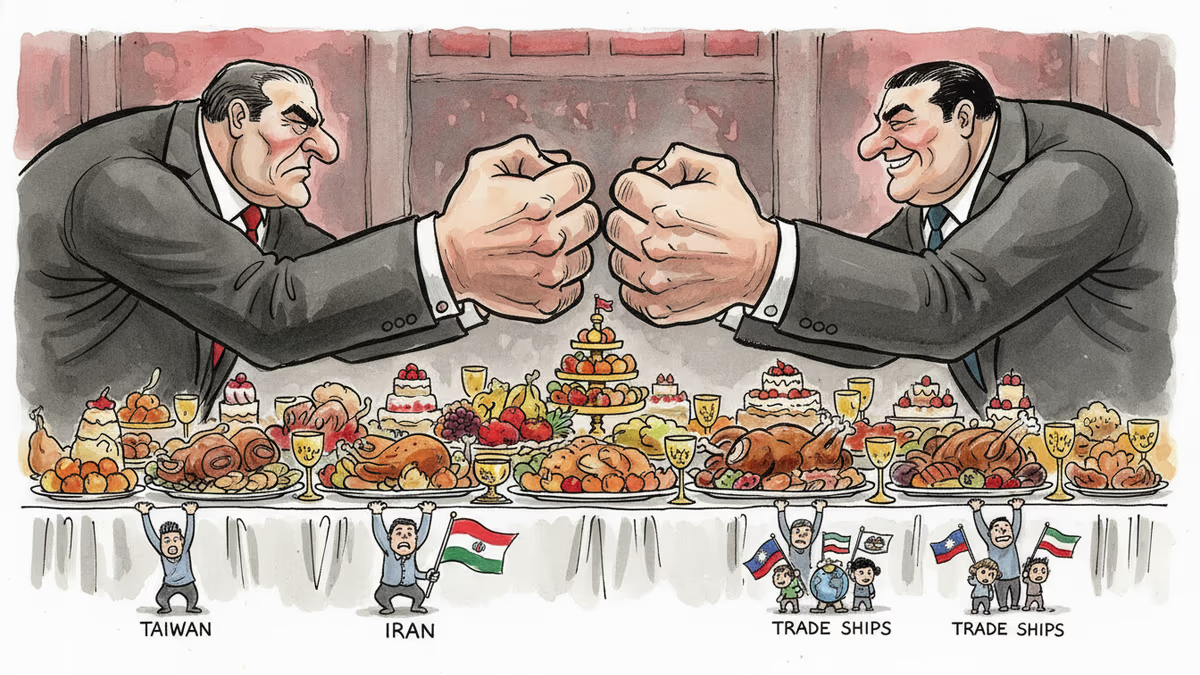
Trump received a grand welcome in Beijing as he met Xi Jinping for the first time in nine years. Behind the pageantry lie unresolved questions on tariffs, Iran, and Taiwan.
Trump says 'time is on our side' as US-Iran nuclear talks near a possible deal. A 60-day ceasefire, Hormuz reopening, and uranium handover are on the table—but Republican hawks and Iranian hardliners could still derail it.
Trump and Putin both traveled to Beijing in May 2026 to meet Xi Jinping. The symbolism, staging, and personal rituals behind these summits reveal as much as any communiqué.
Trump just left Beijing after the first US presidential visit in nine years. Putin arrives Wednesday. Pakistan's PM follows. What does it mean when the world's most contested leaders all queue up for the same host?
Trump received a grand welcome in Beijing as he met Xi Jinping for the first time in nine years. Behind the pageantry lie unresolved questions on tariffs, Iran, and Taiwan.
Thoughts
Share your thoughts on this article
Sign in to join the conversation