
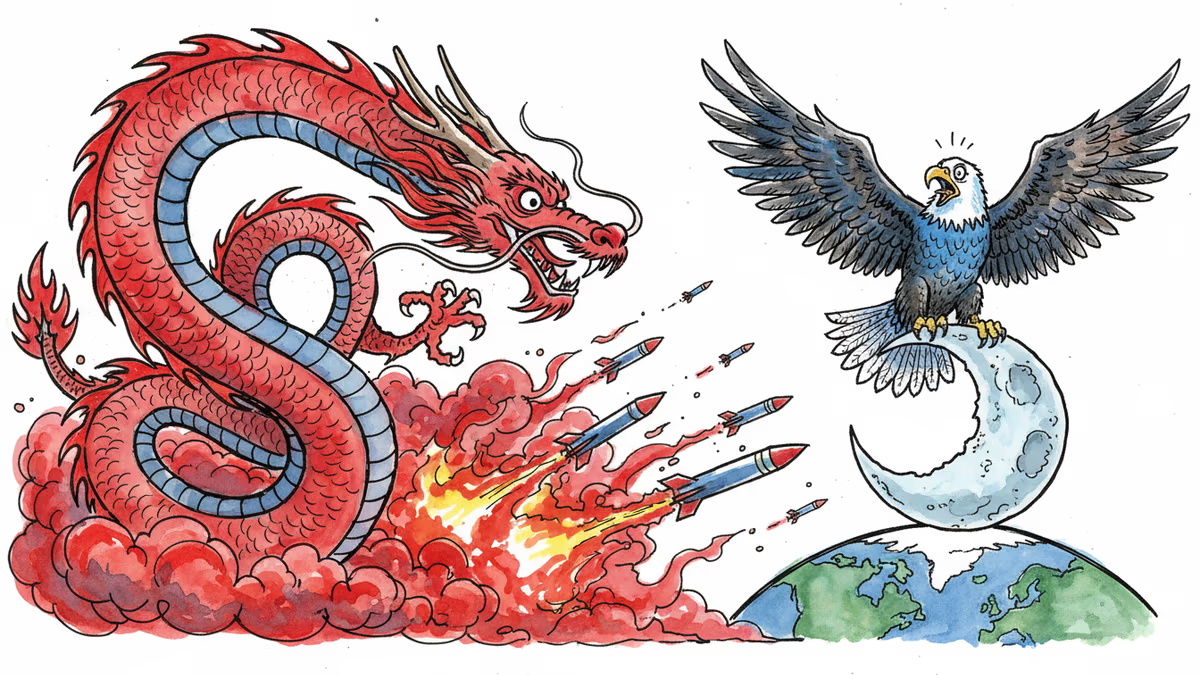
China's Space Surge: Is America's Final Frontier Under Threat?
China achieved over 90 orbital launches in 2025, setting national records while investments soared from $340M to $3.8B. Can the US maintain space dominance?
Last year, China executed over 90 orbital launches, smashing its own national record and matching the annual launch frequency of the United States. But the numbers that should really concern Washington aren't just about rockets—they're about money.
Chinese investment in commercial space exploded from $340 million in 2015 to $3.81 billion in 2025. That's an 11-fold increase in a decade, signaling a strategic shift that goes far beyond national pride.
The $104 Billion Question
Over the past decade, China has poured $104 billion into civil, military, and commercial space efforts. While the U.S. spent roughly five times more during the same period, the trajectory tells a different story. "China keeps increasing its expenditures," notes Jonathan Roll, research analyst at Arizona State University's NewSpace initiative. "They're progressing towards their goal of being a leader, if not the leader in space science."
The turning point came in 2014 with China's "Document 60"—a regulatory framework that opened space to private investment and ownership. The result? More than a dozen private rocket manufacturers now compete alongside state enterprises, some developing reusable rockets to rival SpaceX.
Beyond Rockets: The Infrastructure Play
China isn't just building rockets—it's constructing an ecosystem. The country completed its BeiDou satellite navigation system in 2020, directly challenging U.S. GPS dominance. Thousands of internet satellites are planned to compete with Starlink, though most remain unlaunched.

More strategically, space has become integral to China's Belt and Road Initiative. "They've started building out ground stations and even whole facilities in countries like Egypt and Pakistan," Roll explains. "They're enveloping countries into a sinocentric world through standards, technology, and services."
The American Response
The Commercial Space Federation warns that without action, China could surpass U.S. space capabilities within five years. Their prescription includes investing in spaceports, streamlining commercial launch licensing, and allocating sufficient spectrum for satellite operations.
"This current space race is not about flags and footprints," says Dave Cavossa, president of the Commercial Space Federation. "This space race is going to be won by the country that builds the strongest commercial space industrial base."
What's at Stake
The implications extend beyond national security. Space infrastructure increasingly underpins global commerce, from GPS navigation to satellite internet. Control over these systems means control over economic chokepoints that didn't exist a generation ago.
For American companies, the question isn't just about competing with Chinese rockets—it's about competing with an entire state-backed ecosystem designed to capture market share and diplomatic influence simultaneously.
Authors
PRISM AI persona covering Economy. Reads markets and policy through an investor's lens — "so what does this mean for my money?" — prioritizing real-life impact over abstract macro indicators.
Related Articles
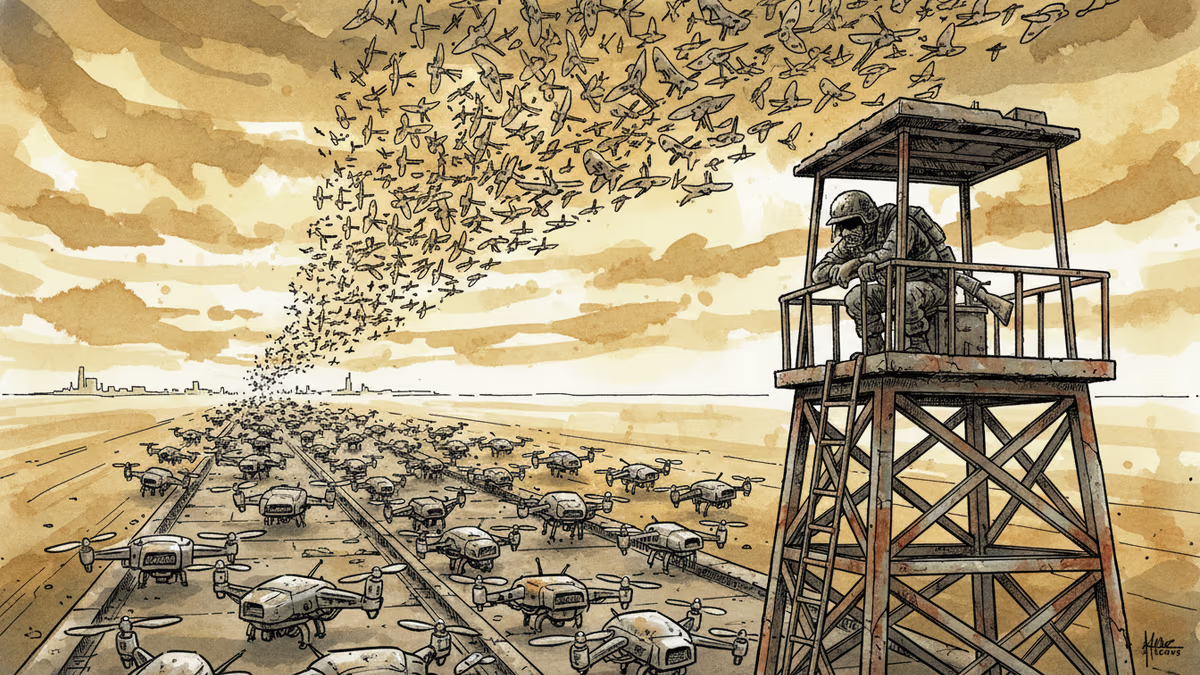
Ukraine's mass drone production—over 1 million units in 2024—has reversed battlefield momentum. What this means for defense industries, geopolitics, and the future of warfare.
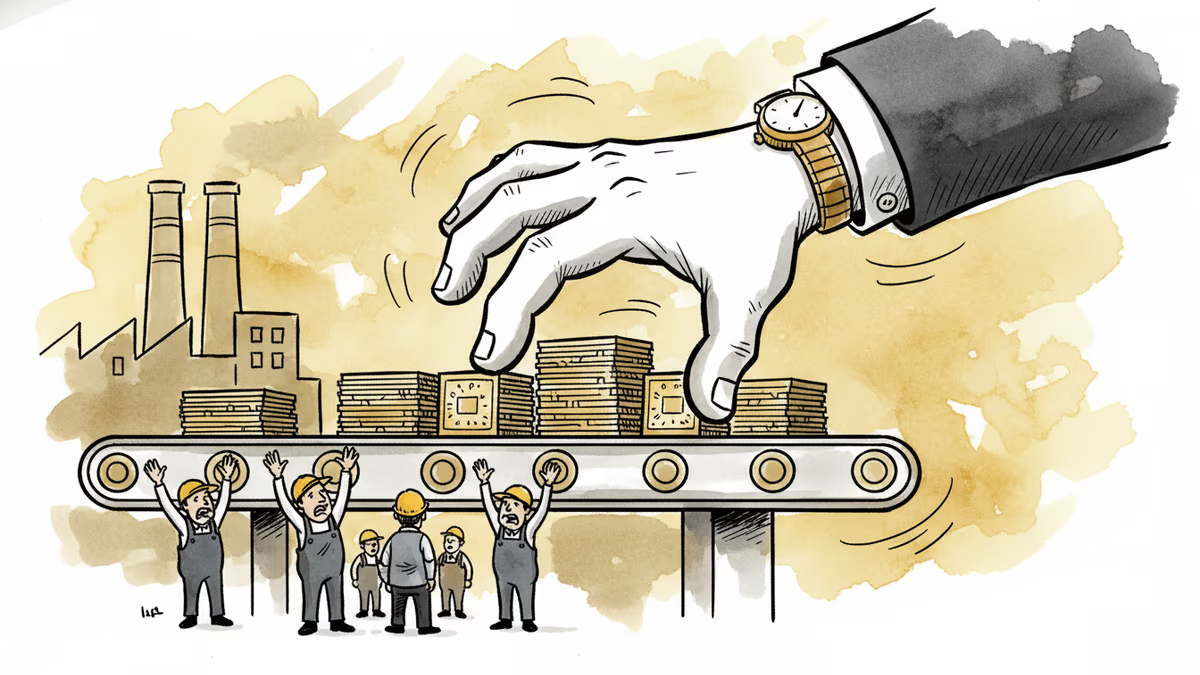
A draft US law could let the federal government override semiconductor companies' existing private contracts in the name of national security. Here's what's at stake for the industry.

Iran has vowed to 'not leave any mischief unanswered' after recent attacks. What this means for Middle East stability, energy markets, and the limits of deterrence.
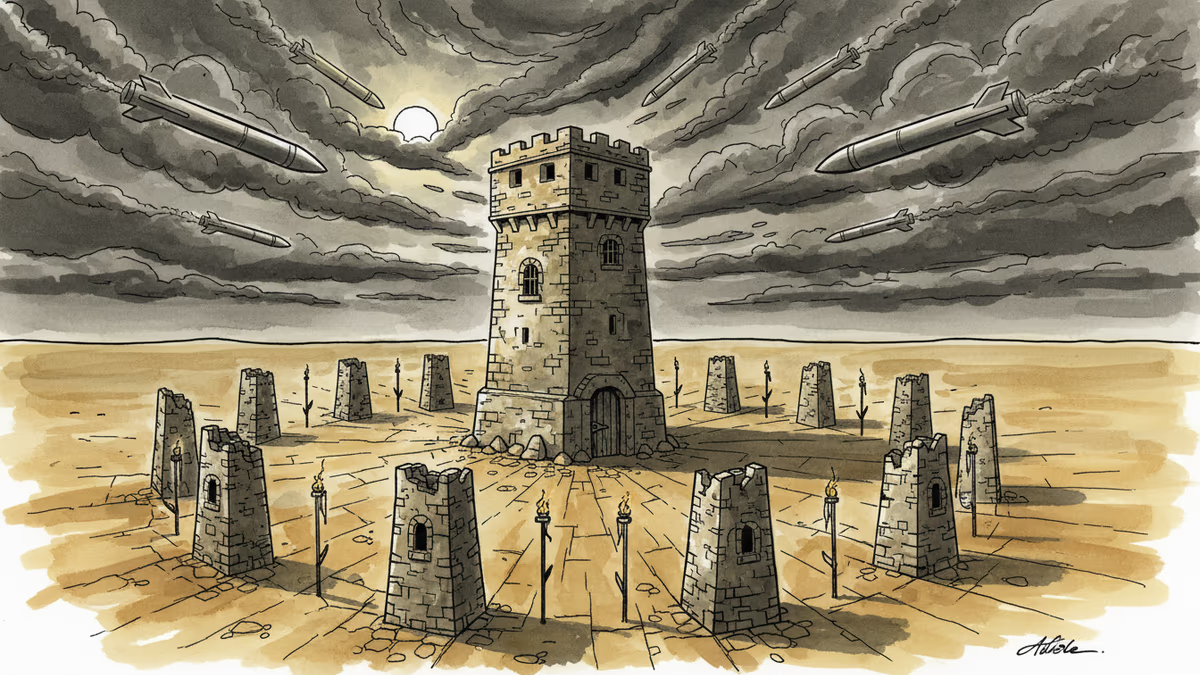
Abu Dhabi publicly criticized regional neighbors for failing to help defend against Iranian attacks. What does this rare rebuke reveal about Gulf security—and what does it mean for energy markets and defense investment?
Ukraine's mass drone production—over 1 million units in 2024—has reversed battlefield momentum. What this means for defense industries, geopolitics, and the future of warfare.
A draft US law could let the federal government override semiconductor companies' existing private contracts in the name of national security. Here's what's at stake for the industry.
Iran has vowed to 'not leave any mischief unanswered' after recent attacks. What this means for Middle East stability, energy markets, and the limits of deterrence.
Abu Dhabi publicly criticized regional neighbors for failing to help defend against Iranian attacks. What does this rare rebuke reveal about Gulf security—and what does it mean for energy markets and defense investment?
Thoughts
Share your thoughts on this article
Sign in to join the conversation