
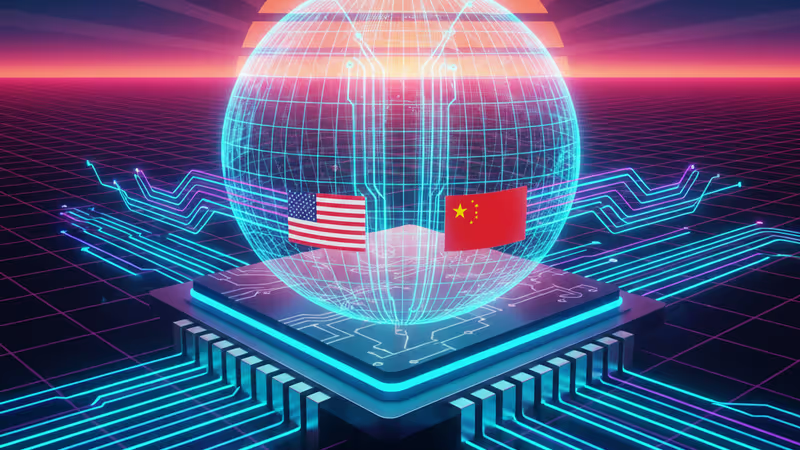
Nvidia H200 China Export 2026: Trump Eases AI Chip Restrictions
Nvidia H200 AI chips are heading back to China in 2026 as the Trump administration eases Biden-era curbs with a 50% sales cap. Read about the impact on the global AI supply chain.
One-half of U.S. sales volume—that's the new magic number for Nvidia. The Trump administration has officially greenlit the export of H200 AI chips to China, reversing a major Biden-era ban. It's a calculated gamble to keep American tech dominant while managing China's rapid AI ascent.
The 50% Rule in Nvidia H200 China Export 2026
According to the Department of Commerce’s Bureau of Industry and Security (BIS), shipments of Nvidia's second-most-advanced processor can resume this Thursday, January 15, 2026. However, the government has imposed a strict cap: total exports to China cannot exceed 50% of the volume sold within the United States.
This policy shift comes nearly one year after the previous administration blocked the H200 to prevent China from accessing top-tier American AI hardware. The current administration isn't just opening the gates; they're trying to strike a balance between market share for U.S. firms and national security concerns.

Immediate Demand and Strategic Dependence
Analysts suggest that Chinese tech giants won't hesitate to place orders. Charles Chang, a professor at Fudan University, noted that because China is currently behind in high-end silicon development, the market's hunger for these chips is enormous. They're plug-and-play for many existing systems already running on Nvidia software.
| Feature | Previous Policy | Current Policy (2026) |
|---|---|---|
| Export Status | Banned | Conditional Approval |
| Volume Limit | N/A | 50% of US Sales |
| Target Hardware | H200 / Advanced Chips | H200 Specific |
| Geopolitical Aim | Containment | Market Balance |
Authors
Related Articles
Nvidia shipped roughly a billion RISC-V cores in 2024, then announced it would run CUDA on the open standard. We break down how royalty-free instruction sets and open software stacks are trying to route around CUDA's lock-in. Part 2 of the Semiconductor Sovereignty series.
AMD's MI325X matches or beats Nvidia on memory and bandwidth — yet Nvidia's 86-92% share holds. The real moat is CUDA, 20 years in the making. Part 1 of 4.
Josh D'Amaro took over Disney with a bold Disney Plus vision. Days later, he's in a First Amendment fight with the Trump administration over The View. What does this mean for media freedom?

SpaceX plans to invest at least $55 billion in a Texas AI chip factory called Terafab, with total costs potentially reaching $119 billion. We break down what's real, what's at stake, and who wins or loses.
Nvidia shipped roughly a billion RISC-V cores in 2024, then announced it would run CUDA on the open standard. We break down how royalty-free instruction sets and open software stacks are trying to route around CUDA's lock-in. Part 2 of the Semiconductor Sovereignty series.
AMD's MI325X matches or beats Nvidia on memory and bandwidth — yet Nvidia's 86-92% share holds. The real moat is CUDA, 20 years in the making. Part 1 of 4.
Josh D'Amaro took over Disney with a bold Disney Plus vision. Days later, he's in a First Amendment fight with the Trump administration over The View. What does this mean for media freedom?
SpaceX plans to invest at least $55 billion in a Texas AI chip factory called Terafab, with total costs potentially reaching $119 billion. We break down what's real, what's at stake, and who wins or loses.
Thoughts
Share your thoughts on this article
Sign in to join the conversation