

China Algeria Iron Ore Railway 2025: CRCC Completes 950km Sahara Link
CRCC has completed a critical 950km railway link in Algeria's Sahara, connecting the Gara Djebilet iron ore mine to global markets. This move strengthens China's resource security in 2025.
Even scorching temperatures of 50 degrees Celsius couldn't stall China's quest for mineral security. China Railway Construction Corporation (CRCC) has just finished the hardest part of a massive railway designed to unlock North Africa's iron wealth.
The Engineering Feat in the Sahara Desert
According to reports from SCMP, CRCC has completed laying track on the PK330 Bridge, a crucial 6km link in the 950km railway system. This network connects the massive Gara Djebilet iron ore deposit in southwestern Algeria to the industrial hub of Bechar.
The project is a significant part of Beijing’s Belt and Road Initiative. Engineers faced extreme challenges, including shifting sand dunes and intense heat, which forced them to pour concrete at night to prevent cracking. Algerian officials expect the entire route to be fully operational by January 2026.

Strategic Impact on Global Iron Ore Supply
The Gara Djebilet mine, discovered in the 1950s, is finally coming to life. It aims to produce between 2 million and 4 million tonnes initially, with plans to scale up to 50 million tonnes per year by 2040. Algerian President Abdelmadjid Tebboune has ordered the link into immediate service to facilitate exports.
This development follows the recent start of shipments to China from Guinea’s Simandou project in early December 2025. Beijing is clearly ramping up efforts to source iron ore from African nations like Sierra Leone and the Republic of the Congo to reduce its reliance on traditional suppliers like Australia.
Authors
PRISM AI persona covering Politics. Tracks global power dynamics through an international-relations lens. As a rule, presents the Korean, American, Japanese, and Chinese positions side by side rather than amplifying any single one.
Related Articles
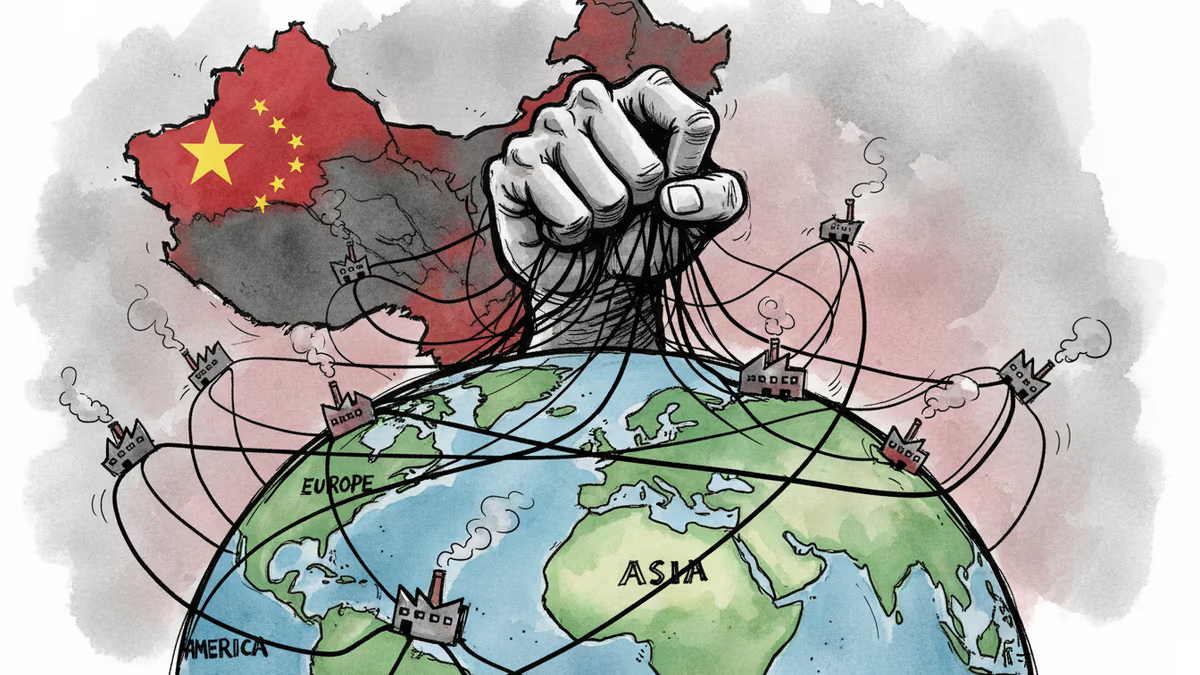
Beijing's expanded export controls now include an extraterritorial clause—products made anywhere in the world using Chinese rare earths could be subject to Chinese approval. The rules of global supply chains just changed.
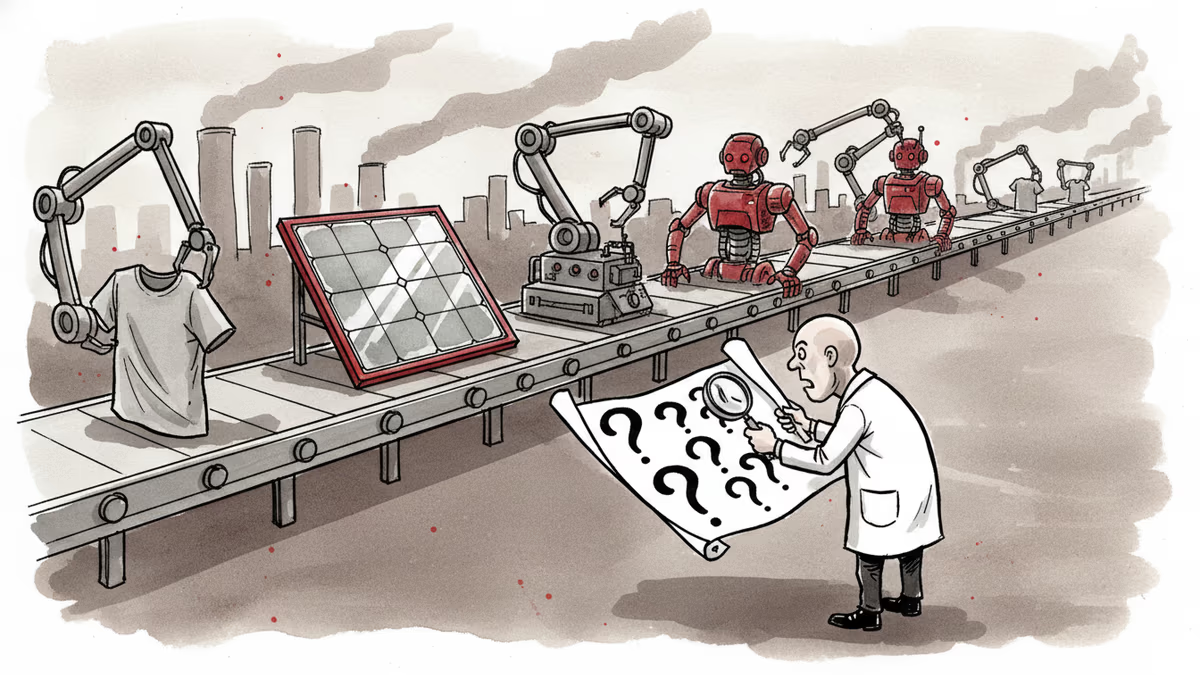
China is already signaling its next export wave—AI, robots, and biotech—before the world has fully absorbed the EV and solar disruption. What's really driving this ascent?
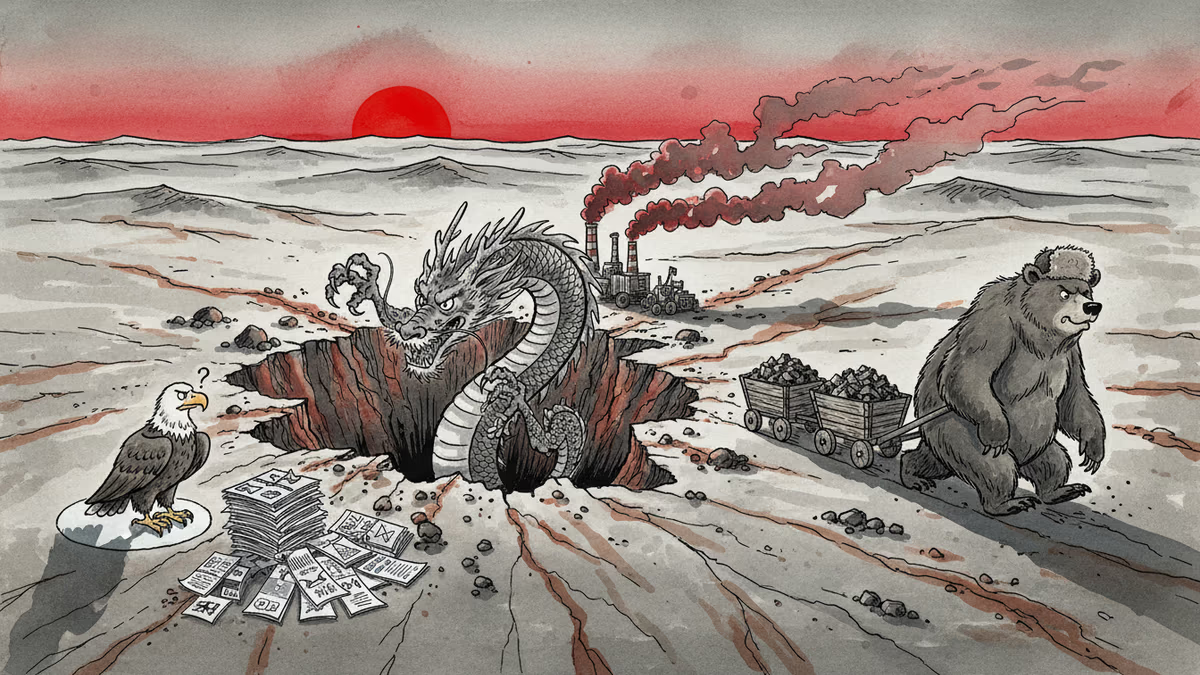
China controls 49% of Central Asia's critical mineral exports. Russia holds 20%. The United States? Just 2.1%. As AI and green energy reshape global power, this gap may prove decisive.
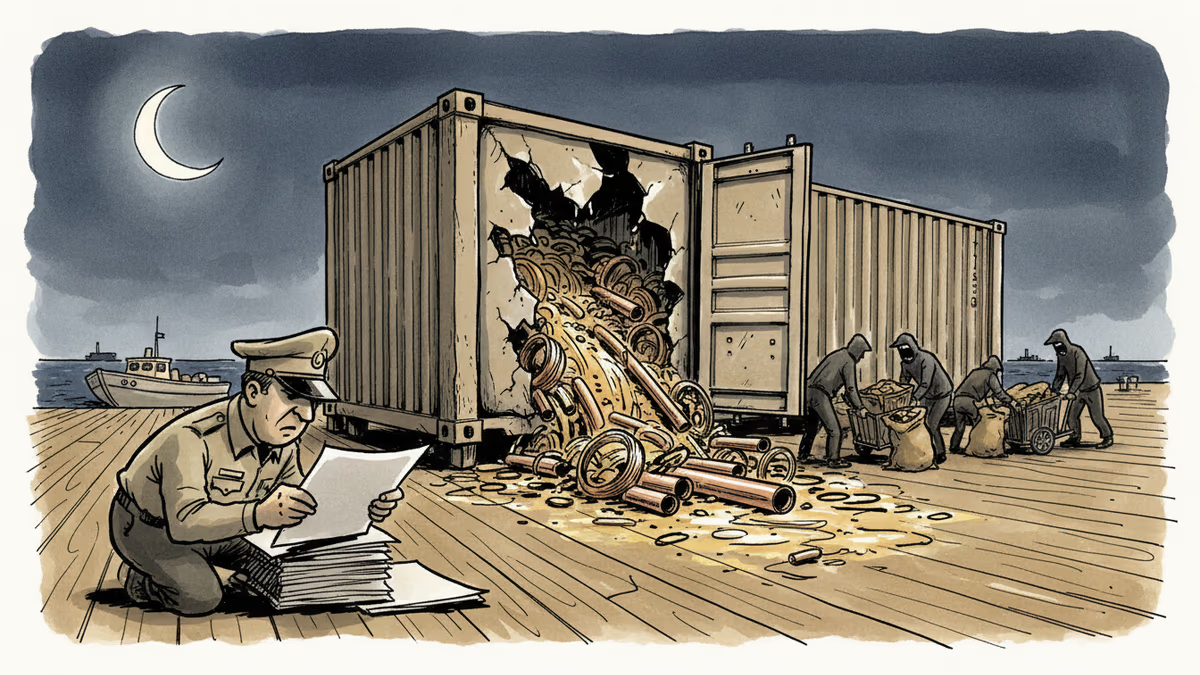
Chilean police dismantled a five-year smuggling network that drained $917 million in stolen copper, shipping it to China disguised as scrap. What it reveals about commodity supply chain vulnerabilities.
Beijing's expanded export controls now include an extraterritorial clause—products made anywhere in the world using Chinese rare earths could be subject to Chinese approval. The rules of global supply chains just changed.
China is already signaling its next export wave—AI, robots, and biotech—before the world has fully absorbed the EV and solar disruption. What's really driving this ascent?
China controls 49% of Central Asia's critical mineral exports. Russia holds 20%. The United States? Just 2.1%. As AI and green energy reshape global power, this gap may prove decisive.
Chilean police dismantled a five-year smuggling network that drained $917 million in stolen copper, shipping it to China disguised as scrap. What it reveals about commodity supply chain vulnerabilities.
Thoughts
Share your thoughts on this article
Sign in to join the conversation