
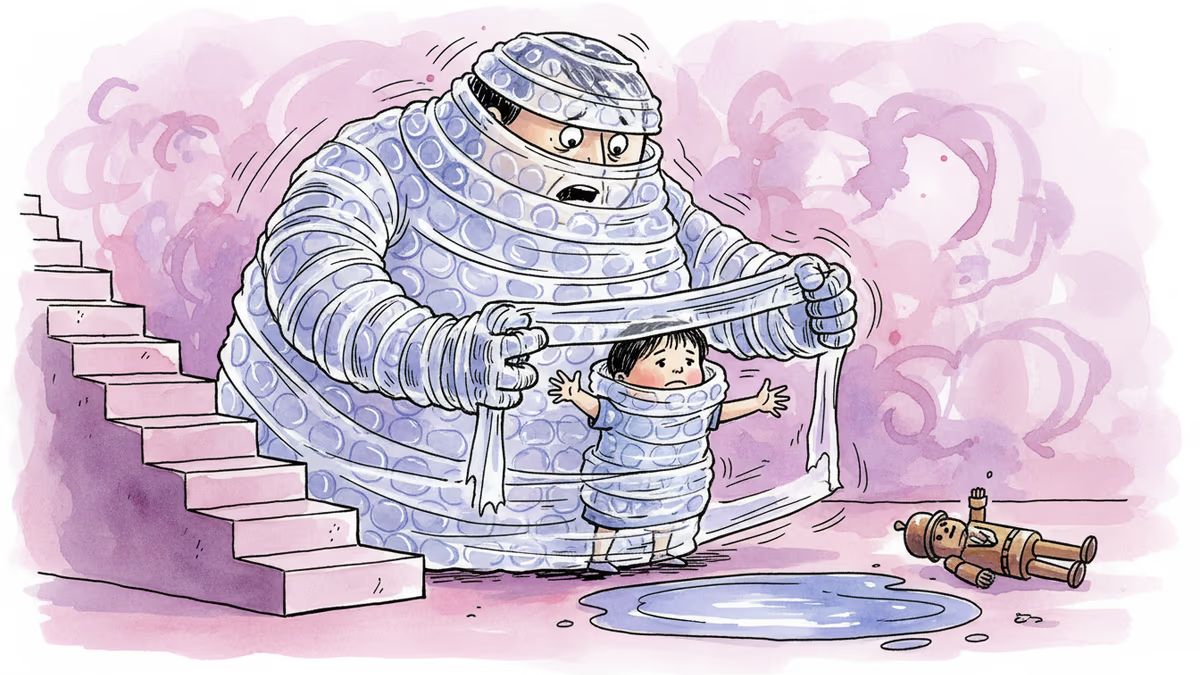
The Case for Letting Kids Struggle
Philosophers Niklas Serning and Nina Lyon argue that emotional and practical adult skills can only be built through appropriate discomfort. What does that mean for how we raise children today?
Every time we spare a child from discomfort, we may be quietly borrowing against their future.
That's the uncomfortable thesis at the heart of a recent essay by philosopher Niklas Serning and writer Nina Lyon, published in Aeon. Their argument is deceptively simple: the emotional and practical skills of adulthood—tolerating frustration, navigating conflict, making decisions under uncertainty—cannot be taught in comfort. They can only be learned through appropriate levels of discomfort and stress. Remove the friction, and you remove the lesson.
It's the kind of claim that sounds obvious until you actually try to live by it.
Why This Argument Lands Differently Now
The idea that struggle builds character is hardly new. Psychologists have long studied what's called "optimal frustration"—the sweet spot of challenge where a child is stretched just enough to grow without being overwhelmed. Jean Piaget built much of developmental theory around it. Lev Vygotsky called it the "zone of proximal development."
But the context of 2026 is genuinely different from any prior generation. The pandemic stripped two to three years of unstructured social experience from children worldwide—no playgrounds, no hallway arguments, no navigating a lunch table. That cohort is now entering universities and first jobs. Simultaneously, smartphones and AI tools have made micro-discomforts nearly extinct: no more getting lost, sitting with boredom, or tolerating an awkward silence long enough to push through it.
The result is a generation that has faced enormous macro-stressors—pandemic, climate anxiety, economic precarity—while being systematically shielded from the small, everyday friction that actually builds coping capacity. Big fears, little practice.

The Word That Does All the Work
Serning and Lyon are careful to specify appropriate discomfort, and that qualifier carries enormous weight. It's the difference between a child learning to tie their shoes after several failed attempts and a child being shamed in front of peers for failing. Both involve stress. Only one builds anything useful.
Developmental psychologists would largely agree with the distinction, but they'd also warn that the line is harder to locate in practice than in theory. What feels like a manageable challenge to one child can be genuinely destabilizing for another. Temperament, prior experience, and the quality of adult support available all shift the threshold significantly.
There's also a structural danger in the argument. "Discomfort builds resilience" is true in many contexts—and has also been used, historically, to justify neglect. When applied selectively to children from disadvantaged backgrounds, the logic can quietly reframe deprivation as opportunity. The essay doesn't go there, but critics of the resilience literature often point out that the framework was built largely on research from middle-class, Western samples.
How Different Stakeholders Read This
For parents, the prescription is easier to accept intellectually than emotionally. Watching your child struggle activates something deep and biological. In cultures where parental involvement is closely tied to social status—and where educational competition is fierce—deliberately stepping back feels less like wisdom and more like risk. American helicopter parenting and South Korean gwarip (private tutoring culture) look different on the surface but share the same underlying anxiety: in a winner-take-most economy, can you really afford to let your child fail?
For educators, the essay resonates with a frustration that's become nearly universal. Teachers across the US, UK, and Australia report that students increasingly struggle to resolve minor conflicts independently, to accept critical feedback, or to tolerate a grade that feels unfair without parental escalation. Schools have responded by creating more structured emotional support systems—which may, paradoxically, reduce the very friction that builds emotional muscle.
For psychologists, the nuance is everything. Bessel van der Kolk's work on trauma, for instance, reminds us that the nervous system doesn't always distinguish between "appropriate stress" and "overwhelming threat" in the moment. Good intentions around challenge can misfire badly without attunement to the individual child.
This content is AI-generated based on source articles. While we strive for accuracy, errors may occur. We recommend verifying with the original source.
Related Articles
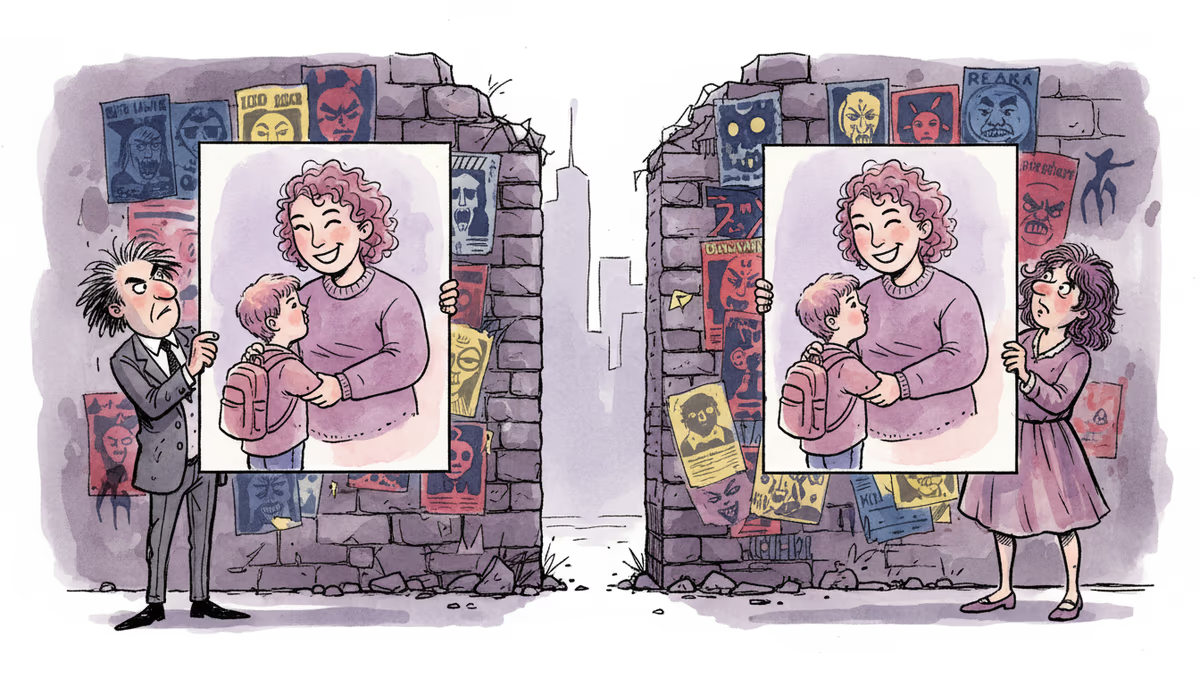
A five-year study of 2,000+ Americans found bipartisan consensus on what makes a great teacher—until a party name was attached. The results reveal something deeper than an education debate.
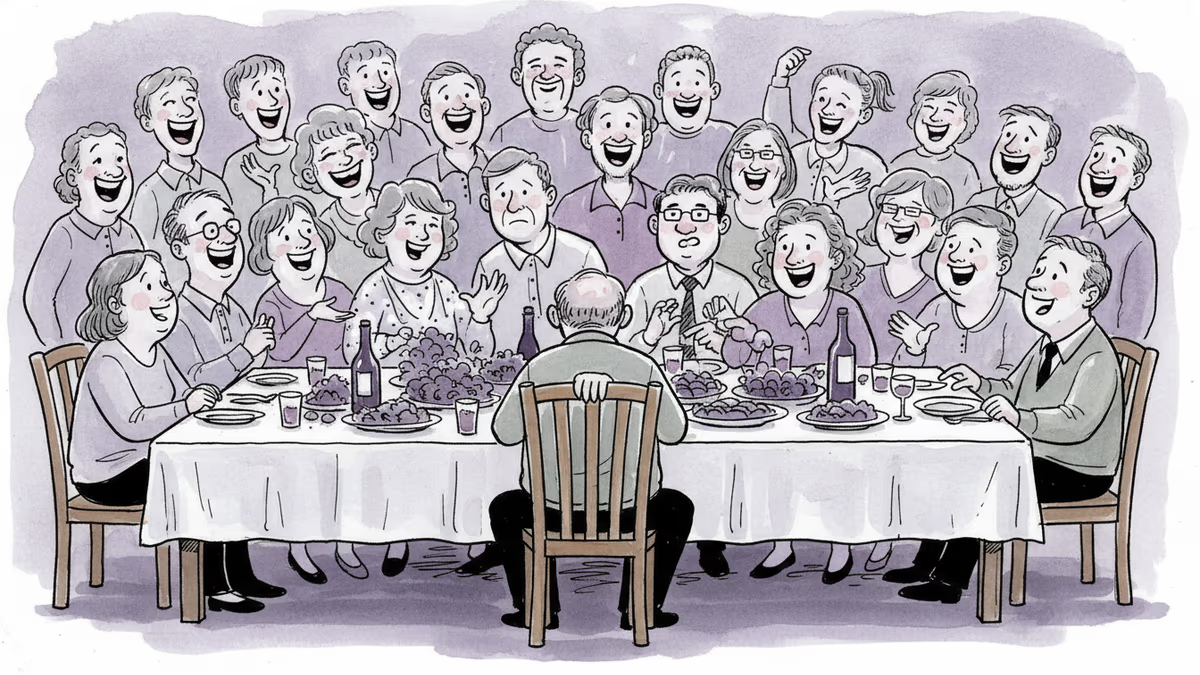
Writer Danielle Crittenden's memoir about losing her daughter Miranda challenges how modern society handles parental grief—and why the bereaved so often disappear in silence.
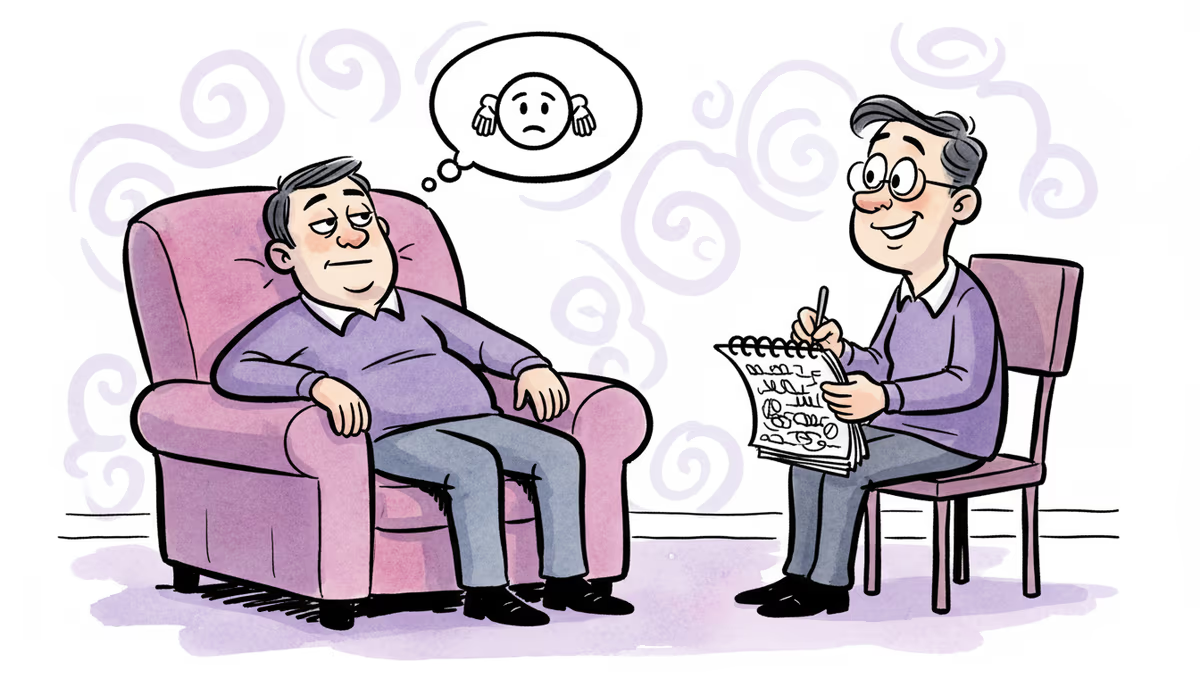
Therapists say sessions where clients have "nothing to talk about" are often the most revealing. Here's the science and psychology behind the uneventful appointment.

Researcher Anne-Laure Le Cunff argues ADHD is best understood as an impulsive drive for novelty, not a deficit. What does this mean for education, work, and how we define normal?
A five-year study of 2,000+ Americans found bipartisan consensus on what makes a great teacher—until a party name was attached. The results reveal something deeper than an education debate.
Writer Danielle Crittenden's memoir about losing her daughter Miranda challenges how modern society handles parental grief—and why the bereaved so often disappear in silence.
Therapists say sessions where clients have "nothing to talk about" are often the most revealing. Here's the science and psychology behind the uneventful appointment.
Researcher Anne-Laure Le Cunff argues ADHD is best understood as an impulsive drive for novelty, not a deficit. What does this mean for education, work, and how we define normal?
Thoughts
Share your thoughts on this article
Sign in to join the conversation