
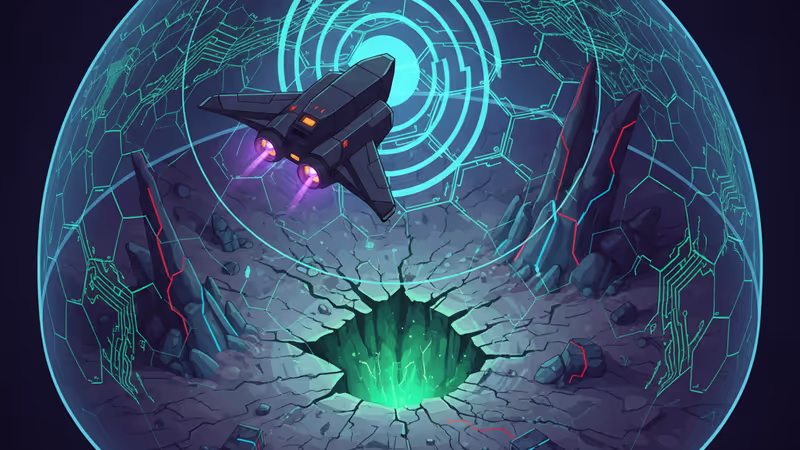
Chernobyl's New Scar: How a Drone Strike Revealed Our Planet's Invisible Radiation Shield
A drone strike on Chernobyl revealed more than a vulnerability; it proved the power of a global radiation shield. Discover how this network makes another nuclear surprise impossible.
The Lede
A drone strike recently tore a 15-square-meter hole in the massive containment structure covering the Chernobyl reactor. While the International Atomic Energy Agency (IAEA) reports no immediate change in radiation levels, the attack isn't the real story. The real story is that we know, instantly and with certainty, that radiation levels are stable. This incident, a chilling intersection of old disasters and new warfare, has inadvertently stress-tested the planet's invisible, post-Chernobyl radiation shield—a global web of sensors, citizen scientists, and government agencies that makes a repeat of 1986's silent, spreading catastrophe virtually impossible.
Why It Matters
The existence of this planetary-scale monitoring network has profound second-order effects that go far beyond nuclear plant safety. It fundamentally alters the dynamics of geopolitics, public trust, and technological development:
- The End of Secrecy: Nations can no longer conceal radiological incidents, whether accidental or intentional. A clandestine weapons test or an industrial cover-up would be detected in minutes, not days, by a combination of official and crowdsourced sensors. This enforced transparency acts as a powerful deterrent.
- The Democratization of Safety: The rise of volunteer networks like Safecast, born from the frustration following the Fukushima disaster, shifts power away from solely government-controlled narratives. This empowers communities but also creates a new challenge: managing public interpretation of complex data without causing undue panic over natural fluctuations.
- A New Market for 'Sensing-as-a-Service': The demand for real-time, verifiable environmental data is fueling a market for advanced sensor technology, AI-driven analysis platforms, and rapid-response hardware like detector-equipped drones. This is a new layer of critical global infrastructure.
The Analysis
From Blind Panic to Real-Time Awareness
The world learned of the 1986 Chernobyl disaster two days late, when radiation monitors in Sweden picked up an anomaly. It was a terrifying revelation of the Soviet Union's secrecy and the world's unpreparedness. The 2011 Fukushima disaster, while more transparent, highlighted a different gap: the lack of accessible, real-time public data, which left citizens and even experts in the dark and fueled the creation of citizen-science networks.
Today's landscape is unrecognizable. The IAEA maintains a global map where data from member nations appears in near real-time. Countries like Poland publish their monitoring data openly. This patchwork quilt of official and unofficial sensors ensures constant vigilance. The drone strike is a perfect example: the world was not waiting for an official announcement; the data was already flowing, confirming the containment's integrity for the moment.

The Global Sensor Web: A High-Tech Immune System
This network is not just a collection of Geiger counters. It's a sophisticated, multi-layered system. Tech firms like Mirion are developing advanced detectors for everything from airport security to drones, capable of not just detecting radiation but identifying its specific isotopic signature. This allows authorities to distinguish instantly between a natural radon spike caused by a storm, a lost medical radioisotope, or the fission products from a genuine nuclear threat.
This capability is crucial. As the source material notes, natural events like rainstorms and even tides can cause background radiation levels to fluctuate. Without intelligent sensors, these events could trigger a cascade of false alarms. With them, the system can filter out the noise and focus on true signals, acting like a planetary immune system that recognizes and isolates genuine threats.
PRISM Insight
Investment & Technology Outlook
The next frontier is predictive analysis. We are moving from a reactive model (detecting a leak) to a proactive one. By feeding real-time sensor data, weather patterns, and geographical information into AI models, we can predict how a potential release would spread before it even happens. This creates immense opportunities for companies specializing in AI, IoT sensor networks, and automated response systems. The drone-mounted detector mentioned in the source is not a novelty; it's the prototype for autonomous fleets that will provide situational awareness in hazardous zones, a market that spans from nuclear safety to chemical spills and battlefield reconnaissance.
The Geopolitical Angle: Transparency as a Weapon
This pervasive monitoring network is a new tool in the diplomat's and warfighter's arsenal. The ability to independently verify claims about a radiological event removes ambiguity and holds actors accountable on the world stage. When a package containing uranium was detected at Heathrow Airport in 2022, it wasn't a secret intelligence coup; it was the system working as designed. For any state or non-state actor, the knowledge that any radiological move will be instantly detected and attributed changes the strategic calculation, making the use of such materials a far less attractive option.
PRISM's Take
The drone attack on Chernobyl is a grim milestone, but its primary lesson is one of reassurance, not fear. The damage to the sarcophagus is a physical vulnerability that must be addressed, but the invisible shield of information that surrounds it held perfectly. We have successfully built a system that eliminates the deadliest element of any nuclear disaster: surprise.
While this network cannot stop a malicious act, it guarantees immediate global awareness and accountability. It transforms nuclear safety from a national responsibility into a transparent, global, and increasingly democratized enterprise. The age of the hidden nuclear catastrophe is over.
Authors
Related Articles
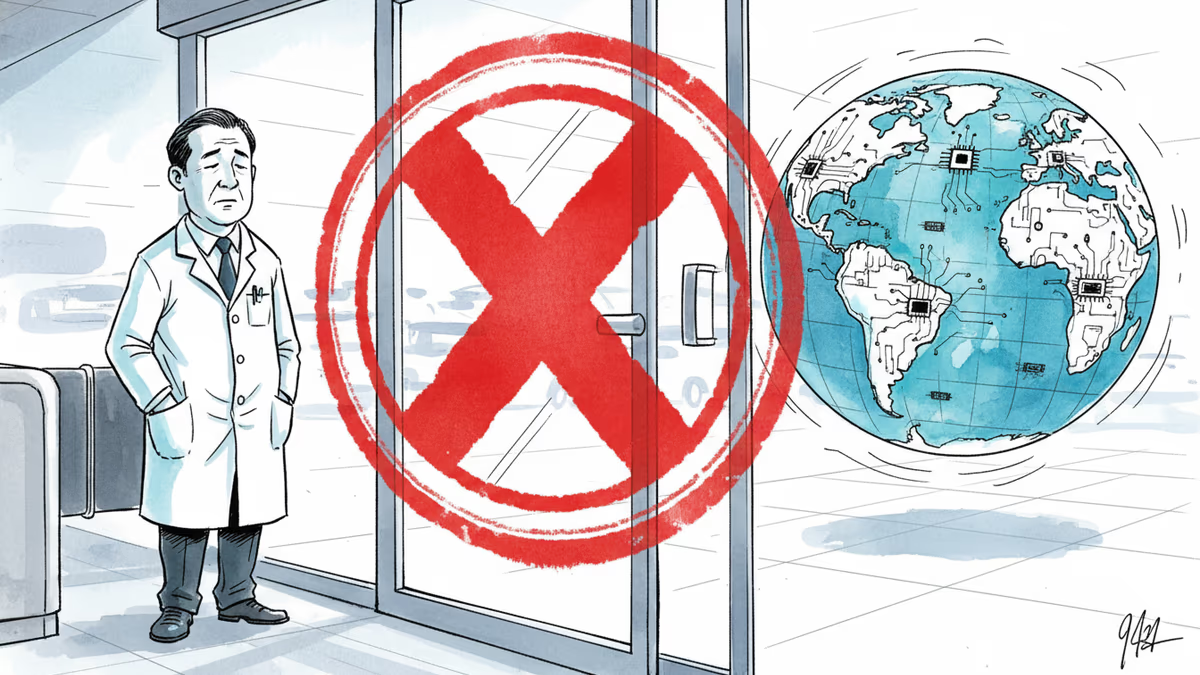
China is restricting AI researchers and startup founders from traveling abroad as the U.S.-China AI performance gap narrows to just 2.7%. What Beijing's talent lockdown means for the global AI race.
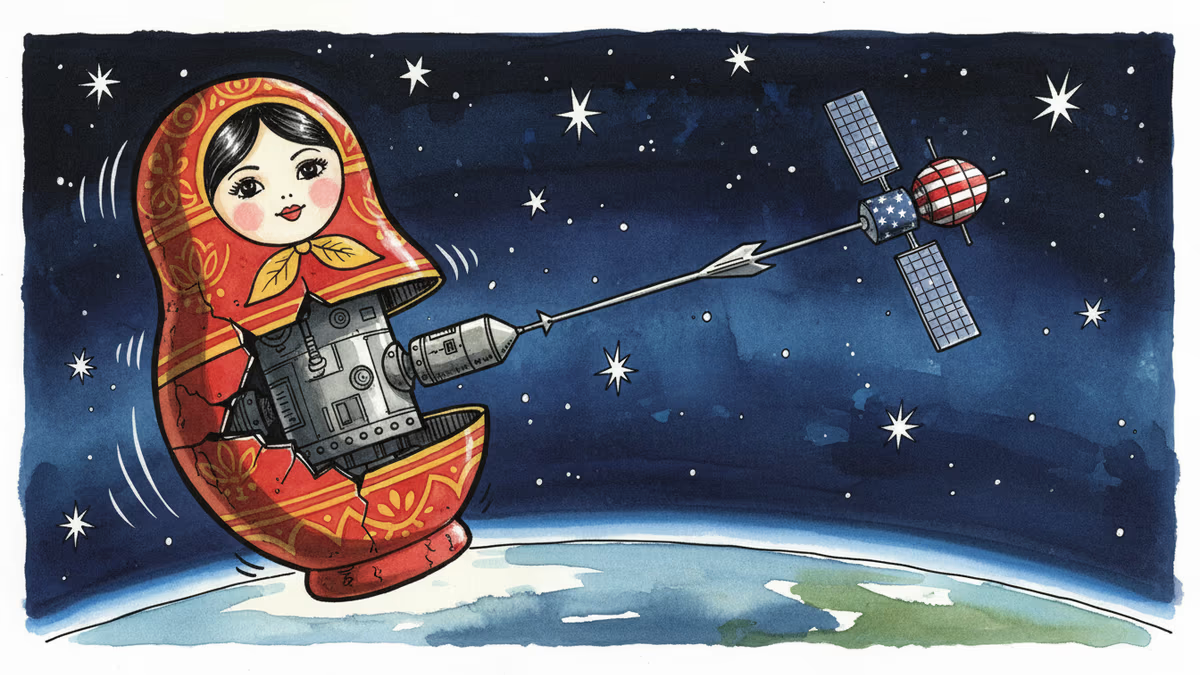
US Space Command confirms Russia has deployed operational anti-satellite weapons tracking American spy satellites in low-Earth orbit. What does this mean for space security?
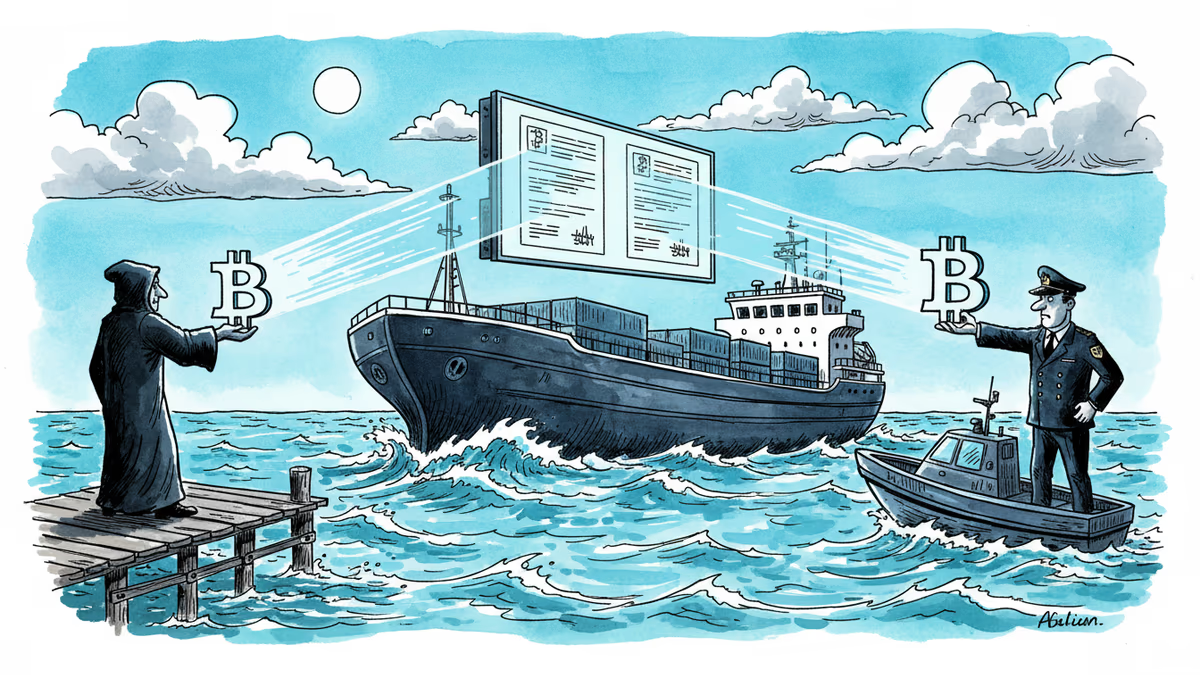
Scammers posing as Iranian authorities are demanding bitcoin and tether from ships near the Strait of Hormuz—exploiting the fact that Iran already does exactly this.
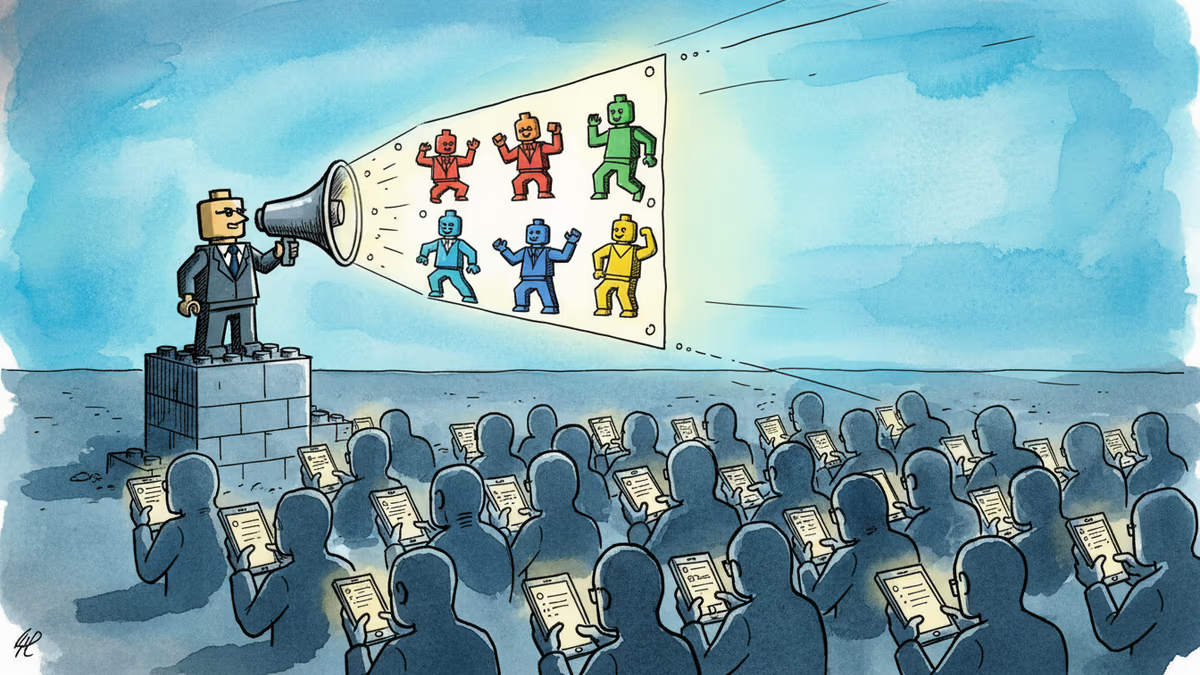
A small pro-Iran team is racking up millions of views with AI-generated Lego videos that mock Trump — and Americans are sharing them. What does that tell us about information warfare?
China is restricting AI researchers and startup founders from traveling abroad as the U.S.-China AI performance gap narrows to just 2.7%. What Beijing's talent lockdown means for the global AI race.
US Space Command confirms Russia has deployed operational anti-satellite weapons tracking American spy satellites in low-Earth orbit. What does this mean for space security?
Scammers posing as Iranian authorities are demanding bitcoin and tether from ships near the Strait of Hormuz—exploiting the fact that Iran already does exactly this.
A small pro-Iran team is racking up millions of views with AI-generated Lego videos that mock Trump — and Americans are sharing them. What does that tell us about information warfare?
Thoughts
Share your thoughts on this article
Sign in to join the conversation