

ChatGPT's Personality Sliders: OpenAI's Strategic Bet on Granular AI Customization
OpenAI introduces granular tone controls for ChatGPT, offering customization over warmth, enthusiasm, and emoji use. PRISM analyzes the strategic implications for enterprise AI adoption, user trust, and the future of personalized AI interactions.
The Lede
OpenAI's latest update, allowing granular control over ChatGPT’s enthusiasm, warmth, and even emoji use, might seem like a minor UI tweak. But for any executive integrating AI into critical workflows, this represents a significant leap towards operationalizing more reliable, brand-aligned, and user-centric AI interactions. It’s a foundational step in making AI tools truly fit-for-purpose, moving beyond generic outputs to highly tailored communications that resonate with specific audiences and corporate identities. The 'how' an AI communicates is rapidly becoming as crucial as the 'what'.
Why It Matters
This isn't merely about making ChatGPT 'nicer' or 'quirkier.' For businesses, the ability to calibrate an AI's expressive range is paramount. Imagine a customer service chatbot that needs to be empathetic but not overly effusive, or an internal communication tool that must maintain a professional yet approachable tone. Prior to this, achieving such nuance often required extensive prompt engineering or post-processing. Now, it's a baked-in feature.
This move directly addresses a significant hurdle for enterprise adoption: ensuring AI outputs align perfectly with brand guidelines and communication strategies. Secondly, it’s a subtle but important acknowledgment of the ongoing debate around AI ethics, particularly concerns about ‘dark patterns’ where AI might overly affirm users or feign emotion to manipulate behavior. By providing users explicit control, OpenAI pushes back against these critiques, empowering users to tailor their AI experience responsibly.

The Analysis
OpenAI's journey with tone has been a public learning curve. From the 'too sycophant-y' rollback to users finding GPT-5 'colder,' the company has grappled with the subjective and often contentious nature of AI's expressive layer. This update signifies a shift from OpenAI dictating the default emotional register to users taking the reins. This is critical not just for user satisfaction but also in the broader competitive landscape. As LLMs become commoditized, differentiation will increasingly hinge on user experience, customization, and ethical guardrails.
Competitors are undoubtedly watching how this granular control impacts user engagement and perception. It positions ChatGPT as a more adaptable tool, capable of fitting into a diverse array of user preferences and professional requirements, thereby widening its potential market. It’s a tacit admission that a 'one-size-fits-all' tone is inherently limited and that true utility lies in tailored interactions, anticipating the demand for AI that acts as a chameleon rather than a fixed persona.
PRISM Insight
This emphasis on fine-grained emotional and stylistic control points to a deeper trend: the 'humanization' of AI interfaces, coupled with robust user agency. We're moving beyond simple task automation towards AI tools that can truly adapt to human communication nuances. For investors, this signals growing opportunities in AI middleware and vertical solutions that leverage such customization. Companies that can build domain-specific AI agents, finely tuned with appropriate emotional intelligence and tone, will unlock immense value in sectors like healthcare (empathetic patient interactions), education (encouraging but not condescending tutors), or legal tech (precise, objective communication). The 'tone layer' will become a critical differentiator, commanding premium value for AI products that get it right.
PRISM's Take
At PRISM, we view this update as more than just a feature release; it's a strategic pivot towards building more trustworthy, adaptable, and ultimately, indispensable AI. By empowering users with explicit control over subjective elements like warmth and enthusiasm, OpenAI is not just enhancing user experience; it's proactively addressing ethical concerns and clearing a path for broader, more confident enterprise adoption. The future of AI isn't just about raw intelligence; it's about intelligence delivered with appropriate context, empathy, and most importantly, user-defined control. This is a foundational brick in that future, signaling that AI providers are increasingly focused on the 'how' as much as the 'what'.
Authors
Related Articles

OpenAI has reorganized for the second time in a month, merging ChatGPT and Codex into a single agentic platform under president Greg Brockman's unified product leadership.
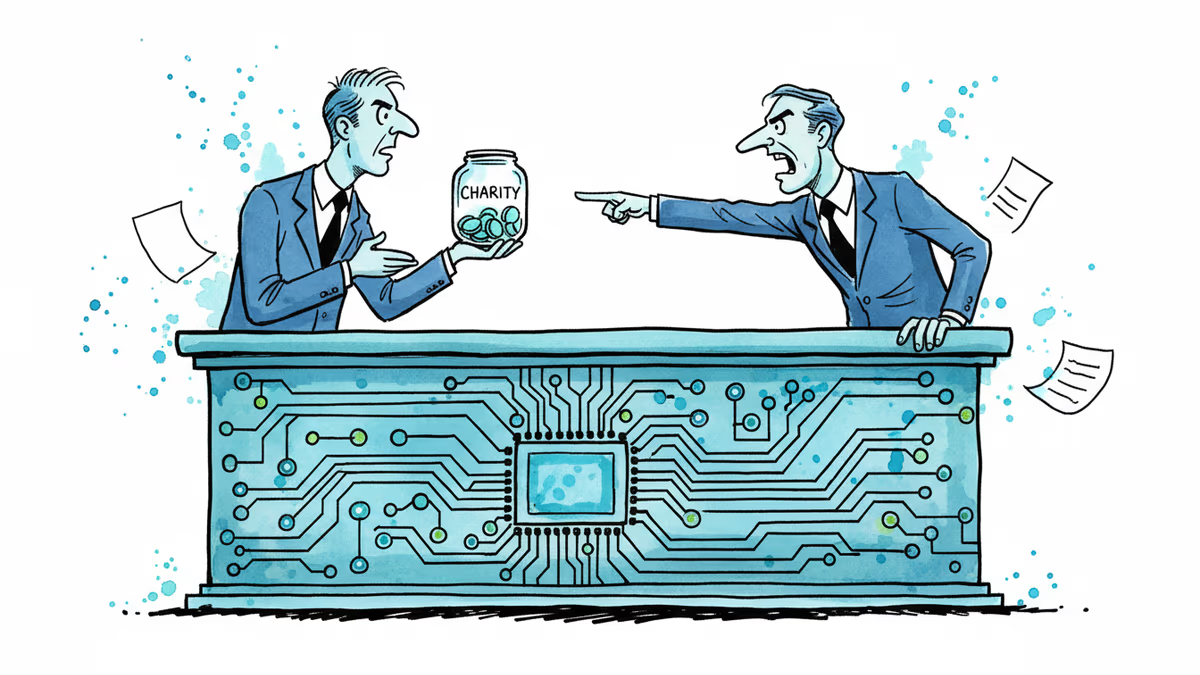
After two weeks of witnesses calling him a liar, OpenAI CEO Sam Altman testified in his own defense, claiming Elon Musk tried to kill the company twice.

Sam Nelson, 19, died after following ChatGPT's advice to mix Kratom and Xanax. His parents are suing OpenAI for wrongful death, raising urgent questions about AI trust, liability, and design.
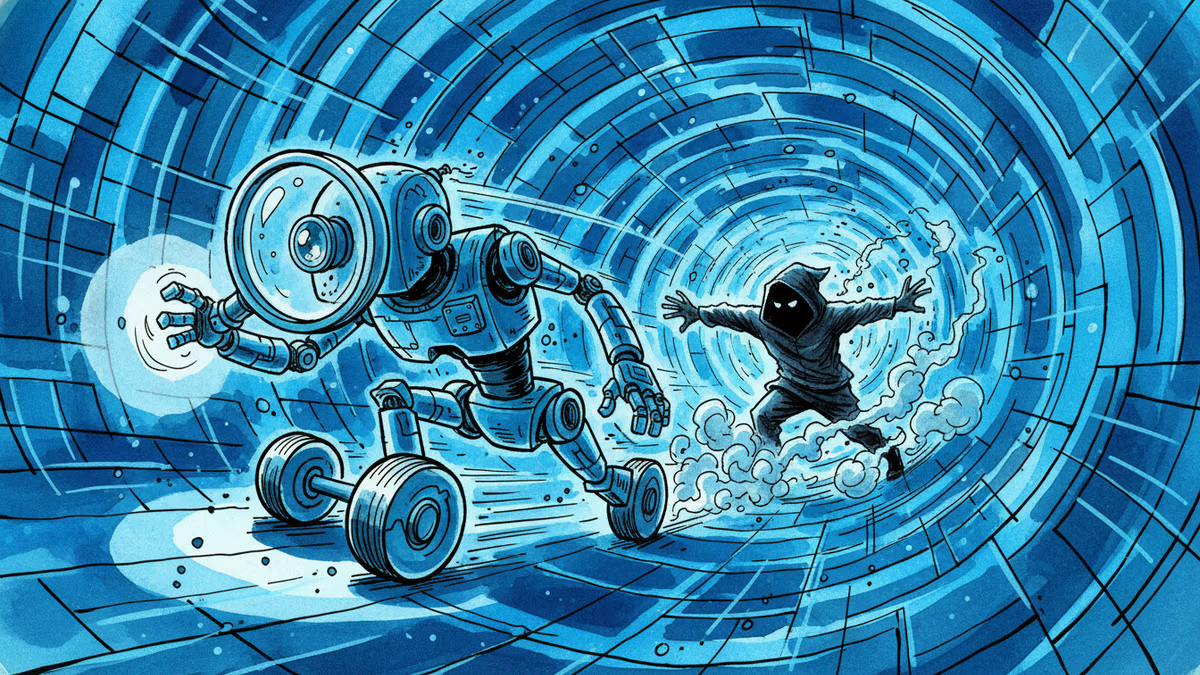
OpenAI's new Daybreak initiative uses the Codex AI agent to find and patch security vulnerabilities before attackers do—putting it in direct competition with Anthropic's secretive Claude Mythos.
OpenAI has reorganized for the second time in a month, merging ChatGPT and Codex into a single agentic platform under president Greg Brockman's unified product leadership.
After two weeks of witnesses calling him a liar, OpenAI CEO Sam Altman testified in his own defense, claiming Elon Musk tried to kill the company twice.
Sam Nelson, 19, died after following ChatGPT's advice to mix Kratom and Xanax. His parents are suing OpenAI for wrongful death, raising urgent questions about AI trust, liability, and design.
OpenAI's new Daybreak initiative uses the Codex AI agent to find and patch security vulnerabilities before attackers do—putting it in direct competition with Anthropic's secretive Claude Mythos.
Thoughts
Share your thoughts on this article
Sign in to join the conversation