

OpenAI’s 2026 Roadmap: Prioritizing Practical AI Adoption and Enterprise Value
OpenAI CFO Sarah Friar outlines the 2026 strategy focusing on practical AI adoption in health, science, and enterprise to bridge the gap between AI potential and daily usage.
The AI gap is closing. OpenAI isn't just building smarter models; it's building a business centered on tangible results. According to a recent post by CFO Sarah Friar, the company plans to focus heavily on "practical adoption" of AI in 2026, shifting the narrative from raw capability to real-world utility.
Bridging the Gap Between AI Potential and Usage
As OpenAI continues to direct massive capital toward infrastructure, the focus has pivoted to ensuring these systems are usable in daily operations. Friar noted that while the company spends a huge amount of money on hardware and energy, the ultimate goal is closing the gap between what AI can do and how people actually use it in professional environments.

Scaling in Health, Science, and Enterprise
The blog post, titled "A business that scales with the value of intelligence," highlights health, science, and enterprise as the primary sectors where better intelligence translates directly into superior outcomes. Since the launch of ChatGPT, the company's weekly active user count has served as a metric for this scaling intelligence, proving that the demand for practical AI is immediate and vast.
Authors
Related Articles
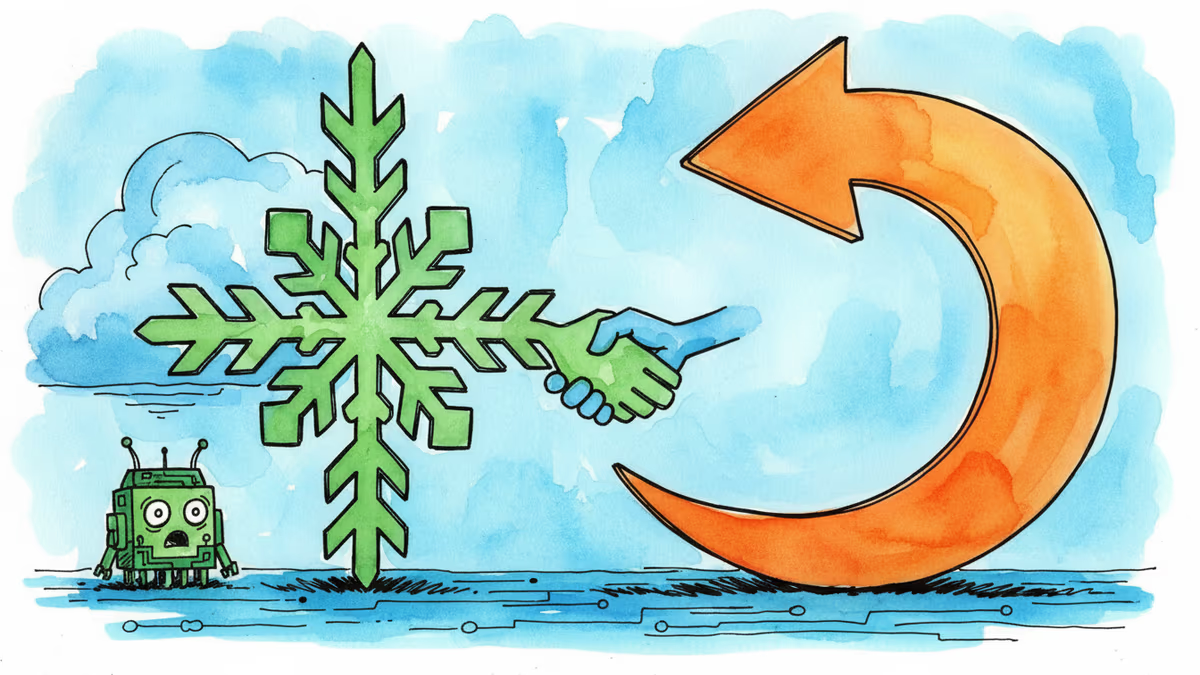
Snowflake's new $6 billion AWS contract is about more than cloud spending. It signals a shift in AI infrastructure—away from Nvidia GPUs and toward cheaper, homegrown chips for the agent era.
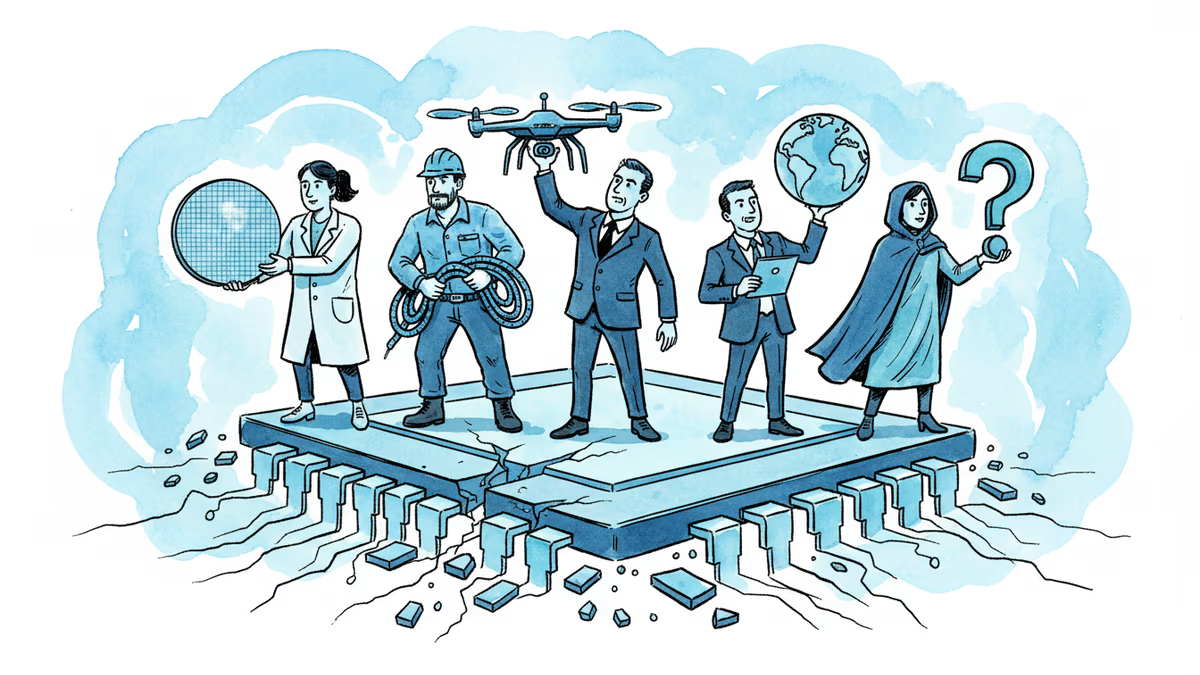
At Milken 2026, five AI insiders—from the CEO of ASML to a quantum physicist challenging LLMs—laid out the physical, energy, and geopolitical limits the AI boom is running into.
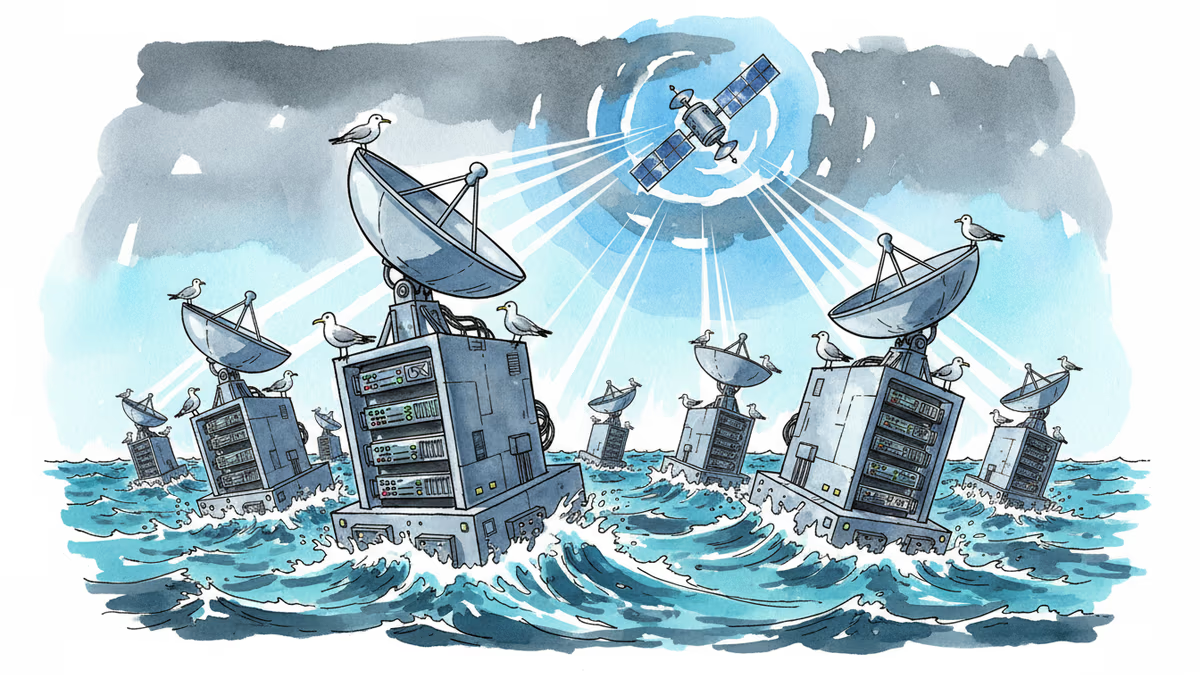
Palantir co-founder Peter Thiel and other Silicon Valley investors have poured $140 million into Panthalassa, a startup building wave-powered floating AI data centers in the open ocean. Here's what that actually means.

Cohere and Aleph Alpha are merging to build a transatlantic AI challenger valued at $20 billion. Their pitch: sovereignty, not just performance. Can it work?
Snowflake's new $6 billion AWS contract is about more than cloud spending. It signals a shift in AI infrastructure—away from Nvidia GPUs and toward cheaper, homegrown chips for the agent era.
At Milken 2026, five AI insiders—from the CEO of ASML to a quantum physicist challenging LLMs—laid out the physical, energy, and geopolitical limits the AI boom is running into.
Palantir co-founder Peter Thiel and other Silicon Valley investors have poured $140 million into Panthalassa, a startup building wave-powered floating AI data centers in the open ocean. Here's what that actually means.
Cohere and Aleph Alpha are merging to build a transatlantic AI challenger valued at $20 billion. Their pitch: sovereignty, not just performance. Can it work?
Thoughts
Share your thoughts on this article
Sign in to join the conversation