

OpenAI ChatGPT Age Prediction Feature Debuts to Bolster Teen Safety
OpenAI launches a new age prediction feature for ChatGPT, using behavioral signals to identify and protect users under 18. Global rollout underway.
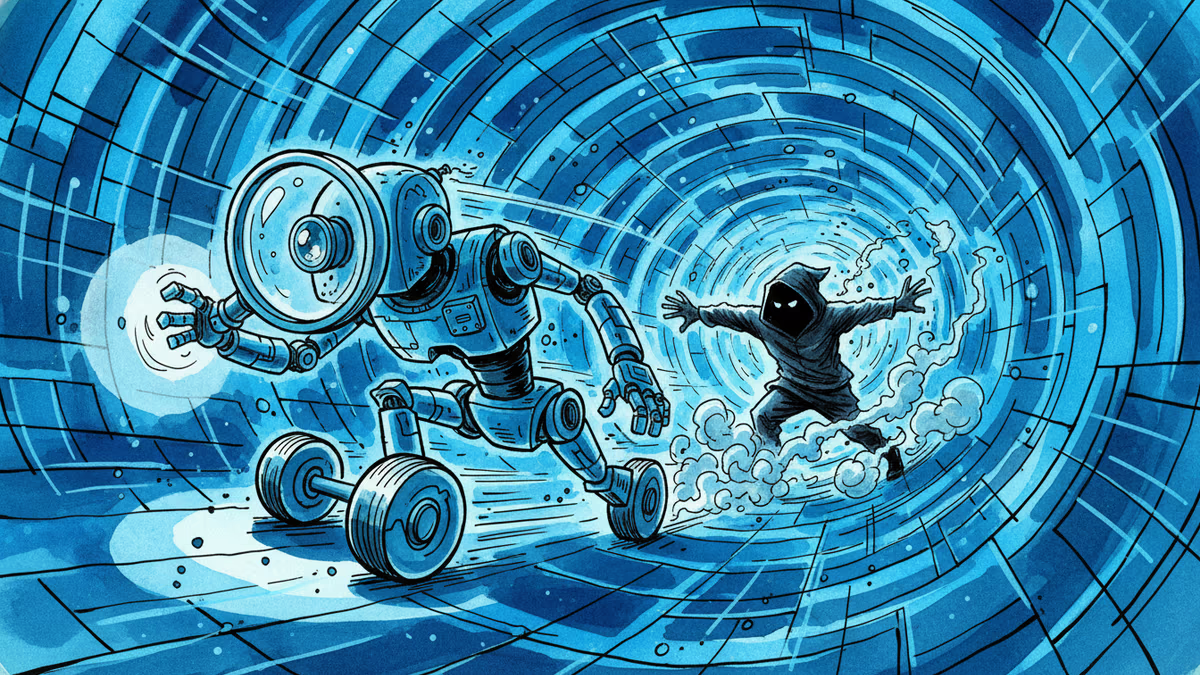
OpenAI knows how old you are—even if you lie about it. The company is rolling out a new age prediction model for ChatGPT designed to identify and safeguard users under 18. According to reports from The Verge, this move aims to create a safer environment for teens by moving beyond simple self-declaration.
How the OpenAI ChatGPT Age Prediction Feature Works
The system doesn't just look at the birthdate you typed in. Instead, it analyzes a complex array of behavioral and account-level signals to estimate a user's true age. Once the system identifies a user as a minor, ChatGPT automatically applies stricter safety protocols.

- Stated age during sign-up
- Account longevity and creation date
- Activity timestamps and usage frequency
- Long-term interaction patterns
Global Rollout and Regulatory Alignment
This initiative follows an announcement in December regarding updated guidelines for interacting with teens. It places OpenAI in line with other major platforms like Instagram, YouTube, and TikTok, which have faced increasing pressure to verify user ages. While the rollout is nearly global, users in the EU can expect to see these features in the coming weeks.
Authors
Related Articles

OpenAI has reorganized for the second time in a month, merging ChatGPT and Codex into a single agentic platform under president Greg Brockman's unified product leadership.

After two weeks of witnesses calling him a liar, OpenAI CEO Sam Altman testified in his own defense, claiming Elon Musk tried to kill the company twice.

Sam Nelson, 19, died after following ChatGPT's advice to mix Kratom and Xanax. His parents are suing OpenAI for wrongful death, raising urgent questions about AI trust, liability, and design.
OpenAI's new Daybreak initiative uses the Codex AI agent to find and patch security vulnerabilities before attackers do—putting it in direct competition with Anthropic's secretive Claude Mythos.
OpenAI has reorganized for the second time in a month, merging ChatGPT and Codex into a single agentic platform under president Greg Brockman's unified product leadership.
After two weeks of witnesses calling him a liar, OpenAI CEO Sam Altman testified in his own defense, claiming Elon Musk tried to kill the company twice.
Sam Nelson, 19, died after following ChatGPT's advice to mix Kratom and Xanax. His parents are suing OpenAI for wrongful death, raising urgent questions about AI trust, liability, and design.
OpenAI's new Daybreak initiative uses the Codex AI agent to find and patch security vulnerabilities before attackers do—putting it in direct competition with Anthropic's secretive Claude Mythos.
Thoughts
Share your thoughts on this article
Sign in to join the conversation