
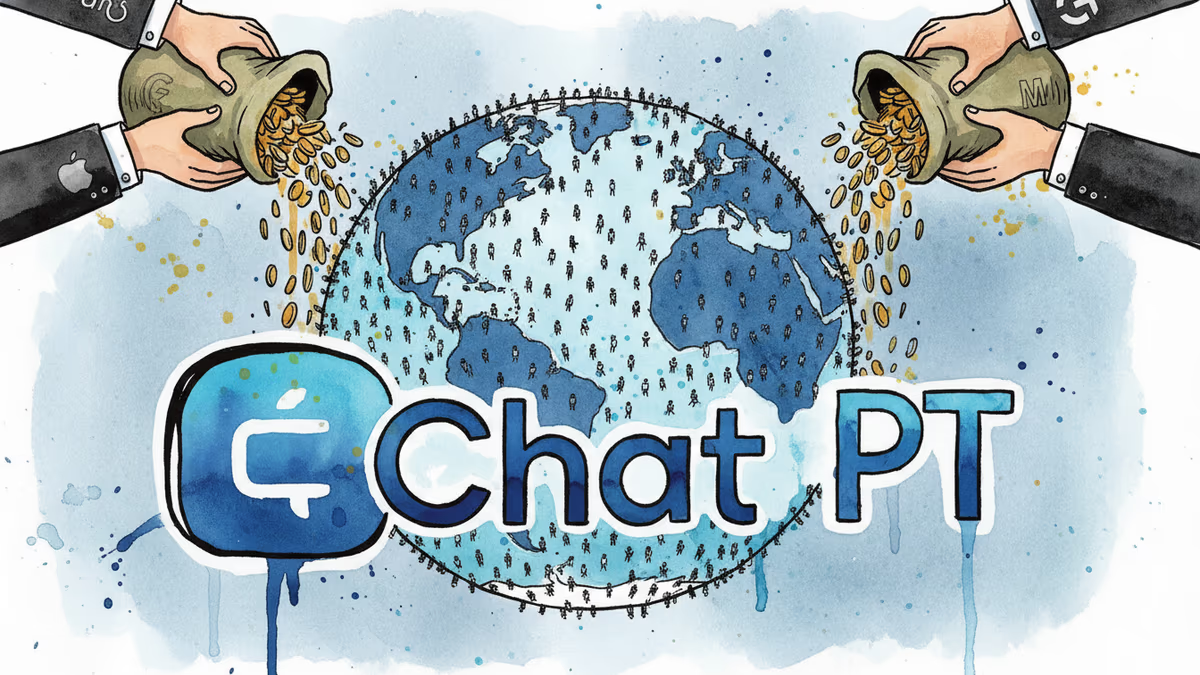
ChatGPT Hits 900M Users as $110B Bet Reshapes AI Landscape
ChatGPT reaches 900 million weekly users while OpenAI secures $110 billion in funding. Analyzing what this means for AI adoption, competition, and market dynamics.
900 Million People Talk to AI Every Week
One in eight humans on Earth now chats with ChatGPT weekly. That's the staggering reality behind OpenAI's latest announcement: ChatGPT has reached 900 million weekly active users, jumping 100 million in just four months since October.
But here's the kicker: 50 million people pay $20 monthly for ChatGPT Plus. That's more than Netflix's subscriber base in the US. When users willingly pay for something they can get for free, it signals a fundamental shift from novelty to necessity.
"January and February are on track to be the largest months for new subscribers in our history," OpenAI reported. The AI isn't just answering questions anymore—people are using it to "learn, write, plan, and build." It's become a digital Swiss Army knife.
Why Amazon, Nvidia, and SoftBank Bet $110 Billion
The user milestone came alongside OpenAI's announcement of a $110 billion funding round—one of the largest private investments in history. Amazon led with $50 billion, while Nvidia and SoftBank each contributed $30 billion. The company's pre-money valuation: $730 billion.
This isn't just about ChatGPT's popularity. Investors see something bigger: the potential death of traditional search. Google's 20-year monopoly on how we find information is under threat. Complex queries increasingly favor ChatGPT's conversational approach over Google's link-heavy results.
The funding war reflects a broader truth: AI infrastructure is expensive. Training models, running servers, and scaling to nearly a billion users requires unprecedented capital. OpenAI's investors aren't just buying into a chatbot—they're betting on the future of human-computer interaction.
The Search Wars Heat Up

Google isn't sitting idle. The search giant has poured billions into Bard (now Gemini) and integrated AI across its ecosystem. Microsoft, OpenAI's biggest partner, continues pushing Copilot integration across Office and Windows.
But the real competition might come from unexpected places. Perplexity AI focuses on research and citations. Anthropic's Claude emphasizes safety and reliability. Meta's Llama models target developers and enterprises.
Each approach represents a different vision for AI's future. Will users want one super-intelligent assistant, or specialized tools for different tasks? The 900 million ChatGPT users suggest the former—for now.
Beyond the Hype: What This Actually Changes
The numbers tell a story of mainstream adoption that seemed impossible just two years ago. When ChatGPT launched in November 2022, reaching 100 million users in two months felt revolutionary. Now, adding 100 million users in four months is just another milestone.
This scale changes everything. Businesses can't ignore AI adoption when their customers and employees already use it daily. Schools grapple with students who've never known homework without AI assistance. Entire industries—from customer service to content creation—face fundamental disruption.
The 50 million paying subscribers represent something else: proof that AI has real economic value. These users aren't just experimenting—they're integrating AI into their workflows, creative processes, and decision-making.
The Regulatory Reckoning Approaches
With great power comes great scrutiny. European regulators are crafting AI governance frameworks. The US Congress holds hearings on AI safety and competition. China balances AI innovation with control.
OpenAI's dominance—900 million users and $110 billion in backing—makes it a natural target for antitrust concerns. The company's partnerships with Microsoft and exclusive deals with publishers raise questions about market concentration.
Meanwhile, the AI safety community watches nervously. As models become more capable and widely used, the stakes for getting AI alignment right continue to rise.
Authors
Related Articles

OpenAI has reorganized for the second time in a month, merging ChatGPT and Codex into a single agentic platform under president Greg Brockman's unified product leadership.

After two weeks of witnesses calling him a liar, OpenAI CEO Sam Altman testified in his own defense, claiming Elon Musk tried to kill the company twice.

Sam Nelson, 19, died after following ChatGPT's advice to mix Kratom and Xanax. His parents are suing OpenAI for wrongful death, raising urgent questions about AI trust, liability, and design.
OpenAI's new Daybreak initiative uses the Codex AI agent to find and patch security vulnerabilities before attackers do—putting it in direct competition with Anthropic's secretive Claude Mythos.
OpenAI has reorganized for the second time in a month, merging ChatGPT and Codex into a single agentic platform under president Greg Brockman's unified product leadership.
After two weeks of witnesses calling him a liar, OpenAI CEO Sam Altman testified in his own defense, claiming Elon Musk tried to kill the company twice.
Sam Nelson, 19, died after following ChatGPT's advice to mix Kratom and Xanax. His parents are suing OpenAI for wrongful death, raising urgent questions about AI trust, liability, and design.
OpenAI's new Daybreak initiative uses the Codex AI agent to find and patch security vulnerabilities before attackers do—putting it in direct competition with Anthropic's secretive Claude Mythos.
Thoughts
Share your thoughts on this article
Sign in to join the conversation