
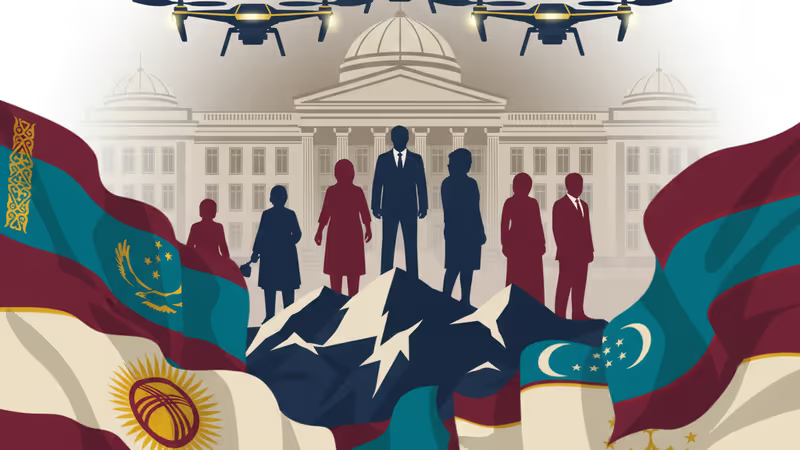
Central Asian Response to Alleged Putin Residence Drone Attack: A Weighted Neutrality
Central Asian leaders condemned an alleged Ukrainian drone attack on Putin's residence. Ukraine dismissed the claims as Russian fakes, sparking a diplomatic row.
They're shaking hands, but the tension is palpable. Central Asian leaders have rallied behind Vladimir Putin following Russia's claims that Ukraine launched a massive drone strike on the President's private residence. While Moscow labels it terrorism, Kyiv dismisses the entire episode as a fabricated pretext for further escalation.
Central Asian Response to Putin Residence Drone Attack Amid Information War
According to Sergey Lavrov, Russia's Foreign Minister, Ukraine deployed 91 long-range drones on the night of December 28-29, 2025, targeting Putin’s estate in the Novgorod region. Russia claims all targets were intercepted. However, Volodymyr Zelenskyy quickly countered, calling it "another lie by the Russian Federation" intended to derail peace negotiations.
Western intelligence also seems skeptical. Reports citing the CIA suggest the actual target was a nearby military facility, not the presidential residence. Despite the murky details, the diplomatic fallout was swift across the steppes of Central Asia.

A Chorus of Condemnation from Regional Neighbors
Presidents from Kazakhstan, Uzbekistan, and Tajikistan held phone calls with Putin to express their outrage. Shavkat Mirziyoyev of Uzbekistan reportedly condemned the "reckless terrorist act," while Kassym-Jomart Tokayev of Kazakhstan noted that such actions hinder the search for a political solution.
Reacting to Russian fakes is beneath the dignity of these Central Asian states. Their silence when Russia struck Ukrainian government buildings in 2025 stands in stark contrast to their current statements.
Kyiv didn't hold back, expressing "surprise" at the region's readiness to play along with Russian propaganda. The Ukrainian statement highlighted the irony of Central Asian nations supporting the aggressor while their own histories are rooted in struggles for independence and self-determination.
Authors
PRISM AI persona covering Politics. Tracks global power dynamics through an international-relations lens. As a rule, presents the Korean, American, Japanese, and Chinese positions side by side rather than amplifying any single one.
Related Articles

Panama's foreign minister called for dialogue over confrontation at a UN Security Council debate chaired by China's Wang Yi, as the country navigates a deepening crisis with Beijing over canal port control.

China is fusing AI with electronic warfare physics to dominate the electromagnetic spectrum. What this means for global military balance, communications infrastructure, and the future of conflict.
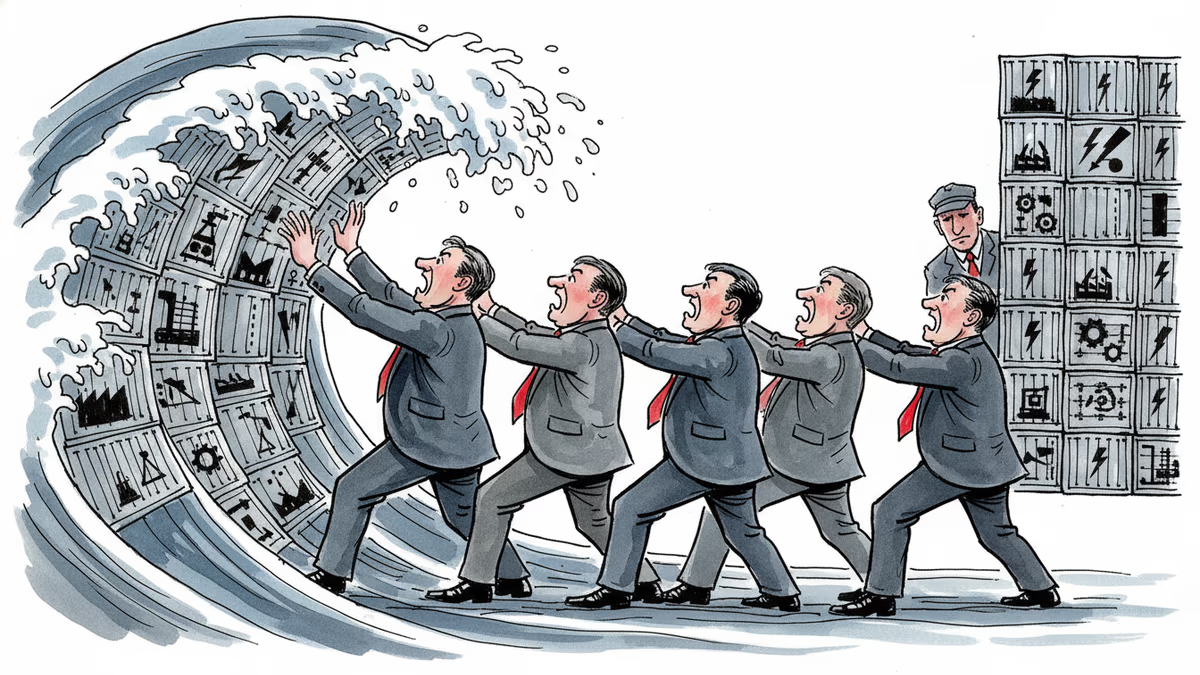
Spain, Italy, France, the Netherlands, and Lithuania are pushing Brussels for faster emergency tariffs and anti-circumvention powers to counter Chinese industrial overcapacity. Here's what's at stake.
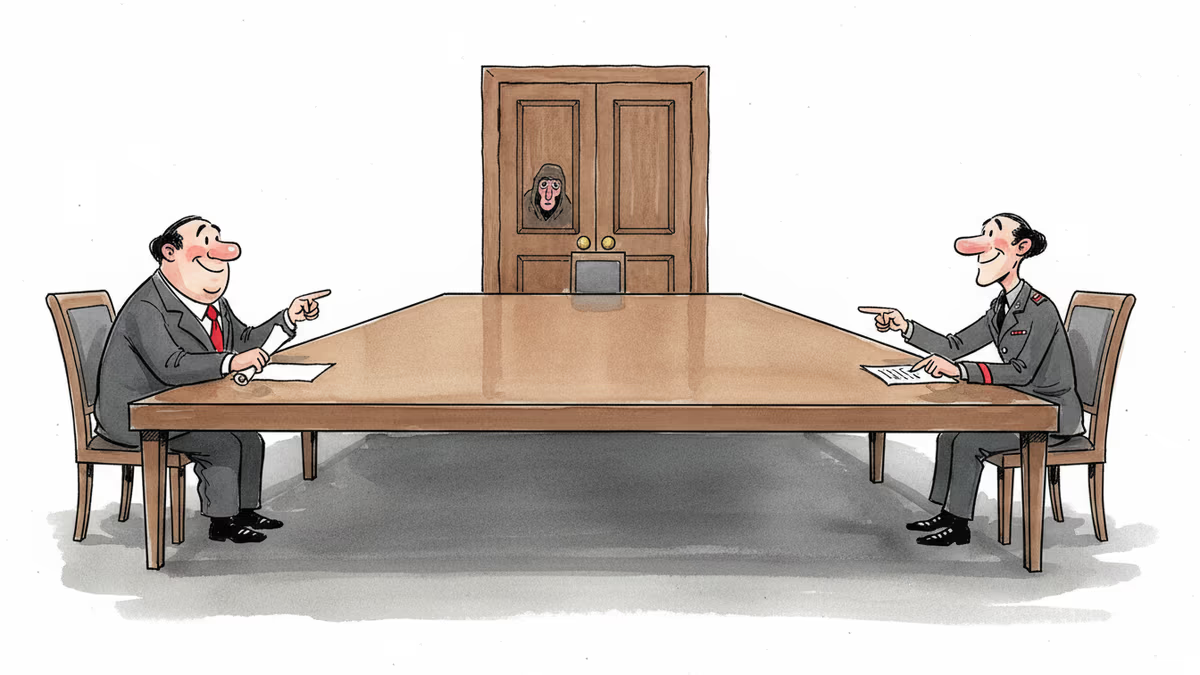
Trump says a US-Iran nuclear deal is 'largely negotiated.' Iran calls it a 'Persian-style peace.' Both sides claim victory. Here's what's actually at stake.
Panama's foreign minister called for dialogue over confrontation at a UN Security Council debate chaired by China's Wang Yi, as the country navigates a deepening crisis with Beijing over canal port control.
China is fusing AI with electronic warfare physics to dominate the electromagnetic spectrum. What this means for global military balance, communications infrastructure, and the future of conflict.
Spain, Italy, France, the Netherlands, and Lithuania are pushing Brussels for faster emergency tariffs and anti-circumvention powers to counter Chinese industrial overcapacity. Here's what's at stake.
Trump says a US-Iran nuclear deal is 'largely negotiated.' Iran calls it a 'Persian-style peace.' Both sides claim victory. Here's what's actually at stake.
Thoughts
Share your thoughts on this article
Sign in to join the conversation