

Bluspark Global Security Flaws: How Plaintext Passwords Left the Supply Chain Wide Open
Bluspark Global security flaws exposed 20 years of shipment data due to plaintext passwords and unauthenticated APIs. Learn how this supply chain tech firm responded.
Decades of global shipping data—dating as far back as 2007—were left vulnerable to anyone with an internet connection. Security researchers recently exposed critical vulnerabilities in Bluspark Global, a New York-based logistics tech firm that powers the supply chains of major retail giants and furniture makers. This isn't just a technical glitch; it's a terrifying look at the fragile state of global commerce.
Bluspark Global Security Flaws: Unauthenticated APIs and Exposed Credentials
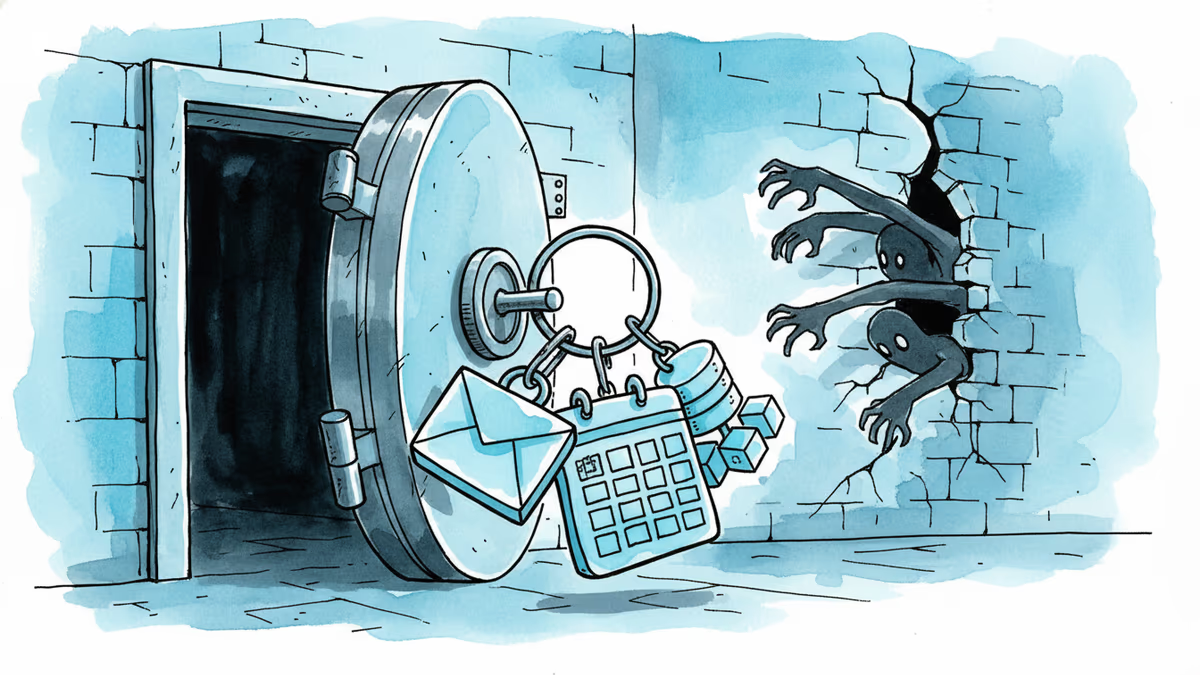
Researcher Eaton Zveare discovered five flaws in the company's Bluvoyix platform. The most glaring issue was an unauthenticated API that allowed anyone to retrieve sensitive data without a password. Even worse, the platform stored both employee and customer passwords in plaintext, meaning they weren't encrypted at all.
By exploiting these vulnerabilities, Zveare could create new administrator accounts and gain unrestricted access to shipment records. He noted that the company's own API documentation provided a 'test' feature that facilitated the data retrieval, making it trivial for malicious actors to hijack the system.

A Delayed Response to a Massive Risk
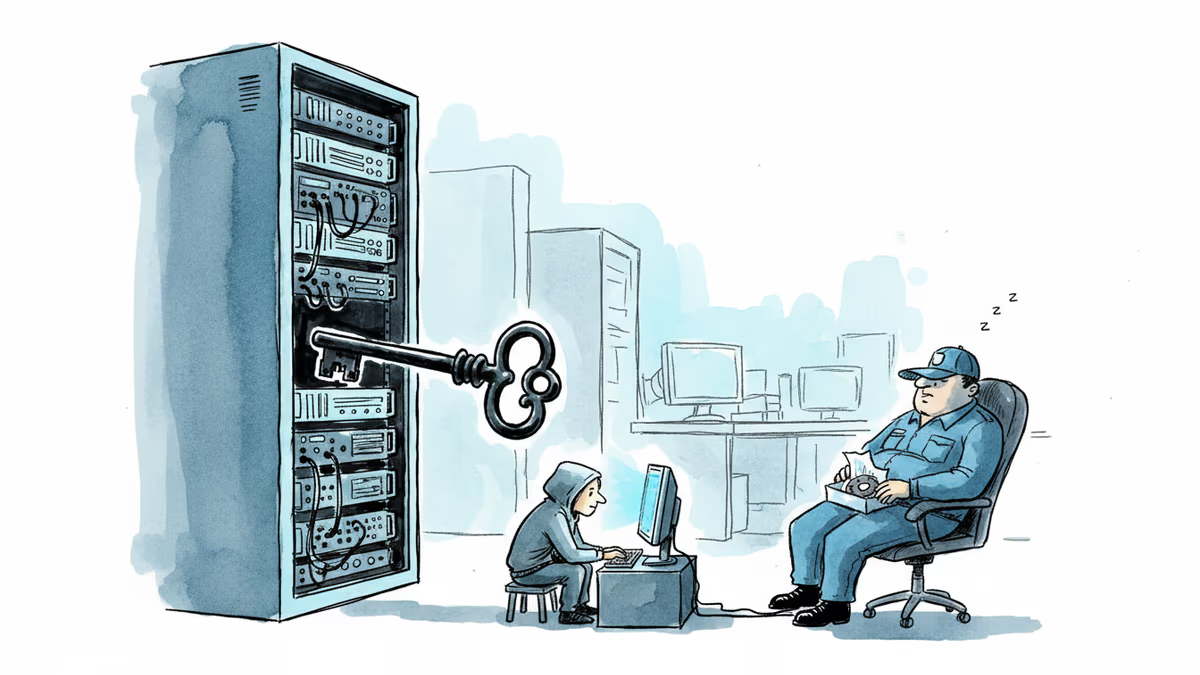
Alerting Bluspark Global proved harder than finding the bugs. It took Zveare weeks of ignored emails and LinkedIn messages before TechCrunch stepped in. The company only responded after being shown a partial copy of its own CEO's password. It's a classic example of the 'disclosure gap' where firms lack a clear channel for security reporting.
The company has since patched the flaws. A legal representative for Bluspark stated they're "confident in the steps taken," though they haven't confirmed whether any malicious exploitation occurred. They're now reportedly planning to introduce a formal bug disclosure program.
Authors
Related Articles
A critical vulnerability in Starlette—downloaded 325 million times per week—puts millions of AI agent servers at risk, exposing stored credentials for email, databases, and third-party services.

GitHub confirmed hackers stole data from 3,800 internal repositories via a poisoned VS Code extension. Here's why developer tools are now the most dangerous attack surface in tech.

A Utah woman was sentenced to life in prison partly because of her Google searches and deleted texts. The Kouri Richins case reveals how digital footprints have become the courtroom's most reliable witness.
Dirty Frag gives low-privilege users root access on virtually every Linux distro. The exploit code leaked three days ago. Microsoft says attackers are already experimenting with it.
A critical vulnerability in Starlette—downloaded 325 million times per week—puts millions of AI agent servers at risk, exposing stored credentials for email, databases, and third-party services.
GitHub confirmed hackers stole data from 3,800 internal repositories via a poisoned VS Code extension. Here's why developer tools are now the most dangerous attack surface in tech.
A Utah woman was sentenced to life in prison partly because of her Google searches and deleted texts. The Kouri Richins case reveals how digital footprints have become the courtroom's most reliable witness.
Dirty Frag gives low-privilege users root access on virtually every Linux distro. The exploit code leaked three days ago. Microsoft says attackers are already experimenting with it.
Thoughts
Share your thoughts on this article
Sign in to join the conversation