
ByteDance's AI Creates 15-Second Videos That Could Reshape Creator Economy
ByteDance unveils Seedance 2.0, a multimodal AI video generator combining text, images, video, and audio. How will this impact content creators and the media landscape?
The 15-Second Revolution Nobody Saw Coming
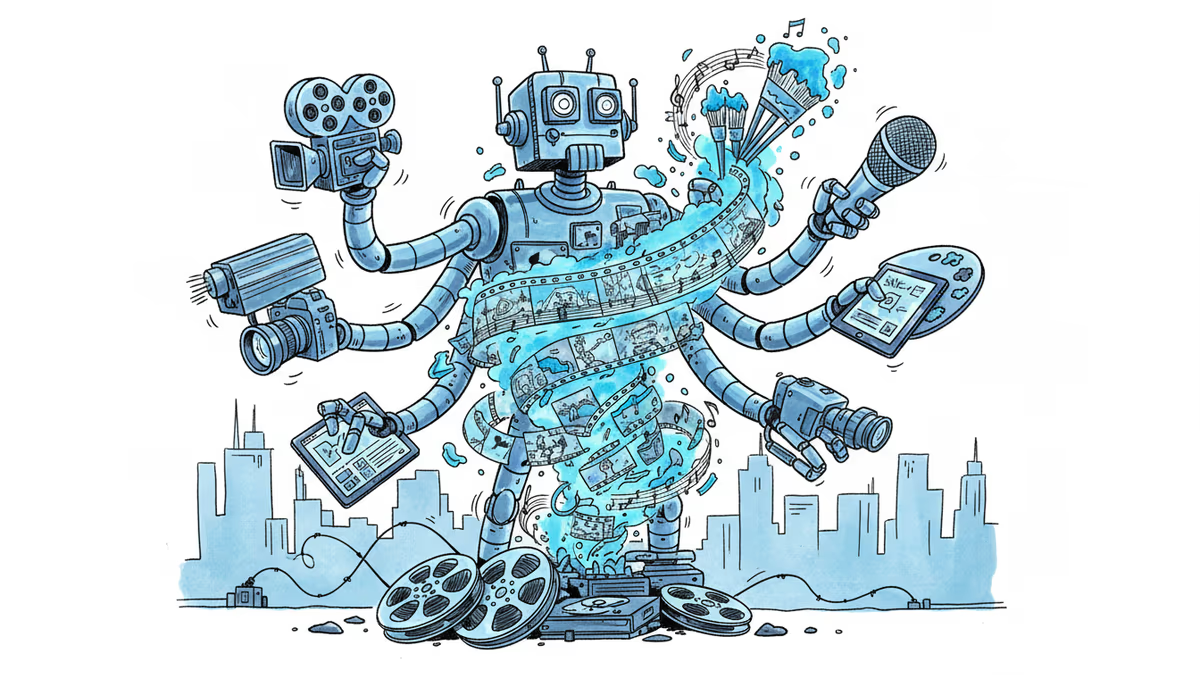
While everyone's been debating ChatGPT and image generators, ByteDance just dropped a bomb that could reshape how we think about content creation entirely. Seedance 2.0 isn't just another AI video tool—it's a multimodal powerhouse that can weave together text prompts, 9 images, 3 video clips, and 3 audio tracks into polished 15-second videos complete with sound.
The timing isn't coincidental. As TikTok's parent company, ByteDance understands the attention economy better than anyone. 15 seconds is the sweet spot where human attention meets algorithmic preference—long enough to tell a story, short enough to watch again.
Creators Split Between Hope and Fear
The creator community's reaction reveals a fundamental tension in the AI age. Independent filmmaker Sarah Chen sees opportunity: "I can now prototype video concepts in minutes instead of days." But video editor Marcus Rodriguez worries: "If anyone can create professional-looking content, what happens to those of us who spent years mastering these skills?"
The key advancement lies in Seedance 2.0's ability to handle "complex scenes with multiple subjects"—historically the Achilles' heel of AI video generation. Previous tools often produced inconsistent results or struggled with scene continuity. If ByteDance has truly solved this, they've crossed a significant technical threshold.
The Economics of Instant Content

Consider the math: A typical branded video costs $10,000-50,000 to produce professionally. If AI tools can deliver 80% of that quality for $50, we're looking at a 200-1000x cost reduction. That's not incremental change—that's market disruption.
Small businesses previously locked out of video marketing due to budget constraints suddenly have access to professional-grade content creation. But this democratization comes with complications: market saturation, quality dilution, and the challenge of standing out in an ocean of AI-generated content.
The Authenticity Question
Here's where it gets philosophically interesting. If AI can generate content indistinguishable from human-created work, what defines "authentic" creativity? The process, the intent, or just the final output?
Some creators are already experimenting with "AI-assisted" workflows, using tools like Seedance 2.0 for initial concepts while adding human touches for final polish. Others reject AI entirely, positioning "human-made" as a premium brand differentiator.
Regulatory and Ethical Implications
ByteDance's timing is particularly notable given ongoing scrutiny of Chinese tech companies in Western markets. A powerful content generation tool from the company behind TikTok raises questions about information manipulation, deepfakes, and content authenticity at scale.
The EU's AI Act and similar regulations worldwide will likely need updating to address AI-generated media disclosure requirements. How do you label content that's 70% AI-generated but 30% human-edited?
Authors
Related Articles

Samsung and SK unveiled a chip and AI investment package worth thousands of trillions of won on June 29. The headline number swings wildly by outlet, but the real contest isn't capital — it's water and power.
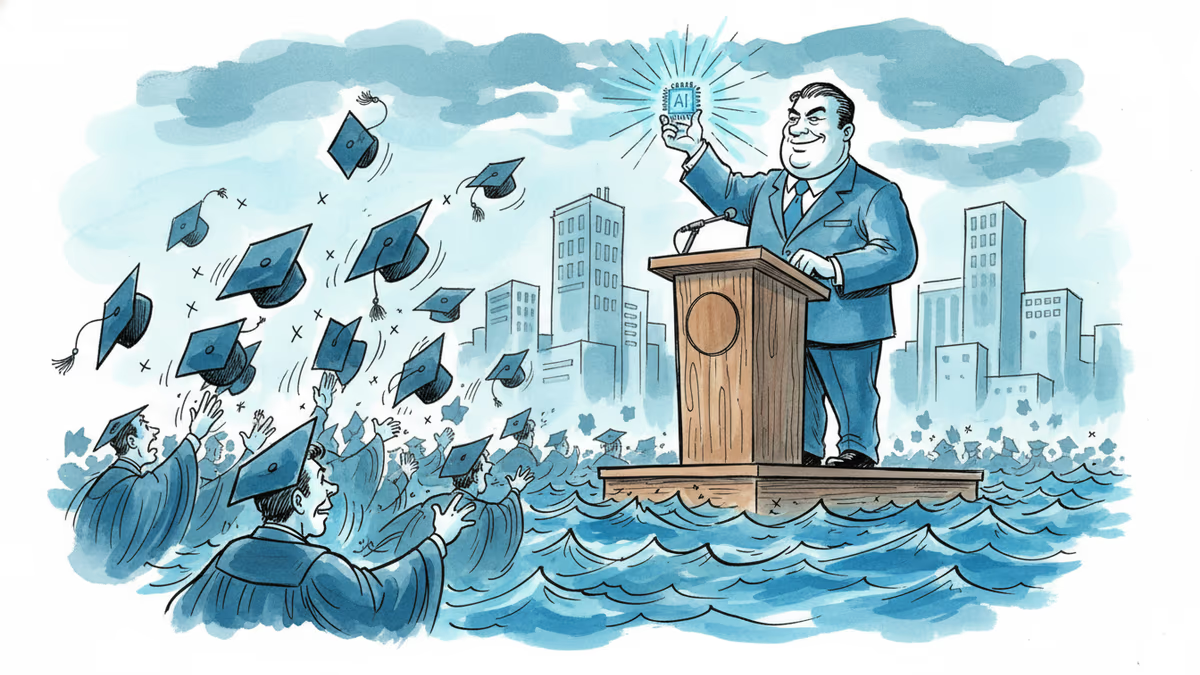
Viral videos show 2026 graduates jeering executives who praise AI at commencement ceremonies. It's not just rudeness — it's a signal about who pays for technological optimism.
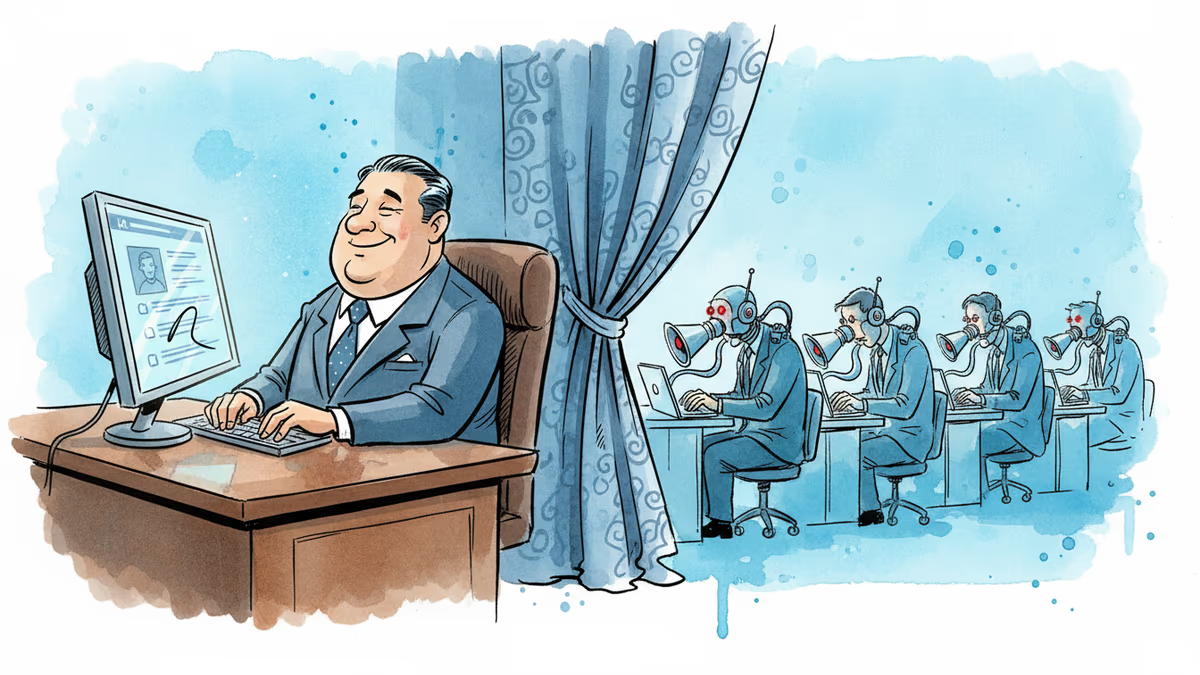
Filipino virtual assistants using AI to ghost-manage LinkedIn profiles for executives is now a structured industry. 30 comments a day, fake engagement rings, and a platform struggling to tell real from fabricated.
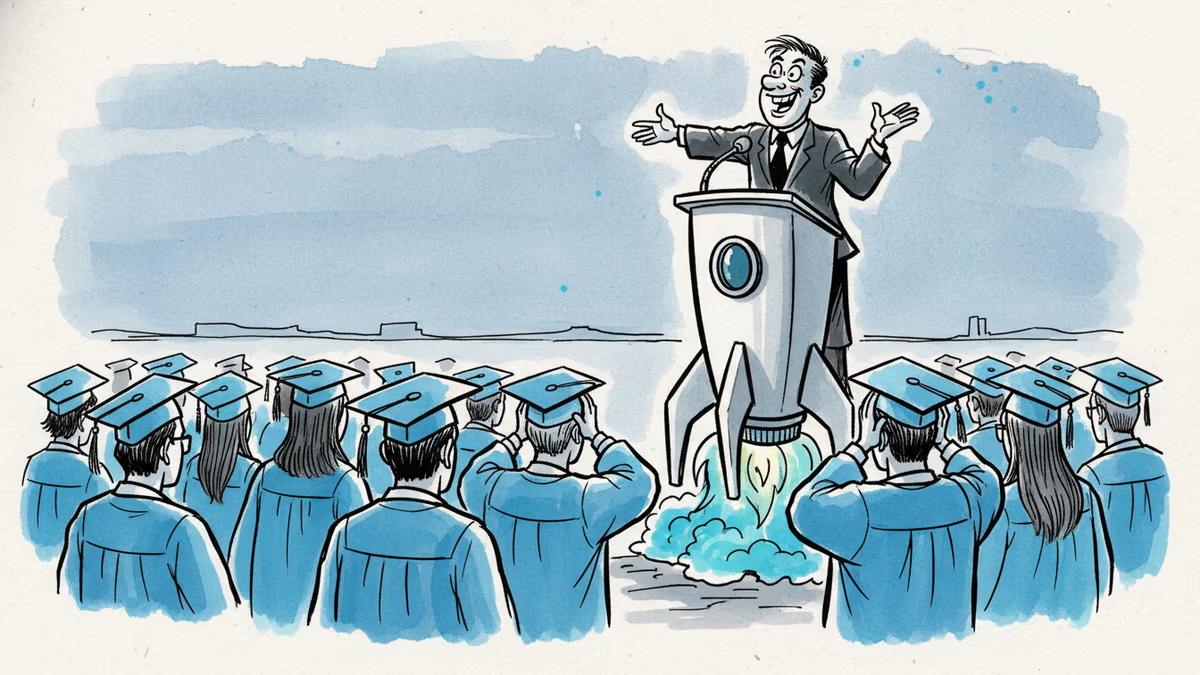
Two commencement speakers learned the hard way that AI enthusiasm doesn't land well with today's graduates. The backlash reveals a widening gap between tech optimism and Gen Z's economic reality.
Samsung and SK unveiled a chip and AI investment package worth thousands of trillions of won on June 29. The headline number swings wildly by outlet, but the real contest isn't capital — it's water and power.
Viral videos show 2026 graduates jeering executives who praise AI at commencement ceremonies. It's not just rudeness — it's a signal about who pays for technological optimism.
Filipino virtual assistants using AI to ghost-manage LinkedIn profiles for executives is now a structured industry. 30 comments a day, fake engagement rings, and a platform struggling to tell real from fabricated.
Two commencement speakers learned the hard way that AI enthusiasm doesn't land well with today's graduates. The backlash reveals a widening gap between tech optimism and Gen Z's economic reality.
Thoughts
Share your thoughts on this article
Sign in to join the conversation