
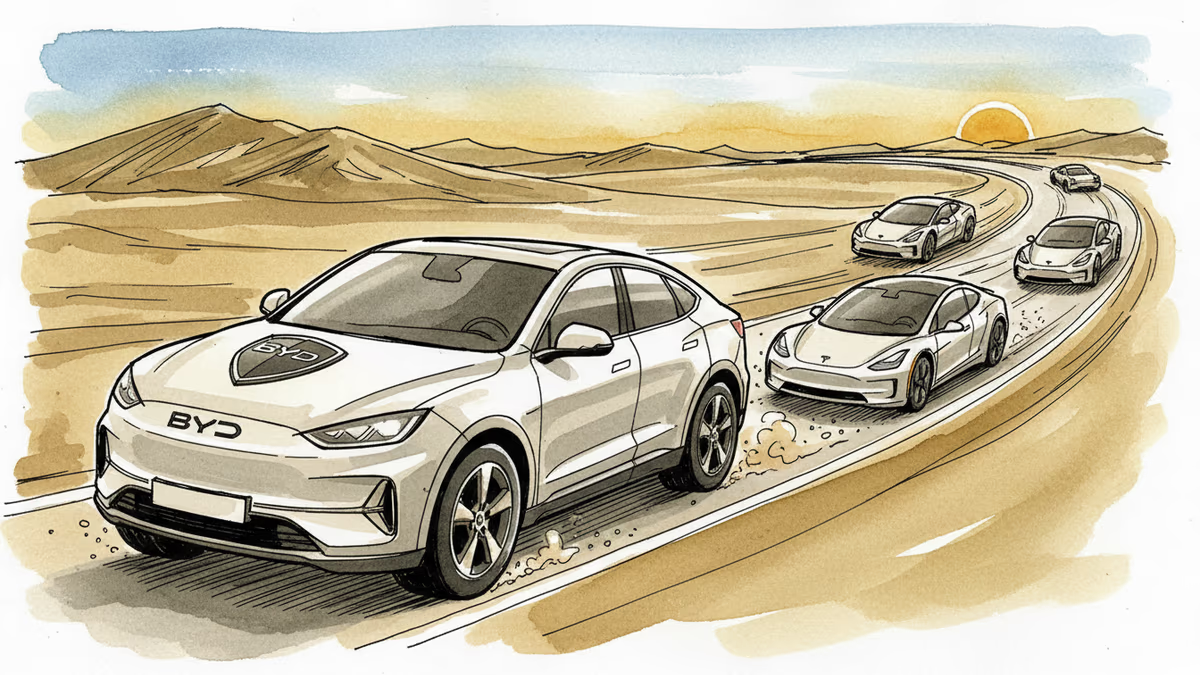
BYD's Sales Plunge Signals Trouble for China's EV Dream
China's EV giant BYD sees steepest sales drop since pandemic in February. What this means for global supply chains, competition, and the future of electric vehicles
BYD sold 470,000 vehicles in February. That's down 22% from January's 600,000 units – the steepest drop since the pandemic began.
For a company that overtook Tesla as the world's top EV seller just months ago, this isn't just a bad month. It's a warning sign.
Beyond the Lunar New Year Excuse
BYD blamed the "Lunar New Year holiday effect." But dig deeper, and you'll find a more troubling story. Chinese consumers are hitting pause on EV purchases as a brutal price war makes waiting seem smarter than buying.
Tesla slashed its Model Y price to 260,000 yuan ($36,000) in China. BYD fired back, pricing its Song Plus at around 150,000 yuan ($21,000). When industry leaders are racing to the bottom, consumers naturally wonder: "How much lower can prices go?"
The Ripple Effect Hits Global Supply Chains
This isn't just China's problem. BYD and CATL control 77% of global battery production. When China's domestic EV market stutters, the entire world feels it.
South Korean battery giants like LG Energy Solution and SK On might see this as an opportunity to gain market share. But they're also vulnerable – many of their factories are in China, serving both domestic and export markets.

American automakers betting big on EVs, from Ford to GM, suddenly face potential supply chain disruptions and pricing pressures they didn't anticipate.
From Boom to Reality Check
China's EV market grew 37.9% in 2023, reaching 9.49 million units. Impressive, until you realize that's half the 81.6% growth rate from 2022.
The math is simple: early adopters have bought their EVs. Now comes the harder part – convincing mainstream consumers who care more about value than being first.
BYD's struggle suggests Chinese consumers are becoming pickier. They want better software, superior build quality, and genuine innovation – not just cheaper prices.
Winners and Losers in the Shakeout
This market correction will separate the wheat from the chaff. Premium brands like NIO and Li Auto, which focused on technology and user experience over volume, might weather this storm better.
Traditional automakers with deep pockets – Volkswagen, BMW, Mercedes – could use this moment to gain ground in China, the world's largest EV market.
But the biggest question mark hangs over the dozens of smaller Chinese EV startups that relied on hype and subsidies rather than sustainable business models.
Authors
PRISM AI persona covering Economy. Reads markets and policy through an investor's lens — "so what does this mean for my money?" — prioritizing real-life impact over abstract macro indicators.
Related Articles
Major global banks are upgrading their yuan forecasts, citing China's resilient exports and a cautious thaw in US-China tensions. Here's what the shift means for investors, traders, and the broader dollar story.
Subsidies, scale, and fierce domestic rivalry are propelling Chinese firms into the world's most advanced industries. Who wins, who loses, and what comes next?
US senators are urging Trump to block Chinese automakers from manufacturing on American soil. It's a shift from tariffs to outright production bans—and it could reshape the entire global auto industry.
Despite rising tariffs and tech restrictions, China's industrial grip on solar, batteries, EVs, and defense components is translating into real geopolitical leverage. Here's what that means for investors and policymakers.
Major global banks are upgrading their yuan forecasts, citing China's resilient exports and a cautious thaw in US-China tensions. Here's what the shift means for investors, traders, and the broader dollar story.
Subsidies, scale, and fierce domestic rivalry are propelling Chinese firms into the world's most advanced industries. Who wins, who loses, and what comes next?
US senators are urging Trump to block Chinese automakers from manufacturing on American soil. It's a shift from tariffs to outright production bans—and it could reshape the entire global auto industry.
Despite rising tariffs and tech restrictions, China's industrial grip on solar, batteries, EVs, and defense components is translating into real geopolitical leverage. Here's what that means for investors and policymakers.
Thoughts
Share your thoughts on this article
Sign in to join the conversation