
From Star Trek Fantasy to ADHD Reality: Home Automation's Unexpected Evolution
A pandemic hobby becomes assistive technology as Home Assistant users recreate Star Trek's LCARS interface while managing executive dysfunction. Exploring the deeper implications of customizable smart homes.
What started as pandemic boredom has evolved into something far more profound: the transformation of science fiction interfaces into real-world assistive technology. While most people see Home Assistant as just another smart home platform, one user's journey reveals how open-source automation is quietly revolutionizing accessibility and personal empowerment.
When Hobby Becomes Necessity
The story begins with a simple discovery of Home Assistant, the popular open-source home automation platform known for its extreme customization capabilities. But what makes this particular implementation fascinating isn't the technical prowess—it's how ADHD transformed a nerdy hobby into an essential life management tool.
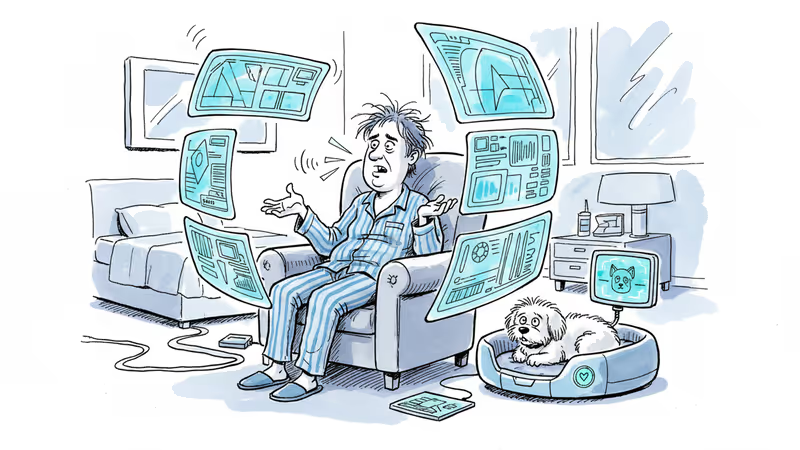
The user deployed audible calendar reminders, laundry notifications, timers, and monitoring systems for both doorbell security and pet care. These aren't just convenience features; they're compensatory strategies for executive dysfunction, turning a smart home into a cognitive prosthetic that scaffolds daily life.
The most ambitious step? Recreating Star Trek'sLCARS (Library Computer Access/Retrieval System) interface—the iconic computer system that Captain Picard used to command the Enterprise.
The LCARS Experiment: Retro-Future Design
Why would someone spend countless hours recreating a 1980s vision of the future? The answer lies in the enduring brilliance of LCARS design principles. Despite being nearly four decades old, the interface remains remarkably intuitive: large touch targets, clear color coding, seamless voice integration, and minimal cognitive load.
This isn't just nostalgia—it's a masterclass in accessible design that modern smart home interfaces often fail to achieve. While today's apps prioritize visual appeal over usability, LCARS was designed for high-stress, mission-critical environments where clarity matters more than aesthetics.

Beyond Smart Homes: The Assistive Technology Revolution
What's happening here represents a broader shift in how we think about home automation. Traditional smart home marketing focuses on convenience and energy savings, but the real revolution lies in assistive technology applications that major manufacturers barely acknowledge.
For individuals with ADHD, autism, dementia, or mobility challenges, customizable automation isn't a luxury—it's a necessity. The ability to create personalized reminder systems, environmental controls, and monitoring solutions can mean the difference between independent living and requiring constant assistance.
Yet this potential remains largely untapped in commercial products. Google Home, Amazon Alexa, and Apple HomeKit offer limited customization compared to what's possible with open-source platforms like Home Assistant.
The Open Source Advantage
The contrast is stark: while commercial platforms lock users into proprietary ecosystems with limited interoperability, Home Assistant connects virtually any device and allows infinite customization. Users own their data, control their privacy, and aren't subject to corporate decisions about feature deprecation or service termination.
This matters especially for assistive technology users who may depend on specific configurations for daily functioning. When Google discontinues a service or Amazon changes an algorithm, it's not just inconvenient—it can be disabling.
The Accessibility Gap
But there's a cruel irony: the platform with the greatest potential for assistive technology has the highest technical barriers to entry. Setting up Home Assistant requires networking knowledge, YAML configuration files, and troubleshooting skills that many users—especially those who would benefit most from assistive automation—simply don't have.
This highlights a broader problem in tech accessibility: the most empowering tools often require the most privilege to access. Meanwhile, commercial platforms optimize for the broadest possible market, leaving edge cases—including many disability communities—underserved.
Authors
Related Articles
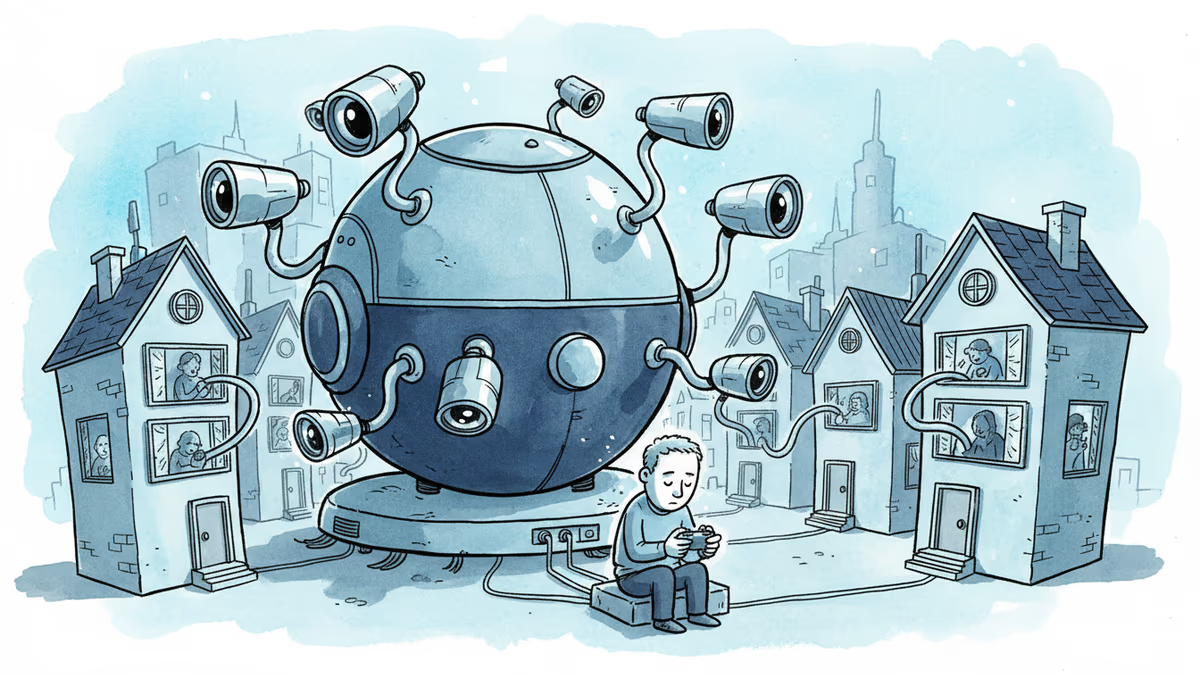
A security researcher discovered he could access 7,000 DJI robot vacuums and peek into strangers' homes. This Valentine's Day revelation exposes the hidden privacy risks of our smart home obsession.
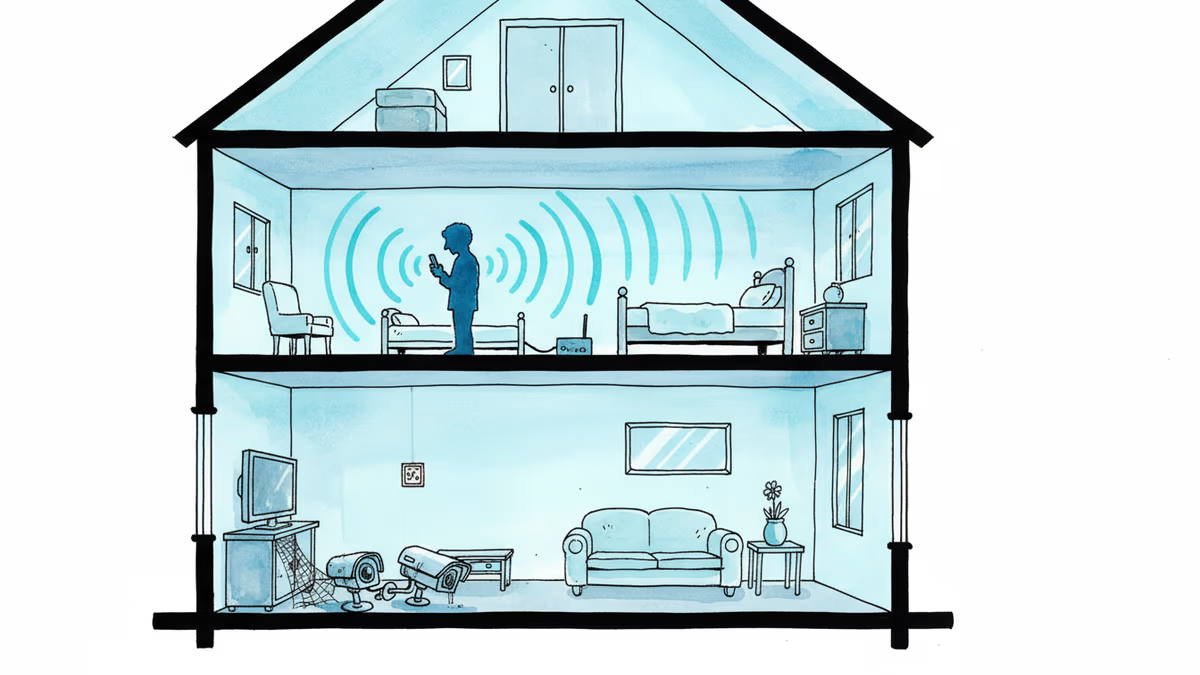
ADT acquires Origin Wireless to detect human movement through Wi-Fi signals without cameras. A game-changer for home security or privacy nightmare?
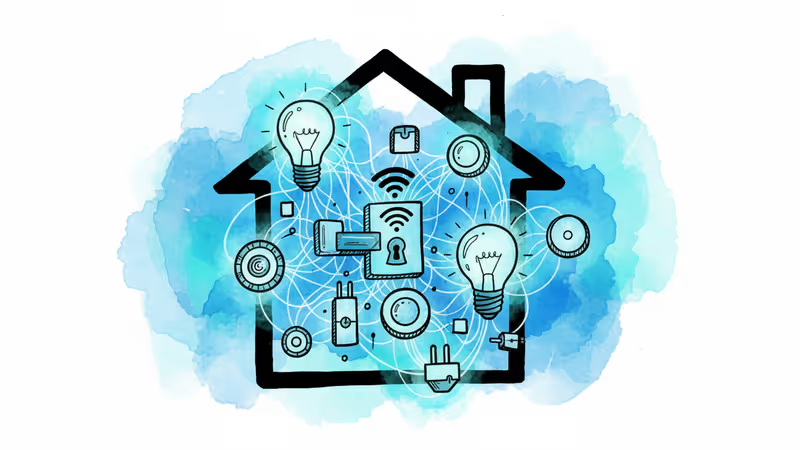
Thread protocol is reshaping the smart home landscape by enabling seamless device communication across manufacturers. Here's what it means for consumers and the industry.
Fauna Robotics unveils Sprout, a compact humanoid robot inspired by Baymax. But can its cute design overcome the practical limitations of its size?
A security researcher discovered he could access 7,000 DJI robot vacuums and peek into strangers' homes. This Valentine's Day revelation exposes the hidden privacy risks of our smart home obsession.
ADT acquires Origin Wireless to detect human movement through Wi-Fi signals without cameras. A game-changer for home security or privacy nightmare?
Thread protocol is reshaping the smart home landscape by enabling seamless device communication across manufacturers. Here's what it means for consumers and the industry.
Fauna Robotics unveils Sprout, a compact humanoid robot inspired by Baymax. But can its cute design overcome the practical limitations of its size?
Thoughts
Share your thoughts on this article
Sign in to join the conversation