
Why a 150-Year-Old Security Giant Paid $170M for 'Invisible' Tech
ADT acquires Origin Wireless to detect human movement through Wi-Fi signals without cameras. A game-changer for home security or privacy nightmare?
The $170 Million Question
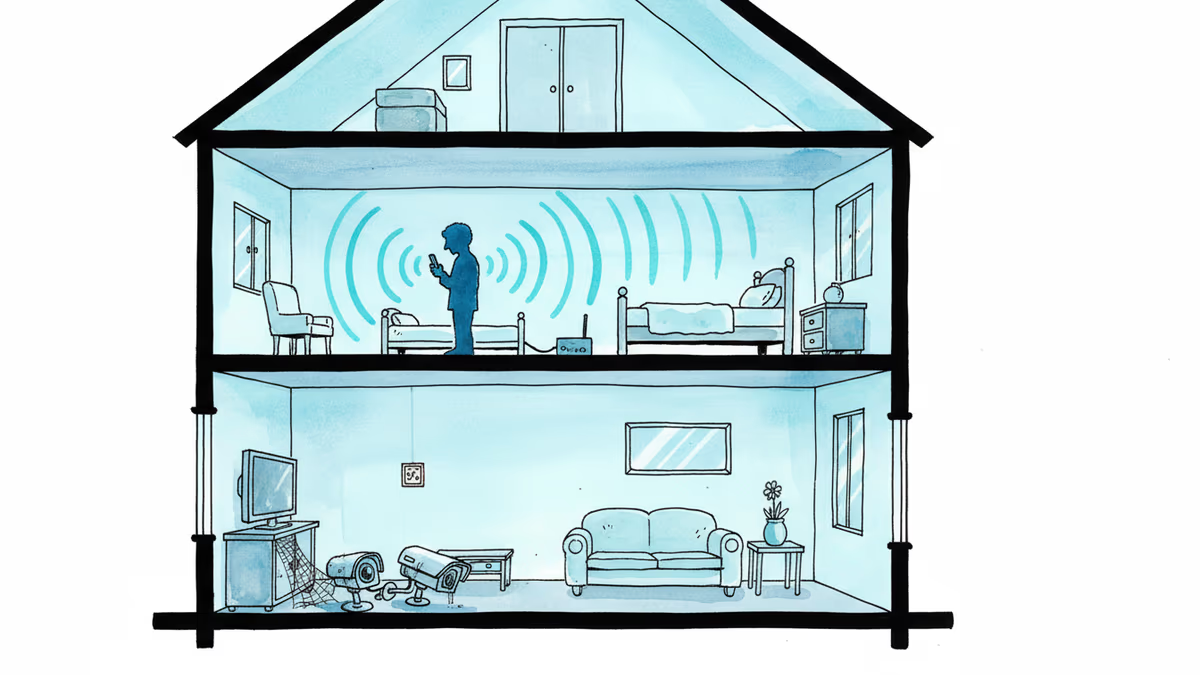
Why would ADT, a 150-year-old security stalwart, drop $170 million on a 4-year-old startup called Origin Wireless? The answer lies in something you can't see: Wi-Fi signals bouncing around your living room.
Origin Wireless developed algorithms that turn existing Wi-Fi networks into invisible motion detectors. No additional cameras, no extra sensors—just software that analyzes how radio frequency signals reflect off moving objects to detect human presence and movement patterns.
The False Alarm Crisis
Home security's dirty secret? 95% false alarm rate. A swaying tree branch, wandering cat, or even an air conditioning unit can trigger alerts. Customers get frustrated, security companies waste money on unnecessary dispatches, and first responders lose trust in the system.
ADT sees Origin Wireless as the solution. Traditional motion sensors scream "something moved!" The new tech whispers "a person walked from the front door to the kitchen at 2:47 AM."

Privacy vs. Protection Paradox
Here's where it gets complicated. This technology can track every movement inside your home—bathroom trips, midnight snack runs, restless pacing during insomnia. It's incredibly powerful for security, but raises uncomfortable questions about domestic surveillance.
Unlike cameras, Wi-Fi-based detection is invisible and harder to disable. You can't put tape over a Wi-Fi signal. For families, this means unprecedented insights into daily routines—or unprecedented intrusion, depending on your perspective.
The Bigger Game
This acquisition signals a shift in home security from reactive to predictive. Instead of responding to break-ins, systems could learn household patterns and flag anomalies before crimes occur. Imagine alerts like "unusual movement detected in basement at 3 AM when family typically sleeps upstairs."
Competitors are watching closely. Google Nest, Amazon Ring, and traditional players like Vivint will likely accelerate their own invisible detection research. The race is on to make homes smarter without making them creepier.
Authors
Related Articles

Tinder now rewards users who scan their irises at a World orb with free in-app boosts. As AI agents flood dating apps, 'being human' is becoming a verified status — and a business model.

Wisconsin Governor Tony Evers vetoed an age verification bill for adult sites, citing privacy concerns. With 25+ states going the other way, the debate cuts to the heart of online freedom vs. child protection.

CBP admits buying location data from ad industry while Meta contractors watch users in bathrooms through smart glasses. The digital privacy boundary is crumbling.

A security researcher discovered he could access 7,000 DJI robot vacuums and peek into strangers' homes. This Valentine's Day revelation exposes the hidden privacy risks of our smart home obsession.
Tinder now rewards users who scan their irises at a World orb with free in-app boosts. As AI agents flood dating apps, 'being human' is becoming a verified status — and a business model.
Wisconsin Governor Tony Evers vetoed an age verification bill for adult sites, citing privacy concerns. With 25+ states going the other way, the debate cuts to the heart of online freedom vs. child protection.
CBP admits buying location data from ad industry while Meta contractors watch users in bathrooms through smart glasses. The digital privacy boundary is crumbling.
A security researcher discovered he could access 7,000 DJI robot vacuums and peek into strangers' homes. This Valentine's Day revelation exposes the hidden privacy risks of our smart home obsession.
Thoughts
Share your thoughts on this article
Sign in to join the conversation