
Blood Pressure Monitoring Is Going Cuffless
From 24/7 cuffless monitoring to Apple Watch notifications, home blood pressure management is undergoing a revolution. Here's what's changing and why it matters for your health.
1.3 Billion People Don't Know They Have It
High blood pressure affects one in three adults worldwide—that's roughly 1.3 billion people. The kicker? About half don't even know they have it. The World Health Organization estimates that if people could diagnose and monitor hypertension at home, simple fixes like quitting smoking or adjusting diet could save 76 million lives.
The problem has always been measurement. Traditional cuffs require the right posture, a quiet environment, and perfect timing. Even doctor's offices can skew results due to "white coat hypertension"—stress from the clinical setting itself. But 2024 marked a turning point in how we think about blood pressure monitoring.
The Cuffless Revolution Arrives
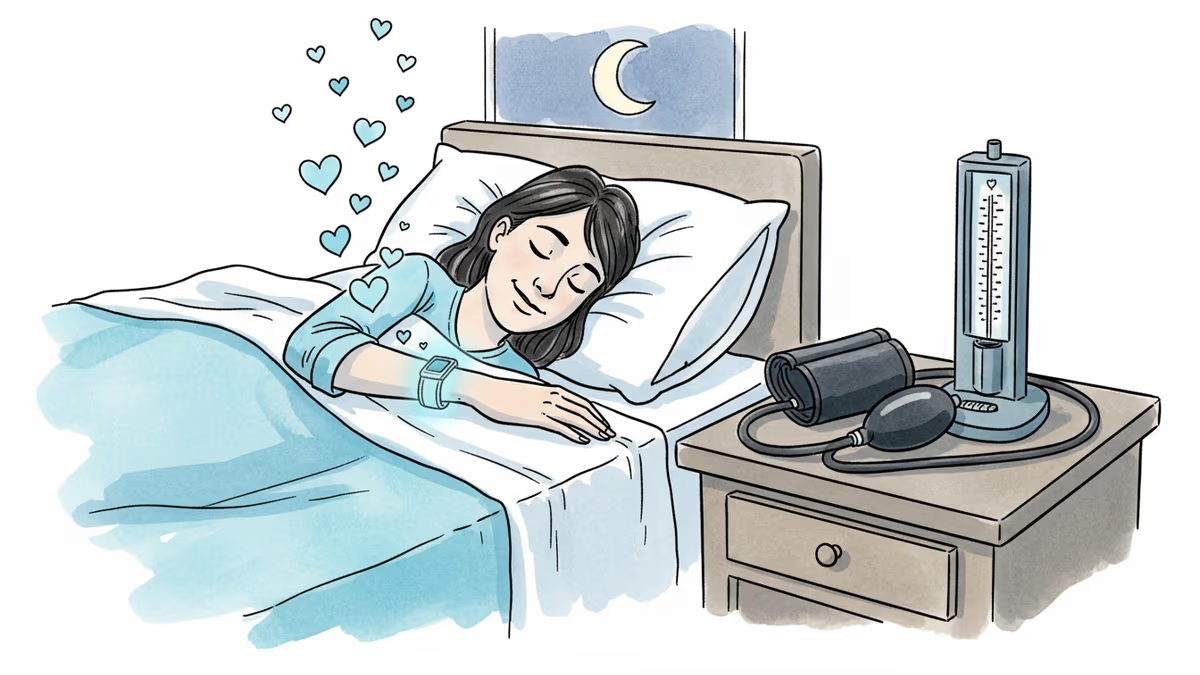
The most significant breakthrough is the Aktiia Hilo, launching in the US later this year after successful rollouts in Europe and Canada. Unlike traditional monitors that squeeze your arm once or twice a day, the Hilo takes up to 25 readings daily, including while you sleep.
This matters more than you might think. If your blood pressure doesn't drop during sleep, that's a serious indicator of potential heart disease. The gold standard for BP measurement isn't in a doctor's office—it's during your normal daily activities, when you're walking, working, or resting.
The technology shift is fundamental. Traditional cuffs use oscillometric detection—essentially listening for vibrations when blood flow stops and starts. The Hilo uses optical photoplethysmography (PPG) sensors, the same technology fitness trackers use for heart rate, to analyze blood vessel shape changes and extrapolate blood pressure.
Apple Watch Changes the Game

The Apple Watch Series 11 introduced hypertension notifications in 2024, marking the first time the world's most popular consumer health device offered blood pressure insights. The FDA cleared the feature, though with important caveats: it's not diagnostic, has limited indication for undiagnosed users, and absence of notification doesn't mean absence of hypertension.
Still, the implications are massive. The Apple Watch analyzes 30 days of cardiac data from existing sensors—no calibration required. For millions of users who might never think to check their blood pressure, this could be their first warning sign.
Whoop MG ($359/year) also entered the space but chose not to pursue FDA clearance, focusing instead on user experience over regulatory approval.
Medical vs. Consumer Grade Accuracy
Traditional monitors like the Withings BPM Vision ($180) remain the gold standard for accuracy. FDA-cleared and meeting American Heart Association protocols, it offers medical-grade precision in a user-friendly tabletop design.
The accuracy debate is heating up. Medical professionals emphasize that consumer wearables should supplement, not replace, traditional monitoring. The American Heart Association maintains that cuff-based measurements remain the most reliable for diagnosis and treatment decisions.
But consumer advocates argue that imperfect continuous monitoring beats perfect occasional monitoring. If someone discovers their hypertension through an Apple Watch notification, does the initial detection method matter?
The Regulatory Tightrope
The FDA faces a delicate balance. Too strict, and life-saving innovations get delayed. Too lenient, and consumers might rely on inaccurate readings for critical health decisions. The agency's approach—approving Apple's "notification" feature while requiring disclaimers—suggests a middle path: enable awareness while maintaining medical oversight.
European regulators have been more permissive. The Aktiia Hilo received CE marking and meets ISO 81060-2 standards for blood pressure monitor validation. This regulatory divergence could influence where health tech companies focus their innovation efforts.
Authors
Related Articles
The Apple Watch Series 4 didn't just upgrade wearables — it shifted them from fitness tools to health monitors. Here's what that shift really means for consumers, medicine, and your data.
A $7M quantum computing competition is testing whether today's noisy, limited quantum machines can actually help human health—before the powerful ones we've been promised ever arrive.
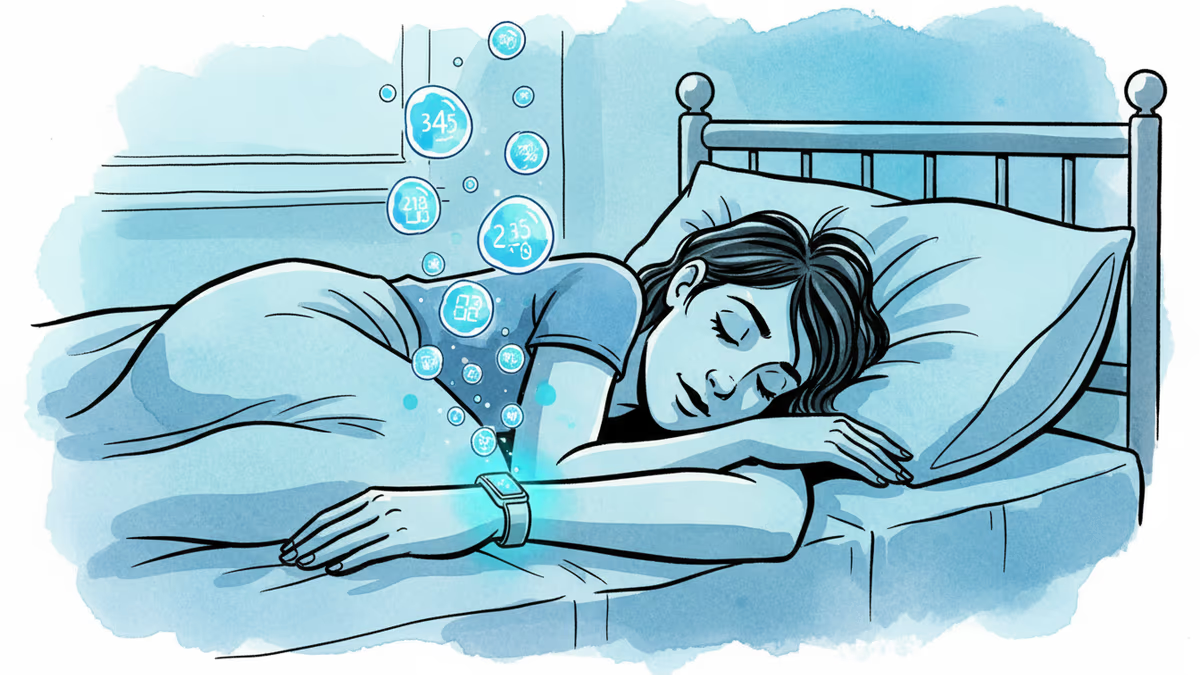
The Aktiia Hilo band promises 24/7 blood pressure monitoring without the squeeze. As it heads to US market, we explore what continuous BP tracking really means for healthcare.
After losing 45% of revenue to Oura's patent dispute, Ultrahuman launches Ring Pro with 15-day battery life. Can the Indian startup reclaim its US market share in the booming smart ring category?
The Apple Watch Series 4 didn't just upgrade wearables — it shifted them from fitness tools to health monitors. Here's what that shift really means for consumers, medicine, and your data.
A $7M quantum computing competition is testing whether today's noisy, limited quantum machines can actually help human health—before the powerful ones we've been promised ever arrive.
The Aktiia Hilo band promises 24/7 blood pressure monitoring without the squeeze. As it heads to US market, we explore what continuous BP tracking really means for healthcare.
After losing 45% of revenue to Oura's patent dispute, Ultrahuman launches Ring Pro with 15-day battery life. Can the Indian startup reclaim its US market share in the booming smart ring category?
Thoughts
Share your thoughts on this article
Sign in to join the conversation