
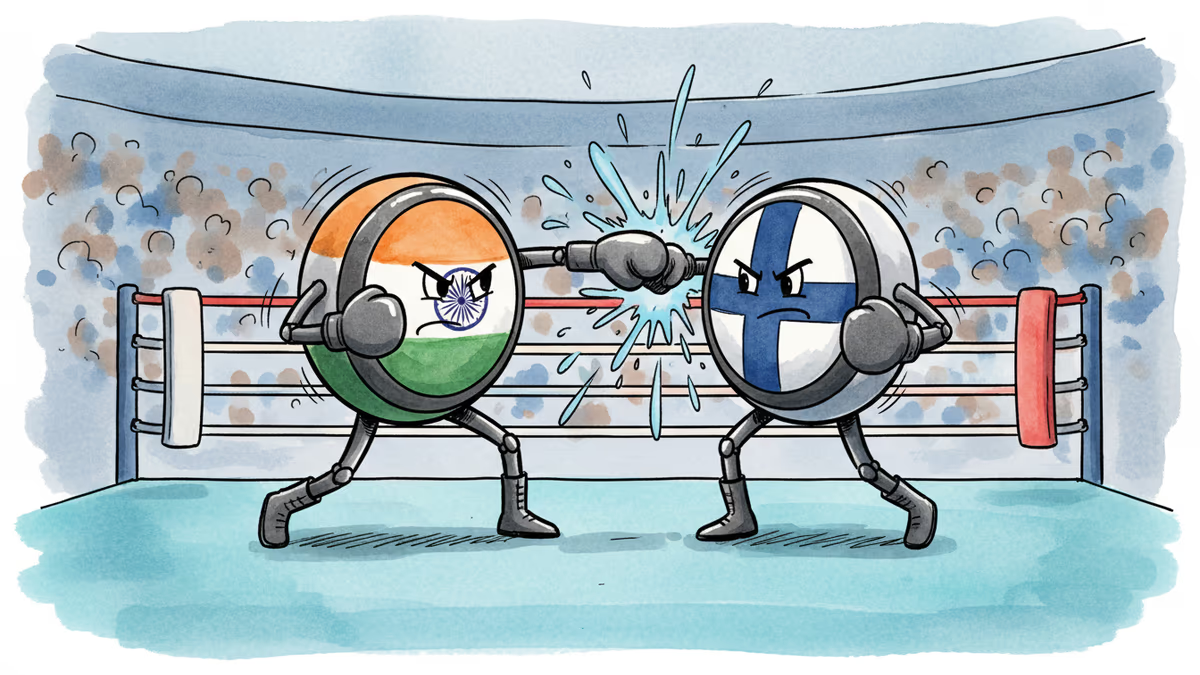
The Smart Ring Patent War: How Ultrahuman Lost 45% Revenue and Fought Back
After losing 45% of revenue to Oura's patent dispute, Ultrahuman launches Ring Pro with 15-day battery life. Can the Indian startup reclaim its US market share in the booming smart ring category?
700,000 Users, 45% Revenue Gone Overnight
In October 2025, Indian wearables startup Ultrahuman faced every entrepreneur's nightmare. The U.S. International Trade Commission ruled in favor of rival Oura in a patent dispute, effectively banning Ultrahuman from importing new smart ring inventory into America. The blow was devastating: the U.S. represented 45% of Ultrahuman's 700,000 daily active users worldwide.
Four months later, Ultrahuman fired back. On Friday, the Bengaluru-based company unveiled its third-generation smart ring, the Ring Pro, boasting 15 days of battery life compared to the previous model's four to six days. Priced at $479, it's a 37% premium over the Ring Air's $349 price tag, but delivers more than triple the battery performance.
Patent Workaround or Genuine Innovation?
CEO Mohit Kumar claims the Ring Pro represents a complete redesign to circumvent Oura's patents. "We developed the Ring Pro with a new design," Kumar told TechCrunch, adding that the device features a redesigned heart-rate sensing architecture and a new dual-core processor. The company has submitted the device to U.S. Customs and Border Protection for import clearance.
But skeptics wonder: Is this genuine innovation or expensive patent theater? The timing suggests necessity rather than natural product evolution. Despite the U.S. disruption, Ultrahuman maintains it's operating at an annualized revenue run rate of $150 million, though margins are expected to narrow due to litigation costs and redesign expenses.
Meanwhile, Oura continues to dominate with more than two-thirds of the smart ring market, while Ultrahuman holds the second position with roughly 25% market share, according to IDC data.

Real-Time AI: The Next Battleground?
Alongside the Ring Pro, Ultrahuman introduced Jade, a "biointelligence" system that promises real-time health insights rather than retrospective summaries. Instead of telling you yesterday's sleep score was 85, Jade might suggest taking five deep breaths when it detects elevated stress levels in real-time.
"Most AI tools today look backward at your data," Kumar explained. "Jade is built to react to your health in real time and surface actions users can take." The system will be available to all Ultrahuman users without requiring a subscription—a potential competitive advantage in a market where Oura charges monthly fees for premium features.
The question remains whether consumers want constant health coaching or if they'll suffer from "notification fatigue." The wearables industry hasn't fully solved the problem of distinguishing genuinely useful alerts from digital noise.
The Broader Smart Ring Boom
Ultrahuman's patent troubles come amid explosive growth in the smart ring category. Global shipments grew nearly 80% year-over-year in 2025, according to Counterpoint Research, driven by demand for compact wearables with advanced sleep tracking and longer battery life.
Interestingly, 68% of Ultrahuman's user base is female, up from 65% a year earlier, reflecting strong adoption of the startup's women's health features. This demographic focus could prove crucial as the market matures and companies seek differentiation beyond basic fitness tracking.
Authors
Related Articles
The Apple Watch Series 4 didn't just upgrade wearables — it shifted them from fitness tools to health monitors. Here's what that shift really means for consumers, medicine, and your data.
From 24/7 cuffless monitoring to Apple Watch notifications, home blood pressure management is undergoing a revolution. Here's what's changing and why it matters for your health.
The Aktiia Hilo band promises 24/7 blood pressure monitoring without the squeeze. As it heads to US market, we explore what continuous BP tracking really means for healthcare.
Meta plans to launch a smartwatch with AI features in 2025 after scrapping a similar project in 2022. We analyze why the company is trying again and what it means for the wearable market.
The Apple Watch Series 4 didn't just upgrade wearables — it shifted them from fitness tools to health monitors. Here's what that shift really means for consumers, medicine, and your data.
From 24/7 cuffless monitoring to Apple Watch notifications, home blood pressure management is undergoing a revolution. Here's what's changing and why it matters for your health.
The Aktiia Hilo band promises 24/7 blood pressure monitoring without the squeeze. As it heads to US market, we explore what continuous BP tracking really means for healthcare.
Meta plans to launch a smartwatch with AI features in 2025 after scrapping a similar project in 2022. We analyze why the company is trying again and what it means for the wearable market.
Thoughts
Share your thoughts on this article
Sign in to join the conversation