
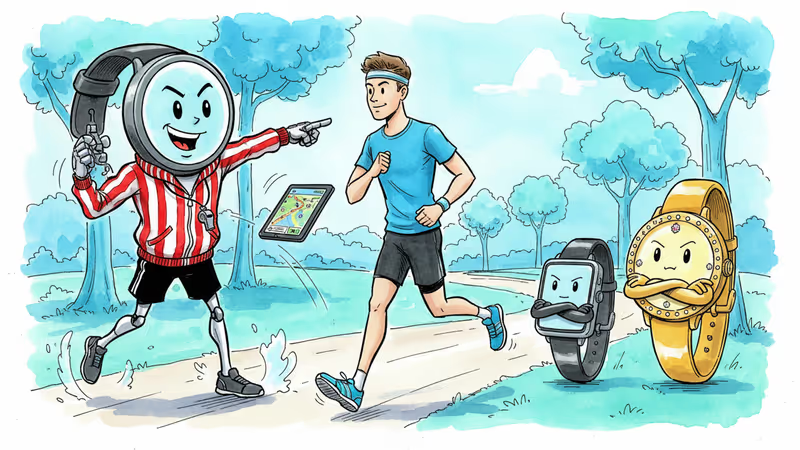
Fitness Trackers No Longer Sell Health—They Sell Lifestyle
The 2026 fitness tracker market reveals a shift from basic health monitoring to personalized lifestyle coaching. We analyze how wearables are evolving beyond simple metrics to become integral parts of daily life.
A $99Amazfit Active 2 scored the same as a $1,000Garmin Fenix 8 in recent reviews. Coincidence? Hardly.
The fitness tracker market is experiencing a fascinating shift. It's no longer about "more sensors, better accuracy." Instead, the question has become: "How seamlessly does this fit into your actual life?"
When Price Stops Predicting Performance
The most striking change in 2026's fitness tracker landscape is the collapse of the traditional price-performance correlation. The $99Amazfit Active 2 delivers continuous heart rate monitoring, blood oxygen tracking, stress analysis, and 160 workout modes—features that were flagship-exclusive just a few years ago.
Meanwhile, the $999Garmin Fenix 8 adds call functionality and voice assistants, but its core fitness tracking doesn't dramatically outperform budget alternatives. You're paying 10 times more for incremental improvements.
This democratization stems from sensor technology standardization and manufacturing scale. A $50 band can now pack sensors that once required premium pricing. The real differentiator isn't hardware—it's software intelligence and ecosystem integration.
The Ring That's Disrupting Wrists
The most intriguing development isn't happening on wrists at all. The $349Oura Ring 4 earning "best non-wrist tracker" recognition signals something deeper than technological achievement.
Smart rings represent anti-complexity. No screen, no notifications, no distractions. Just sleep and recovery data. This appeals to users experiencing "digital fatigue"—people who want less information, not more. The ring's success suggests consumers are rebelling against feature bloat.

Samsung's Galaxy Ring entry validates this trend. Even tech giants are betting that sometimes, less really is more. The question is whether this minimalist approach can scale beyond early adopters.
AI Coaches Become Standard Equipment
Artificial intelligence has shifted from novelty to necessity. Garmin's free coaching, Amazfit's$77 annual AI chatbot, Apple's Workout Buddy—every major player now offers algorithmic guidance. These aren't just data dashboards; they're digital personal trainers making daily recommendations.
Oura pushes further, offering blood test services that combine wearable data with lab results. This represents wearables' evolution from measurement devices to comprehensive health platforms.
The business model shift is clear: hardware becomes the gateway, recurring services drive revenue. Companies are betting users will pay monthly for insights, not just upfront for devices.
Platform Lock-In Intensifies
The Apple Watch SE 3 dominates iPhone users not because of superior specs, but because of iOS ecosystem integration. Similarly, Samsung Galaxy Watches only reach full potential with Galaxy phones.
This platform dependency fundamentally changes purchasing decisions. Consumers aren't choosing devices anymore—they're choosing ecosystems. Switch costs become prohibitive when your health data, workout history, and daily routines are locked into one platform.
For consumers, this creates a strategic dilemma: commit to an ecosystem for years, or accept reduced functionality by mixing brands.
The Subscription Health Future
Nearly every advanced feature now requires ongoing payments. Oura's full functionality needs monthly subscriptions. Garmin introduced premium tiers. Even budget brands like Amazfit gate their best AI features behind paywalls.
This subscription creep reflects a broader industry shift. Hardware margins are shrinking, so companies chase recurring revenue. The question is whether consumers will accept monthly health bills, or if subscription fatigue will create backlash.
Authors
Related Articles

One caregiver's experience with ElliQ, an AI companion robot, reveals how social technology may fill a critical gap in managing Parkinson's disease — and what that says about elder care's future.
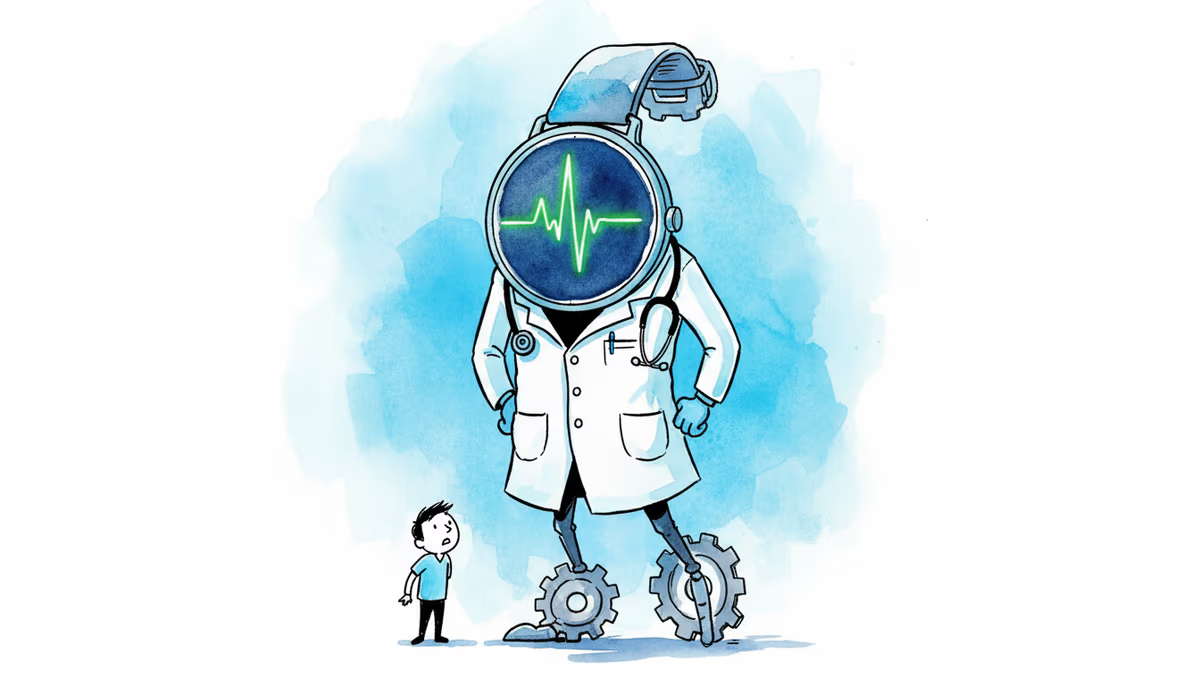
The Apple Watch Series 4 didn't just upgrade wearables — it shifted them from fitness tools to health monitors. Here's what that shift really means for consumers, medicine, and your data.
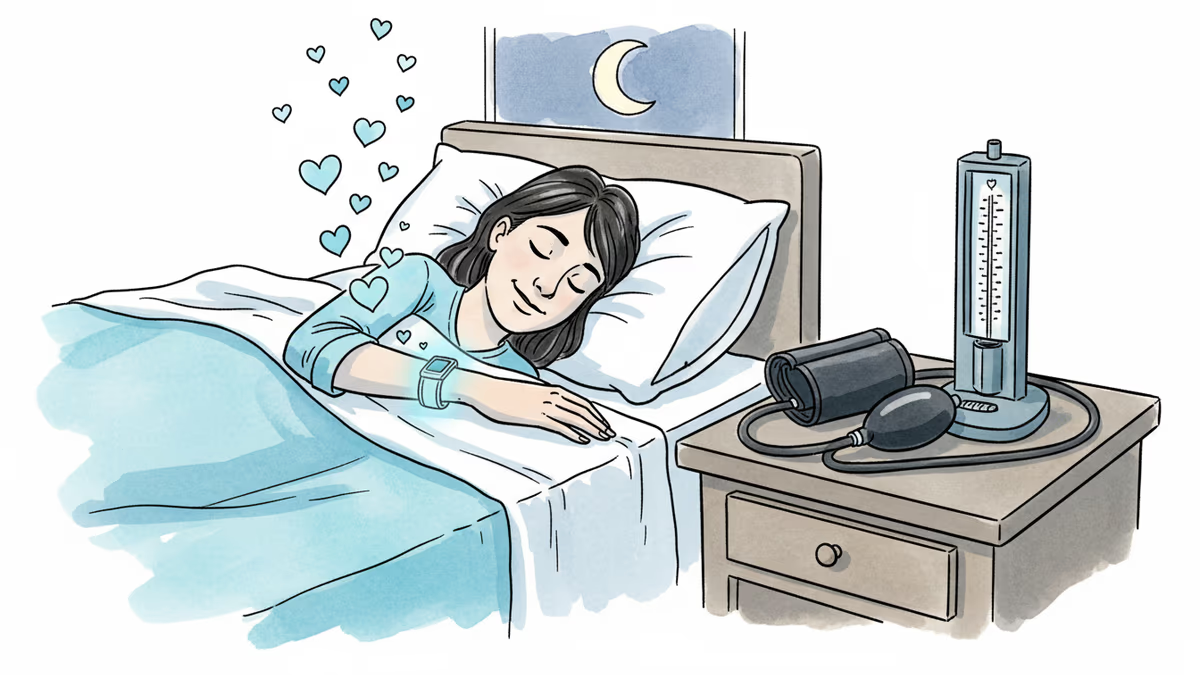
From 24/7 cuffless monitoring to Apple Watch notifications, home blood pressure management is undergoing a revolution. Here's what's changing and why it matters for your health.
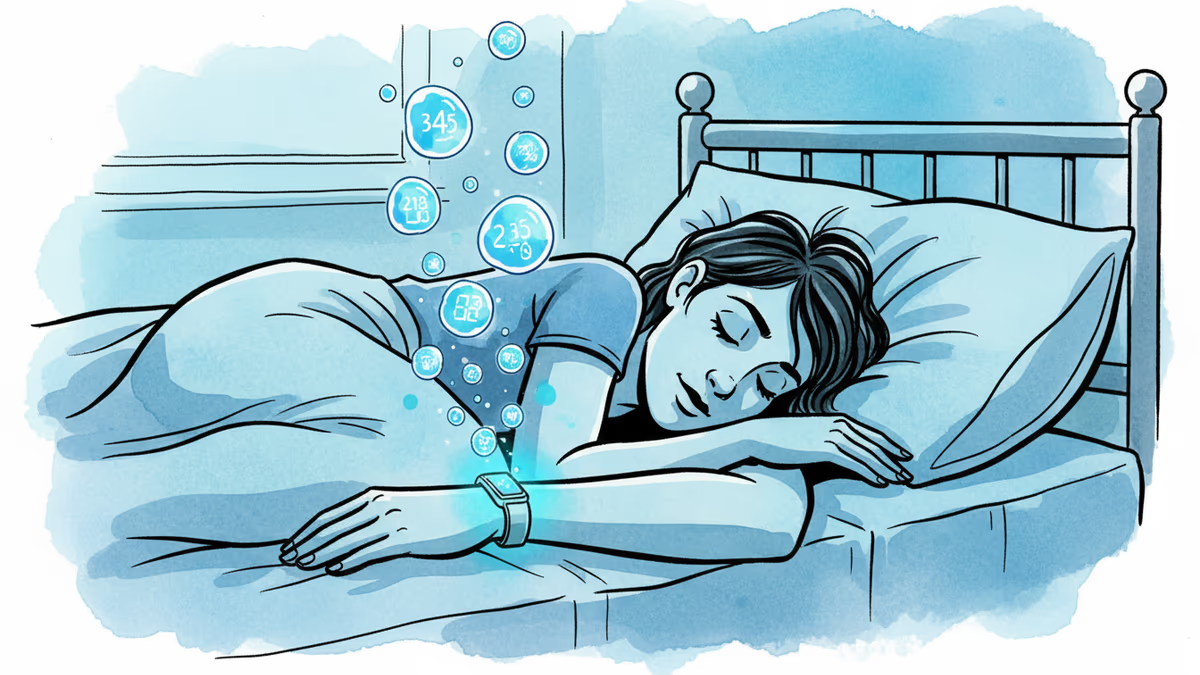
The Aktiia Hilo band promises 24/7 blood pressure monitoring without the squeeze. As it heads to US market, we explore what continuous BP tracking really means for healthcare.
One caregiver's experience with ElliQ, an AI companion robot, reveals how social technology may fill a critical gap in managing Parkinson's disease — and what that says about elder care's future.
The Apple Watch Series 4 didn't just upgrade wearables — it shifted them from fitness tools to health monitors. Here's what that shift really means for consumers, medicine, and your data.
From 24/7 cuffless monitoring to Apple Watch notifications, home blood pressure management is undergoing a revolution. Here's what's changing and why it matters for your health.
The Aktiia Hilo band promises 24/7 blood pressure monitoring without the squeeze. As it heads to US market, we explore what continuous BP tracking really means for healthcare.
Thoughts
Share your thoughts on this article
Sign in to join the conversation