
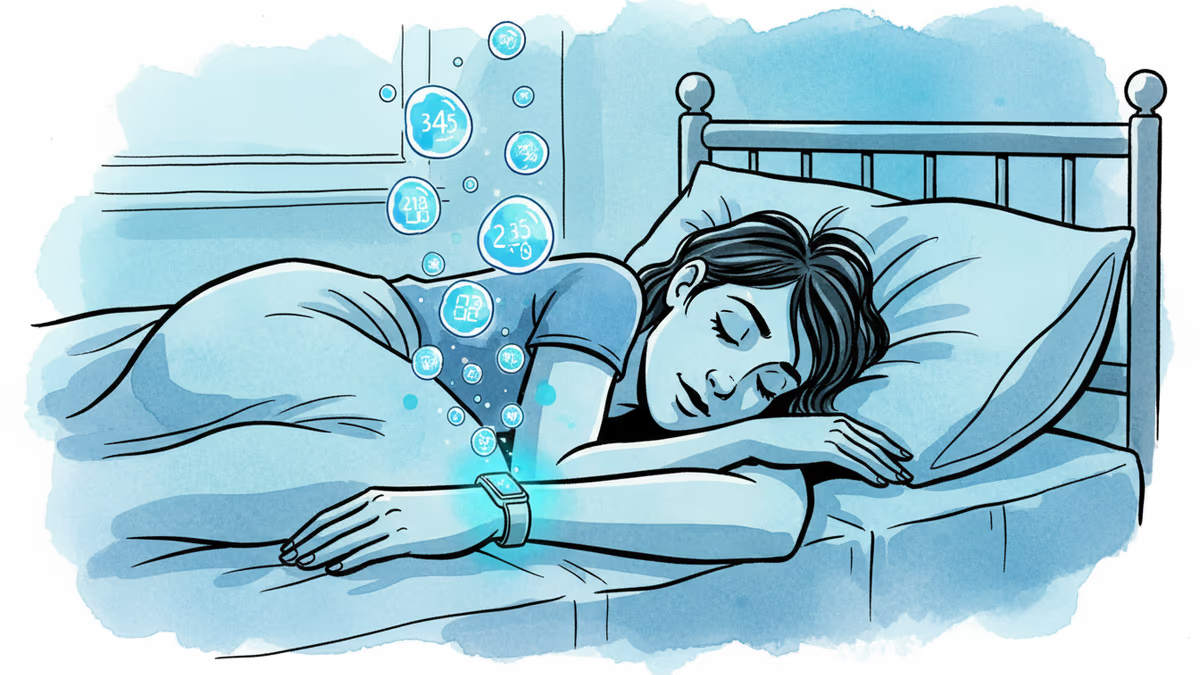
Your Blood Pressure, Measured 25 Times a Day. Ready?
The Aktiia Hilo band promises 24/7 blood pressure monitoring without the squeeze. As it heads to US market, we explore what continuous BP tracking really means for healthcare.
The Silent Killer Gets Louder
One in three people worldwide has high blood pressure. Most don't know it. When they find out, it's often too late—after a heart attack or stroke. The cruel irony? We've had the tools to prevent this for decades. Exercise, less salt, medication. Simple stuff. The hard part is knowing when to use them.
Enter the Aktiia Hilo, a cuffless wristband that measures your blood pressure up to 25 times daily. No arm squeezing. No 30-minute prep time. No awkward doctor visits where your pressure spikes just from being there. It even works while you sleep—arguably the most important time to monitor cardiovascular health.
The device cleared FDA approval in July 2025 and is expected to hit US shelves later this year. WIRED was the first US outlet to test it, rating it 8/10. But beyond the tech specs lies a bigger question: Do we really want our blood pressure measured all day long?
Light Reading Your Arteries
The Hilo ditches the traditional inflate-and-squeeze approach. Instead, it uses photoplethysmography—the same optical sensors in your Apple Watch or Fitbit—to analyze pulse patterns in your wrist arteries. A proprietary algorithm converts these light-based readings into systolic and diastolic numbers.
The catch? Monthly calibration with a traditional cuff is required. You can't use your home blood pressure monitor—it has to be Aktiia's Bluetooth-enabled cuff. This ensures accuracy but creates vendor lock-in, a familiar Silicon Valley playbook.

Early users report fascinating insights. One tester noted how "reading the wrong email" would spike their pressure in real-time. Another discovered their blood pressure properly dipped during sleep—a sign of healthy cardiovascular function that's impossible to track with conventional monitors.
Doctors: Excited but Cautious
Cardiologists are intrigued but measured in their enthusiasm. Dr. Sarah Chen, a hypertension specialist at Stanford, sees potential: "Continuous monitoring could revolutionize how we diagnose and treat high blood pressure. But we need to be careful about creating anxiety in patients who obsess over every reading."
The concern is valid. Unlike glucose monitors that help diabetics make immediate dietary decisions, blood pressure fluctuates naturally throughout the day. A slightly high reading at 2 PM doesn't necessarily require action—but try telling that to a worried patient.
Meanwhile, patients with "white coat hypertension"—normal pressure at home, elevated at the doctor's office—are eager for 24/7 monitoring. Currently, getting continuous blood pressure data requires an overnight hospital stay with a bulky ambulatory monitor.
Market Disruption or Medical Distraction?
Apple recently added hypertension notifications to the Apple Watch, but it only flags patterns over 30 days—no specific readings. Whoop claims similar features but hasn't sought FDA approval. The Hilo sits somewhere between: FDA-cleared medical device meets consumer wearable.
Pricing remains a wildcard. The band plus one-year subscription is expected around $400-500. That's competitive with high-end fitness trackers but expensive for a single-purpose medical device. Insurance coverage is unlikely initially.
The broader trend is clear: healthcare is moving from reactive (treat when sick) to predictive (prevent before symptoms). Continuous monitoring of vital signs—glucose, heart rhythm, now blood pressure—represents medicine's shift toward always-on surveillance.
Authors
Related Articles
The Apple Watch Series 4 didn't just upgrade wearables — it shifted them from fitness tools to health monitors. Here's what that shift really means for consumers, medicine, and your data.
A $7M quantum computing competition is testing whether today's noisy, limited quantum machines can actually help human health—before the powerful ones we've been promised ever arrive.
From 24/7 cuffless monitoring to Apple Watch notifications, home blood pressure management is undergoing a revolution. Here's what's changing and why it matters for your health.
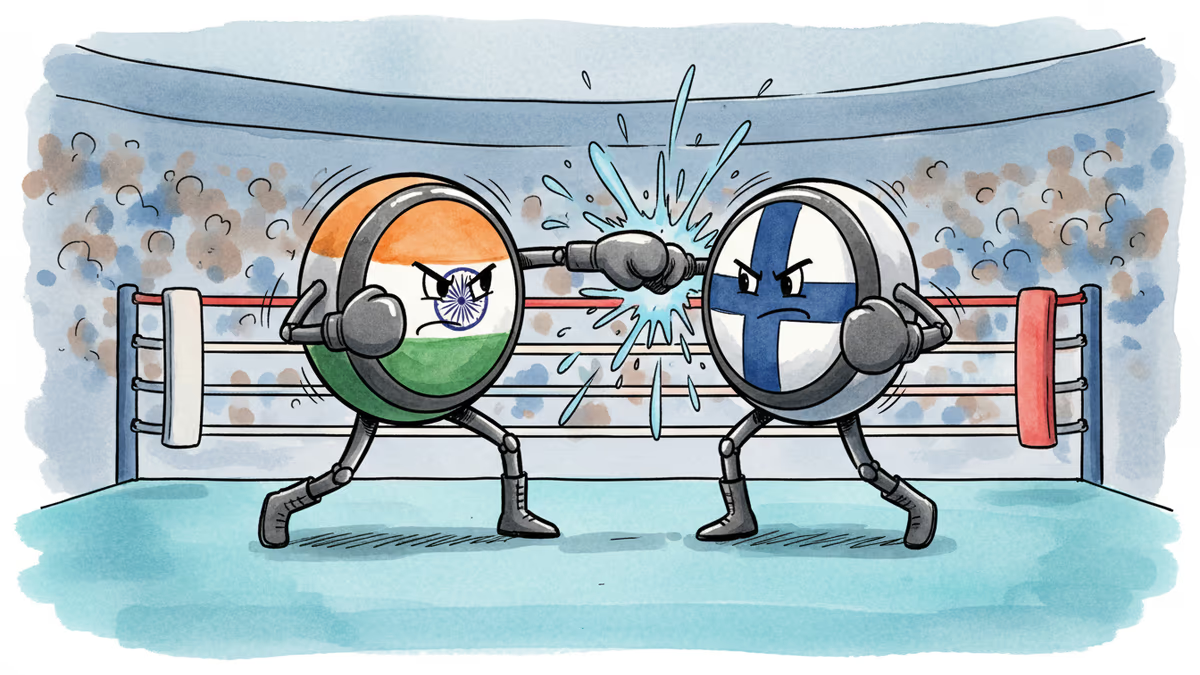
After losing 45% of revenue to Oura's patent dispute, Ultrahuman launches Ring Pro with 15-day battery life. Can the Indian startup reclaim its US market share in the booming smart ring category?
The Apple Watch Series 4 didn't just upgrade wearables — it shifted them from fitness tools to health monitors. Here's what that shift really means for consumers, medicine, and your data.
A $7M quantum computing competition is testing whether today's noisy, limited quantum machines can actually help human health—before the powerful ones we've been promised ever arrive.
From 24/7 cuffless monitoring to Apple Watch notifications, home blood pressure management is undergoing a revolution. Here's what's changing and why it matters for your health.
After losing 45% of revenue to Oura's patent dispute, Ultrahuman launches Ring Pro with 15-day battery life. Can the Indian startup reclaim its US market share in the booming smart ring category?
Thoughts
Share your thoughts on this article
Sign in to join the conversation