

Smart Glasses Are Getting Smarter, But Are We Ready?
Even Realities' G2 smart glasses showcase impressive tech advances, yet fundamental questions about privacy, ethics, and natural interaction remain unresolved.
$599 for a Glimpse of Tomorrow's Awkwardness
Mid-conversation with a friend about his brutal hangover, text suddenly materialized in my field of vision: "Aspirin: effective pain reliever for headaches." The Even Realities G2 smart glasses had been listening, analyzing, and helpfully offering medical advice. Impressive? Absolutely. Natural? That's where things get complicated.
In the 19 months since Even Realities launched their first G1 smart glasses, the landscape has shifted dramatically. Ray-Ban has moved 2 million Meta Glasses, Oakley has entered the game, and CES 2026 was flooded with options. Yet the G2 doubles down on a different philosophy: smart glasses that don't scream "I'm recording you."
The upgrades are real. The display is 75% larger, the frame is 0.28 ounces lighter, and battery life stretches to two full days. But the real innovation might be the $249 R1 smart ring that lets you control everything with subtle thumb gestures—no temple tapping required.
The Promise vs. The Reality Gap
The technical specs are genuinely impressive. The new HAO 2.0 display system pumps out 1,200 nits of brightness, making text readable even in challenging light. Prescription support now covers -12.00 to +12.00 diopters—a remarkable engineering feat for such thin lenses.
But here's the rub: software stability remains "a lottery," as one reviewer put it. Bluetooth disconnections, app crashes, and the need for frequent reboots persist even after the official launch. For a device that costs more than many laptops, reliability shouldn't be optional.
The most intriguing feature is Conversate—an AI that listens to your conversations and serves up contextual information in real-time. Mention a celebrity, get a bio. Use technical jargon, get definitions. It's like having Wikipedia whisper in your ear, except it's happening automatically, constantly, invisibly.

The Invisible Recording Dilemma
Unlike Meta's smart glasses, the G2 has no visible indicator that it's processing your conversation. Even Realities claims audio isn't stored—only transcribed text—but the ethical implications are murky. Imagine using this during a job interview or business negotiation. The competitive advantage is obvious, but is it fair?
This isn't just a tech problem—it's a social one. The glasses work best when their intelligence remains covert, but that covertness creates an information asymmetry that feels fundamentally unfair. We're entering an era where "natural" conversation might be artificially enhanced, and nobody knows the rules yet.
Three Perspectives on Smart Glasses' Future
For Early Adopters: The G2 represents meaningful progress toward truly wearable computing. The form factor is there, the display is crisp, and the ring controller is genuinely innovative. If you can live with software hiccups, you're getting a preview of 2030.
For Privacy Advocates: These devices represent a surveillance nightmare wrapped in stylish frames. No visible recording indicators, constant audio processing, and AI analysis of private conversations create unprecedented privacy concerns that regulation hasn't caught up to.
For Business Professionals: The productivity potential is enormous. Real-time translation (33+ languages), teleprompter functionality, and AI-assisted conversation could transform meetings, presentations, and negotiations. But the competitive advantages raise questions about fairness and disclosure.
The Uncanny Valley of Human-AI Interaction
What struck me most wasn't the technology—it was the social awkwardness. Reading AI-generated information while maintaining eye contact is harder than it sounds. The display bounces when you walk, becomes unreadable in bright sunlight, and occasionally lags behind conversation in ways that make you look distracted or rude.
We're not just buying smart glasses; we're beta-testing a new form of human-computer interaction that hasn't figured out its social protocols yet. The technology works, but the etiquette doesn't exist.
Authors
Related Articles
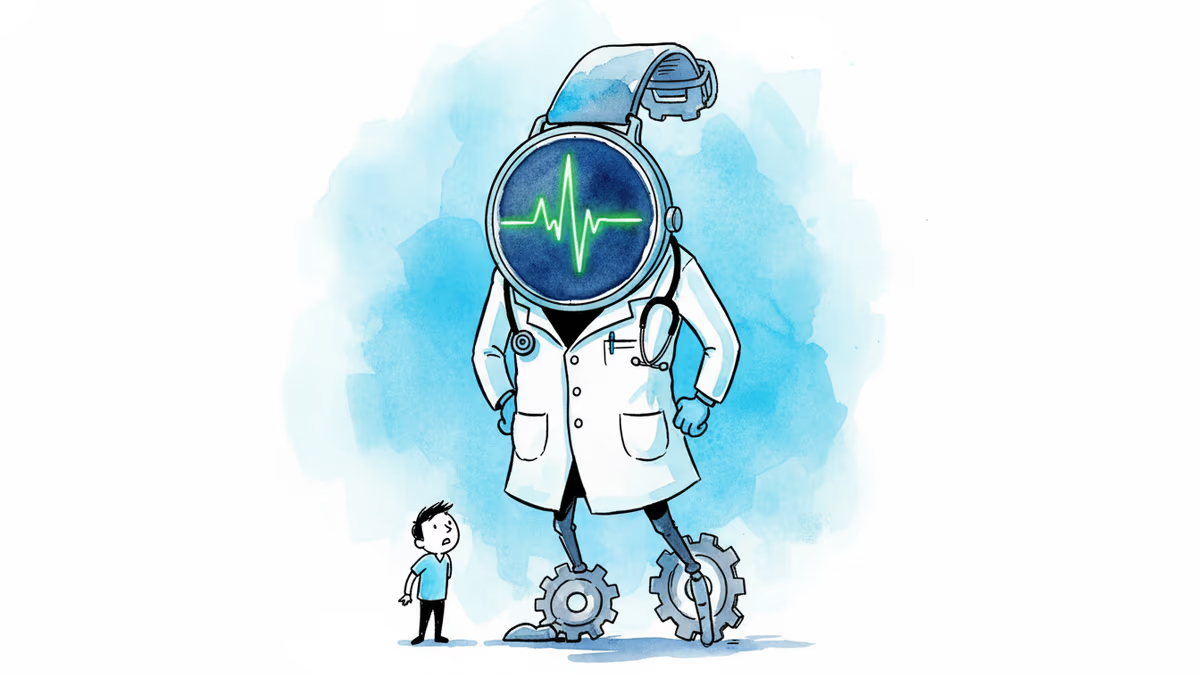
The Apple Watch Series 4 didn't just upgrade wearables — it shifted them from fitness tools to health monitors. Here's what that shift really means for consumers, medicine, and your data.

From 24/7 cuffless monitoring to Apple Watch notifications, home blood pressure management is undergoing a revolution. Here's what's changing and why it matters for your health.
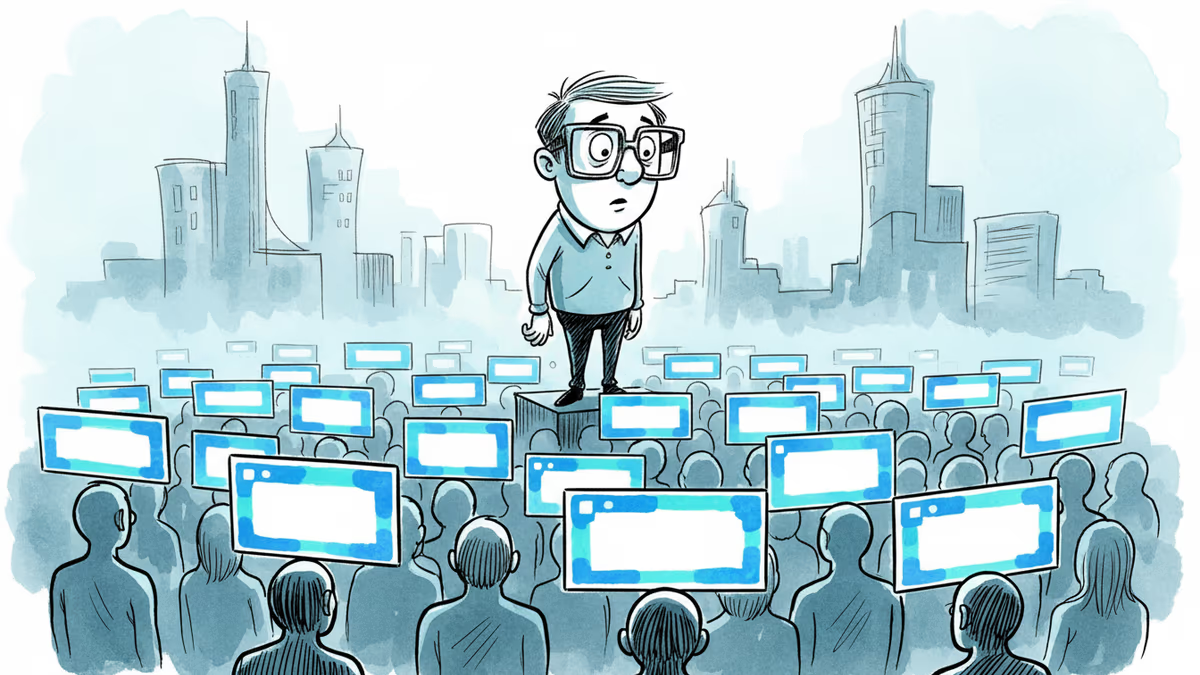
Meta's Ray-Ban smart glasses now feature facial recognition, marking a pivotal moment in everyday surveillance technology. The convenience vs privacy dilemma has officially begun.
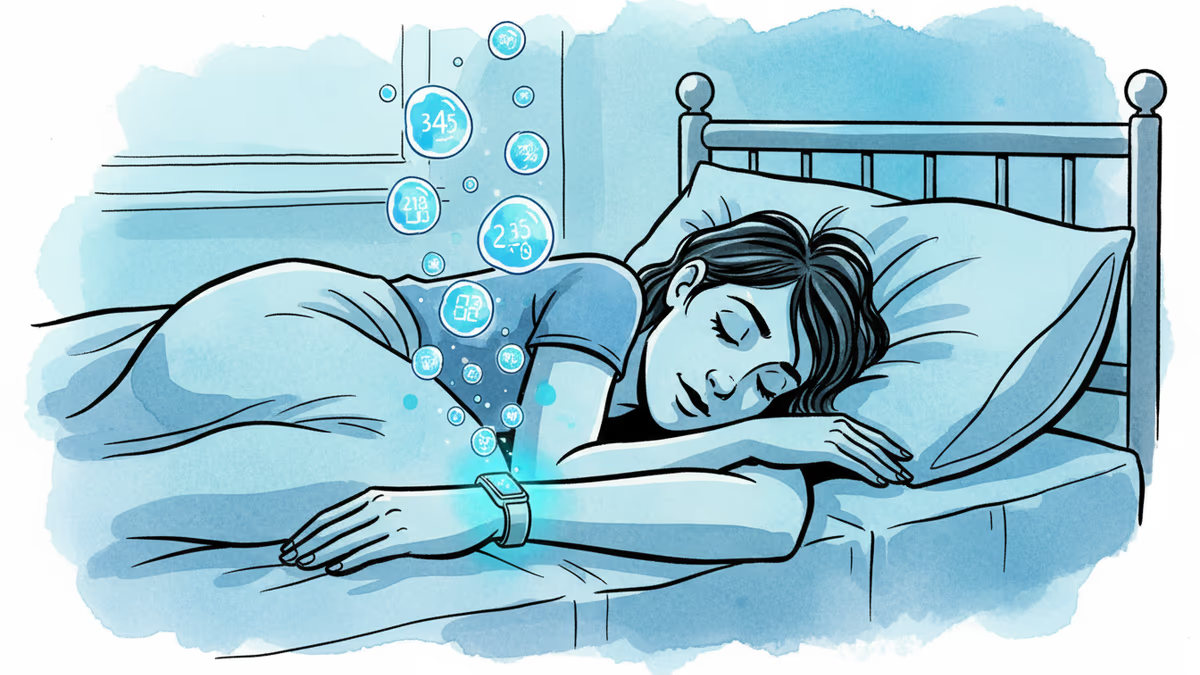
The Aktiia Hilo band promises 24/7 blood pressure monitoring without the squeeze. As it heads to US market, we explore what continuous BP tracking really means for healthcare.
The Apple Watch Series 4 didn't just upgrade wearables — it shifted them from fitness tools to health monitors. Here's what that shift really means for consumers, medicine, and your data.
From 24/7 cuffless monitoring to Apple Watch notifications, home blood pressure management is undergoing a revolution. Here's what's changing and why it matters for your health.
Meta's Ray-Ban smart glasses now feature facial recognition, marking a pivotal moment in everyday surveillance technology. The convenience vs privacy dilemma has officially begun.
The Aktiia Hilo band promises 24/7 blood pressure monitoring without the squeeze. As it heads to US market, we explore what continuous BP tracking really means for healthcare.
Thoughts
Share your thoughts on this article
Sign in to join the conversation