
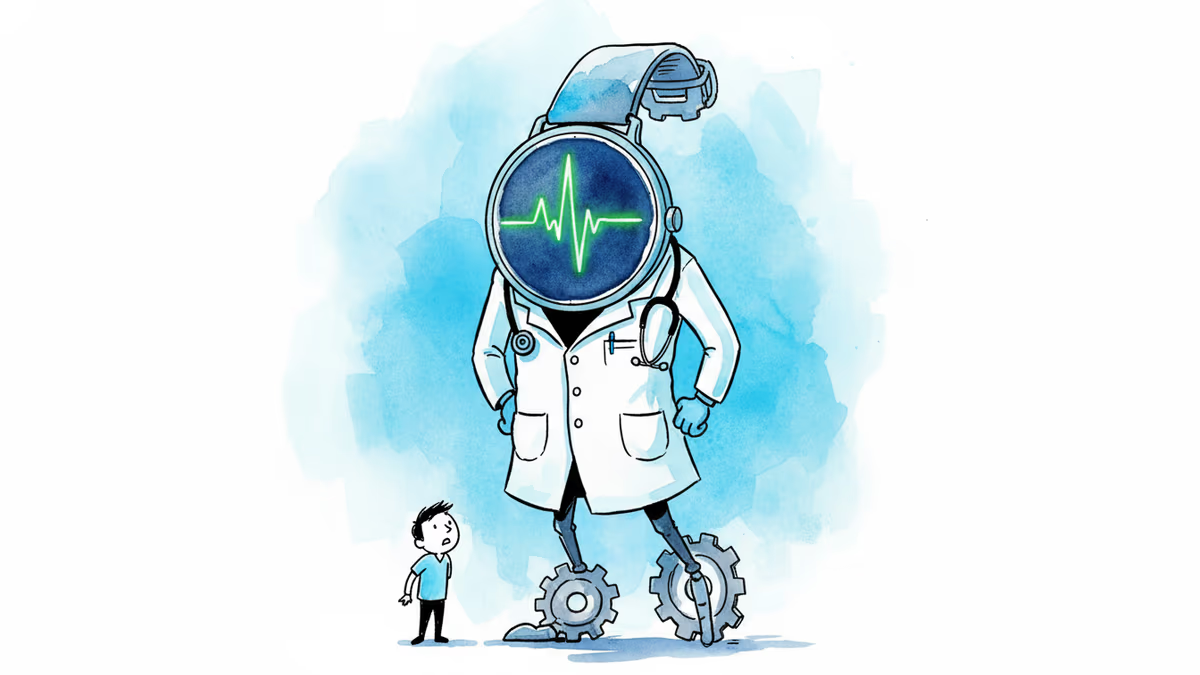
The Gadget That Quietly Rewrote Health Tech
The Apple Watch Series 4 didn't just upgrade wearables — it shifted them from fitness tools to health monitors. Here's what that shift really means for consumers, medicine, and your data.
What if the most consequential medical device of the past decade wasn't invented by a hospital — it was strapped to your wrist?
That's not hyperbole. It's the quiet argument that runs through the entire arc of consumer health tech since 2018, when Apple released the Series 4 — a smartwatch that, for the first time, could take an FDA-cleared electrocardiogram on your wrist. It sounds like a footnote. It wasn't.
From Step Counter to Symptom Spotter
Before the Series 4, the category was essentially a sophisticated pedometer. Smartwatches and fitness bands tracked steps, heart rate, sleep, and activity logs. Useful if you wanted to close your rings or nudge yourself off the couch — but medically, almost irrelevant. The idea of a consumer device detecting atrial fibrillation (AFib) outside a clinical setting was, frankly, not on anyone's roadmap.
Then it was. And people noticed — not just tech reviewers, but cardiologists, insurers, and regulators. Stories emerged of users discovering previously undetected AFib through a wrist notification. The device had crossed a line from lifestyle product into something that could, in specific circumstances, genuinely alter a medical outcome.
The industry followed fast. Blood oxygen saturation. Skin temperature. Sleep apnea detection. Blood pressure monitoring. Each successive generation of devices from Apple, Samsung, Garmin, and Fitbit has pushed further into territory once reserved for clinical hardware. The direction of travel is unmistakable: wearables are becoming, slowly but deliberately, medical-adjacent.
The Gap Between 'Detects' and 'Diagnoses'

Here's where it gets complicated. Consumer-grade ECG sensors are not the same as hospital-grade equipment. Their sensitivity and specificity — the clinical measures of accuracy — still lag behind dedicated medical devices. A wearable flagging an irregular rhythm is a prompt to see a doctor, not a diagnosis. That distinction matters enormously, and it's one that marketing language sometimes blurs.
Physicians are divided. Some genuinely welcome the data — continuous, longitudinal readings that a once-a-year physical simply cannot replicate. Others worry about a flood of anxious patients arriving in emergency rooms clutching their wrist data, having been alarmed by a false positive. The healthcare system, in most countries, was not designed to absorb this volume of patient-generated health data.
Regulators are catching up, but unevenly. The FDA has developed clearer pathways for software-as-a-medical-device, but the global picture is patchwork. Samsung's blood pressure feature launched in South Korea before the US, precisely because regulatory environments differ. The same device, sold globally, can legally do different things depending on where you live.
Who Actually Benefits — and Who Bears the Risk?
For consumers, the promise is real: earlier detection, more data, more agency over your own health. For older adults or those with chronic conditions, continuous monitoring could meaningfully reduce risk.
But the picture has other dimensions. Insurance companies have a long-standing interest in health data. Employers, in some jurisdictions, can incentivize wellness tracking. The more intimate and medically significant the data a wearable collects, the higher the stakes around who can access it, under what conditions, and for what purposes. Most users, when they tap 'agree' on a health app's terms of service, have little idea what they've consented to.
The tech companies themselves are navigating a tension: the more clinical their devices become, the more regulatory scrutiny they attract. Apple has been careful to frame its health features as tools for awareness, not diagnosis. That framing is partly genuine, partly legal protection.
Authors
Related Articles
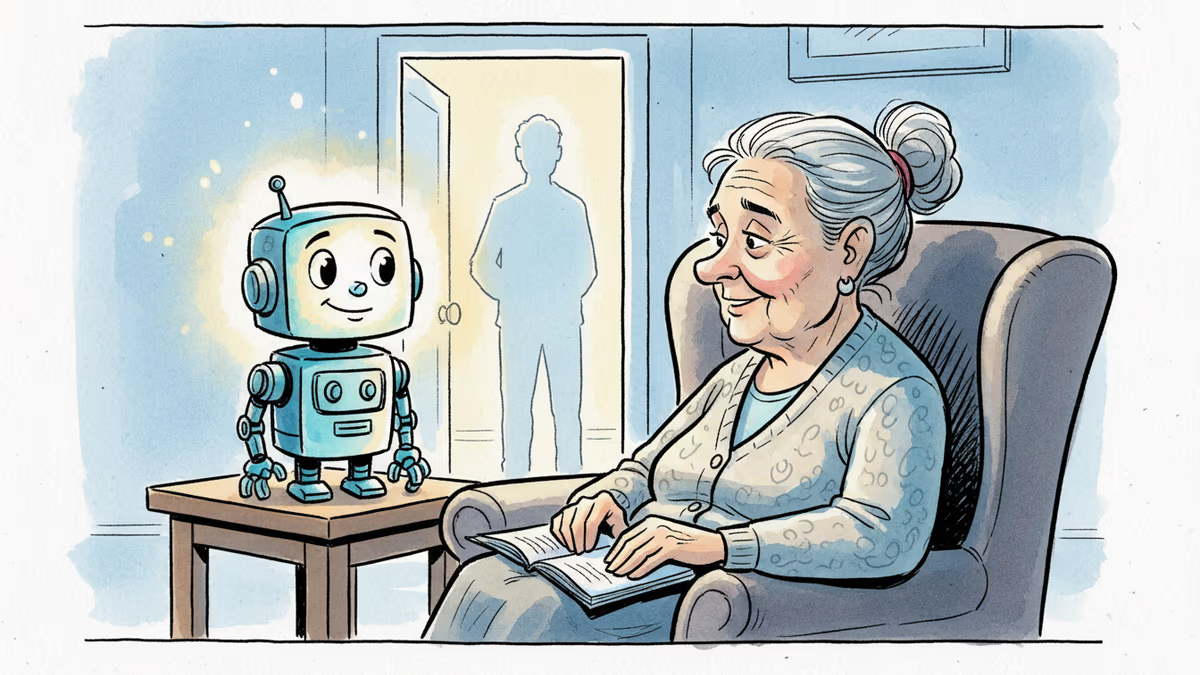
One caregiver's experience with ElliQ, an AI companion robot, reveals how social technology may fill a critical gap in managing Parkinson's disease — and what that says about elder care's future.
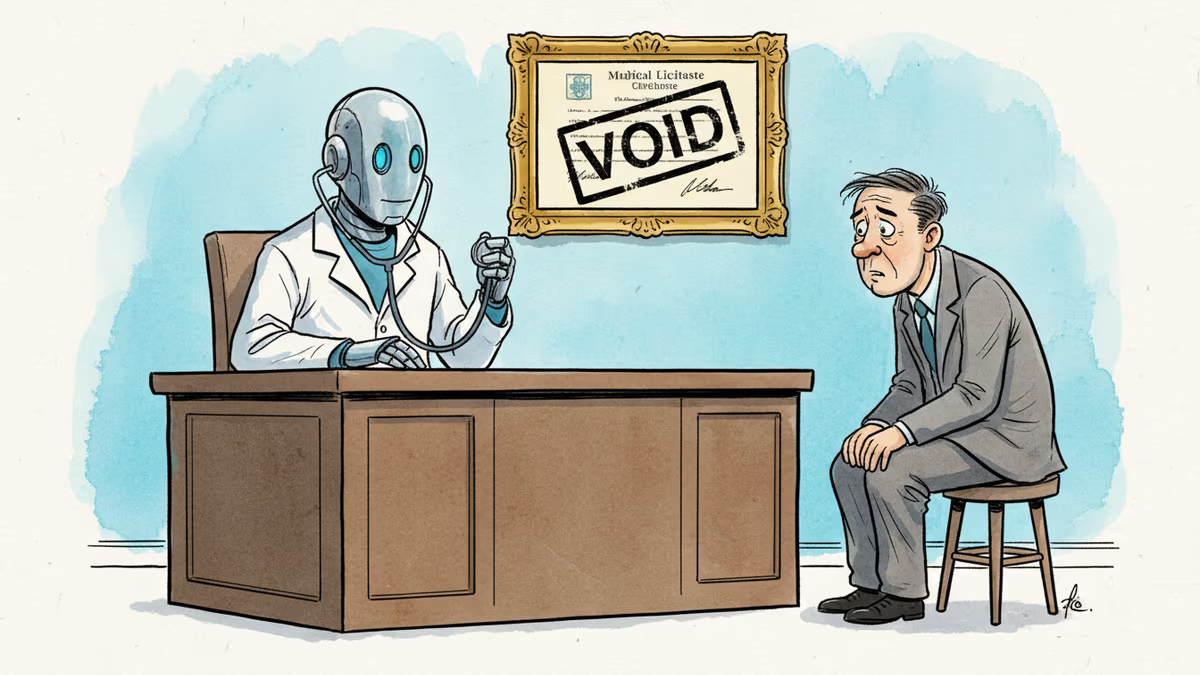
Pennsylvania has sued Character.AI after its chatbot characters claimed to be licensed psychiatrists and provided mental health advice. The case tests whether existing medical law can hold AI platforms accountable.
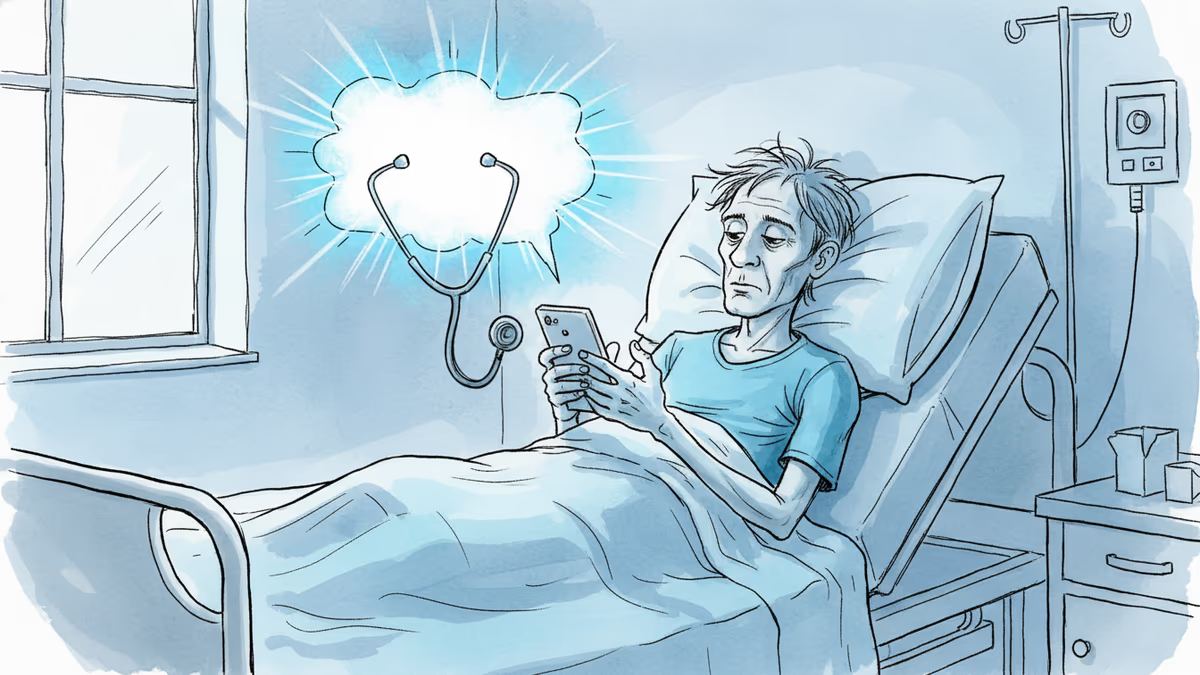
Microsoft, Amazon, and OpenAI have all launched medical AI tools in recent months—with minimal external evaluation. What's at stake when Big Tech moves fast in healthcare?
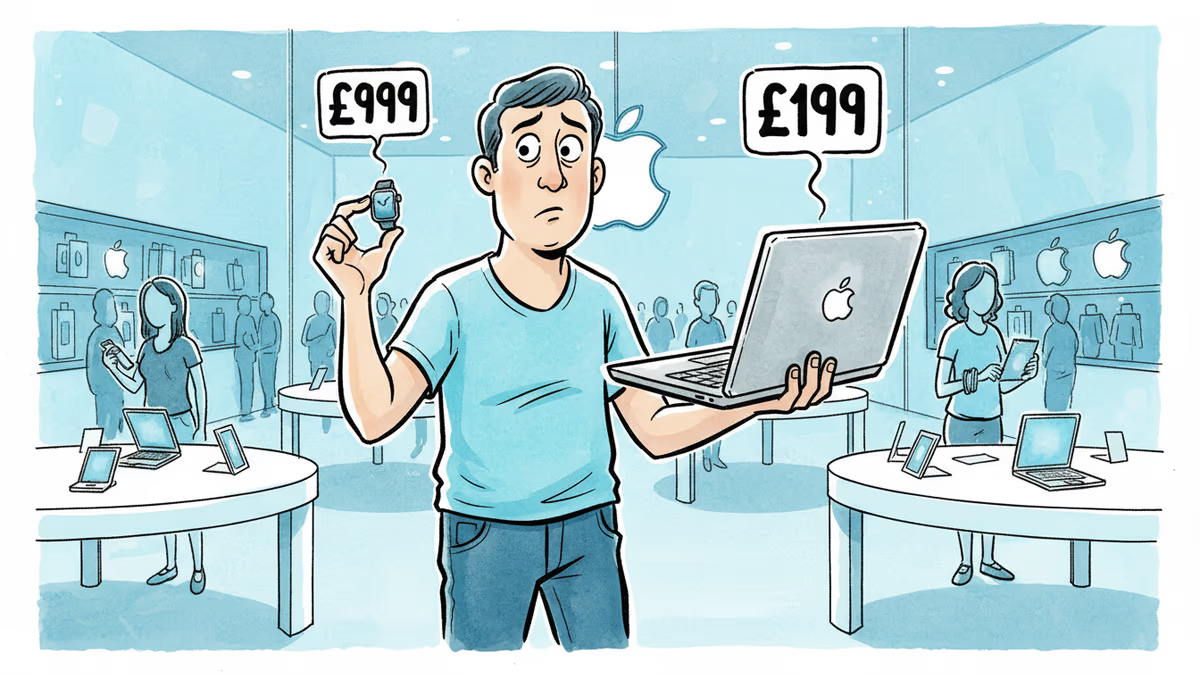
Apple's new $599 MacBook Neo has created an awkward pricing paradox that makes the $800 Apple Watch Ultra 3 seem absurdly overpriced. Consumers are questioning the logic.
One caregiver's experience with ElliQ, an AI companion robot, reveals how social technology may fill a critical gap in managing Parkinson's disease — and what that says about elder care's future.
Pennsylvania has sued Character.AI after its chatbot characters claimed to be licensed psychiatrists and provided mental health advice. The case tests whether existing medical law can hold AI platforms accountable.
Microsoft, Amazon, and OpenAI have all launched medical AI tools in recent months—with minimal external evaluation. What's at stake when Big Tech moves fast in healthcare?
Apple's new $599 MacBook Neo has created an awkward pricing paradox that makes the $800 Apple Watch Ultra 3 seem absurdly overpriced. Consumers are questioning the logic.
Thoughts
Share your thoughts on this article
Sign in to join the conversation