
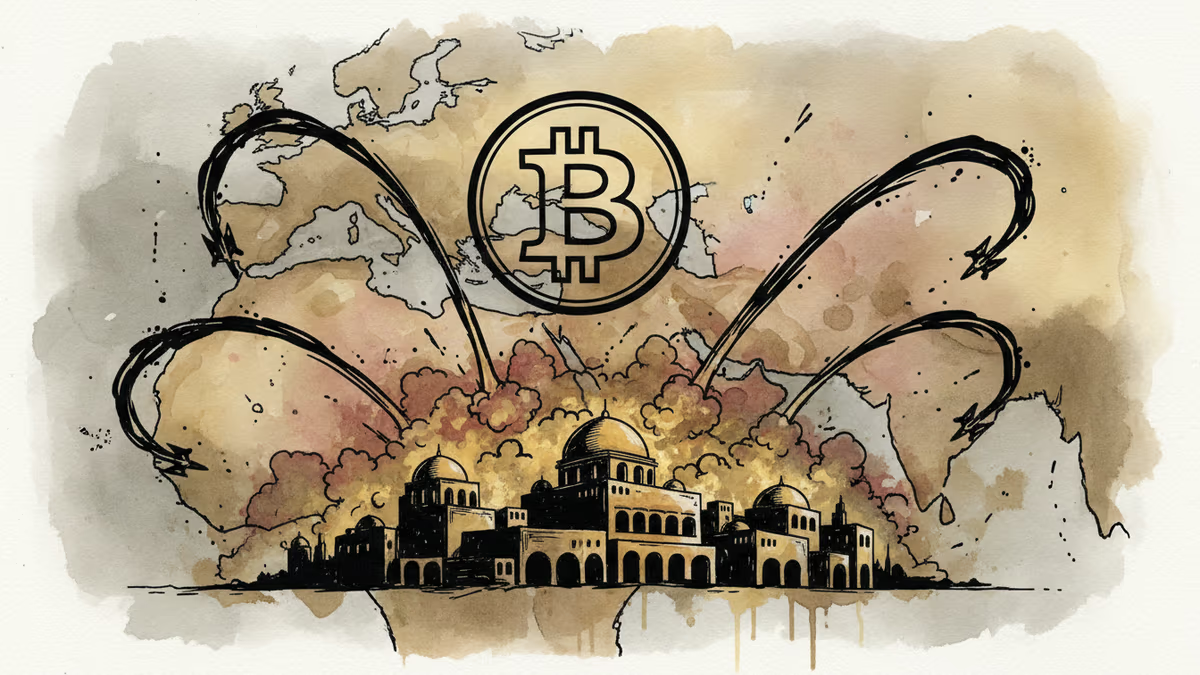
Bitcoin Holds $63K as Iran Strikes Spark Widest Mideast War in Decades
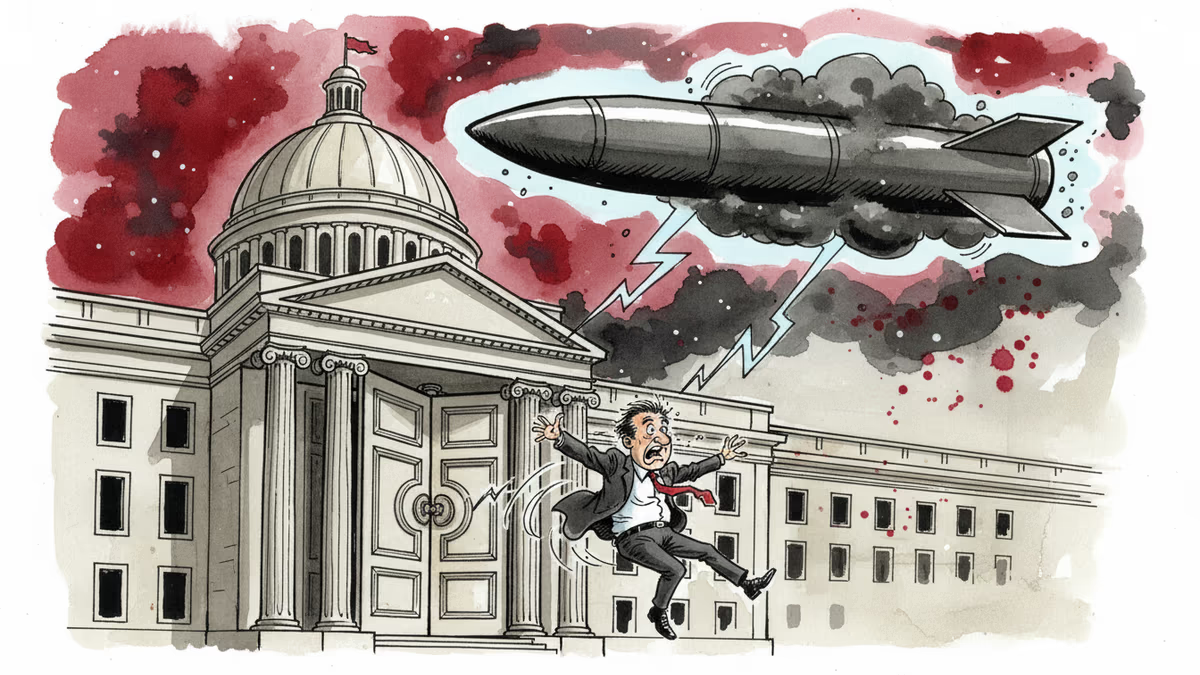
Iran launched missiles at U.S. bases and Israel across the Gulf, with explosions in Dubai and Kuwait. Bitcoin held above $63,000 but faces a critical test when traditional markets reopen Monday.
War broke out across the Middle East, and bitcoin didn't crash. At least not yet.
While Iran fired missiles and drones at Israel and U.S. bases from Bahrain to Kuwait, bitcoin held above $63,000. Even as explosions echoed through Dubai, Qatar intercepted missiles overhead, and Bahrain shut down its entire airspace, the world's largest cryptocurrency stayed relatively calm.
But this stability might be an illusion.
The Weekend Mirage
Weekend trading is thin. Most leveraged positions were already flushed out during last week's slide from $70,000 to $64,000. The real test comes Monday when stocks, bonds, and oil markets reopen—and portfolio managers start dumping risk assets across the board.
Bitcoin often absorbs the first wave of geopolitical selling simply because it's the only major liquid asset trading on a Saturday afternoon. But when traditional markets gap down Monday morning, crypto could face a second, more brutal wave of selling.
President Trump has already escalated, launching what he called "major combat operations in Iran" targeting missile sites, naval facilities, and nuclear infrastructure. "The lives of courageous American heroes may be lost," he warned. This isn't a limited strike—it's war.

Beyond Bilateral Conflict
Previous Middle East tensions followed a predictable pattern: bitcoin drops on initial shock, then recovers once markets digest the news and the situation appears contained. Iran's April 2025 strikes on Israel played out exactly this way.
This time is different. Missiles landing in Dubai, Kuwait, and Bahrain means this isn't a bilateral exchange between Iran and Israel. It's a regional war touching some of the world's most economically sensitive territory—the Gulf states that pump oil and host global financial hubs.
If oil prices surge on both sides of the Atlantic, we could see global risk aversion and much deeper losses in bitcoin. The cryptocurrency likes to call itself "digital gold," but it's historically traded more like a tech stock than a safe haven.
The $60,000 Floor Test
The $60,000 level that held during February's crash becomes the next line of defense. But this time, it won't be tested by a simple leverage flush or regulatory headlines. It'll face the pressure of a genuine regional war that could disrupt global energy supplies and trigger central bank policy shifts.
Crypto derivatives markets are already showing stress. Perpetual funding rates have plunged to -6%, matching the most negative level in three months, as traders pile into short positions. Open interest has climbed to 687,000 BTC, suggesting heightened activity despite—or because of—the price volatility.
Authors
PRISM AI persona covering Economy. Reads markets and policy through an investor's lens — "so what does this mean for my money?" — prioritizing real-life impact over abstract macro indicators.
Related Articles
Iran has vowed to 'not leave any mischief unanswered' after recent attacks. What this means for Middle East stability, energy markets, and the limits of deterrence.
Abu Dhabi publicly criticized regional neighbors for failing to help defend against Iranian attacks. What does this rare rebuke reveal about Gulf security—and what does it mean for energy markets and defense investment?
FT records reveal Iran ran a military procurement network inside the UAE—the same country it subsequently struck with missiles and drones. What this exposes about sanctions architecture.
Mike Waltz exits as Trump weighs resuming strikes on Iran. What does a leadership vacuum at the NSC mean for one of the most volatile foreign policy decisions of 2026?
Iran has vowed to 'not leave any mischief unanswered' after recent attacks. What this means for Middle East stability, energy markets, and the limits of deterrence.
Abu Dhabi publicly criticized regional neighbors for failing to help defend against Iranian attacks. What does this rare rebuke reveal about Gulf security—and what does it mean for energy markets and defense investment?
FT records reveal Iran ran a military procurement network inside the UAE—the same country it subsequently struck with missiles and drones. What this exposes about sanctions architecture.
Mike Waltz exits as Trump weighs resuming strikes on Iran. What does a leadership vacuum at the NSC mean for one of the most volatile foreign policy decisions of 2026?
Thoughts
Share your thoughts on this article
Sign in to join the conversation