
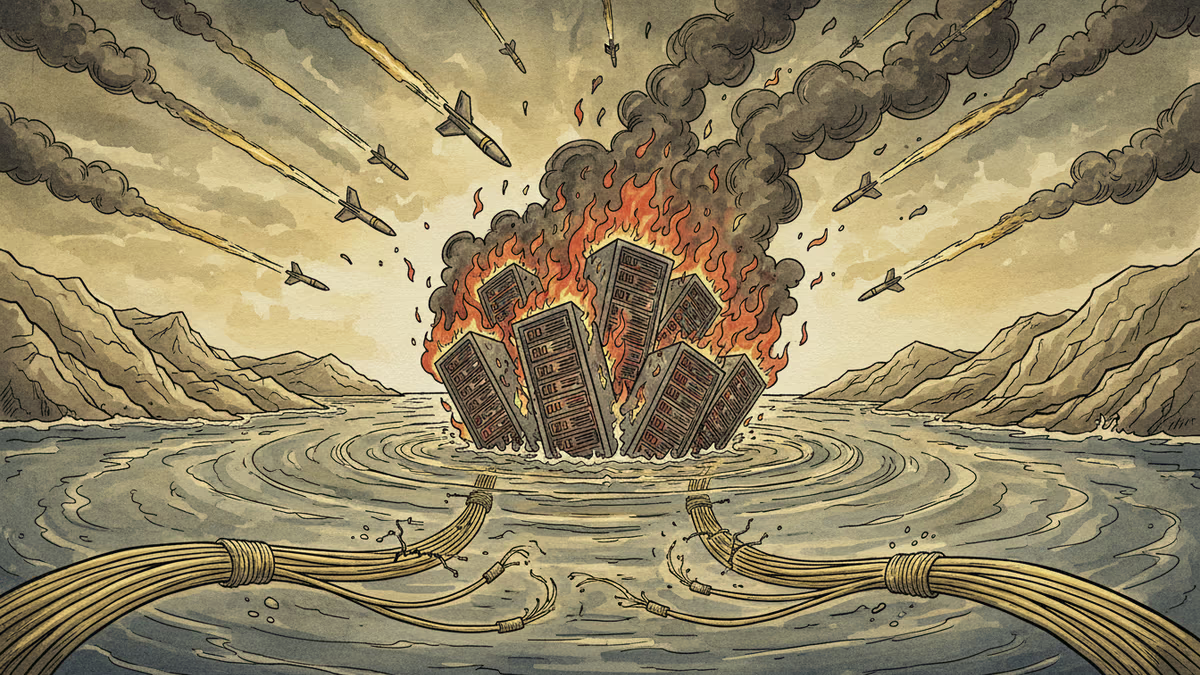
The Gulf's Trillion-Dollar AI Dream Goes Up in Smoke
Iran's closure of Hormuz Strait and renewed Houthi attacks threaten $2.2 trillion in Middle East AI investments. Amazon data center strikes expose critical infrastructure vulnerabilities in the region's tech hub ambitions.
$2.2 Trillion Went Up in Smoke Overnight
For the first time in history, both the Strait of Hormuz and the Red Sea are closed to commercial traffic simultaneously. Iran's Revolutionary Guard shut down Hormuz on March 3, threatening to "set ablaze" any vessel attempting passage. The same day, Houthi militants resumed attacks in the Red Sea.
The problem isn't oil—it's data. Seventeen submarine cables snake through the Red Sea alone, carrying the vast majority of internet traffic between Europe, Asia, and Africa. Additional cables thread through Hormuz, serving Iran, Iraq, Kuwait, Bahrain, and Qatar.
Over the weekend, drones struck three AWS data centers: two in the UAE, one in Bahrain. Amazon told customers to consider "migrating workloads out of the Middle East entirely," warning that the regional operating environment "remains unpredictable."
The trillion-dollar bet on the Gulf as AI's next great hub just became the world's most expensive lesson in geopolitical risk.
Silicon Valley's Middle East Gold Rush
Last May, President Trump's Gulf tour produced $2.2 trillion in investment pledges. The region's pitch was compelling: political alignment with Washington, abundant sovereign wealth, world-class infrastructure.
OpenAI, G42, Oracle, Nvidia, and SoftBank announced Stargate UAE—a planned 5-gigawatt AI campus in Abu Dhabi that would be the largest outside the U.S. Amazon committed $5 billion to an AI hub in Riyadh with Saudi Arabia's Humain.
The Gulf states delivered on their promises. The UAE intercepted 165 ballistic missiles, two cruise missiles, and 541 drones over a single weekend. Saudi Arabia and Qatar mounted similarly robust defenses.
It was Washington's decision to strike Iran that put those investments in the crosshairs.

The Infrastructure That Never Gets Protected
U.S. security frameworks were designed to keep advanced chips away from China, not to protect physical infrastructure from missiles. While oil infrastructure has decades of conflict exposure and military integration, data centers were treated as commercial assets rather than national security concerns.
"AI development is outpacing national security doctrine," Sam Zabin from the Center for Strategic and International Studies told Rest of World. "Undersea cable routes are geographically constrained with fewer options for physical bypasses."
The January 2026 Pax Silica initiative brought the UAE and Qatar into a U.S.-led effort to control semiconductor supply chains. Abu Dhabi's G42 severed ties with Huawei. Humain aligned with U.S. chip suppliers. Supply chain control was prioritized. Physical defense during high-intensity conflict wasn't.
When Theory Becomes Reality
The cables themselves aren't direct targets—yet. Deliberate strikes would require ships dragging anchors across the seafloor or attacks on landing stations. Iran would risk severing its own connectivity.
The real danger is collateral damage. In February 2024, three Red Sea cables were cut by a cargo ship's dragging anchor after a Houthi missile strike, disrupting 25% of traffic between Asia, Europe, and the Middle East. One cable took five months to repair because vessels couldn't safely access the area.
If multiple major cables were severed now, with repair crews locked out of both choke points, disruption could last far longer.
What This Means for Global Tech
Commercial ships now anchor helplessly off UAE coasts. Inside Iran, internet traffic has collapsed to near-zero since February 28—a deliberate government shutdown rather than infrastructure damage.
The Gulf's structural advantages remain: capital, energy resources, strategic location. The UAE and Saudi Arabia have pipelines that bypass Hormuz for oil exports. Both governments proved capable of defending their territory.
"The structural advantages have not yet changed, although the story is still being written," Ryan Bohl from RANE Network told Rest of World. "If this conflict continues, there will increasingly be greater likelihood that major impacts will alter the perception of safety and value for the long term."
Authors
Related Articles
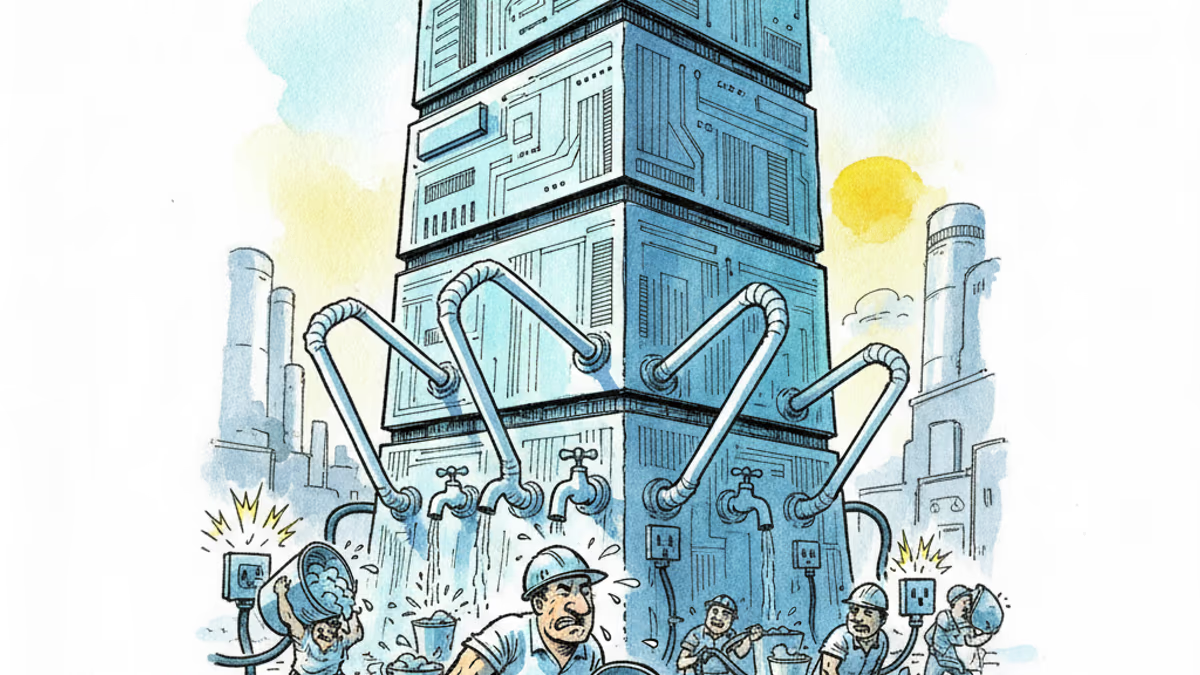
Samsung and SK unveiled a chip and AI investment package worth thousands of trillions of won on June 29. The headline number swings wildly by outlet, but the real contest isn't capital — it's water and power.
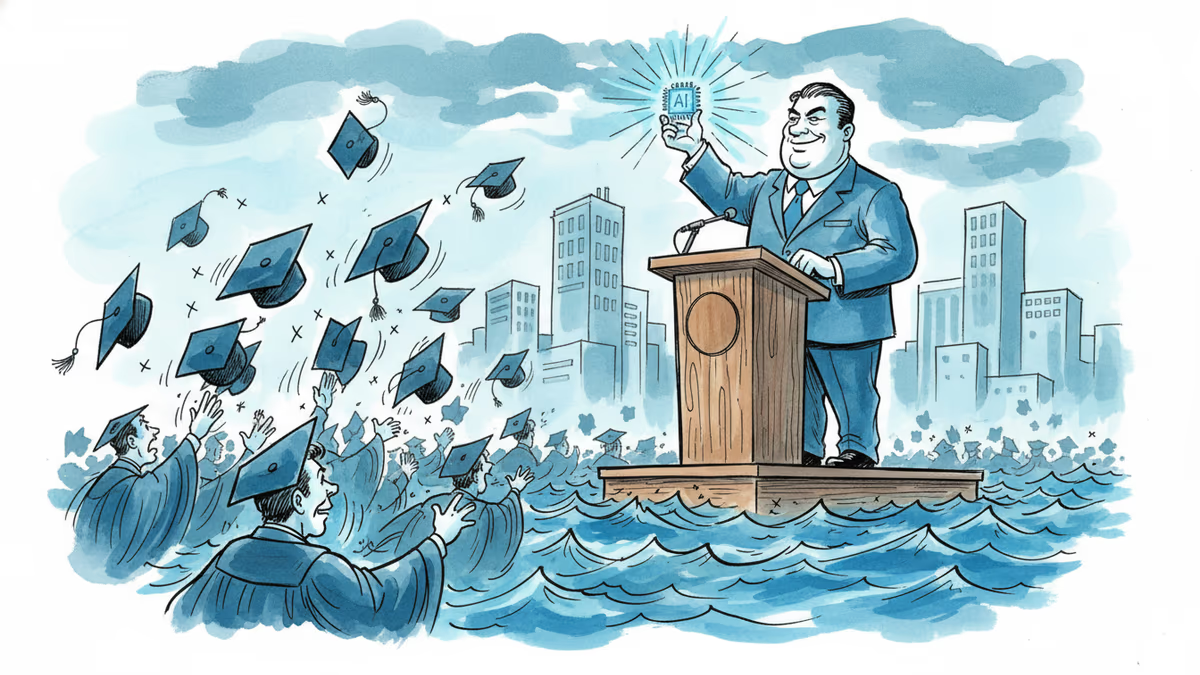
Viral videos show 2026 graduates jeering executives who praise AI at commencement ceremonies. It's not just rudeness — it's a signal about who pays for technological optimism.
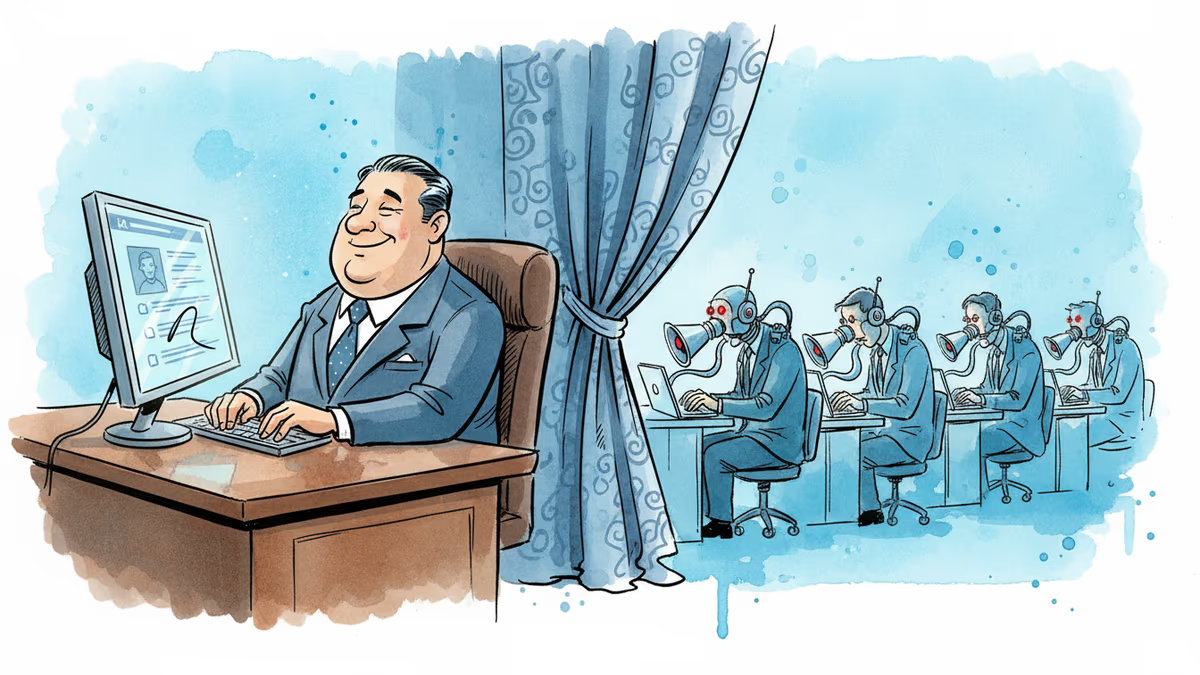
Filipino virtual assistants using AI to ghost-manage LinkedIn profiles for executives is now a structured industry. 30 comments a day, fake engagement rings, and a platform struggling to tell real from fabricated.
Two commencement speakers learned the hard way that AI enthusiasm doesn't land well with today's graduates. The backlash reveals a widening gap between tech optimism and Gen Z's economic reality.
Samsung and SK unveiled a chip and AI investment package worth thousands of trillions of won on June 29. The headline number swings wildly by outlet, but the real contest isn't capital — it's water and power.
Viral videos show 2026 graduates jeering executives who praise AI at commencement ceremonies. It's not just rudeness — it's a signal about who pays for technological optimism.
Filipino virtual assistants using AI to ghost-manage LinkedIn profiles for executives is now a structured industry. 30 comments a day, fake engagement rings, and a platform struggling to tell real from fabricated.
Two commencement speakers learned the hard way that AI enthusiasm doesn't land well with today's graduates. The backlash reveals a widening gap between tech optimism and Gen Z's economic reality.
Thoughts
Share your thoughts on this article
Sign in to join the conversation