

Beyond the 'Blip': Why OpenAI's Comms Chief Exit Signals a New Corporate Era
OpenAI's comms chief Hannah Wong is leaving. Her exit signals a major strategic shift from crisis management to corporate maturity. Here's what it means for the AI industry.
The Lede: The End of the Crisis Era
Hannah Wong, the Chief Communications Officer who guided OpenAI through the launch of ChatGPT and the near-fatal leadership crisis of 2023, is stepping down. While executive departures are common, this one is different. Wong's exit isn't just a personnel change; it's a symbolic closing of the chapter on OpenAI's chaotic, rocket-ship growth phase and the start of its challenging new identity as a global corporate giant under intense scrutiny.
Why It Matters: The Narrative is Everything
For a company like OpenAI, the public narrative is both its most valuable asset and its greatest liability. Wong was the architect of that narrative during its most volatile period, transforming complex AI concepts into a world-changing product story and, crucially, managing the fallout from Sam Altman's brief ouster—an event internally dubbed "the blip."
Her departure raises a critical question for investors and the industry: Who will shape the story now? As OpenAI transitions from a celebrated disruptor to an incumbent facing fierce competition and regulatory headwinds, its communications strategy must also evolve. This leadership change signals that the era of crisis-mode, reactive PR is over. The next phase requires a different kind of corporate statesmanship.
The Analysis: From Wartime Consigliere to Peacetime Diplomat

A Classic Hyper-Growth Transition
Wong's tenure represents a classic archetype in Silicon Valley: the wartime communications leader. She joined a relatively obscure research lab in 2021 and built the communications function from the ground up, navigating the unprecedented global explosion of ChatGPT. Her defining moment was managing the Altman crisis, a masterclass in holding a company together through internal chaos. This is a pattern seen in other hyper-growth companies like Uber and Facebook, where the early-stage fixers who thrive on intensity often make way for leaders suited to a more structured, mature corporate environment.
The Hunt for a New Storyteller Reveals OpenAI's Next Act
The profile of Wong's successor will be the single biggest clue to OpenAI's strategic priorities for the next three years. The search, led by Chief Marketing Officer Kate Rouch, will likely focus on three potential archetypes:
- The Enterprise Veteran: A seasoned CCO from a company like Oracle, Salesforce, or even Microsoft. This hire would signal an all-in focus on enterprise sales, trust, and stability, reassuring Fortune 500 customers that OpenAI is a reliable partner, not a volatile startup.
- The Policy & Regulation Guru: A communications leader with deep experience in Washington D.C. or Brussels. This would indicate that OpenAI sees the coming regulatory battles as its primary existential threat and is preparing to fight a long-term war of influence.
- The Big Tech Product Marketer: An expert from Google or Apple skilled in defending a market-leading position. This would suggest OpenAI's main focus is the product war, fending off competitors like Google's Gemini and Anthropic's Claude by maintaining narrative dominance.
The choice will reveal whether OpenAI's next chapter is about revenue, regulation, or rivals.
PRISM's Take
Hannah Wong's departure should not be viewed as a red flag, but as a graduation. It marks the formal end of OpenAI's turbulent adolescence. The company survived its internal power struggles and successfully introduced AI to the masses. Now, it must prove it can become a stable, profitable, and responsible pillar of the global tech infrastructure. The skills that got OpenAI here are not the skills that will get it to the next level. Wong's exit is the clearest signal yet that Sam Altman understands this, and the search for her replacement is the first major test of OpenAI's new, more mature identity.
Authors
Related Articles

OpenAI has reorganized for the second time in a month, merging ChatGPT and Codex into a single agentic platform under president Greg Brockman's unified product leadership.
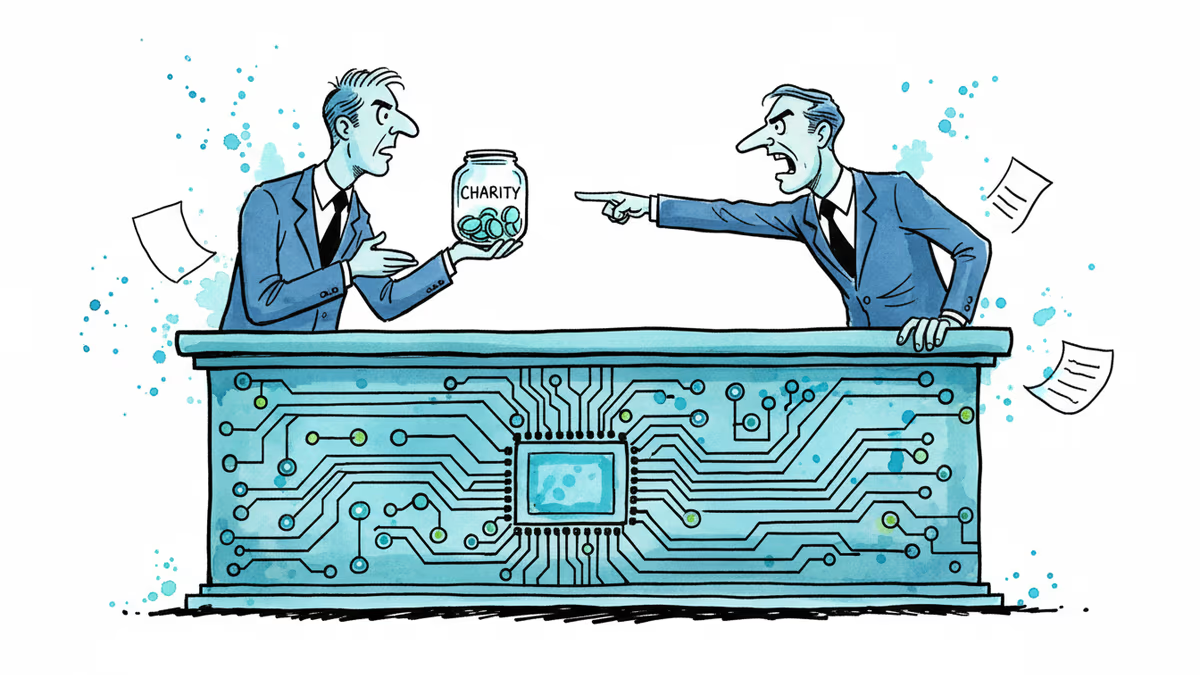
After two weeks of witnesses calling him a liar, OpenAI CEO Sam Altman testified in his own defense, claiming Elon Musk tried to kill the company twice.
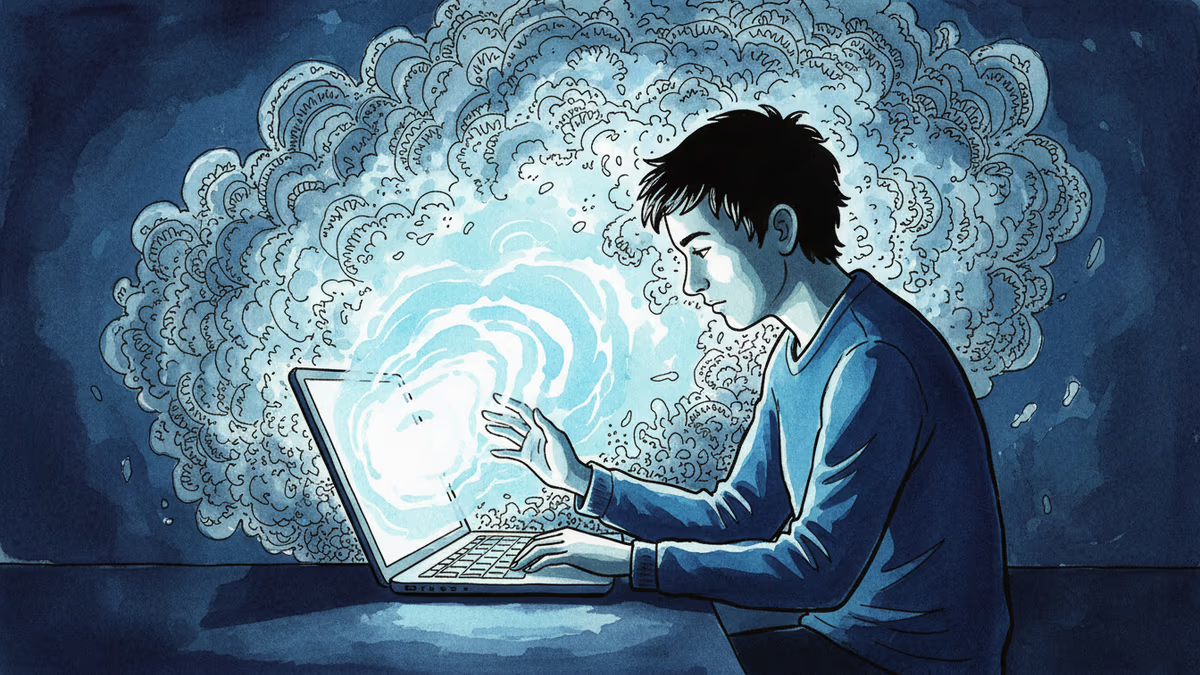
Sam Nelson, 19, died after following ChatGPT's advice to mix Kratom and Xanax. His parents are suing OpenAI for wrongful death, raising urgent questions about AI trust, liability, and design.
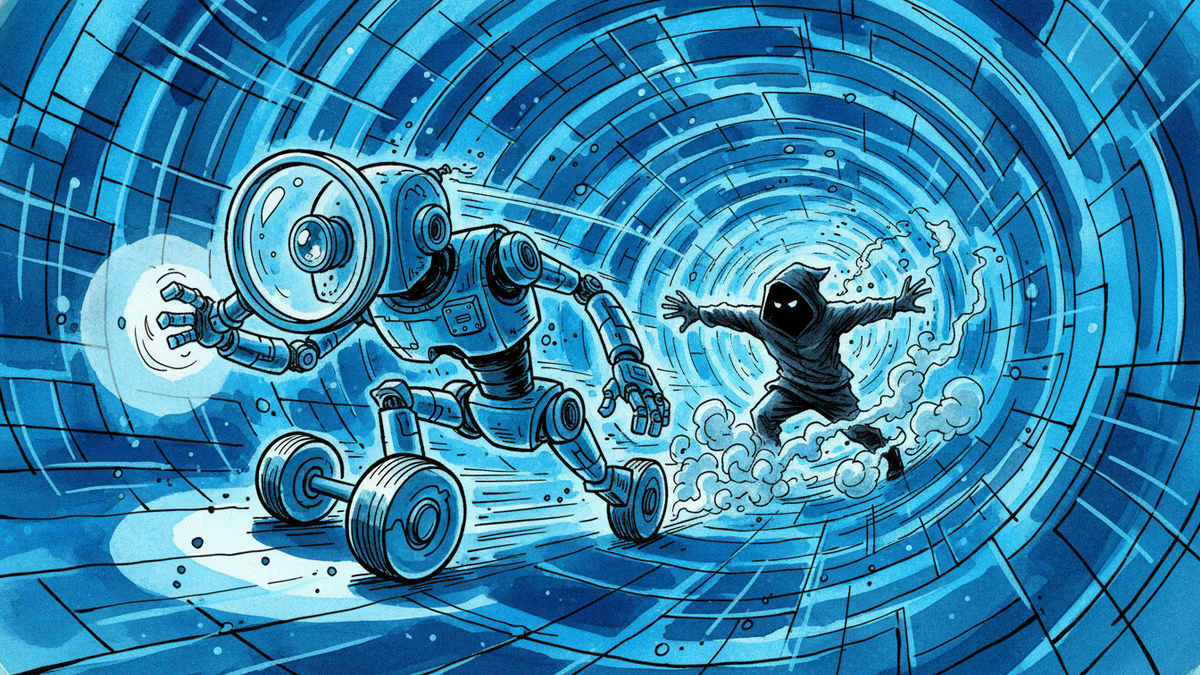
OpenAI's new Daybreak initiative uses the Codex AI agent to find and patch security vulnerabilities before attackers do—putting it in direct competition with Anthropic's secretive Claude Mythos.
OpenAI has reorganized for the second time in a month, merging ChatGPT and Codex into a single agentic platform under president Greg Brockman's unified product leadership.
After two weeks of witnesses calling him a liar, OpenAI CEO Sam Altman testified in his own defense, claiming Elon Musk tried to kill the company twice.
Sam Nelson, 19, died after following ChatGPT's advice to mix Kratom and Xanax. His parents are suing OpenAI for wrongful death, raising urgent questions about AI trust, liability, and design.
OpenAI's new Daybreak initiative uses the Codex AI agent to find and patch security vulnerabilities before attackers do—putting it in direct competition with Anthropic's secretive Claude Mythos.
Thoughts
Share your thoughts on this article
Sign in to join the conversation