

Beyond Chatbots: BNY's 20,000-Agent AI Army Signals a Revolution in Enterprise AI
BNY Mellon is arming 20,000 employees to build custom AI agents. This is more than a tech upgrade—it's a strategic revolution that redefines the enterprise AI playbook.
The Lede: The End of AI as a Spectator Sport
While most companies are still debating which AI chatbot to approve for corporate use, BNY Mellon is quietly arming its workforce. The 240-year-old financial giant is enabling over 20,000 employees to build their own custom AI agents using OpenAI technology via its internal "Eliza" platform. This isn't just another productivity pilot; it's a fundamental strategic shift from buying AI solutions to building an AI-native organization from the ground up. For executives watching from the sidelines, this is a wake-up call: the era of centralized, IT-led AI projects is over. The new competitive battleground is empowering your entire organization to become an AI innovation engine.
Why It Matters: The Second-Order Effects
This move by BNY Mellon creates ripples far beyond its own walls. The most significant impact isn't the immediate efficiency gains, but the second-order effects that will redefine the enterprise landscape:
- The Pressure Cooker Effect: Competitors like JPMorgan Chase and Goldman Sachs, which have also invested heavily in AI, now face a new strategic dilemma. Their top-down, expert-led AI initiatives may produce powerful, singular models, but BNY's decentralized approach could create thousands of smaller, highly specific solutions at a speed that's impossible to match centrally. This shifts the race from building the best AI to building the best AI factory.
- The Enterprise Software Upheaval: The model of selling pre-packaged, one-size-fits-all AI software is now under threat. Why would a company buy a generic AI tool for client reporting when its own client-facing teams can build a superior, bespoke version in-house? Tech vendors, including OpenAI and its partners, will need to pivot from selling products to selling platforms, APIs, and the secure “foundry” infrastructure that enables this kind of mass customization.
- Redefining Employee Value: An employee's value is no longer just their domain expertise; it's their ability to translate that expertise into an automated process or AI agent. This creates a new class of worker: the “citizen AI developer” who can identify a workflow inefficiency and build a digital solution for it, fundamentally changing the nature of knowledge work.

The Analysis: A New Playbook for Corporate AI
From Centralized AI to a Decentralized Army
For the past decade, enterprise AI has been the exclusive domain of data scientists and specialized engineering teams. The process was slow, expensive, and often disconnected from the day-to-day needs of the business. BNY's strategy flips this model on its head. By providing a governed, secure platform, they are essentially democratizing AI development. Instead of a single, monolithic “brain” trying to solve every problem, they are cultivating a swarm of intelligent agents, each designed by the person closest to the problem. This is a move from a command-and-control structure to a highly adaptable, distributed intelligence network.
The "Citizen AI Developer": A Lesson from the Low-Code Era
We've seen this playbook before with the low-code/no-code movement, which promised to turn every business analyst into a software developer. That revolution had mixed results, often leading to a chaotic landscape of “shadow IT,” security vulnerabilities, and poorly maintained applications. BNY appears to have learned this lesson. The success of its Eliza platform will hinge not on the power of the underlying OpenAI models, but on the robustness of its governance, security, and quality-control guardrails. The critical challenge is enabling mass innovation without creating mass chaos. This is the tightrope every enterprise leader must now walk.
PRISM's Take
BNY Mellon isn't just adopting technology; it's making an audacious bet that its greatest asset is the collective intelligence of its workforce, amplified by AI. This move transcends a simple IT project and becomes a full-blown corporate strategy to re-architect its operating model for the AI age. While the headlines focus on the 20,000 employees, the real story is the Eliza platform—the governed sandbox that makes this revolution possible. The success or failure of this initiative will provide the definitive case study for how to transform a legacy enterprise into an AI-first powerhouse. The biggest risk for BNY isn't that the AI will fail, but that the internal culture and governance won't be able to keep pace with the power it has just unleashed.
This content is AI-generated based on source articles. While we strive for accuracy, errors may occur. We recommend verifying with the original source.
Related Articles
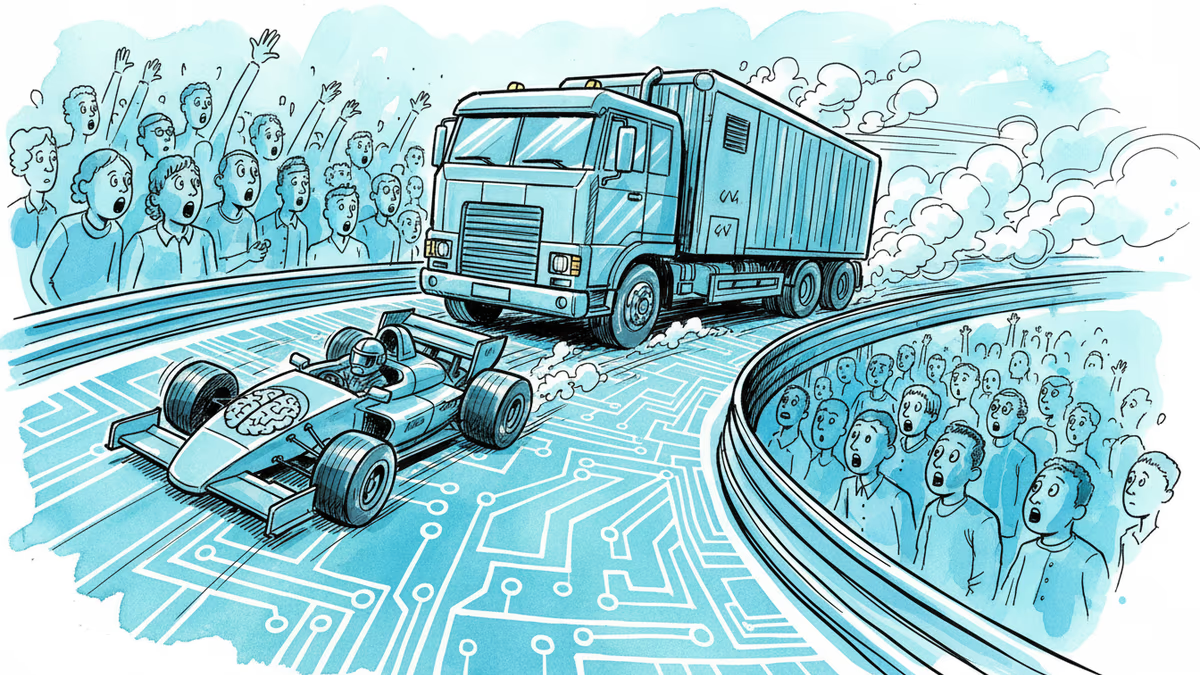
Cerebras Systems has refiled for an IPO targeting mid-May, backed by a $23B valuation, a reported $10B OpenAI deal, and an AWS partnership. What does this mean for Nvidia's dominance and the AI chip landscape?
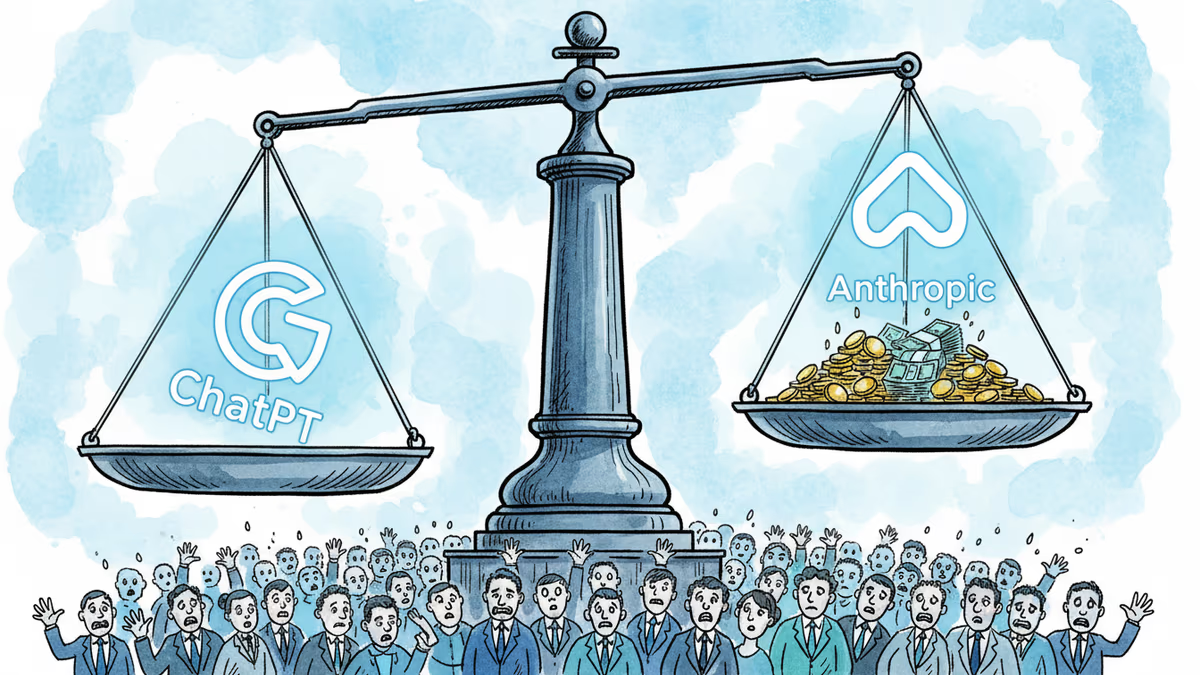
OpenAI's $852B valuation is drawing skepticism from its own backers as Anthropic's ARR tripled in three months. The secondary market is already voting with its feet.
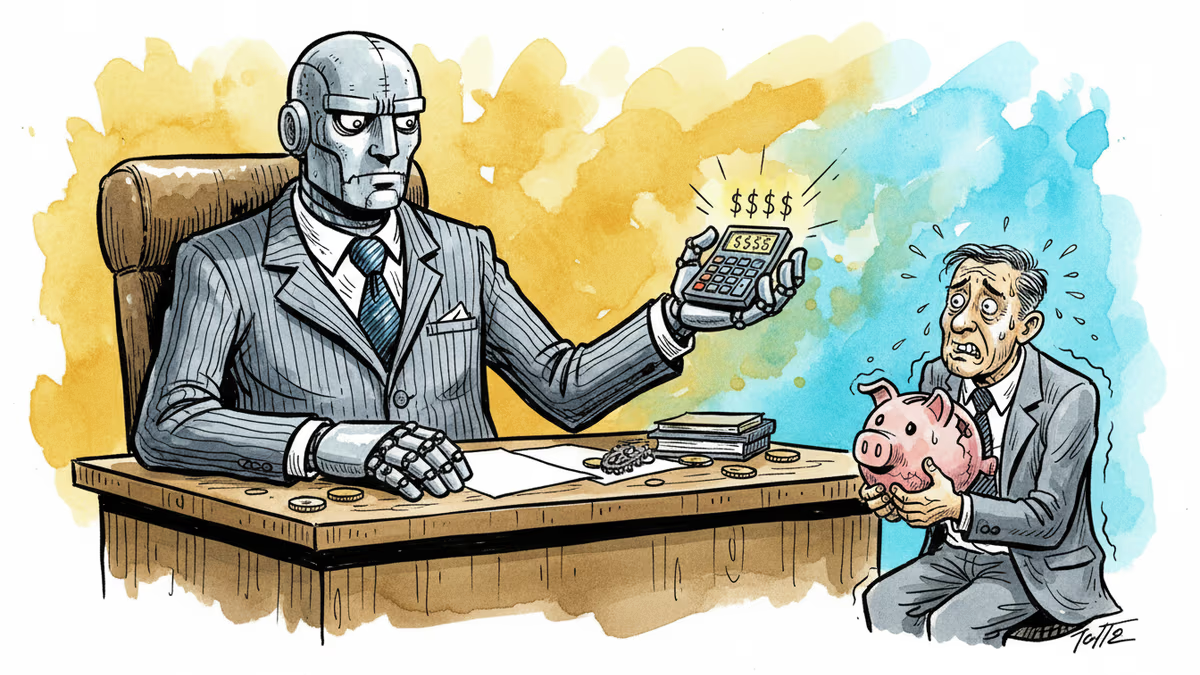
OpenAI acquired Hiro Finance, an AI-powered personal finance startup. Is this just a talent grab, or is the ChatGPT maker quietly building a financial services empire?

OpenAI CEO Sam Altman's San Francisco residence was attacked twice in three days — first a Molotov cocktail, then a shooting. What does this say about tech power, public anger, and the real-world risks facing AI leaders?
Cerebras Systems has refiled for an IPO targeting mid-May, backed by a $23B valuation, a reported $10B OpenAI deal, and an AWS partnership. What does this mean for Nvidia's dominance and the AI chip landscape?
OpenAI's $852B valuation is drawing skepticism from its own backers as Anthropic's ARR tripled in three months. The secondary market is already voting with its feet.
OpenAI acquired Hiro Finance, an AI-powered personal finance startup. Is this just a talent grab, or is the ChatGPT maker quietly building a financial services empire?
OpenAI CEO Sam Altman's San Francisco residence was attacked twice in three days — first a Molotov cocktail, then a shooting. What does this say about tech power, public anger, and the real-world risks facing AI leaders?
Thoughts
Share your thoughts on this article
Sign in to join the conversation