
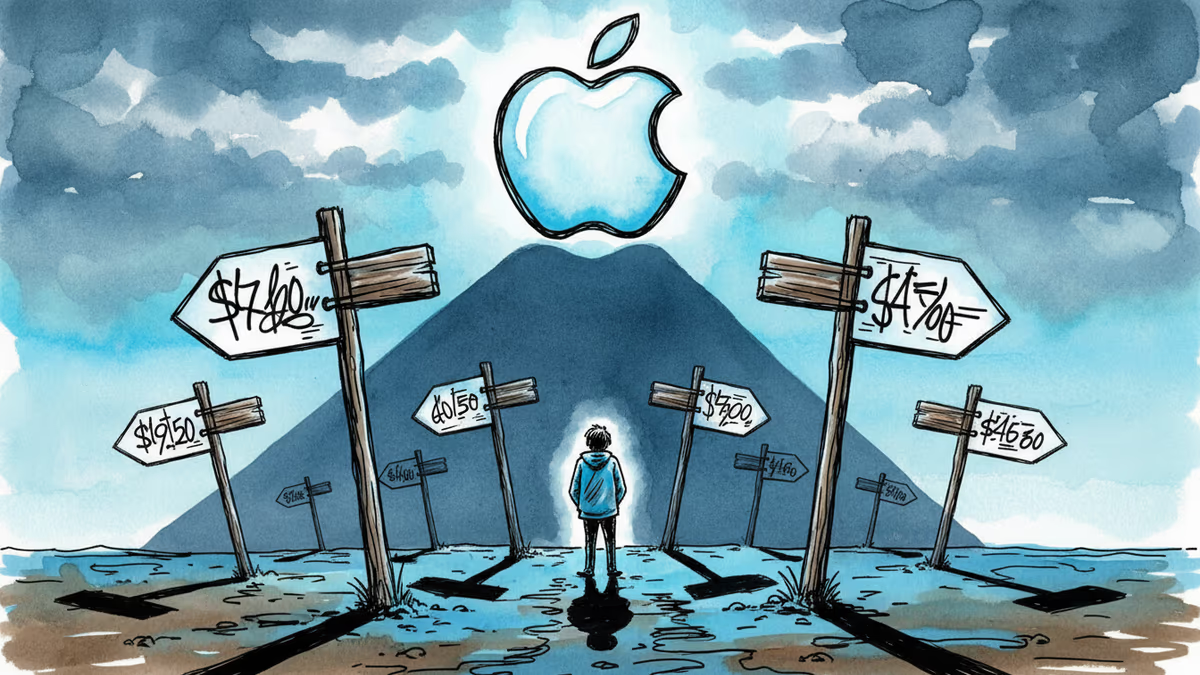
Is the iPhone 17 Finally the Complete Package?
Apple's full iPhone 17 lineup is here, from the $599 17e to the $1,199 Pro Max. We break down which model actually fits your life—and what the pricing gap says about Apple's strategy.
Seven iPhones. A $600 Price Gap. One Question.
Apple is simultaneously selling a $599 smartphone and a $1,199 smartphone—and calling both the iPhone 17. That $600 spread isn't just about specs. It's a statement about who you are as a consumer, and how much Apple thinks it can charge you for the privilege of staying in its ecosystem.
With the launch of the budget iPhone 17e in March 2026, Apple's lineup is now complete. Seven models. One brand. And a buying decision that's somehow gotten more complicated every year. WIRED tested every single one. Here's what actually matters.
The One Most People Should Buy
The $799iPhone 17 earned a 9/10 from WIRED—and the headline upgrade is one that sounds boring until you actually use it: 120Hz display refresh rate. If you've been on a 60Hz iPhone, the jump feels immediate. Scrolling is fluid. Tapping feels instant. It's the kind of change you can't unsee once you've experienced it. The fact that Apple reserved this for Pro models until now says something about the company's product strategy—but more on that in a moment.
The selfie camera jumps to 24 megapixels, with a square sensor that lets you stay in portrait grip while capturing landscape-oriented shots. When more faces appear in frame, the camera automatically adjusts. Front-and-rear simultaneous recording (Dual Capture) is now a native feature. Base storage finally hits 256GB, the ultrawide rear camera climbs to 48 megapixels, and battery life comfortably clears a full day with over six hours of screen-on time.
The one genuine gap: no telephoto lens. The Google Pixel 10 and Samsung Galaxy S26 both offer optical zoom at comparable price points. Apple's "optical-quality" 2x zoom is decent, but it's not the same thing.
The Rest of the Lineup, Honestly Assessed
The budget entry point: The iPhone 17e at $599 is the cheapest way into Apple Intelligence. It loses MagSafe, takes a camera step back, and trades some premium feel for a lower sticker price. It's a solid first iPhone or a sensible gift—but it's not a bargain in the traditional sense. You're paying for ecosystem access, not hardware value.

The middle ground: The iPhone 16 and 16 Plus start at $699. They're still capable phones, but without 120Hz displays, recommending them over the iPhone 17 at a $100 difference is difficult. The math doesn't favor them anymore.
The top tier: iPhone 17 Pro and 17 Pro Max at $1,099 and $1,199 respectively. Telephoto cameras, titanium frames, the most powerful chip Apple ships. If you shoot video professionally, obsess over camera versatility, or simply want the best—this is it. Otherwise, you're paying a premium for capabilities most users won't fully use.
What You Need to Know Before Buying
In the US, most people buy iPhones through carriers—which means locked devices, potential contract complications, and headaches when traveling internationally. Buying directly from Apple with the "connect to any carrier later" option gets you an unlocked phone. It may cost slightly more upfront, but the flexibility is worth it for frequent travelers or anyone who values the ability to switch carriers without penalty.
Apple Intelligence—Apple's AI feature suite—runs on iPhone 15 Pro/Pro Max and anything newer, including the 16e. It covers real-time call transcription, email tone adjustment, a redesigned Siri with ChatGPT integration, and with iOS 26, live translation during phone calls and in Messages. It's a meaningful set of features, though whether it matches Google's or Samsung's AI implementations depends heavily on what you actually use your phone for.
MagSafe magnetic accessories work on all iPhone 12 and later models except the 17e. The ecosystem—chargers, wallets, tripods, ring lights—has matured significantly. If you use a case, make sure it's MagSafe-compatible; non-magnetic cases weaken the connection with accessories.
The Competitive Reality
Here's the uncomfortable truth for Apple fans: Android flagships have offered 120Hz displays and optical zoom at mid-range prices for years. Apple just delivered 120Hz on its standard model in 2026. The company's pace of feature rollout to non-Pro models is, by any objective measure, deliberate and slow.
And yet Apple's market share remains formidable. The reason isn't specs—it's the ecosystem lock-in. The seamless handoff between Mac, iPad, Apple Watch, and AirPods is genuinely difficult to replicate. Switching away from Apple doesn't just mean getting a new phone; it means rebuilding a connected environment.
That said, Google and Samsung are both investing heavily in AI differentiation. If Apple Intelligence doesn't keep pace—especially in non-English markets—the ecosystem argument may start to feel thinner.
Authors
Related Articles
After 15 years of fragmented mobile messaging, Apple and Google are rolling out end-to-end encrypted RCS messaging between iPhones and Android devices. Here's what changed, why it took so long, and what it means for your privacy.
Apple agreed to pay $250 million to settle claims it misled iPhone 16 buyers about Apple Intelligence features. What this means for consumers, Big Tech marketing, and the AI industry.
Apple quietly removed the entry-level $599 Mac Mini, raising the starting price to $799 — just one day after Tim Cook warned of chip supply constraints on the earnings call.
Apple names John Ternus, its hardware engineering chief, as the next CEO. The shift from operator to product person signals where Apple thinks its next decade of growth will come from — and raises real questions about what comes next.
After 15 years of fragmented mobile messaging, Apple and Google are rolling out end-to-end encrypted RCS messaging between iPhones and Android devices. Here's what changed, why it took so long, and what it means for your privacy.
Apple agreed to pay $250 million to settle claims it misled iPhone 16 buyers about Apple Intelligence features. What this means for consumers, Big Tech marketing, and the AI industry.
Apple quietly removed the entry-level $599 Mac Mini, raising the starting price to $799 — just one day after Tim Cook warned of chip supply constraints on the earnings call.
Apple names John Ternus, its hardware engineering chief, as the next CEO. The shift from operator to product person signals where Apple thinks its next decade of growth will come from — and raises real questions about what comes next.
Thoughts
Share your thoughts on this article
Sign in to join the conversation