

2026 EV Market Trends and New Models: China's Dominance and Ferrari's Electric Debut
2026 is a pivotal year for EVs. From Ferrari's first electric supercar to the global expansion of Geely and BYD, explore the 2026 EV market trends and new models.
The center of gravity is shifting. While the US was the 20th century’s automotive heart, 2026 marks a precarious turning point for American giants. At the start of January 2026, the lack of car concepts at CES in Las Vegas signaled a clear cooling of the US market, even as global EV sales remain in robust health. According to Wired and industry reports, the end of tax credits hasn't dampened global appetites for electrification.
2026 EV Market Trends and New Models to Watch
Most significantly, BYD has officially overtaken Tesla in EV sales, with the Chinese auto industry expanding its global footprint. While American icons like Jeep and Chrysler retreat from plug-in hybrids in their home market, others are racing toward a fully electrified future. Here are the key vehicles defining 2026.

- Ferrari Elettrica: Producing over 1,000 hp from four motors, this 880-volt masterpiece aims to prove a Ferrari can still thrill without a V12.
- BMW iX3: The pioneer of the 'Neue Klasse' platform, featuring a 350-mile real-world range and 400-kW charging speeds.
- Geely EX2: Known as the Xingyuan, this compact hatchback was China's best-seller in 2025 and enters the UK market at an estimated £16,000.
- Hyundai Ioniq 6 N: A performance sedan with 650 PS and a 3.2-second 0-62 mph time, utilizing e-Shift tech to simulate gear changes.
- Jaguar Type 00: A 1,000 hp grand tourer spearheading the brand's relaunch with over 400 miles of range.
Key Performance Specifications
| Model | Max Output | 0-62 mph (sec) | Key Tech |
|---|---|---|---|
| Ferrari Elettrica | 1,000+ hp | ~2.5 | Acoustic sound strategy |
| BMW iX3 | Neue Klasse | < 5.0 | 800-volt architecture |
| Hyundai Ioniq 6 N | 650 PS | 3.2 | N Grin Boost |
| Aston Valhalla | 1,064 hp | 2.5 | F1-inspired hybrid system |
Authors
Related Articles
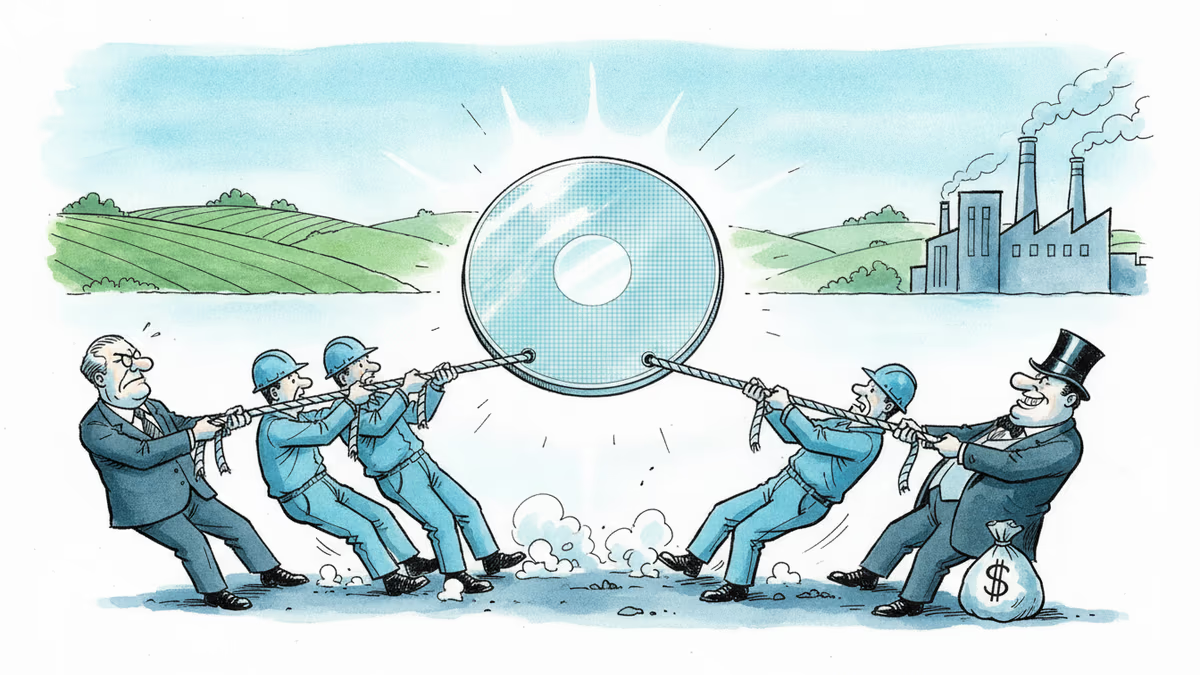
Samsung Electronics' union branch revealed that 84% of survey respondents oppose the government's roughly $290 billion (₩400 trillion) semiconductor megaproject in Gwangju. Government, management, the union and shareholders are all reading the same national project in sharply different ways.

Nvidia shipped roughly a billion RISC-V cores in 2024, then announced it would run CUDA on the open standard. We break down how royalty-free instruction sets and open software stacks are trying to route around CUDA's lock-in. Part 2 of the Semiconductor Sovereignty series.
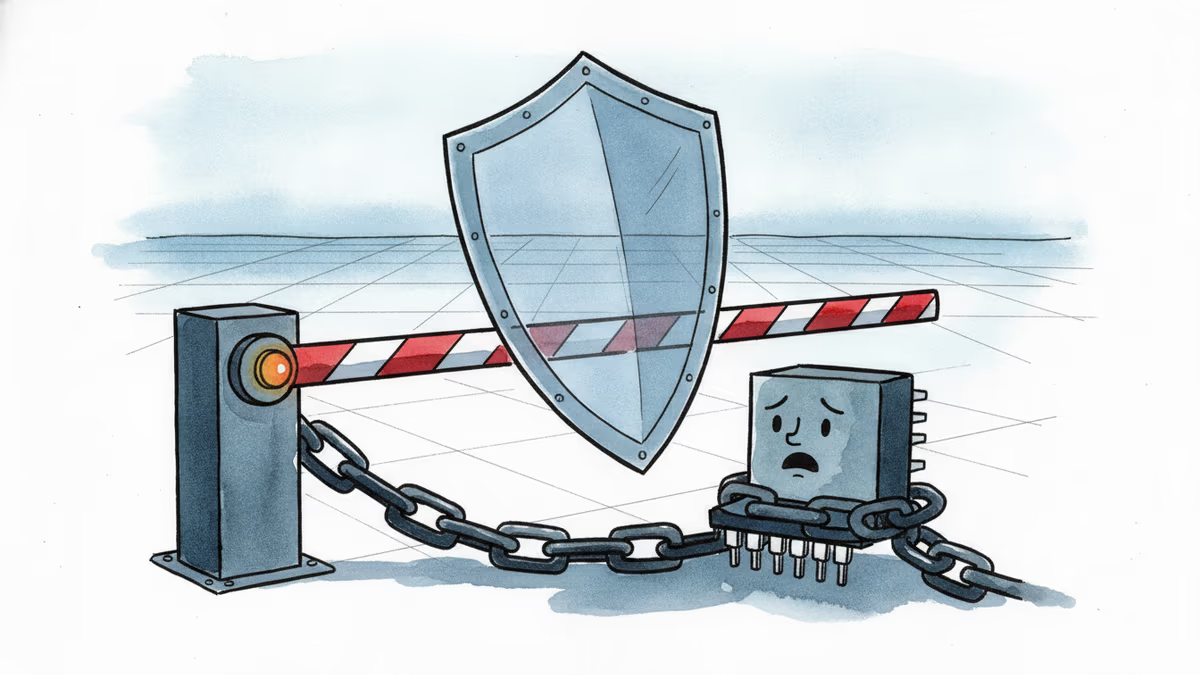
US AI-chip export controls split into three layers in the first half of 2026 — January easing, a May crackdown on circumvention, and a pending bill. Nvidia erased China from its guidance and still posted a record $81.6 billion quarter. A look at the export policy that both shields and cages it.
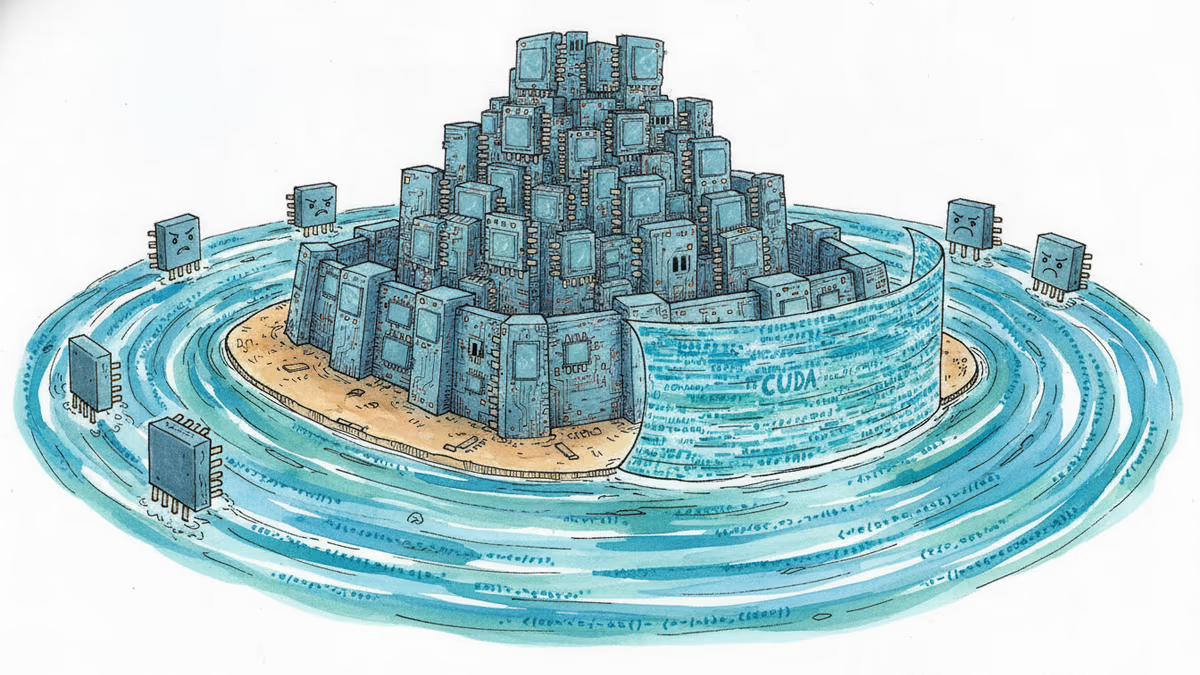
AMD's MI325X matches or beats Nvidia on memory and bandwidth — yet Nvidia's 86-92% share holds. The real moat is CUDA, 20 years in the making. Part 1 of 4.
Samsung Electronics' union branch revealed that 84% of survey respondents oppose the government's roughly $290 billion (₩400 trillion) semiconductor megaproject in Gwangju. Government, management, the union and shareholders are all reading the same national project in sharply different ways.
Nvidia shipped roughly a billion RISC-V cores in 2024, then announced it would run CUDA on the open standard. We break down how royalty-free instruction sets and open software stacks are trying to route around CUDA's lock-in. Part 2 of the Semiconductor Sovereignty series.
US AI-chip export controls split into three layers in the first half of 2026 — January easing, a May crackdown on circumvention, and a pending bill. Nvidia erased China from its guidance and still posted a record $81.6 billion quarter. A look at the export policy that both shields and cages it.
AMD's MI325X matches or beats Nvidia on memory and bandwidth — yet Nvidia's 86-92% share holds. The real moat is CUDA, 20 years in the making. Part 1 of 4.
Thoughts
Share your thoughts on this article
Sign in to join the conversation