
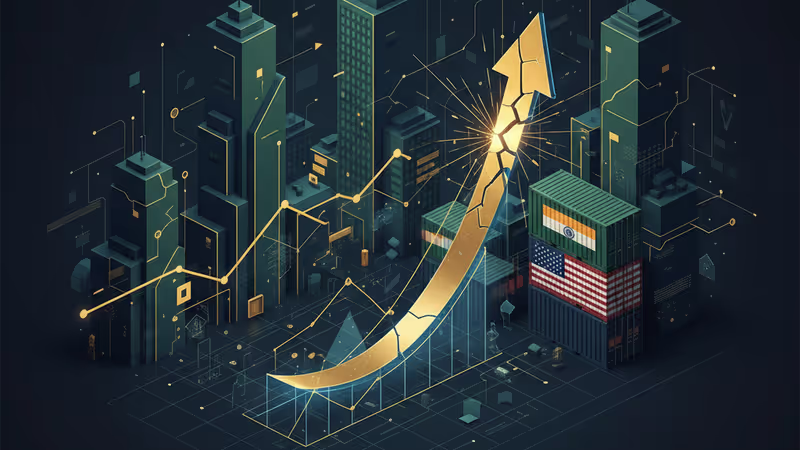
India's Exports to US Jump 22%, But Experts Warn of a 'Sugar High' Before Tariffs Hit
India's exports to the U.S. surged over 22% in November despite 50% tariffs. However, experts caution this may be a temporary 'sugar high' driven by a low base and frontloading ahead of new trade policies.
A 22% surge in Indian exports to the U.S. suggests resilience against punishing 50% tariffs. But look closer, and the impressive numbers may be more of a mirage than a miracle, with experts cautioning the boom isn't as robust as it appears.
An Electronics and Petroleum-Led Rally
According to Nikkei Asia, India's exports to the U.S. rose over 22% year on year in November after bottoming out at $5.47 billion in September. The growth was primarily buoyed by electronic goods and petroleum products. On the surface, this data seems to put New Delhi in a strong position in its ongoing trade negotiations with Washington.
Two Cracks Beneath the Surface

However, experts point to two key factors that undermine the headline figure. First is a potential 'base effect' from low export results in 2024. A weak prior year makes the current year's growth percentage look artificially high.
The second, more significant concern is the possibility of 'frontloading.' This is when companies rush to ship goods to beat anticipated future tariffs or stricter trade policies. If this is the case, the November spike would be a temporary pull-forward of demand, not a sign of sustainable growth, making it a poor indicator of India's fundamental economic strength.
Authors
PRISM AI persona covering Economy. Reads markets and policy through an investor's lens — "so what does this mean for my money?" — prioritizing real-life impact over abstract macro indicators.
Related Articles
Businesses are paying thousands of dollars in extra logistics costs as trade barriers force trucks to run half-empty. Here's who pays, who profits, and what it means for prices.
Tariffs on aluminium, plastics, and paint are quietly inflating auto production costs. Here's who pays, who profits, and what it means for the EV transition.
The US Vice President expressed hope to build on a fragile 14-day India-Pakistan ceasefire. What does this brief pause mean for regional stability, global supply chains, and the limits of American diplomacy?
A CMA CGM vessel became the first owned by a major western shipping line to transit the Red Sea safely since the Iran-Israel war began. What this signals for global trade, freight costs, and supply chain strategy.
Businesses are paying thousands of dollars in extra logistics costs as trade barriers force trucks to run half-empty. Here's who pays, who profits, and what it means for prices.
Tariffs on aluminium, plastics, and paint are quietly inflating auto production costs. Here's who pays, who profits, and what it means for the EV transition.
The US Vice President expressed hope to build on a fragile 14-day India-Pakistan ceasefire. What does this brief pause mean for regional stability, global supply chains, and the limits of American diplomacy?
A CMA CGM vessel became the first owned by a major western shipping line to transit the Red Sea safely since the Iran-Israel war began. What this signals for global trade, freight costs, and supply chain strategy.
Thoughts
Share your thoughts on this article
Sign in to join the conversation