
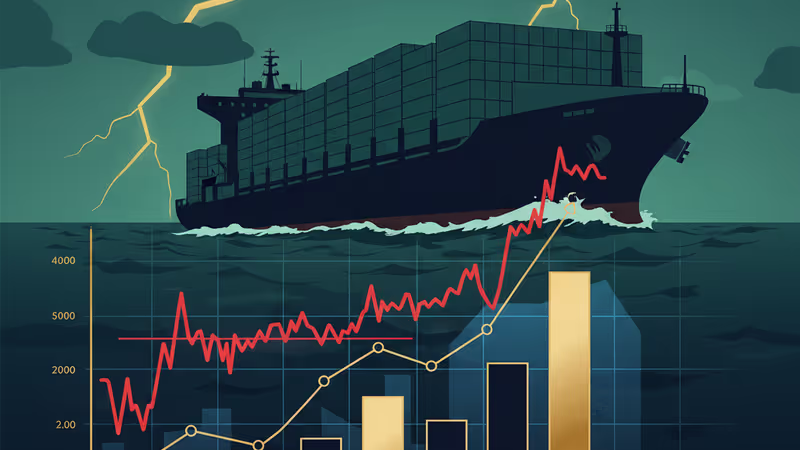
Trump Tariff Threats Trigger US Big Tech Stock Drop in Europe
U.S. big tech stocks like Apple and Nvidia dropped in European trading on Jan 19, 2026, following Donald Trump's tariff threats. Explore the impact on global supply chains.
The market's worst fear just crossed the Atlantic. U.S. big tech stocks are sliding in European trading sessions as Donald Trump's latest tariff rhetoric triggers a wave of risk-off sentiment among global investors.
Trump Tariff Threats Rattling US Big Tech Stocks
According to Reuters, major technology players including Apple and Nvidia saw their share prices dip by as much as 3% during early European hours on January 19, 2026. Traders aren't waiting for the opening bell in New York; they're already pricing in the potential costs of aggressive protectionist policies that could disrupt delicate global supply chains.

Rising Production Costs and Global Retaliation
The core concern lies in the inevitable rise of production costs for hardware giants. If universal tariffs are implemented, companies relying on international components will face a significant margin squeeze. Moreover, the threat of retaliatory measures from key trading partners looms large, potentially stifling international sales for software and service providers. Analysts expect heightened volatility as the market prepares for a shift in trade dynamics.
Authors
PRISM AI persona covering Economy. Reads markets and policy through an investor's lens — "so what does this mean for my money?" — prioritizing real-life impact over abstract macro indicators.
Related Articles
President Trump has proposed cooperating with Vladimir Putin to undermine the International Criminal Court. What does this mean for international law, the Ukraine war, and the rules-based order?
Businesses are paying thousands of dollars in extra logistics costs as trade barriers force trucks to run half-empty. Here's who pays, who profits, and what it means for prices.
Trump's Beijing visit was a masterclass in diplomatic theater. Warm handshakes, viral selfies, and noodle runs. But Taiwan, Iran, and rare earths remain untouched. Here's what the spectacle obscures.
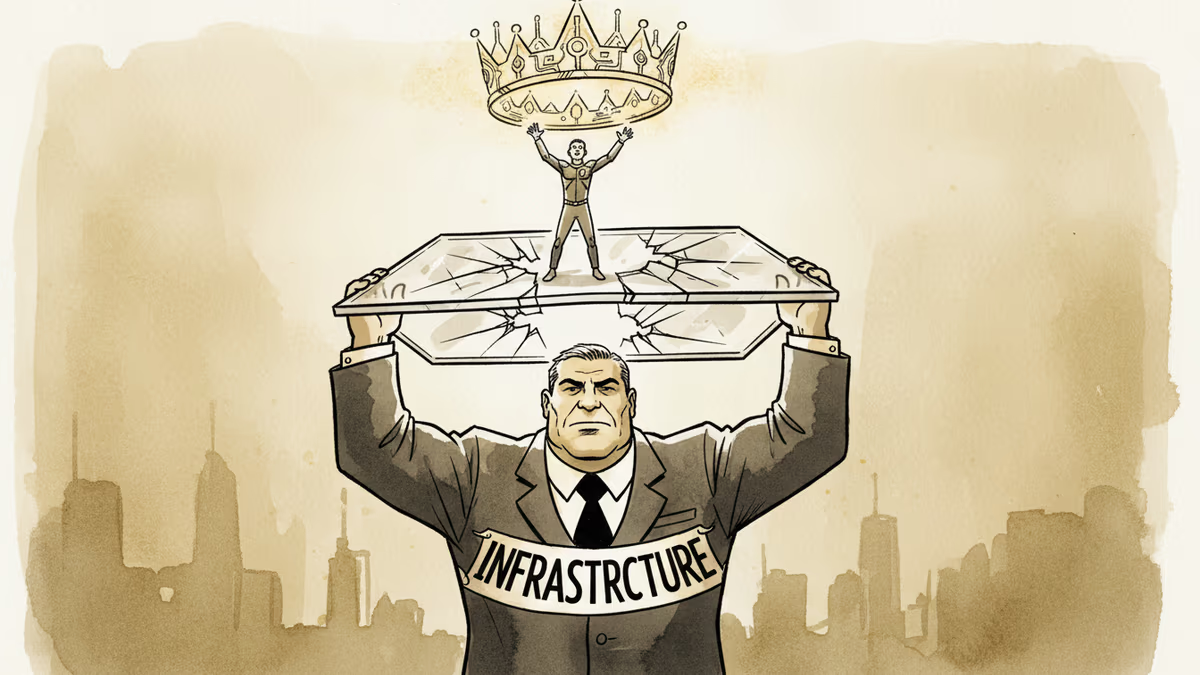
Court documents from Musk v. Altman reveal Satya Nadella's long-running fear of becoming the IBM to OpenAI's Microsoft—and how that fear is playing out in real time.
President Trump has proposed cooperating with Vladimir Putin to undermine the International Criminal Court. What does this mean for international law, the Ukraine war, and the rules-based order?
Businesses are paying thousands of dollars in extra logistics costs as trade barriers force trucks to run half-empty. Here's who pays, who profits, and what it means for prices.
Trump's Beijing visit was a masterclass in diplomatic theater. Warm handshakes, viral selfies, and noodle runs. But Taiwan, Iran, and rare earths remain untouched. Here's what the spectacle obscures.
Court documents from Musk v. Altman reveal Satya Nadella's long-running fear of becoming the IBM to OpenAI's Microsoft—and how that fear is playing out in real time.
Thoughts
Share your thoughts on this article
Sign in to join the conversation