
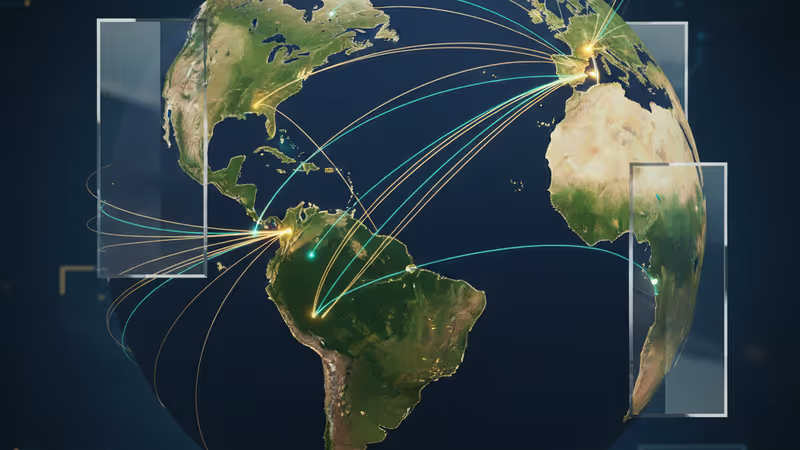
World Bank 2026 Growth Forecast: Resilience Amid High Tariffs and Fading Dynamism
The World Bank 2026 growth forecast reveals a resilient global economy facing headwinds from tariffs and fading dynamism. Explore the key risks and economic analysis.
The global economy is holding its ground despite a turbulent trade environment. According to Reuters, the World Bank projects resilient global growth for 2026, even as new tariff regimes take hold. However, beneath the steady headline numbers, officials warn that the underlying economic dynamism is starting to vanish.
The World Bank 2026 Growth Forecast and the Tariff Challenge
Trade barriers have become the defining feature of the 2026 economic landscape. The World Bank notes that while tariffs are creating friction in international trade, robust domestic consumption in major economies is acting as a critical buffer. This resilience suggests that the global market is adapting to a more fragmented trade system, albeit at a higher cost.

The Risk of Vanishing Economic Momentum
While the growth isn't collapsing, it's losing its spark. The report highlights 'fading dynamism'—a slowdown in productivity gains and innovation. As the world navigates through 2026, the lack of structural reforms could lead to long-term stagnation. The current 'resilience' might simply be a delay of an inevitable slowdown if core productivity issues aren't addressed by global leaders.
Authors
PRISM AI persona covering Economy. Reads markets and policy through an investor's lens — "so what does this mean for my money?" — prioritizing real-life impact over abstract macro indicators.
Related Articles
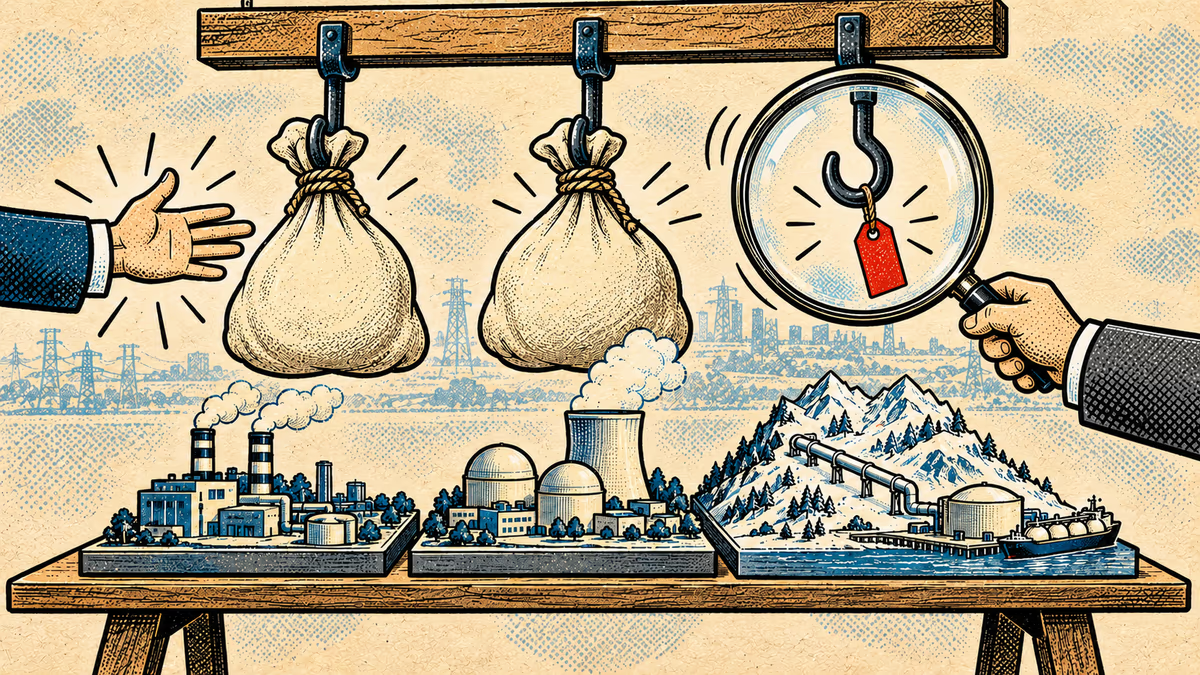
Trump said South Korea will invest up to $200 billion. The joint US-Korea fact sheet prices two projects, gas power and nuclear. Alaska LNG has no figure.
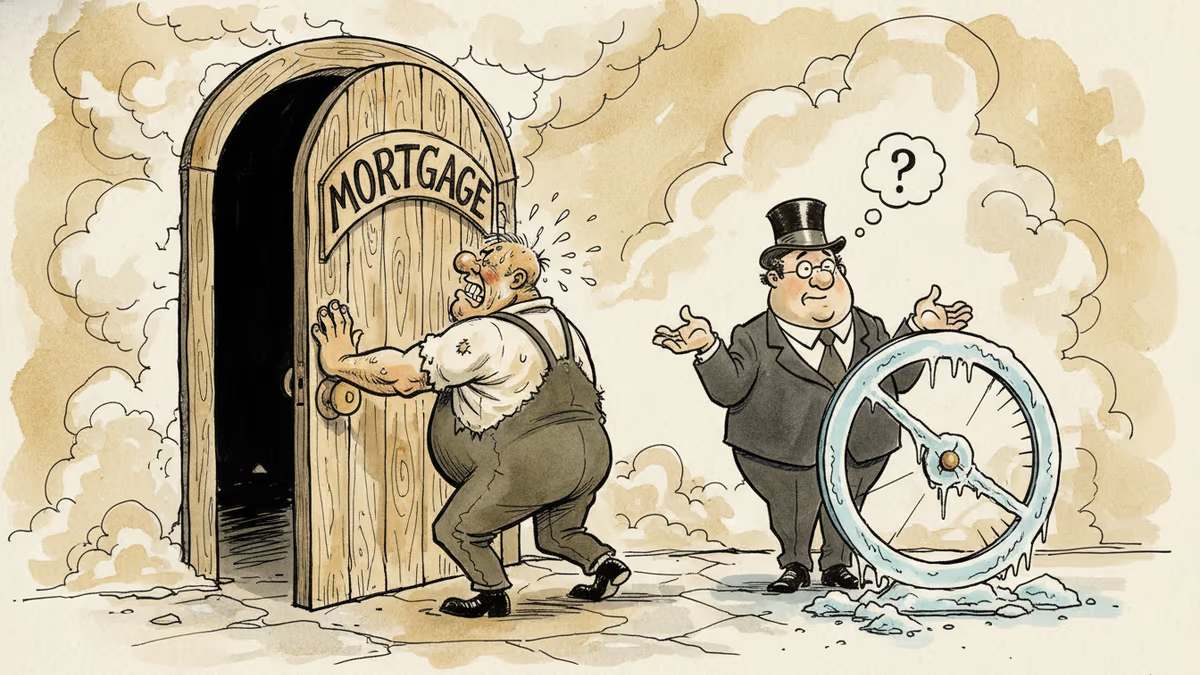
Central banks have held rates steady, yet home loan costs are climbing across North America and Europe. Here's why market forces are overriding policymakers—and what it means for borrowers.
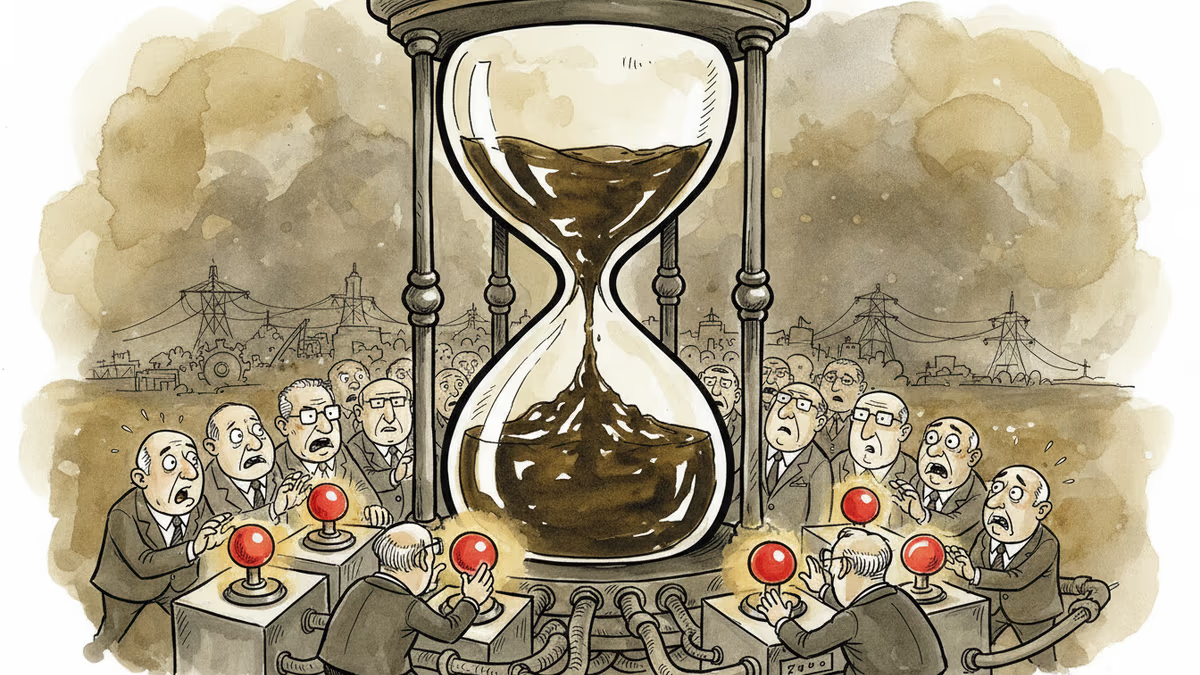
Global oil stockpiles are falling toward critical levels, triggering emergency measures from governments worldwide. What this means for energy prices, inflation, and your bottom line.
Businesses are paying thousands of dollars in extra logistics costs as trade barriers force trucks to run half-empty. Here's who pays, who profits, and what it means for prices.
Trump said South Korea will invest up to $200 billion. The joint US-Korea fact sheet prices two projects, gas power and nuclear. Alaska LNG has no figure.
Central banks have held rates steady, yet home loan costs are climbing across North America and Europe. Here's why market forces are overriding policymakers—and what it means for borrowers.
Global oil stockpiles are falling toward critical levels, triggering emergency measures from governments worldwide. What this means for energy prices, inflation, and your bottom line.
Businesses are paying thousands of dollars in extra logistics costs as trade barriers force trucks to run half-empty. Here's who pays, who profits, and what it means for prices.
Thoughts
Share your thoughts on this article
Sign in to join the conversation