
When AI Becomes Your Personal Fashion Consultant
Designer Kate Barton partnered with IBM AI to create multilingual fashion experiences at NYFW. While many brands quietly use AI, few go public. What's holding them back, and when will AI fashion become the norm?
15 Languages, One AI, Zero Human Stylists
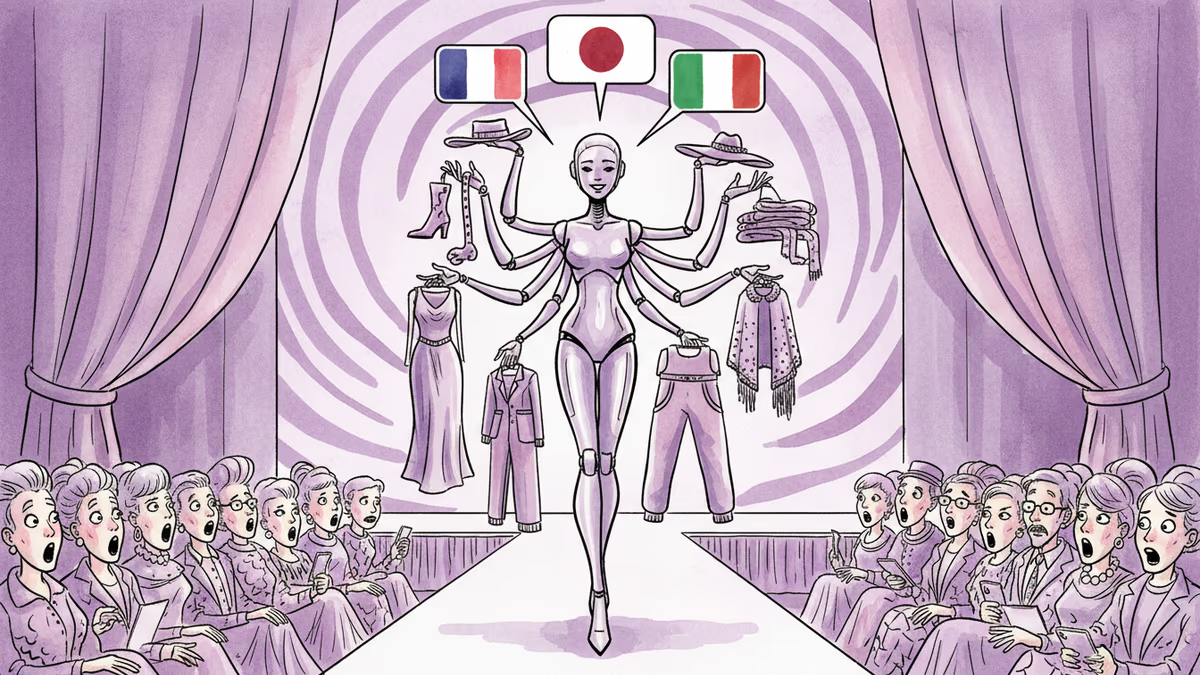
Saturday at New York Fashion Week, something unusual happened in designer Kate Barton's showroom. Guests pointed at runway pieces and asked questions in their native tongues—Spanish, Mandarin, Arabic. An AI agent, built on IBM Watsonx, responded fluently in all 15 languages and offered photorealistic virtual try-ons. This wasn't just a tech demo. It was fashion's quiet AI revolution going public.
"Technology is baked into how I think," Barton told TechCrunch. For her, AI functions like set design—a "portal into the collection's world" rather than technology for its own sake. The goal wasn't to showcase AI capabilities but to create moments that make "your eyes do a double-take."
Ganesh Harinath, CEO of Fiducia AI, said the hardest part wasn't model tuning but orchestration. His team used IBM's cloud infrastructure to create what he calls a "production-grade activation"—industry speak for making AI work seamlessly in real-world conditions.
The Quiet AI Adoption Most Don't See
But Barton's public display was an exception. Most fashion brands at NYFW kept their AI experiments behind closed doors. "Many brands are using AI, though quietly, mainly in operations," Barton observed. The reason for secrecy? Reputational risk.
It echoes the early days when major fashion houses were nervous about launching websites. "Then it became inevitable, and eventually the question shifted from 'should we be online' to 'is our online presence any good?'" Barton noted.

Harinath confirms that while brands experiment with AI, most deployments remain surface-level: chatbots, content generation, internal productivity tools. The deeper applications—better prototyping, smarter production decisions, immersive experiences—are still emerging.
The 2028 Timeline for AI Fashion
Harinath predicts AI in fashion will normalize by 2028 and become embedded in retail's operational core by 2030. "Most of this technology already exists—the differentiator now is assembling the right partners and building teams that can operationalize it responsibly."
Dee Waddell from IBM Consulting agrees: "When inspiration, product intelligence, and engagement are connected in real time, AI moves from being a feature to becoming a growth engine that drives measurable competitive advantage."
But timeline predictions in fashion have historically been optimistic. The industry moves slower than Silicon Valley expects, constrained by seasonal cycles, supply chain complexities, and consumer behavior that values authenticity over efficiency.
The Human Creativity Debate
Barton draws a firm line: "If the technology is used to erase people, I am not into it." Her vision isn't automated fashion but "fashion that uses new tools to heighten craft, deepen storytelling, and bring more people into the experience, without flattening the people who make it."
This philosophy reflects broader industry tensions. While AI can optimize inventory, predict trends, and personalize recommendations, fashion remains fundamentally about human expression and cultural meaning. The question isn't whether AI will transform fashion—it's already happening—but whether that transformation preserves what makes fashion meaningful.
Barton believes audiences are smarter than brands assume. "They can tell the difference between invention and avoidance." Success requires "clear discourse, clear licensing, clear credit, and a shared understanding that human creativity is not an annoying overhead cost."
Authors
Related Articles

Samsung and SK unveiled a chip and AI investment package worth thousands of trillions of won on June 29. The headline number swings wildly by outlet, but the real contest isn't capital — it's water and power.
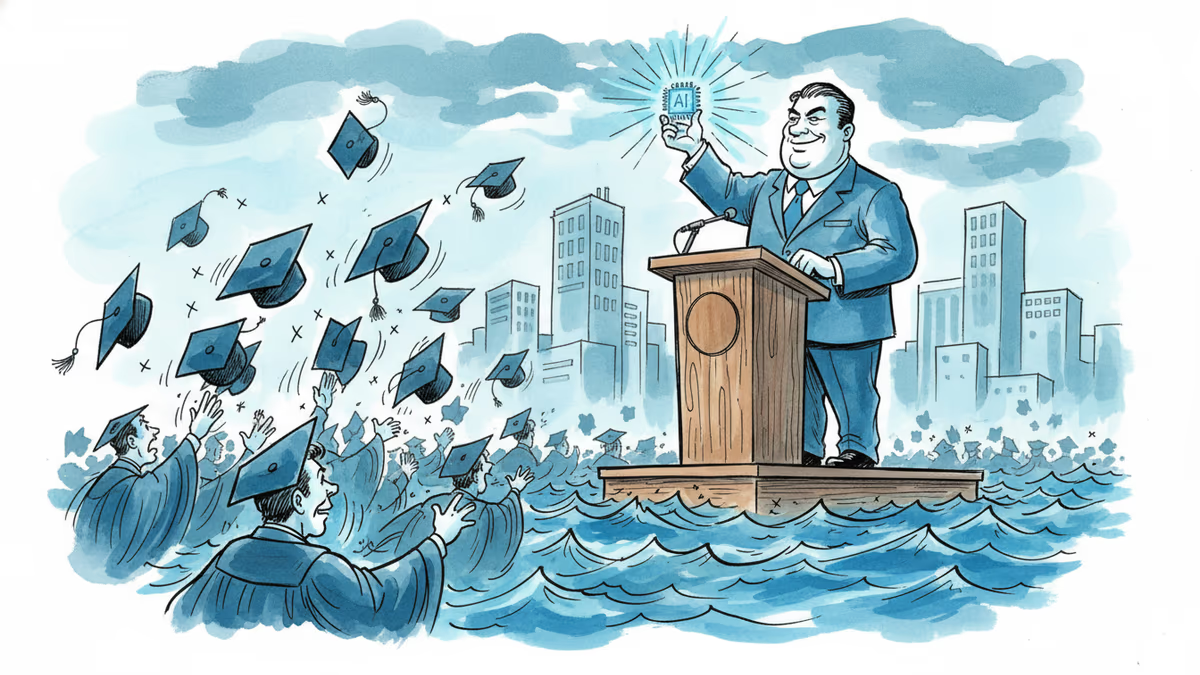
Viral videos show 2026 graduates jeering executives who praise AI at commencement ceremonies. It's not just rudeness — it's a signal about who pays for technological optimism.
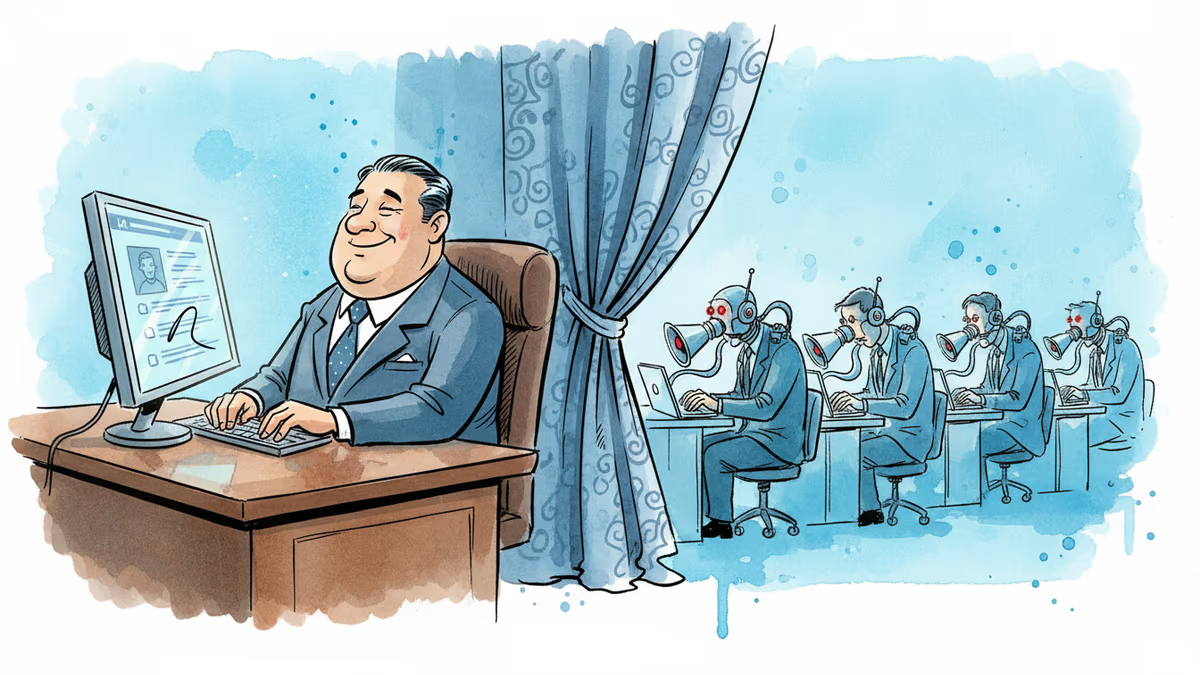
Filipino virtual assistants using AI to ghost-manage LinkedIn profiles for executives is now a structured industry. 30 comments a day, fake engagement rings, and a platform struggling to tell real from fabricated.
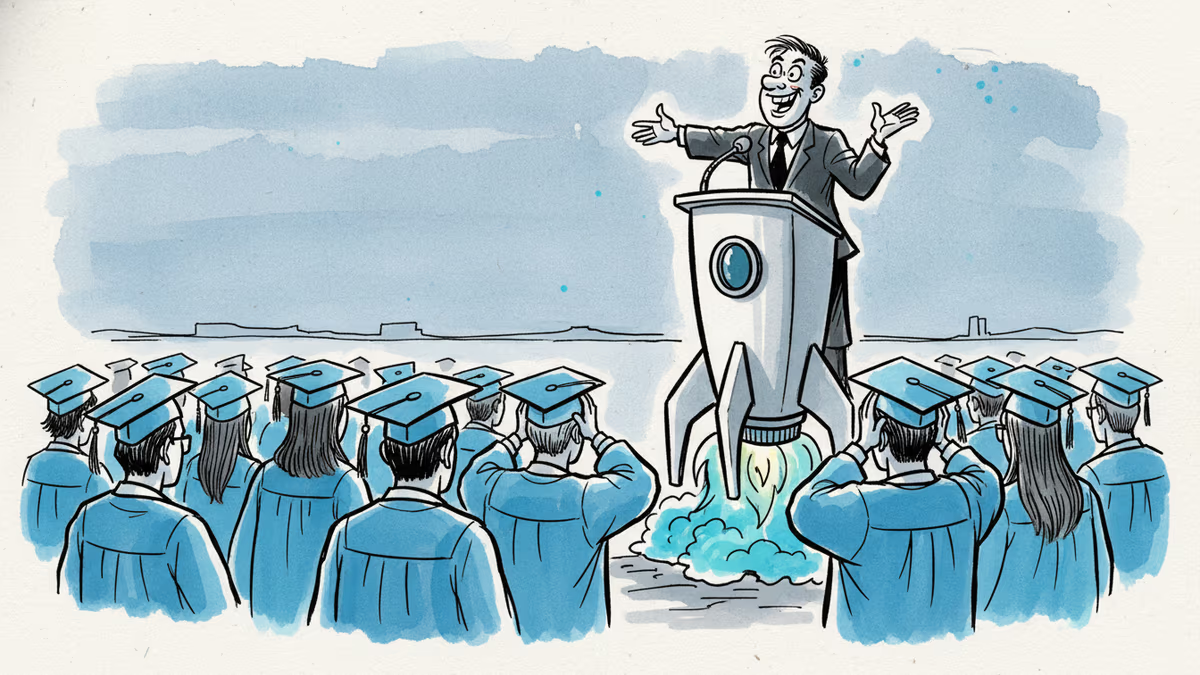
Two commencement speakers learned the hard way that AI enthusiasm doesn't land well with today's graduates. The backlash reveals a widening gap between tech optimism and Gen Z's economic reality.
Samsung and SK unveiled a chip and AI investment package worth thousands of trillions of won on June 29. The headline number swings wildly by outlet, but the real contest isn't capital — it's water and power.
Viral videos show 2026 graduates jeering executives who praise AI at commencement ceremonies. It's not just rudeness — it's a signal about who pays for technological optimism.
Filipino virtual assistants using AI to ghost-manage LinkedIn profiles for executives is now a structured industry. 30 comments a day, fake engagement rings, and a platform struggling to tell real from fabricated.
Two commencement speakers learned the hard way that AI enthusiasm doesn't land well with today's graduates. The backlash reveals a widening gap between tech optimism and Gen Z's economic reality.
Thoughts
Share your thoughts on this article
Sign in to join the conversation