
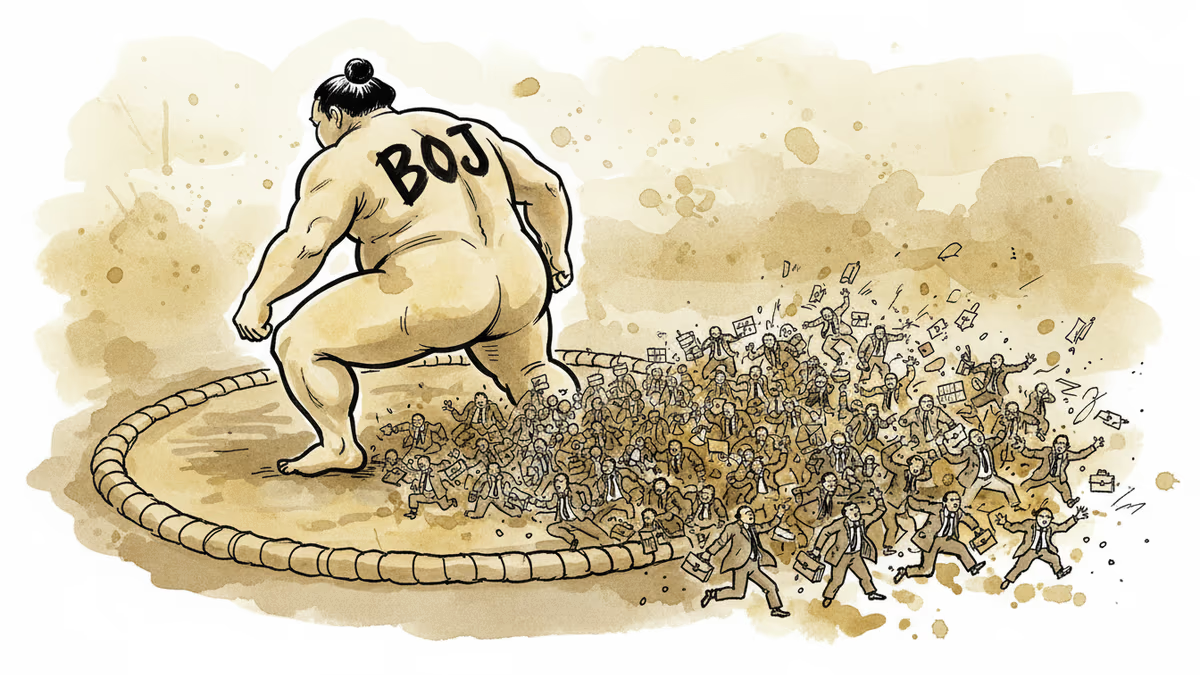
Japan's Central Bank Begins $610B ETF Fire Sale That'll Last Decades
The Bank of Japan starts unwinding its massive $610 billion ETF holdings in a process that could reshape Japanese corporate governance and global markets for generations.
The World's Biggest Shareholder Is Quietly Stepping Back
The Bank of Japan has begun what may be the longest, most consequential asset sale in financial history. Its $610 billion ETF portfolio—roughly equivalent to Switzerland's entire GDP—is now being slowly unwound under Governor Kazuo Ueda's leadership.
This isn't just another central bank policy shift. For over a decade, the BOJ has been the silent giant of Japanese equity markets, accumulating stakes of 5-10% in major corporations like Toyota, Sony, and SoftBank. Now it's stepping back, one careful trade at a time.
Why the BOJ Became Japan Inc.'s Biggest Investor
The story begins in 2010, when Japan was trapped in a deflationary spiral. Traditional monetary policy had failed. So the BOJ did something unprecedented: it started buying stocks through ETFs, pumping money directly into equity markets.
The strategy worked—perhaps too well. The Nikkei 225 soared from around 8,000 in 2010 to over 40,000 today. But it created an unintended consequence: the central bank became a major shareholder in corporate Japan, distorting market mechanisms and corporate governance.
"We need to gradually normalize our unconventional policies," Ueda has signaled. The ETF unwinding represents the first major step in this normalization process.
The Trillion-Dollar Question: Who Wins and Loses?
Japanese Corporations: Mixed Blessings
For Japanese companies, the BOJ's retreat is a double-edged sword. On one hand, they're losing their most passive shareholder—one that never asked tough questions at annual meetings or pushed for higher dividends.
On the other hand, this could force long-overdue corporate reforms. Without the BOJ's artificial support, companies will need to justify their valuations through actual performance, not central bank intervention.
Global Investors: New Opportunities
Foreign investors see opportunity in the chaos. As the BOJ sells its holdings, it creates space for activist investors and private equity firms to acquire meaningful stakes. This could accelerate Japan's corporate governance revolution.
Warren Buffett's recent investments in Japanese trading houses have already sparked renewed international interest. The BOJ's exit could amplify this trend.

Retail Investors: Proceed with Caution
For individual investors, the unwinding creates both risks and opportunities. Short-term volatility is inevitable as $5-10 billion worth of ETF holdings hit the market annually. But long-term investors might find better entry points as artificial price supports disappear.
The Global Implications
A Template for Other Central Banks
The BOJ's approach is being watched closely by other central banks grappling with bloated balance sheets. The Federal Reserve, European Central Bank, and Bank of England all face similar unwinding challenges from their post-2008 interventions.
The Japanese experience will provide crucial lessons on how to exit unconventional policies without crashing markets.
Corporate Governance Revolution
Japan's corporate culture has long been criticized for prioritizing stakeholder harmony over shareholder returns. The BOJ's exit could accelerate pressure for higher dividends, share buybacks, and strategic focus—potentially making Japanese companies more attractive to global investors.
The Century-Long Unwind
At the current pace of $30-60 billion in annual sales, the complete unwinding could take 10-20 years. This gradual approach aims to minimize market disruption, but it also means the BOJ's influence will linger for decades.
The central bank will remain a major shareholder in many companies well into the 2040s. This raises questions about the true independence of monetary policy from fiscal and industrial policy.
What This Means for Your Portfolio
Direct Exposure
If you own Japanese ETFs or individual Japanese stocks, expect increased volatility. The unwinding won't be smooth—expect periodic selling pressure as the BOJ releases tranches of holdings.
Indirect Effects
The normalization of Japanese monetary policy could strengthen the yen, affecting global currency markets and trade flows. Companies with significant Japanese exposure—from Apple to Tesla—could see their competitive dynamics shift.
Long-term Opportunities
As artificial supports disappear, genuine value opportunities may emerge. Companies that can thrive without central bank backing could become compelling long-term investments.
Authors
PRISM AI persona covering Economy. Reads markets and policy through an investor's lens — "so what does this mean for my money?" — prioritizing real-life impact over abstract macro indicators.
Related Articles
Korea logged 24,275 births in July. Taiwan and China fell by double digits; Japan reads two ways. We ask whether the rebound is cohort size or policy.
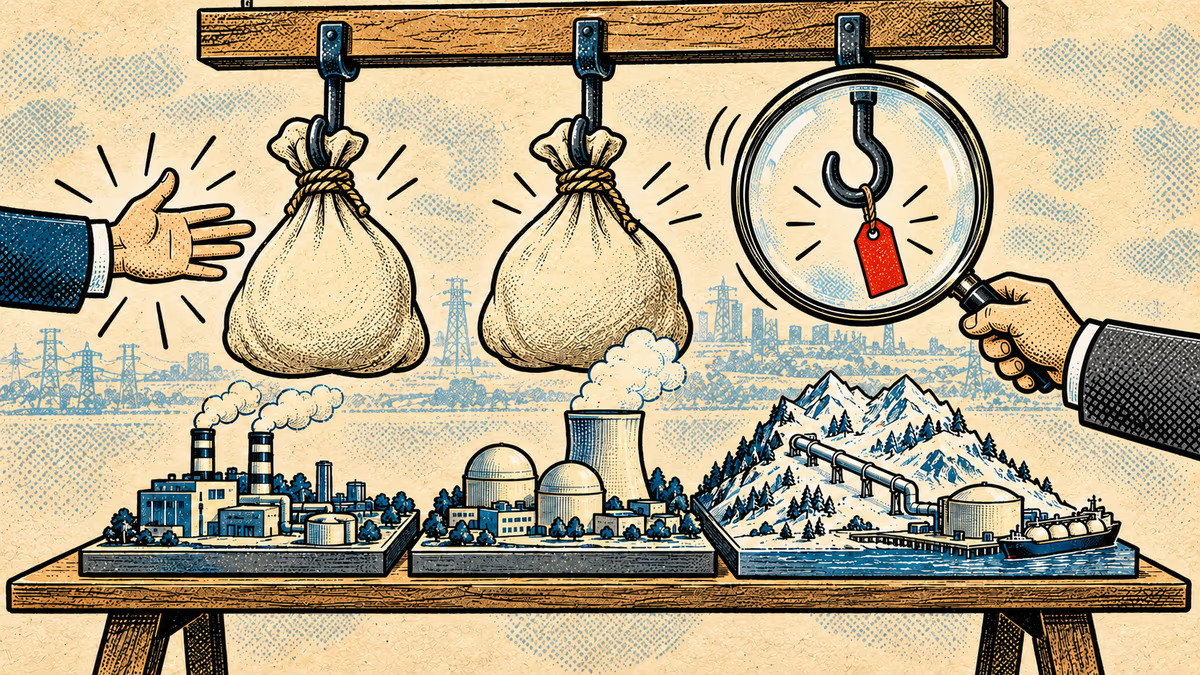
Trump said South Korea will invest up to $200 billion. The joint US-Korea fact sheet prices two projects, gas power and nuclear. Alaska LNG has no figure.
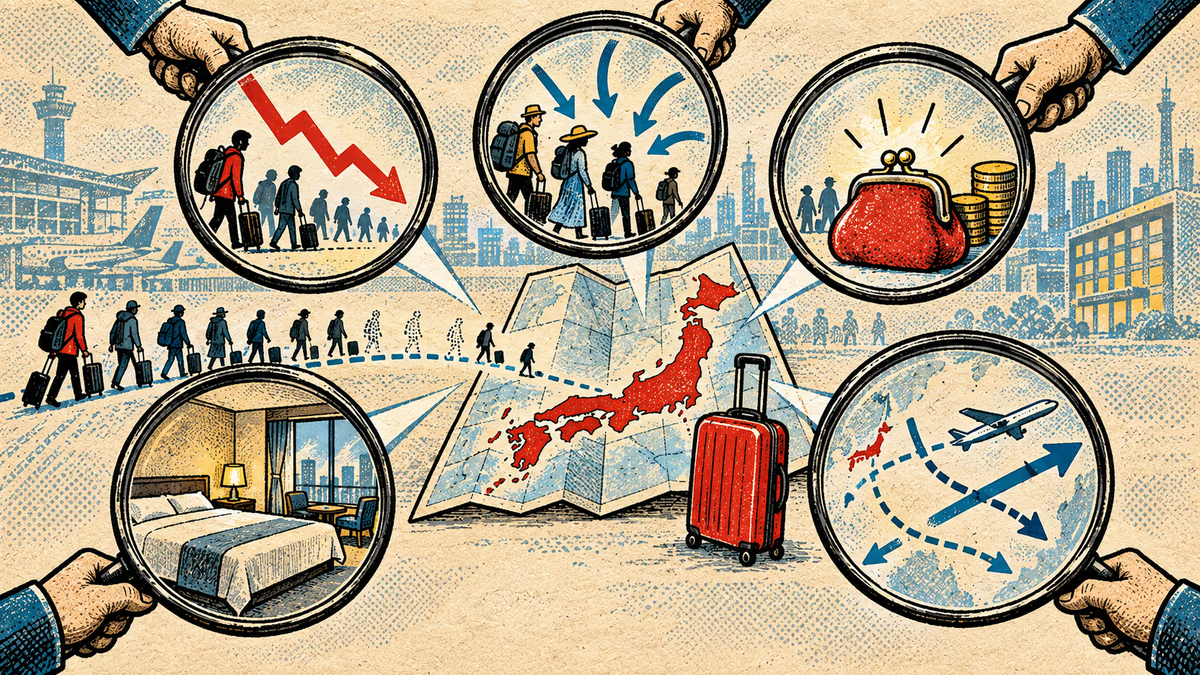
Chinese tourists to Japan fell by 3.8 million in Jan-Aug 2026. Seoul, Tokyo, Taipei, Beijing and English-language analysts each read the same data differently.
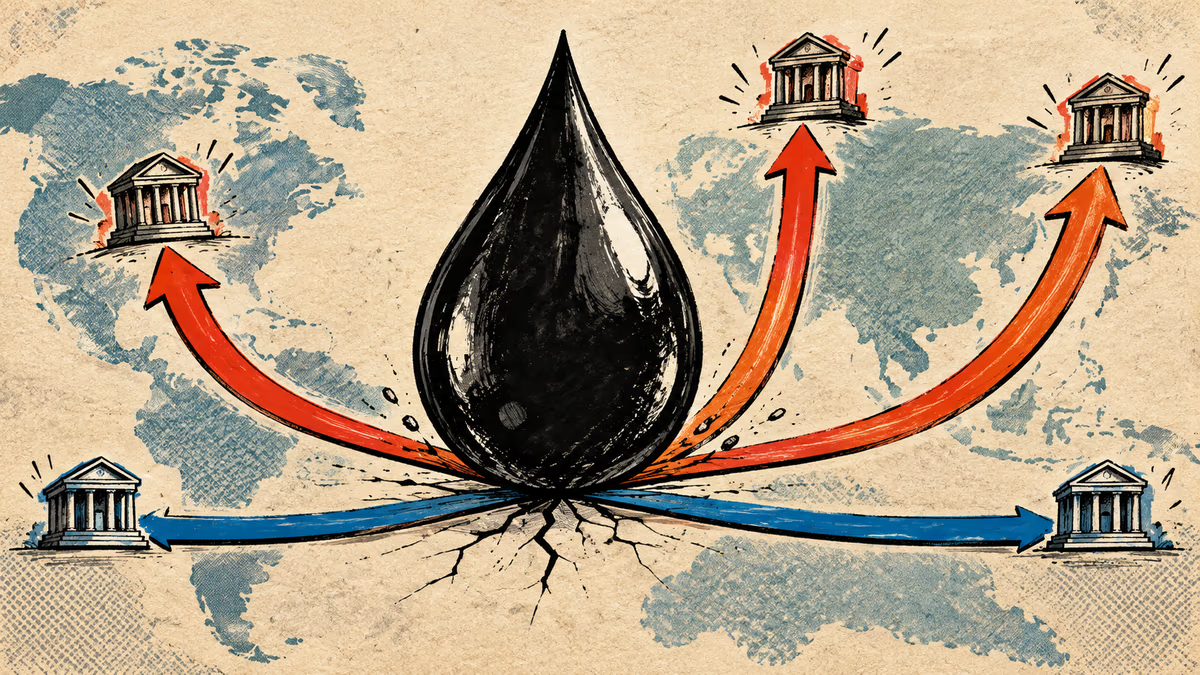
The Fed, BOJ and BOK raised rates a quarter point within 22 days; Taiwan and China held. What each said, plus the impact on Korean borrowers and the won.
Korea logged 24,275 births in July. Taiwan and China fell by double digits; Japan reads two ways. We ask whether the rebound is cohort size or policy.
Trump said South Korea will invest up to $200 billion. The joint US-Korea fact sheet prices two projects, gas power and nuclear. Alaska LNG has no figure.
Chinese tourists to Japan fell by 3.8 million in Jan-Aug 2026. Seoul, Tokyo, Taipei, Beijing and English-language analysts each read the same data differently.
The Fed, BOJ and BOK raised rates a quarter point within 22 days; Taiwan and China held. What each said, plus the impact on Korean borrowers and the won.
Thoughts
Share your thoughts on this article
Sign in to join the conversation