

Beyond Swiping for Love: 4.3M Downloads Fuel the New 'Friendship App' Economy
Explore the booming market of friendship apps in 2025. With 4.3M downloads and $16M in spending, discover how apps like Timeleft, 222, and Bumble BFF are solving the loneliness crisis.
Your next best friend might be a swipe away—and it has nothing to do with dating. As loneliness and social isolation become a literal public health crisis, 4.3 million people have turned to dedicated friendship apps in 2025 alone. According to Appfigures, consumer spending on these local-focused social platforms has hit $16 million this year, signaling a massive shift in how we build communities.
A Public Health Crisis Meets a Digital Solution
The stigma of meeting people online is fading, replaced by a desperate need for platonic connection. Remote workers and younger generations are leading the charge, seeking meaningful bonds based on shared interests rather than romance. Major players like Bumble BFF and newcomers like Timeleft are creating "less awkward" environments for strangers to connect. Instead of cold-approaching someone at a café, these apps guarantee everyone is there for the same reason: friendship.

From AI Quizzes to Group Dinners
The variety of platforms is expanding rapidly. 222 uses personality tests to curate in-person events for strangers, charging a $22.22 fee. Timeleft organizes weekly Wednesday dinners for groups of five, while Pie utilizes AI-driven quizzes to group compatible individuals before they meet in person. Even the over-40 demographic is joining the trend, with Meet5 garnering 777,000 downloads in the U.S. market.
- Bumble BFF: Rebranded stand-alone app focusing on group meetups.
- Les Amís: AI-powered matches for women and LGBTQ+ individuals.
- Mmotion: NYC-based app blending location tracking with social discovery.
Authors
Related Articles
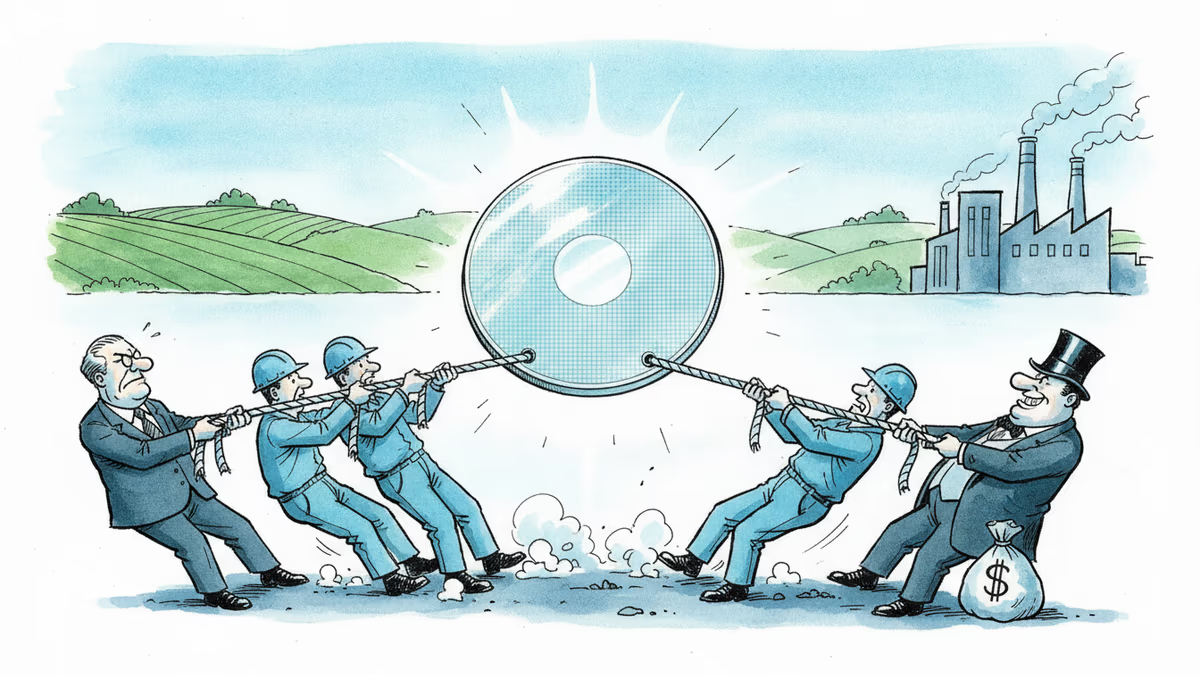
Samsung Electronics' union branch revealed that 84% of survey respondents oppose the government's roughly $290 billion (₩400 trillion) semiconductor megaproject in Gwangju. Government, management, the union and shareholders are all reading the same national project in sharply different ways.
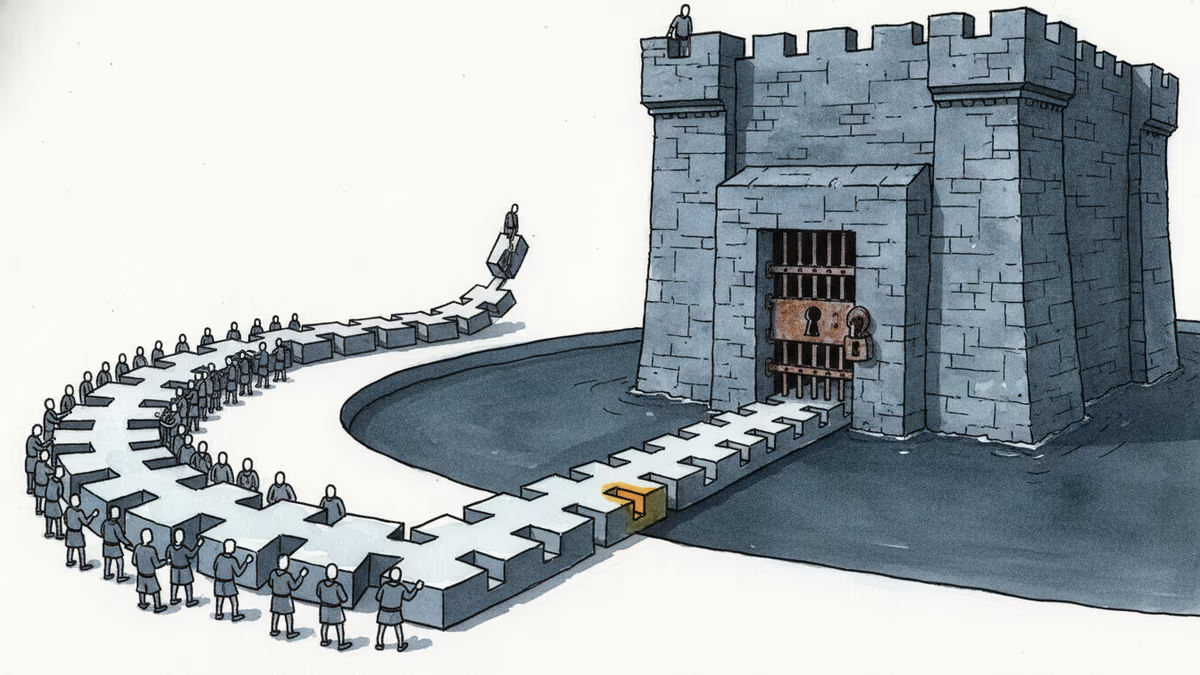
Nvidia shipped roughly a billion RISC-V cores in 2024, then announced it would run CUDA on the open standard. We break down how royalty-free instruction sets and open software stacks are trying to route around CUDA's lock-in. Part 2 of the Semiconductor Sovereignty series.

US AI-chip export controls split into three layers in the first half of 2026 — January easing, a May crackdown on circumvention, and a pending bill. Nvidia erased China from its guidance and still posted a record $81.6 billion quarter. A look at the export policy that both shields and cages it.

AMD's MI325X matches or beats Nvidia on memory and bandwidth — yet Nvidia's 86-92% share holds. The real moat is CUDA, 20 years in the making. Part 1 of 4.
Samsung Electronics' union branch revealed that 84% of survey respondents oppose the government's roughly $290 billion (₩400 trillion) semiconductor megaproject in Gwangju. Government, management, the union and shareholders are all reading the same national project in sharply different ways.
Nvidia shipped roughly a billion RISC-V cores in 2024, then announced it would run CUDA on the open standard. We break down how royalty-free instruction sets and open software stacks are trying to route around CUDA's lock-in. Part 2 of the Semiconductor Sovereignty series.
US AI-chip export controls split into three layers in the first half of 2026 — January easing, a May crackdown on circumvention, and a pending bill. Nvidia erased China from its guidance and still posted a record $81.6 billion quarter. A look at the export policy that both shields and cages it.
AMD's MI325X matches or beats Nvidia on memory and bandwidth — yet Nvidia's 86-92% share holds. The real moat is CUDA, 20 years in the making. Part 1 of 4.
Thoughts
Share your thoughts on this article
Sign in to join the conversation