
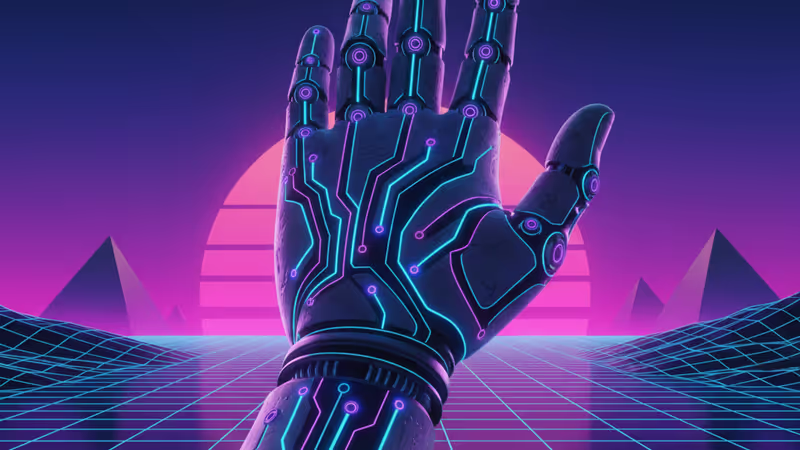
Artificial Robotic Skin Spiking Circuitry: Bridging Biology and AI
Discover how artificial robotic skin spiking circuitry is revolutionizing robotics by mimicking the human nervous system for energy-efficient AI integration.
The human nervous system tracks sensory data using a method that would drive most traditional computer scientists insane: a chaotic, noisy stream of activity spikes. Now, researchers have successfully mimicked this biological chaos to create artificial robotic skin that functions like our own neurons.
Artificial Robotic Skin Spiking Circuitry Advantages
By adopting the principles of how signals from sensory neurons are integrated, this new system leverages spiking circuitry to process information. Unlike traditional digital systems, it can integrate seamlessly with energy-efficient hardware designed to run neural networks using similar spiking signals. This compatibility is expected to drastically reduce the power consumption of AI-based control software in robots.

From Pressure to Reflex: Mimicking the Spinal Column
Our skin isn't just a covering; it's a complex network of specialized sensors for heat, cold, and pressure. These feed into the spinal column, where preliminary processing allows for reflexes to occur without involving the brain. The new artificial skin follows this model, enabling robots to process multimodal sensations and potentially achieve a form of machine 'conscious awareness' through advanced neural integration.
Authors
Related Articles
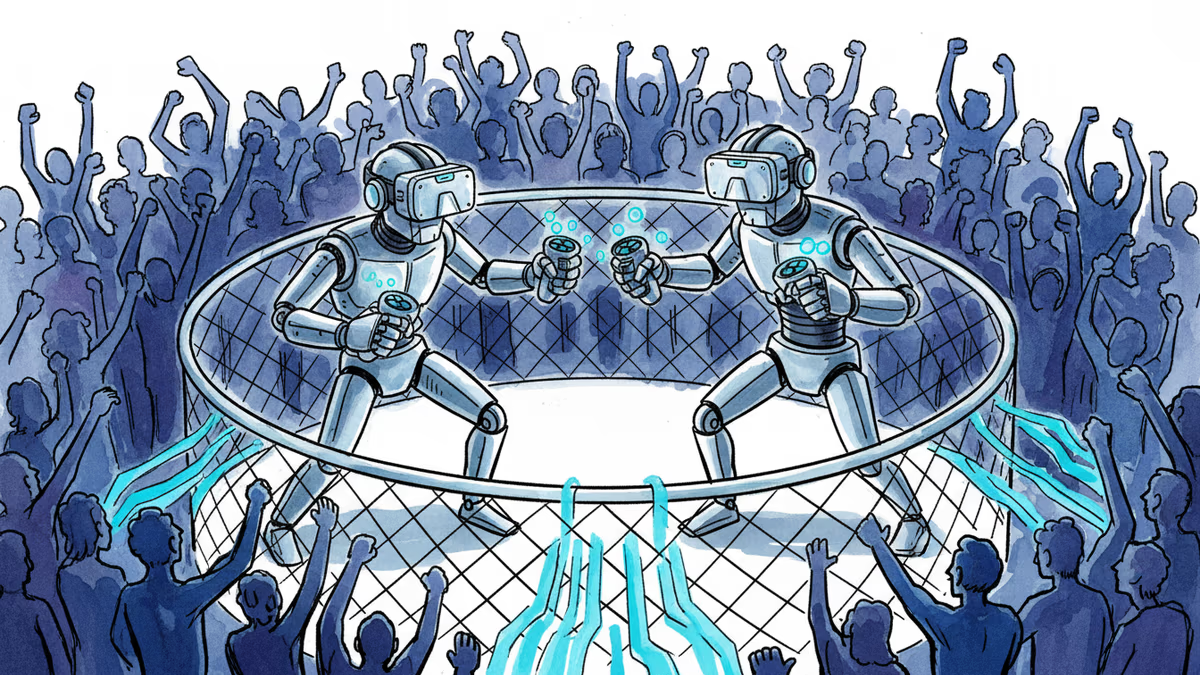
Humanoid robot boxing matches in San Francisco draw hundreds of spectators, but experts question whether it's genuine AI progress or elaborate 'robot theater.
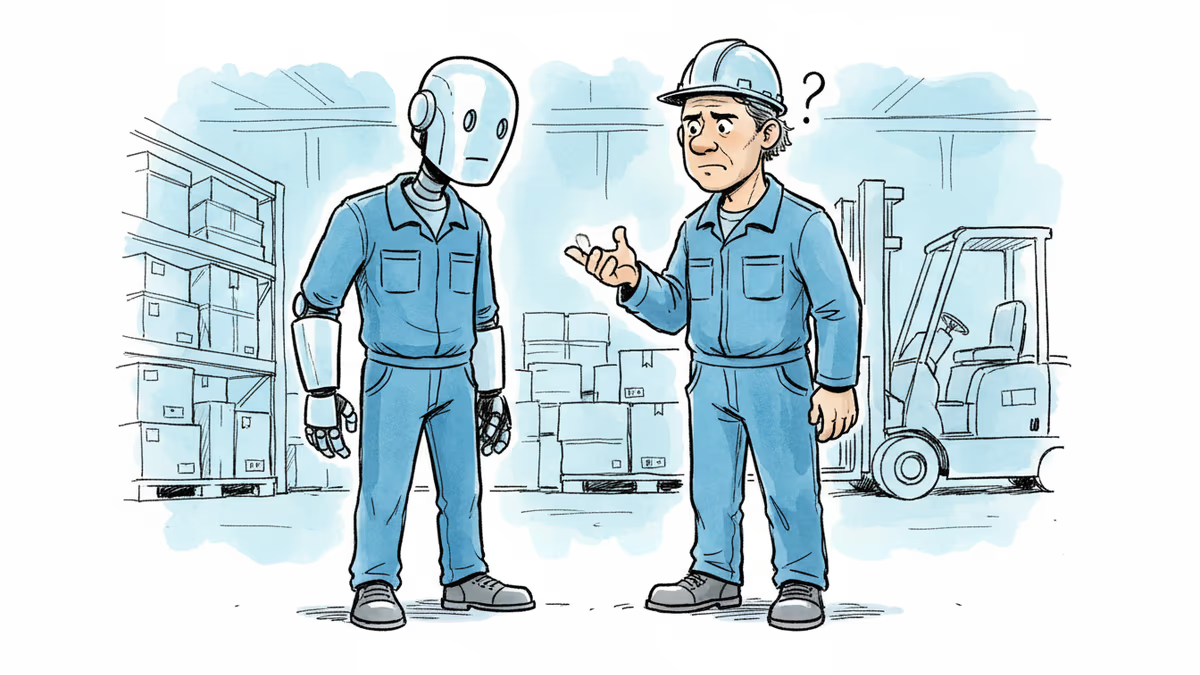
Apptronik raised $935M in Series A extensions, tripling its valuation in a year. But technical limits and social acceptance remain major hurdles for humanoid robots.
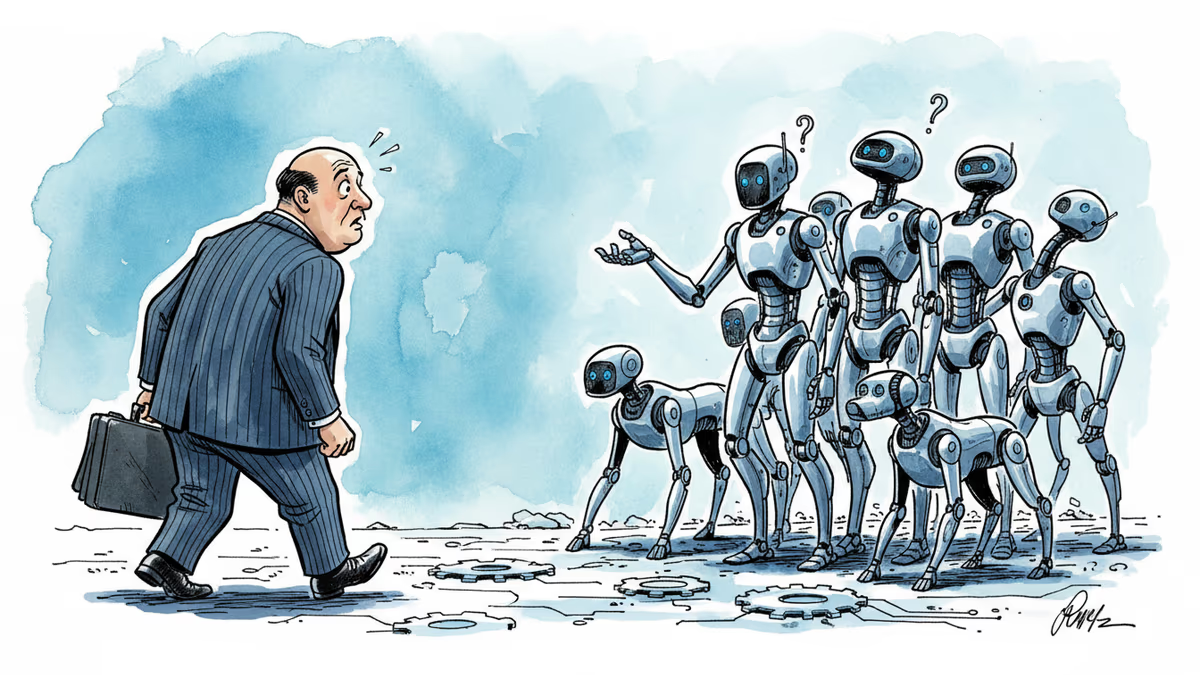
Robert Playter steps down as Boston Dynamics CEO just as robots go commercial. What does this leadership change signal for the robotics industry?
A robot barista named Jarvis at a Seattle luxury apartment complex creates personalized lattes with latte art, showcasing the real-world potential of service automation.
Humanoid robot boxing matches in San Francisco draw hundreds of spectators, but experts question whether it's genuine AI progress or elaborate 'robot theater.
Apptronik raised $935M in Series A extensions, tripling its valuation in a year. But technical limits and social acceptance remain major hurdles for humanoid robots.
Robert Playter steps down as Boston Dynamics CEO just as robots go commercial. What does this leadership change signal for the robotics industry?
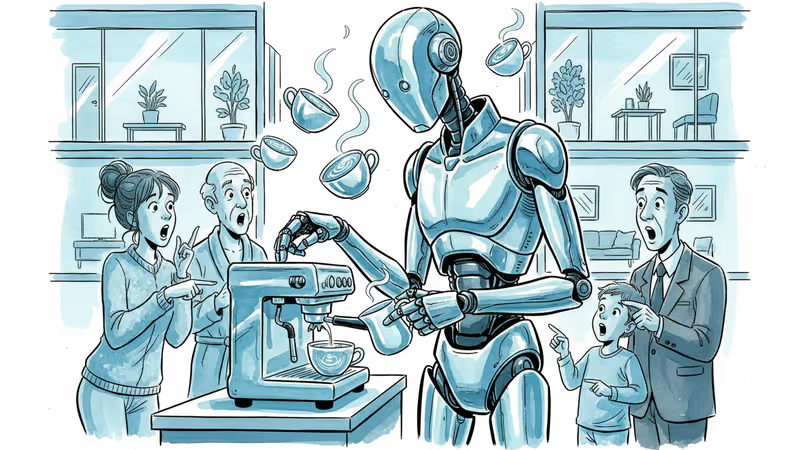
A robot barista named Jarvis at a Seattle luxury apartment complex creates personalized lattes with latte art, showcasing the real-world potential of service automation.
Thoughts
Share your thoughts on this article
Sign in to join the conversation