

Apple's Japan Retreat: The Global Playbook for Dismantling the Walled Garden Emerges
Apple opens iOS to third-party app stores in Japan. PRISM's analysis reveals Apple's global playbook to manage regulators and protect its App Store monopoly.
The Lede: Why This Matters Now
Apple's announcement to open iOS to alternative app stores and payment systems in Japan is far more than a regional compliance update. For C-suite leaders, strategists, and investors, this is the second major deployment of Apple's global playbook for managed retreat. Following the EU's Digital Markets Act, the move in Japan—the world's third-largest app economy—confirms a pattern: Apple will yield to regulatory pressure, but on its own terms, transforming every concession into a complex, friction-filled process designed to protect its services revenue fortress. This isn't the fall of the walled garden; it's the installation of toll gates on newly mandated doors.
Why It Matters: The Second Front Opens
The capitulation in Japan establishes a critical precedent and signals a global acceleration of regulatory action against Big Tech's platform power. The long-term, second-order effects will reshape the mobile ecosystem:
- The Blueprint Solidifies: Apple's response—complying with the letter of the law while using security warnings, a watered-down 'Notarization' review process, and complex developer requirements—is now a battle-tested template. Expect to see this model replicated in the UK, Australia, and the US as similar legislation advances.
- Developer's Dilemma: Developers gain theoretical freedom but face practical fragmentation. The choice is no longer simple. Pursuing off-platform distribution means navigating new approval processes, potentially paying new fees (like the EU's Core Technology Fee), and convincing users to trust an unfamiliar download and payment experience. The path of least resistance will, by design, remain the App Store.
- The Consumer Trust Battleground: Apple is masterfully framing this shift around user risk, repeatedly highlighting threats of malware, fraud, and scams. This narrative positions the App Store as a safe haven and alternative marketplaces as the wild west, a powerful psychological deterrent for mainstream users.

The Analysis: From Brussels to Tokyo
To understand Apple's strategy in Japan, one must look at its recent implementation in the European Union. The EU's DMA was the trial run. There, Apple introduced a 'Core Technology Fee' (CTF) of €0.50 per user per year for large developers distributing outside the App Store, a move decried by critics like Epic Games and Spotify as a poison pill designed to make alternatives financially unviable. While the Japanese announcement doesn't yet detail a similar fee structure, the strategic DNA is identical.
Apple is engaging in what can be described as strategic friction. The 'Notarization' process for apps outside the App Store is a prime example. It's deliberately positioned as a less comprehensive, baseline security check compared to the full App Review. This creates a two-tier system in the user's mind: Apple-vetted (safe) vs. Apple-notarized (less safe). This isn't just about compliance; it's about shaping user perception and behavior to maintain the status quo.
The competition isn't just between app stores anymore; it's a battle of narratives. Apple's narrative is one of safety and simplicity. The challenger's narrative is one of choice and fair pricing. Apple, as the platform owner, controls the microphone.
PRISM's Take: The Illusion of Openness
Apple is executing a masterful defensive strategy. It is ceding territory inch by inch, but only after fortifying its core position. By complying in the most complex way possible and wrapping its actions in the unassailable flag of user security, it gives regulators a paper victory while ensuring the practical reality for most users and developers remains unchanged. The era of the absolute, sealed-off walled garden is over. In its place, Apple is constructing a new model: a fortress with a few, heavily guarded, and expensive-to-use public gates. The fundamental power dynamic between platform owner and developer has not been upended—it has just been given a new, more complex set of rules written by the winner.
Authors
Related Articles
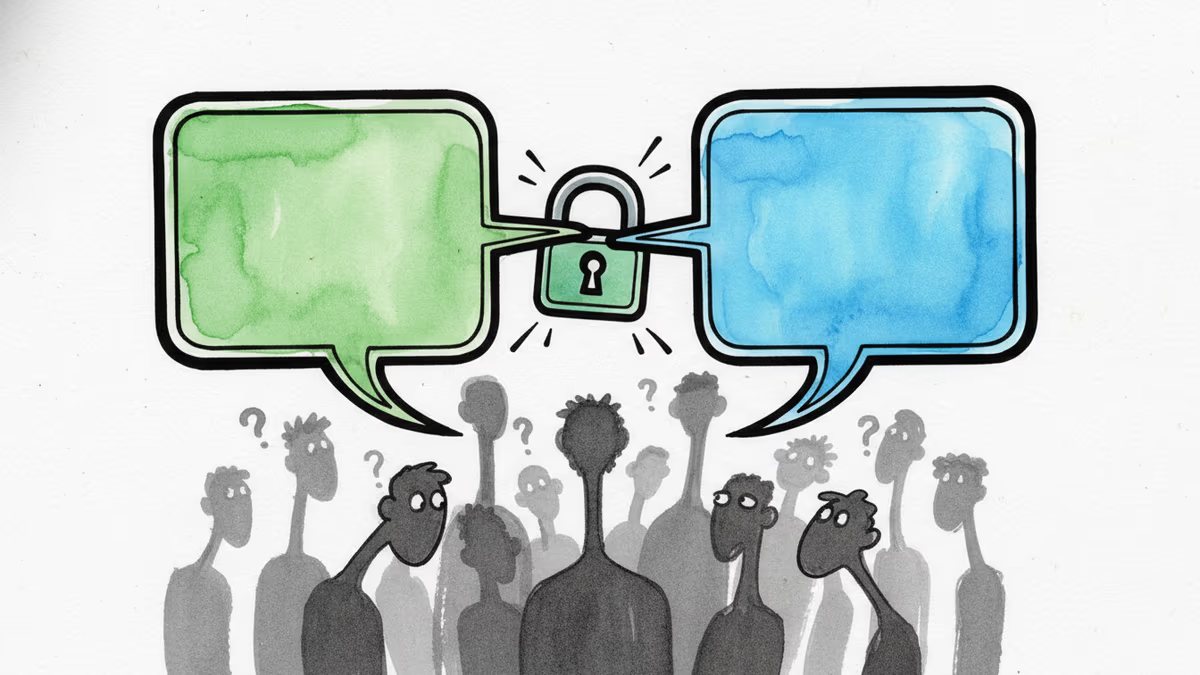
After 15 years of fragmented mobile messaging, Apple and Google are rolling out end-to-end encrypted RCS messaging between iPhones and Android devices. Here's what changed, why it took so long, and what it means for your privacy.
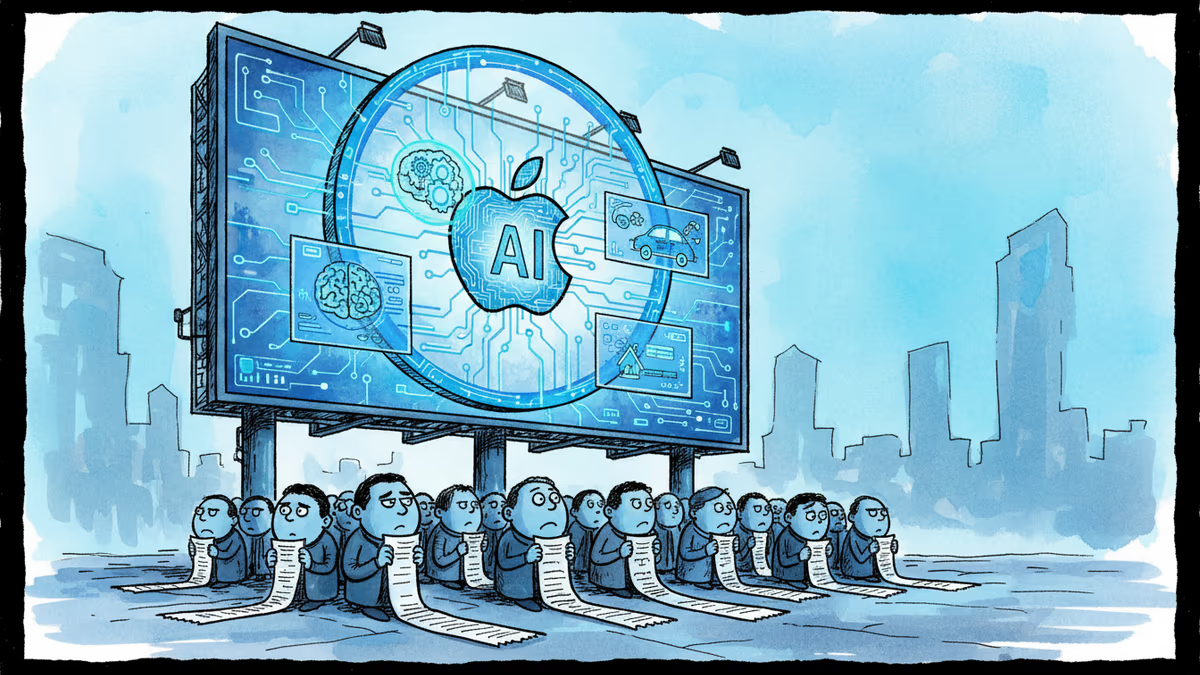
Apple agreed to pay $250 million to settle claims it misled iPhone 16 buyers about Apple Intelligence features. What this means for consumers, Big Tech marketing, and the AI industry.
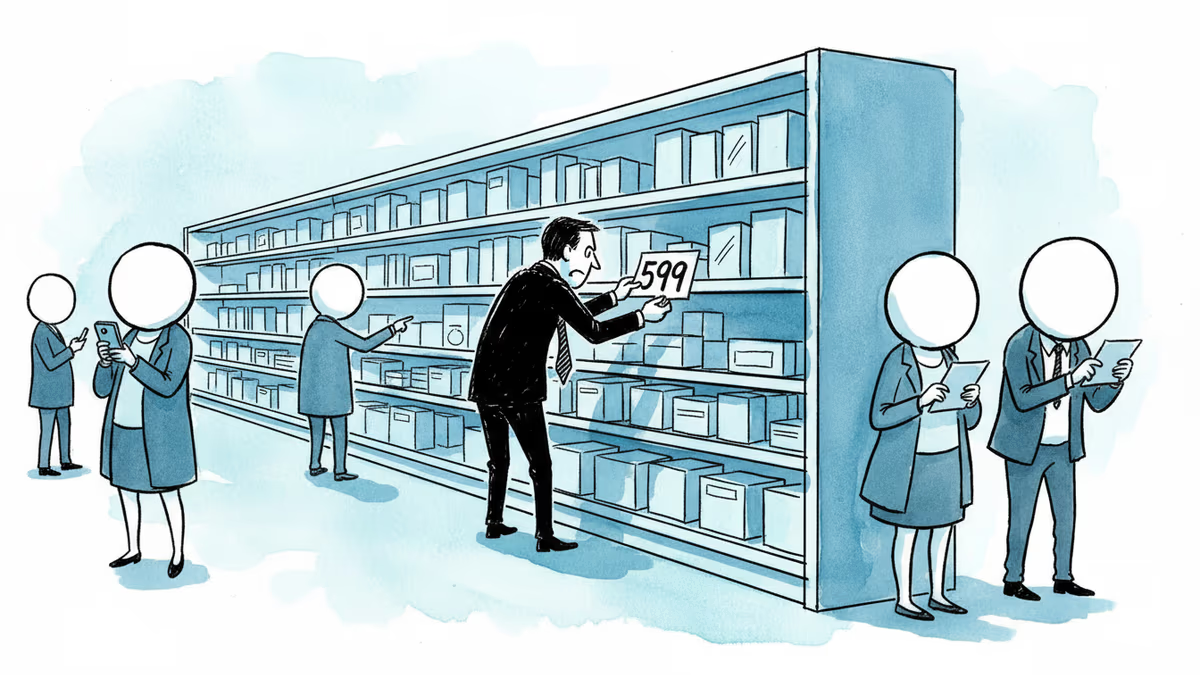
Apple quietly removed the entry-level $599 Mac Mini, raising the starting price to $799 — just one day after Tim Cook warned of chip supply constraints on the earnings call.
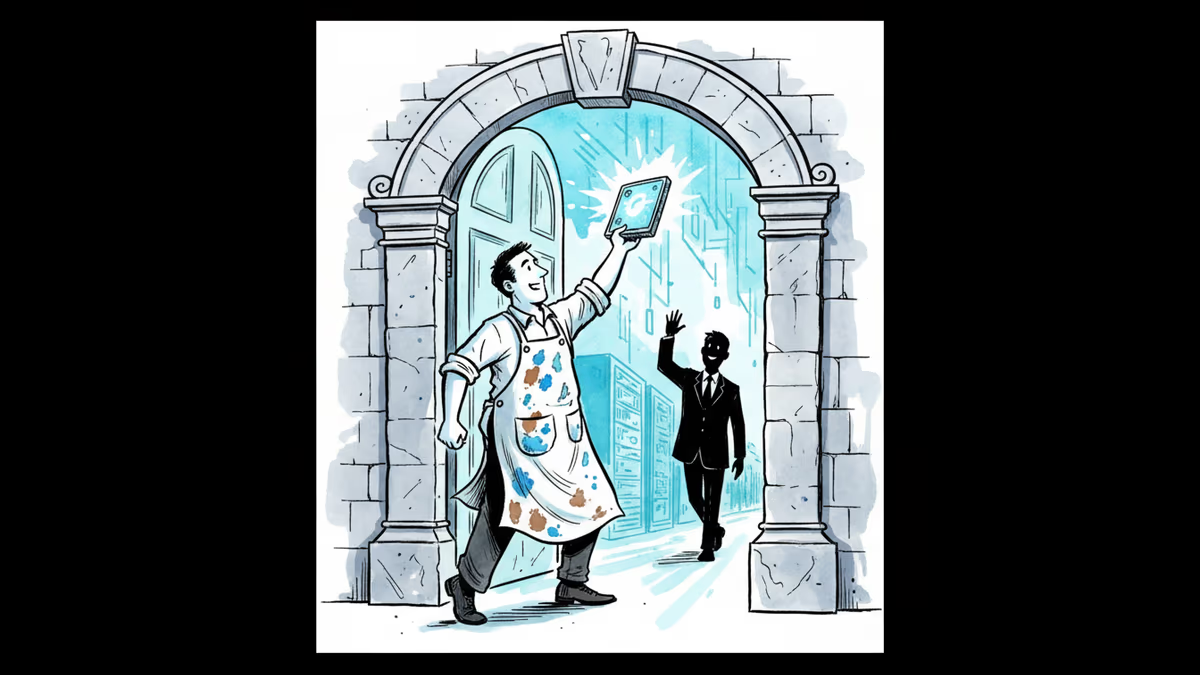
Apple names John Ternus, its hardware engineering chief, as the next CEO. The shift from operator to product person signals where Apple thinks its next decade of growth will come from — and raises real questions about what comes next.
After 15 years of fragmented mobile messaging, Apple and Google are rolling out end-to-end encrypted RCS messaging between iPhones and Android devices. Here's what changed, why it took so long, and what it means for your privacy.
Apple agreed to pay $250 million to settle claims it misled iPhone 16 buyers about Apple Intelligence features. What this means for consumers, Big Tech marketing, and the AI industry.
Apple quietly removed the entry-level $599 Mac Mini, raising the starting price to $799 — just one day after Tim Cook warned of chip supply constraints on the earnings call.
Apple names John Ternus, its hardware engineering chief, as the next CEO. The shift from operator to product person signals where Apple thinks its next decade of growth will come from — and raises real questions about what comes next.
Thoughts
Share your thoughts on this article
Sign in to join the conversation