
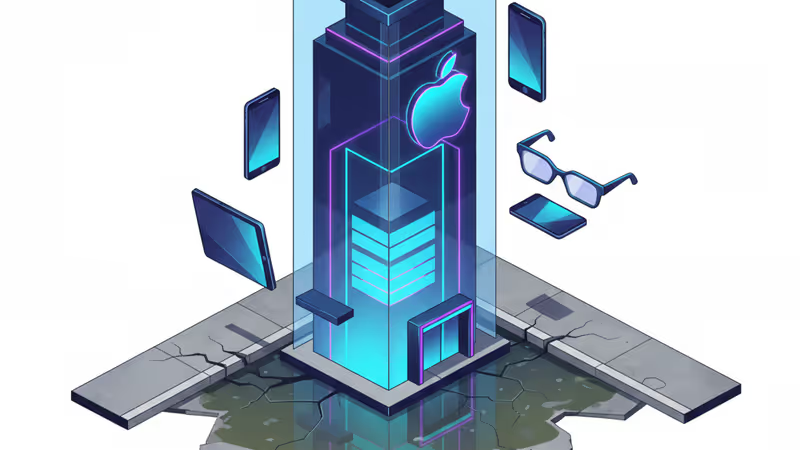
Apple's $30 Million Detroit Bet: Is It Creating Coders or Just Good PR?
Apple invested $30M in its Detroit Developer Academy to create opportunity. While it changed some lives, others faced low stipends and a tough job market. An analysis of Big Tech's education promises.
Is Big Tech's ladder of opportunity actually working? Apple's Developer Academy in Detroit, born from a pledge to advance racial equity after the Black Lives Matter protests, was an ambitious promise. After nearly $30 million in investment over the past four years, the program has opened doors for some but left others facing a harsh economic reality.
A Life-Changing Opportunity
Since its launch in 2021, the academy has welcomed over 1,700 students, with about 600 completing its intensive 10-month course. For some, the experience was transformative. "It changed my life," says Min Thu Khine, who now mentors coding students and works at an Apple Store Genius Bar. "My dream is to be a software engineer at Apple." The program provides students with iPhones and MacBooks and spends an estimated $20,000 per student.
The Reality Behind the Promise

However, not every story has a happy ending. Lizmary Fernandez, who joined the academy while studying to be an immigration attorney, says the cost-of-living stipend was so inadequate that "a lot of us got on food stamps." After graduating, she felt she lacked the experience and portfolio to land a coding job and is now a flight attendant. According to academy officials, about 71% of graduates from the last two years found full-time jobs. For comparison, University of Washington computer scientist Amy J. Ko notes that her department's undergraduate program has a 95% job placement rate. Furthermore, some graduates reported that the curriculum's heavy focus on Apple's ecosystem, like iOS, left them with limited proficiency in competing platforms such as Android, hindering their job search.
Big Tech's Education Play in the AI Era
Apple's initiative highlights the complex reality of corporate-led education efforts. Google and Microsoft have recently committed billions to similar AI education and job training programs. The challenge is the rapid evolution of technology. With generative AI threatening to automate some entry-level software engineering jobs, it raises a fundamental question: can a curriculum built around a single platform provide sustainable skills? The true measure of these programs' success will be their ability to equip students with the resilience to navigate a constantly shifting job market.
Authors
Related Articles
After 15 years of fragmented mobile messaging, Apple and Google are rolling out end-to-end encrypted RCS messaging between iPhones and Android devices. Here's what changed, why it took so long, and what it means for your privacy.
Apple agreed to pay $250 million to settle claims it misled iPhone 16 buyers about Apple Intelligence features. What this means for consumers, Big Tech marketing, and the AI industry.
Apple quietly removed the entry-level $599 Mac Mini, raising the starting price to $799 — just one day after Tim Cook warned of chip supply constraints on the earnings call.
Apple names John Ternus, its hardware engineering chief, as the next CEO. The shift from operator to product person signals where Apple thinks its next decade of growth will come from — and raises real questions about what comes next.
After 15 years of fragmented mobile messaging, Apple and Google are rolling out end-to-end encrypted RCS messaging between iPhones and Android devices. Here's what changed, why it took so long, and what it means for your privacy.
Apple agreed to pay $250 million to settle claims it misled iPhone 16 buyers about Apple Intelligence features. What this means for consumers, Big Tech marketing, and the AI industry.
Apple quietly removed the entry-level $599 Mac Mini, raising the starting price to $799 — just one day after Tim Cook warned of chip supply constraints on the earnings call.
Apple names John Ternus, its hardware engineering chief, as the next CEO. The shift from operator to product person signals where Apple thinks its next decade of growth will come from — and raises real questions about what comes next.
Thoughts
Share your thoughts on this article
Sign in to join the conversation