
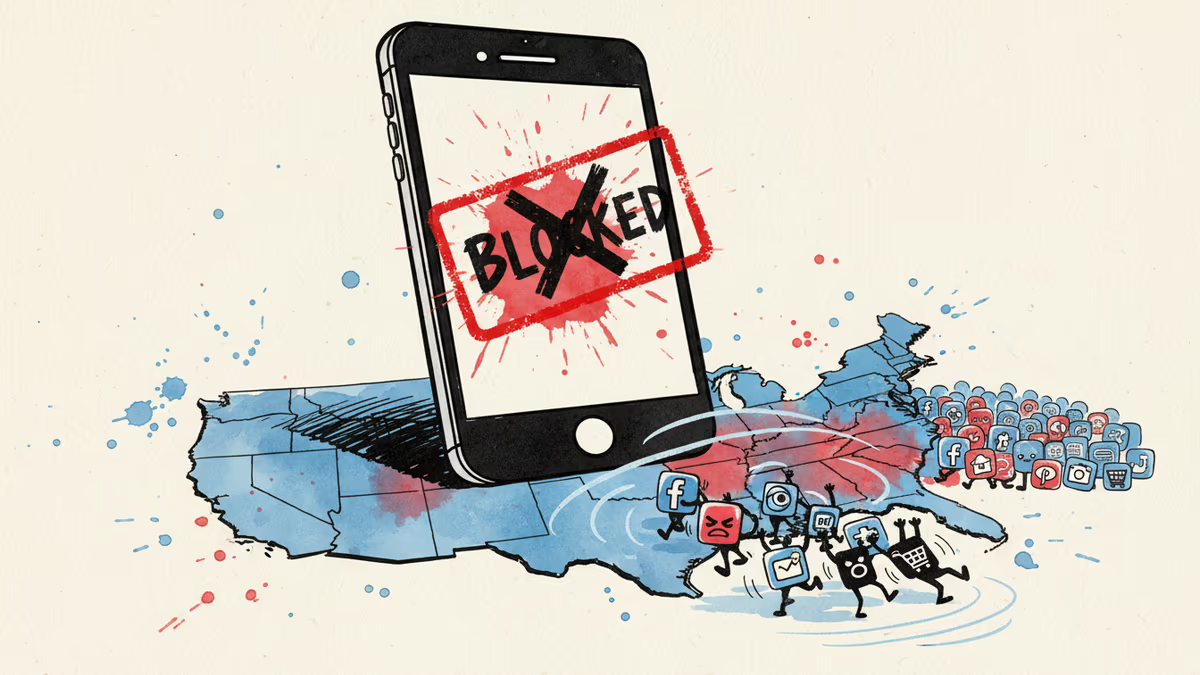
Apple's ByteDance Ban Reveals the New Rules of Digital Territory
Apple quietly blocks all ByteDance apps for US-based iPhones, even with Chinese App Store accounts. This goes beyond TikTok—it's about platform power in geopolitical conflicts.
Chinese App Store users in America started noticing something strange in late January. Apps they'd downloaded for years—Douyin, ByteDance's AI tools, entertainment platforms—suddenly wouldn't install or update. Even with valid Chinese accounts. Even with VPNs. Apple had quietly built a wall.
Beyond TikTok: Total Digital Blockade
This isn't just about TikTok's forced sale. Apple has implemented a comprehensive technical restriction that blocks US-based iPhones from downloading or updating any ByteDance-owned app. That includes Douyin (China's TikTok with 1 billion monthly users), AI productivity tools, and dozens of entertainment apps.
Previously, having a Chinese App Store account meant global access to these apps, regardless of your physical location. Now, if your iPhone detects you're in the United States, access is denied—no matter which App Store account you use.
Apple hasn't issued a public statement, but the tech industry reads this as "preemptive compliance"—getting ahead of potential regulatory expansion beyond TikTok.
Platform Power Goes Geopolitical
This move reveals something bigger: platforms as geopolitical enforcers. No government order was needed. Apple drew the digital borders itself.

For developers who've built businesses around ByteDance's ecosystem, it's devastating. One Silicon Valley startup founder told us they lost $300,000 in monthly revenue overnight when their Chinese-American user base suddenly couldn't access their app.
But the implications stretch far beyond individual companies. We're witnessing the balkanization of app ecosystems—where your physical location determines which digital services you can access, regardless of your account origin.
The Developer's Dilemma
Software developers now face an impossible choice: build for Chinese platforms and lose American users, or stick to Western ecosystems and forfeit the world's largest mobile market.
This fragmentation accelerates what experts call "digital sovereignty"—the idea that nations should control the digital services available within their borders. But when private platforms like Apple make these decisions unilaterally, who's really in charge?
For international businesses, the calculation becomes complex. A gaming company targeting Chinese users must now consider: will American employees be able to test their own products?
The Precedent Problem
Apple's technical implementation is sophisticated—it's not just blocking downloads, but preventing updates to existing installations. This suggests the company has built infrastructure for selective geographic enforcement that could be applied to any app, from any country.
If Apple can unilaterally block ByteDance apps for US users, what stops them from blocking Russian apps during the Ukraine conflict? Or Indian apps during border disputes? The precedent is set.
Authors
Related Articles
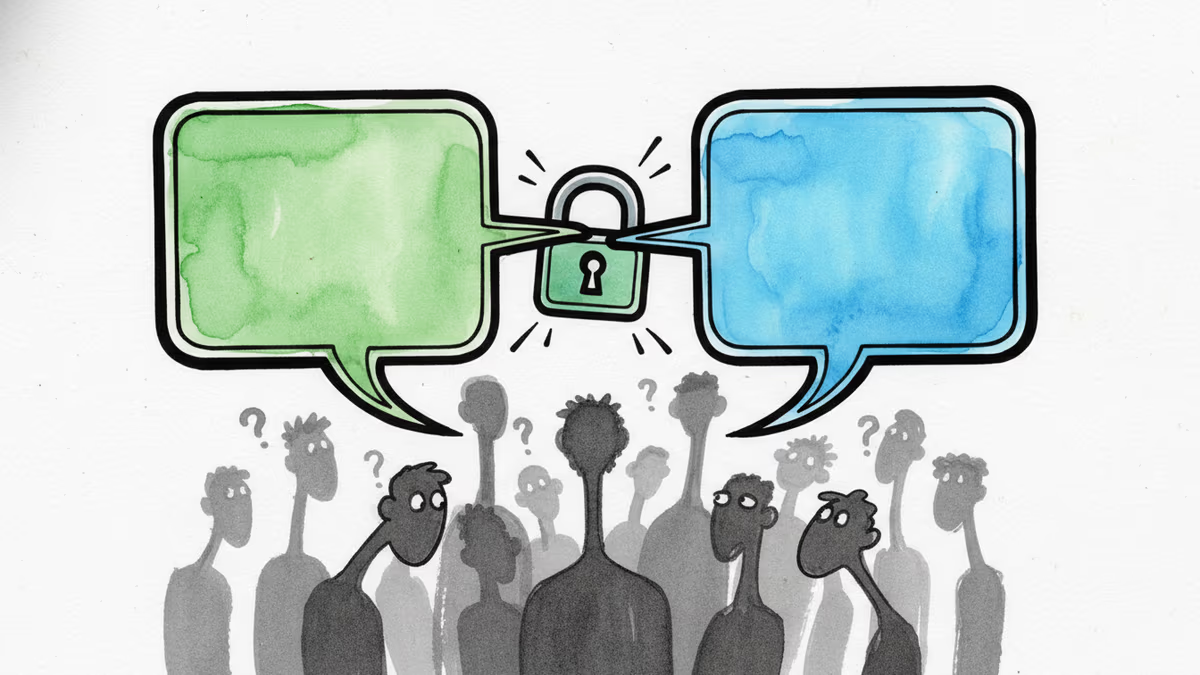
After 15 years of fragmented mobile messaging, Apple and Google are rolling out end-to-end encrypted RCS messaging between iPhones and Android devices. Here's what changed, why it took so long, and what it means for your privacy.
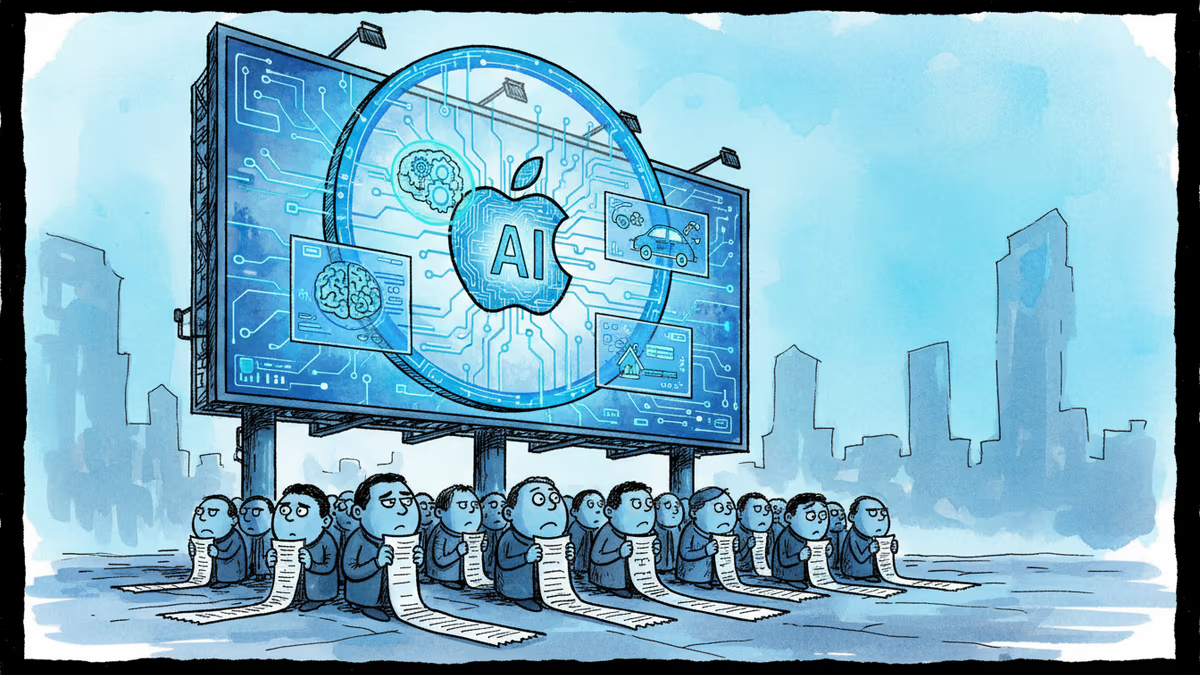
Apple agreed to pay $250 million to settle claims it misled iPhone 16 buyers about Apple Intelligence features. What this means for consumers, Big Tech marketing, and the AI industry.
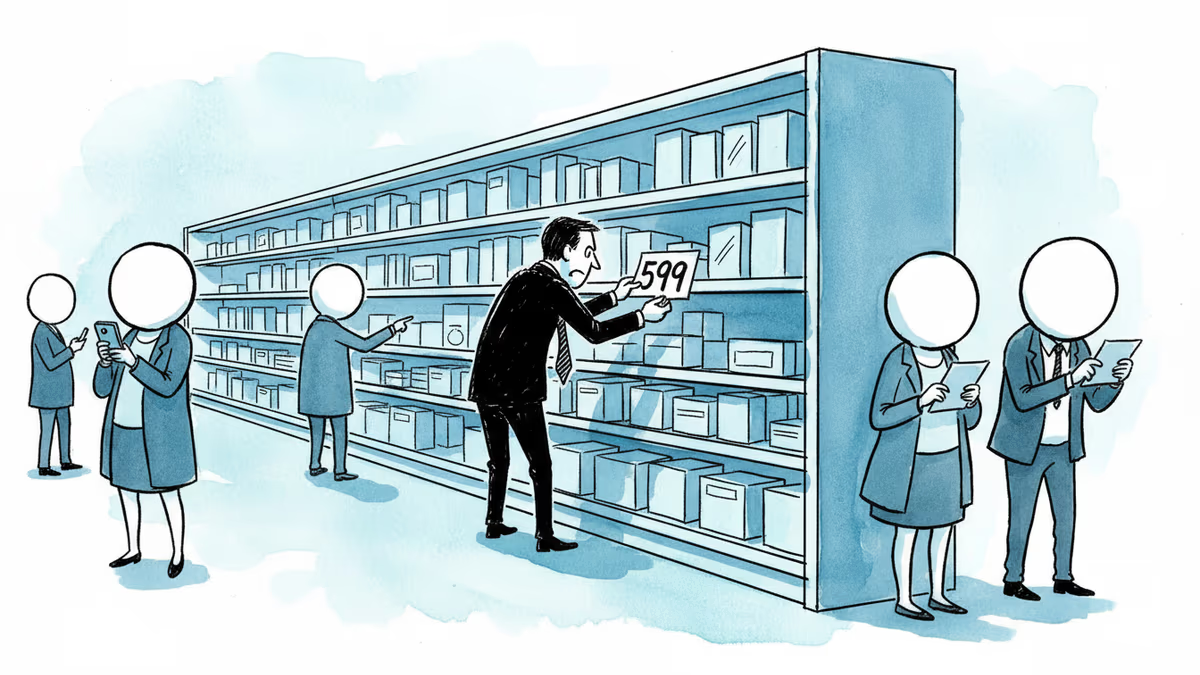
Apple quietly removed the entry-level $599 Mac Mini, raising the starting price to $799 — just one day after Tim Cook warned of chip supply constraints on the earnings call.

Apple names John Ternus, its hardware engineering chief, as the next CEO. The shift from operator to product person signals where Apple thinks its next decade of growth will come from — and raises real questions about what comes next.
After 15 years of fragmented mobile messaging, Apple and Google are rolling out end-to-end encrypted RCS messaging between iPhones and Android devices. Here's what changed, why it took so long, and what it means for your privacy.
Apple agreed to pay $250 million to settle claims it misled iPhone 16 buyers about Apple Intelligence features. What this means for consumers, Big Tech marketing, and the AI industry.
Apple quietly removed the entry-level $599 Mac Mini, raising the starting price to $799 — just one day after Tim Cook warned of chip supply constraints on the earnings call.
Apple names John Ternus, its hardware engineering chief, as the next CEO. The shift from operator to product person signals where Apple thinks its next decade of growth will come from — and raises real questions about what comes next.
Thoughts
Share your thoughts on this article
Sign in to join the conversation