
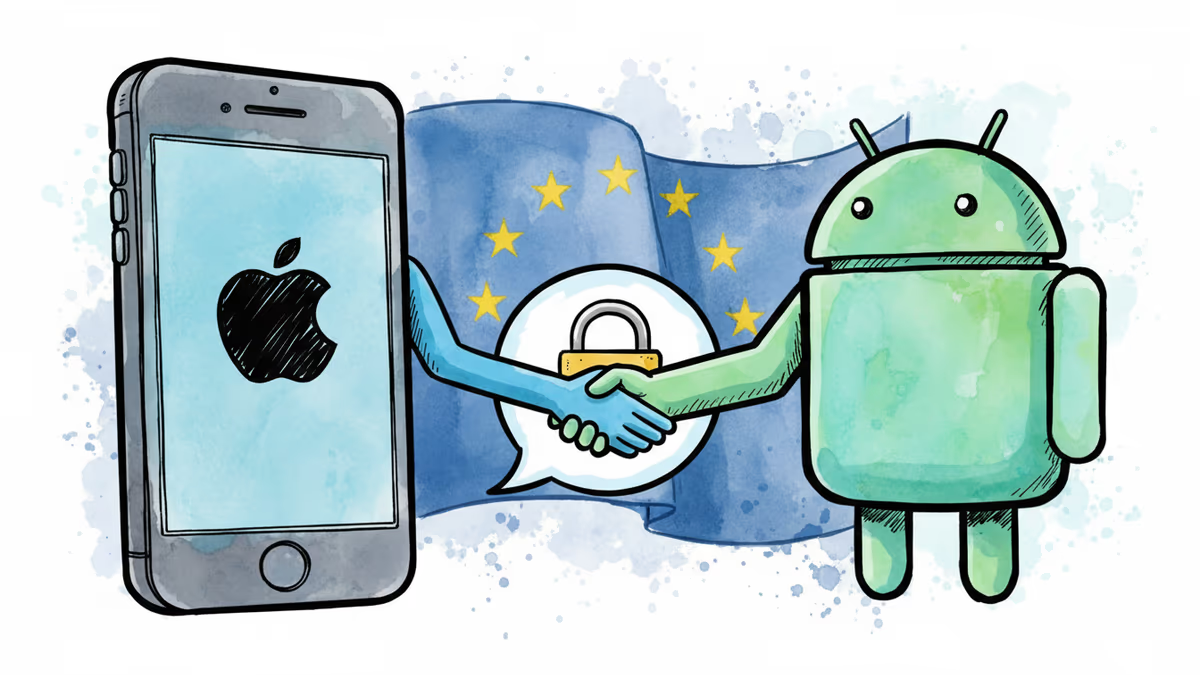
Why Apple's RCS Encryption Test Isn't Really About Android
Apple begins testing end-to-end encrypted RCS messaging in iOS 18.4 beta, but Android compatibility remains missing. The real story lies in regulatory pressure and market strategy.
15 Years Later, Apple Finally Blinks
Apple quietly dropped a bombshell in Monday's iOS 18.4 developer beta: end-to-end encrypted RCS messaging. After 15 years of keeping iMessage as a walled garden, the company is finally testing cross-platform compatibility. But here's the catch—it only works between Apple devices for now.
"Not yet testable with other platforms," Apple states bluntly. The feature won't even ship with iOS 18.4, instead arriving in a "future update." So why announce it now?
The answer isn't about being nice to Android users. It's about survival in a regulatory landscape that's rapidly changing the rules of the game.
Brussels Changed Everything
The European Union's Digital Markets Act (DMA) is forcing Big Tech's hand. Since 2024, major platforms must demonstrate interoperability improvements or face hefty fines. Apple's RCS move isn't altruism—it's compliance.
But there's a strategic twist. By implementing RCS encryption between Apple devices first, the company maintains control over the user experience. When Android compatibility arrives, Apple can position itself as the "secure" option, even in cross-platform messaging.
The Privacy Advocates Are Split

Electronic Frontier Foundation researchers are cautiously optimistic. "Any move toward universal encryption is positive," says one privacy expert. But others worry about implementation details. Will Apple's RCS encryption be truly compatible with Google's standard, or will there be subtle differences that benefit iOS users?
The stakes are higher than most realize. 5.2 billion people send RCS messages globally. If Apple creates a "premium" encrypted experience that works best within its ecosystem, it could actually strengthen the blue-bubble advantage rather than eliminate it.
What Google Isn't Saying
Google has been pushing Apple to adopt RCS for years, even launching public campaigns. Now that it's happening, the search giant is surprisingly quiet. Internal sources suggest Google is concerned about losing its messaging advantage in the Android ecosystem.
Meanwhile, smaller players like Signal and Telegram are watching nervously. Universal RCS encryption could make their privacy-focused platforms less essential. The messaging wars are about to get a lot more complicated.
The Carrier Conundrum
Verizon, AT&T, and T-Mobile have mixed feelings. RCS was originally their technology, designed to replace SMS. But as Apple and Google control the implementation, carriers become mere infrastructure providers.
One telecom executive, speaking anonymously, admits: "We wanted RCS to give us more control over messaging. Instead, it's giving us less."
What happens when the tools meant to connect us all end up controlled by the same few companies?
Authors
Related Articles
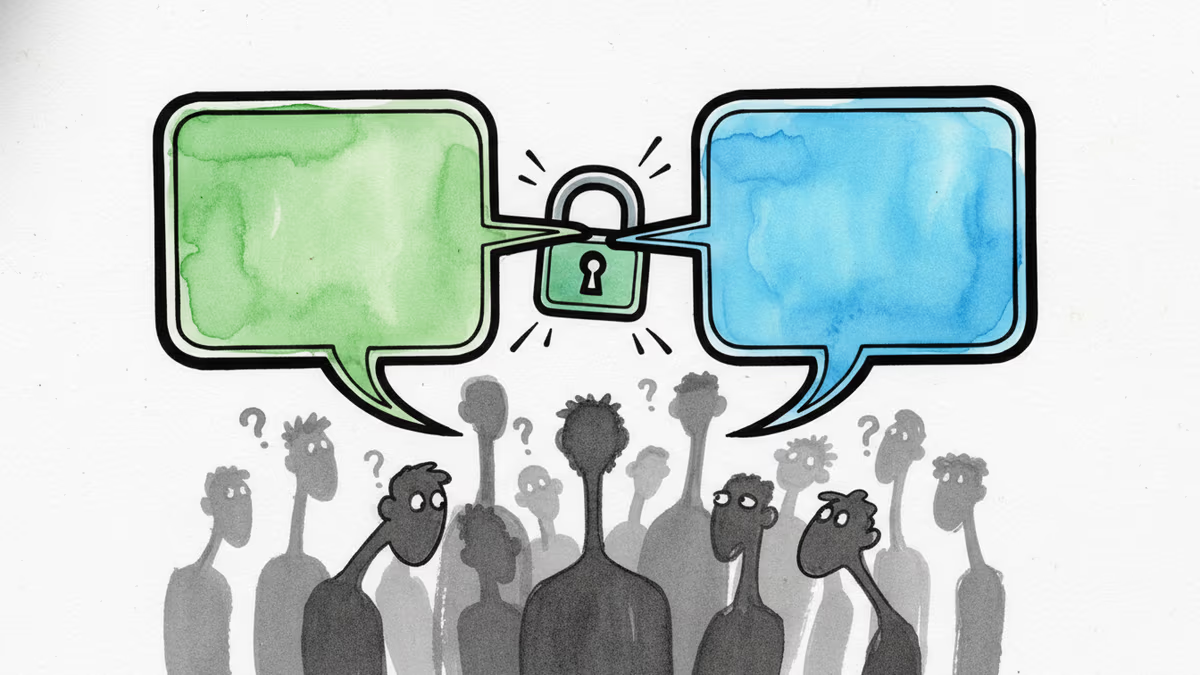
After 15 years of fragmented mobile messaging, Apple and Google are rolling out end-to-end encrypted RCS messaging between iPhones and Android devices. Here's what changed, why it took so long, and what it means for your privacy.
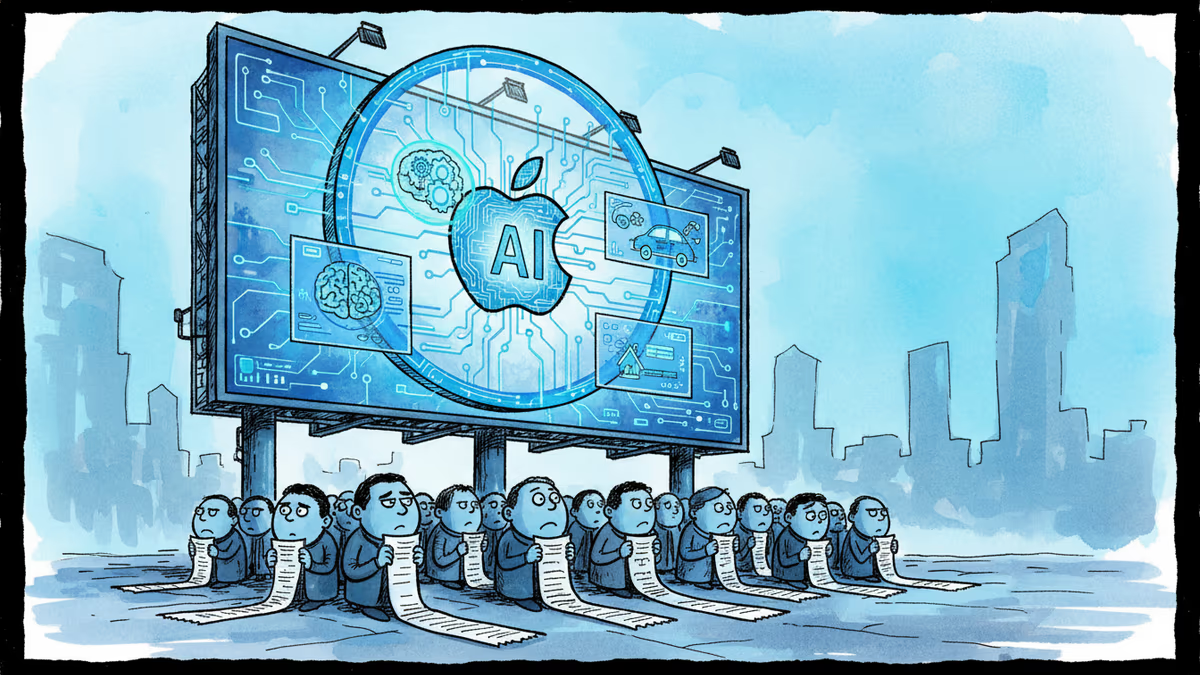
Apple agreed to pay $250 million to settle claims it misled iPhone 16 buyers about Apple Intelligence features. What this means for consumers, Big Tech marketing, and the AI industry.
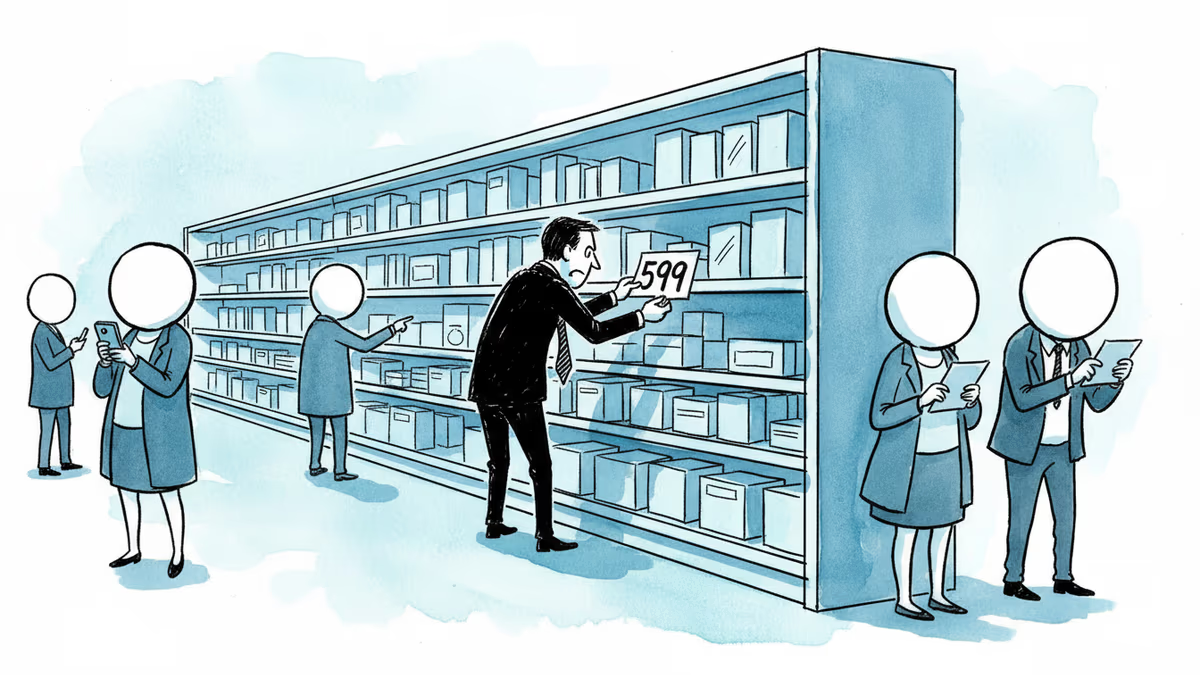
Apple quietly removed the entry-level $599 Mac Mini, raising the starting price to $799 — just one day after Tim Cook warned of chip supply constraints on the earnings call.
Apple names John Ternus, its hardware engineering chief, as the next CEO. The shift from operator to product person signals where Apple thinks its next decade of growth will come from — and raises real questions about what comes next.
After 15 years of fragmented mobile messaging, Apple and Google are rolling out end-to-end encrypted RCS messaging between iPhones and Android devices. Here's what changed, why it took so long, and what it means for your privacy.
Apple agreed to pay $250 million to settle claims it misled iPhone 16 buyers about Apple Intelligence features. What this means for consumers, Big Tech marketing, and the AI industry.
Apple quietly removed the entry-level $599 Mac Mini, raising the starting price to $799 — just one day after Tim Cook warned of chip supply constraints on the earnings call.
Apple names John Ternus, its hardware engineering chief, as the next CEO. The shift from operator to product person signals where Apple thinks its next decade of growth will come from — and raises real questions about what comes next.
Thoughts
Share your thoughts on this article
Sign in to join the conversation