
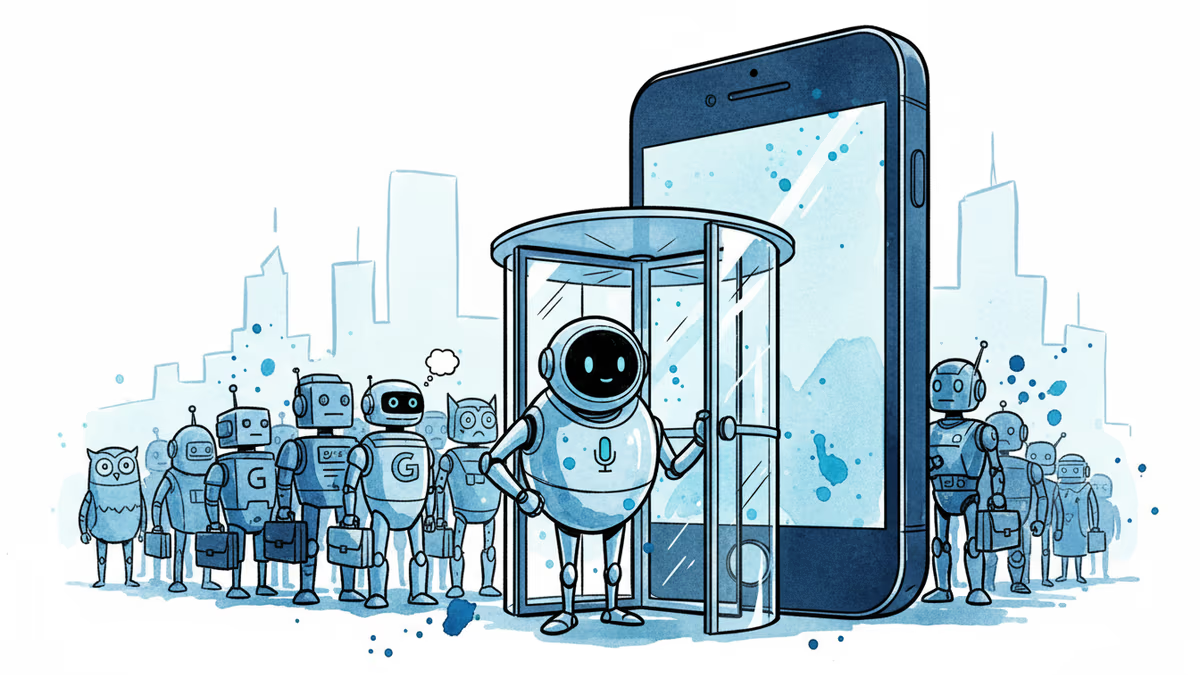
Siri Is About to Become a Chatbot Marketplace
Apple's iOS 27 will let users swap in Google Gemini, Anthropic's Claude, or other AI chatbots to power Siri responses. Here's what that actually means for you, for competitors, and for the AI industry.
OpenAI has had a pretty comfortable arrangement with Apple: its ChatGPT is the only third-party AI brain Siri can borrow. That exclusivity is about to end.
According to Bloomberg's Mark Gurman, Apple's upcoming iOS 27 will introduce a feature called "Extensions" — a system that lets users connect third-party AI chatbots, like Google's Gemini or Anthropic's Claude, directly to Siri. Downloaded from the App Store, these chatbots can be toggled on or off by the user, and the feature will work across iPhone, iPad, and Mac. Think of it as turning Siri into a front door that any approved AI can walk through.
What's Actually Changing Here
Right now, when you ask Siri something it can't handle natively, it can hand the question off to ChatGPT — but only ChatGPT. The Extensions system would blow that open. A developer who prefers Claude's reasoning, a student who trusts Gemini's search integration, a writer who swears by ChatGPT's prose — each could set their preferred AI as Siri's go-to brain without switching phones or juggling multiple apps.
This isn't just a quality-of-life update. It's a structural shift in how Apple positions itself in the AI race. Rather than betting on a single AI partner or trying to out-muscle the likes of OpenAI and Google on model performance, Apple is positioning itself as the neutral platform layer — the operating system on which the AI wars play out.
The Timing Isn't Accidental
Two forces are pushing Apple in this direction simultaneously. First, the competitive landscape has fragmented fast. When Apple announced its ChatGPT integration in 2024, the AI field looked like a two-horse race. Today, Claude, Gemini, Grok, and DeepSeek all have vocal, loyal user bases. Locking Siri to one provider started to look less like a strategic partnership and more like a liability.

Second, regulators are watching. The EU's Digital Markets Act has already forced Apple to open up browsers and payment systems in Europe. AI assistants are a logical next frontier. Getting ahead of a regulatory mandate with a voluntary "user choice" framework is a move Apple has made before — and it tends to look better than being dragged there.
Winners, Losers, and the Default Problem
OpenAI has the most to lose here, at least symbolically. Being the sole AI embedded in Siri gave it a distribution advantage that money can't easily buy — access to hundreds of millions of iPhone users at the moment they're asking for help. That moat narrows considerably if Gemini or Claude are one toggle away.
For Google and Anthropic, the Extensions system is an opening they'll fight hard to exploit. Google in particular has a structural advantage: Gemini is already deeply integrated with Gmail, Google Docs, and Search — services that iPhone users rely on heavily. A Gemini-Siri pipeline could be a compelling pitch.
But here's the tension that won't go away: most users don't change defaults. Studies of browser choice screens — forced on Apple and Google by EU regulators — showed that even when users are explicitly offered alternatives, the majority stick with whatever is pre-selected. The Extensions system may offer genuine choice on paper, while the real competition plays out entirely over which AI gets the default slot and which appears first in a recommendation list. That's a negotiation happening in boardrooms, not settings menus.
Privacy: Apple's Awkward Tightrope
There's an argument that this move quietly undermines one of Apple's most valuable brand promises. For years, the company has distinguished itself from Google and Meta by emphasizing on-device processing and privacy-first design. "What happens on your iPhone, stays on your iPhone" isn't just a tagline — it's a core part of why privacy-conscious consumers choose Apple over Android.
Once Siri starts routing queries to Anthropic's servers or Google's infrastructure, that story gets complicated. Apple will almost certainly build in consent flows and disclosure requirements, but the average user toggling on Gemini probably isn't reading the data-handling fine print. Regulators in Brussels and Washington will be paying attention to exactly this question.
Authors
Related Articles
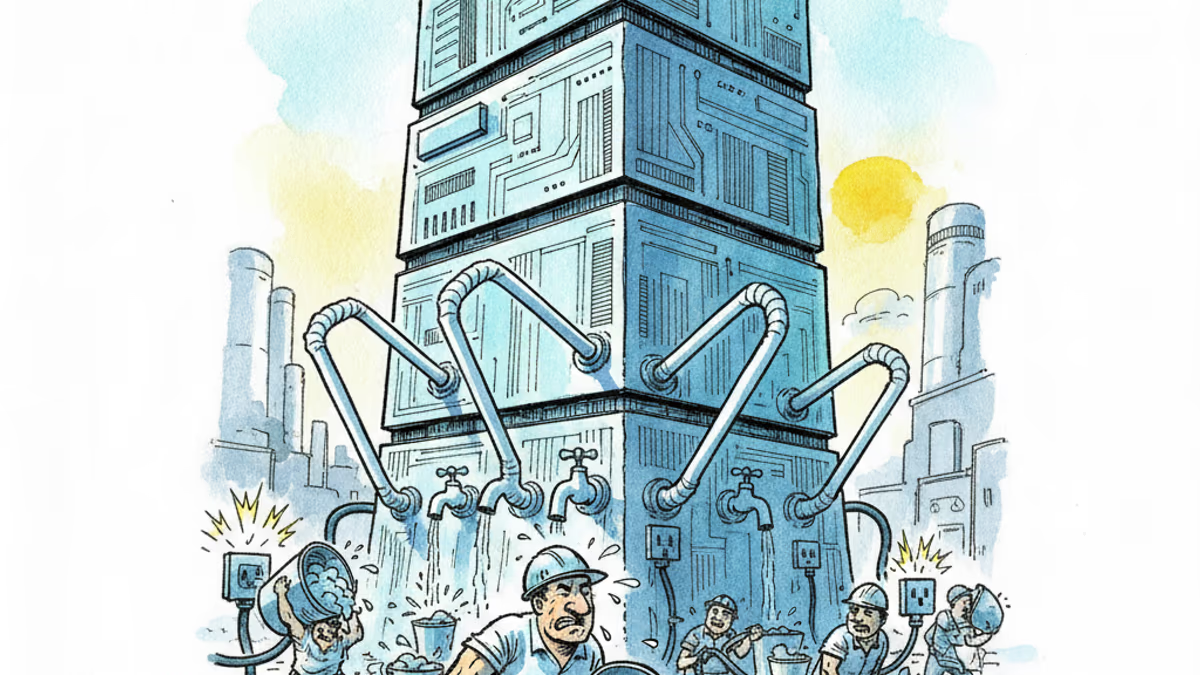
Samsung and SK unveiled a chip and AI investment package worth thousands of trillions of won on June 29. The headline number swings wildly by outlet, but the real contest isn't capital — it's water and power.
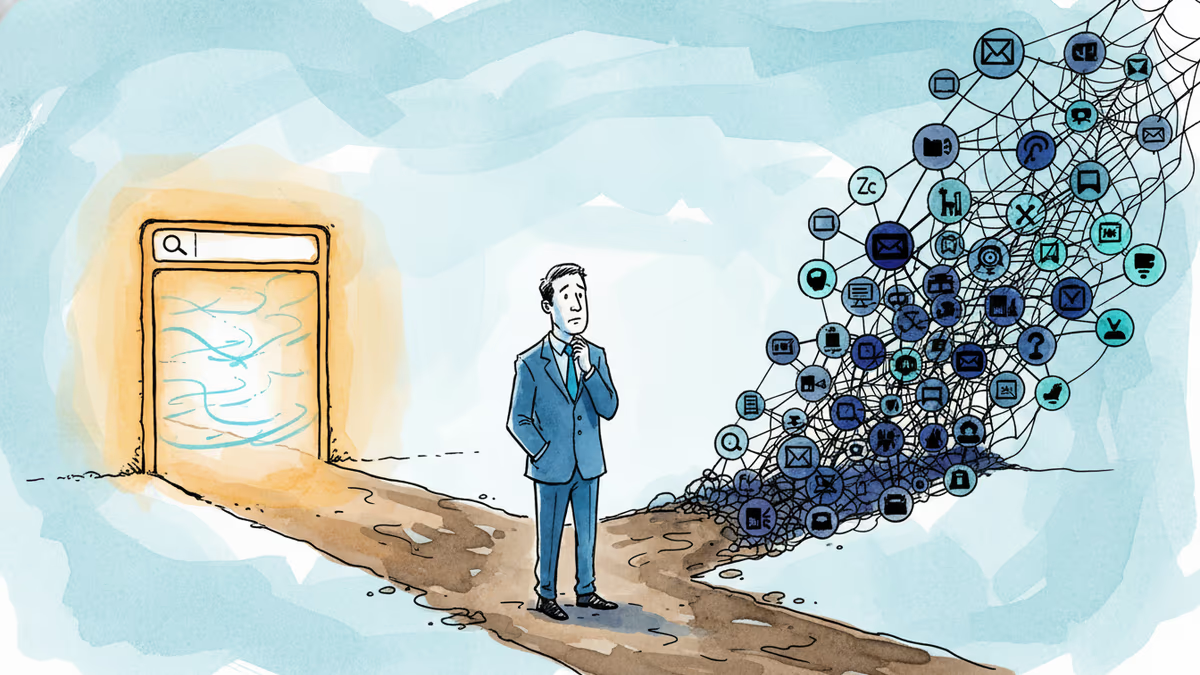
In a post-Google I/O interview, Sundar Pichai acknowledged flawed search results, real AI anxiety, and an AGI timeline that makes the label irrelevant. Here's what he said — and what it means.
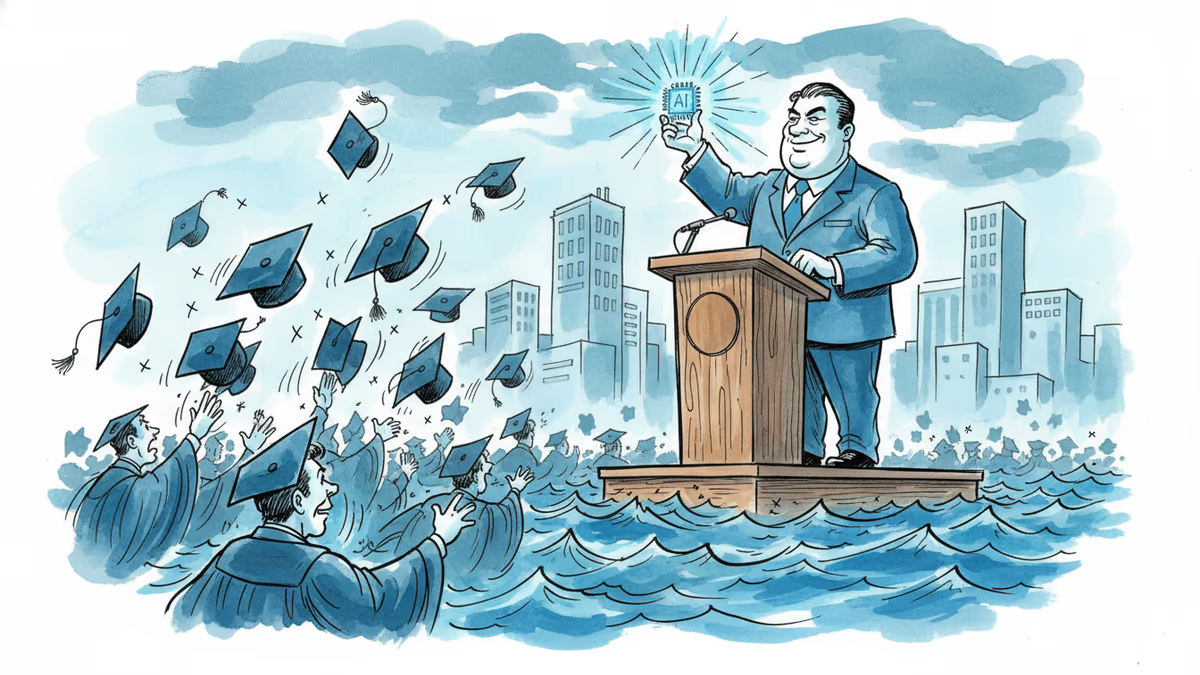
Viral videos show 2026 graduates jeering executives who praise AI at commencement ceremonies. It's not just rudeness — it's a signal about who pays for technological optimism.
Filipino virtual assistants using AI to ghost-manage LinkedIn profiles for executives is now a structured industry. 30 comments a day, fake engagement rings, and a platform struggling to tell real from fabricated.
Samsung and SK unveiled a chip and AI investment package worth thousands of trillions of won on June 29. The headline number swings wildly by outlet, but the real contest isn't capital — it's water and power.
In a post-Google I/O interview, Sundar Pichai acknowledged flawed search results, real AI anxiety, and an AGI timeline that makes the label irrelevant. Here's what he said — and what it means.
Viral videos show 2026 graduates jeering executives who praise AI at commencement ceremonies. It's not just rudeness — it's a signal about who pays for technological optimism.
Filipino virtual assistants using AI to ghost-manage LinkedIn profiles for executives is now a structured industry. 30 comments a day, fake engagement rings, and a platform struggling to tell real from fabricated.
Thoughts
Share your thoughts on this article
Sign in to join the conversation