
Apple's Quiet Revolution: What $100 Price Hikes Really Tell Us
Apple updated MacBook Air and Pro with M5 chips, raising prices by $100-200. But the real story isn't performance—it's how Apple is reshaping the premium computing market through strategic pricing moves.
The $100 Question: Why Apple Raised MacBook Prices Again
Apple's new M5 MacBook Air starts at $1,099—that's $100 more than last year's model. The company's justification? Double the storage space. But dig deeper, and this price hike reveals something more significant about Apple's market strategy.
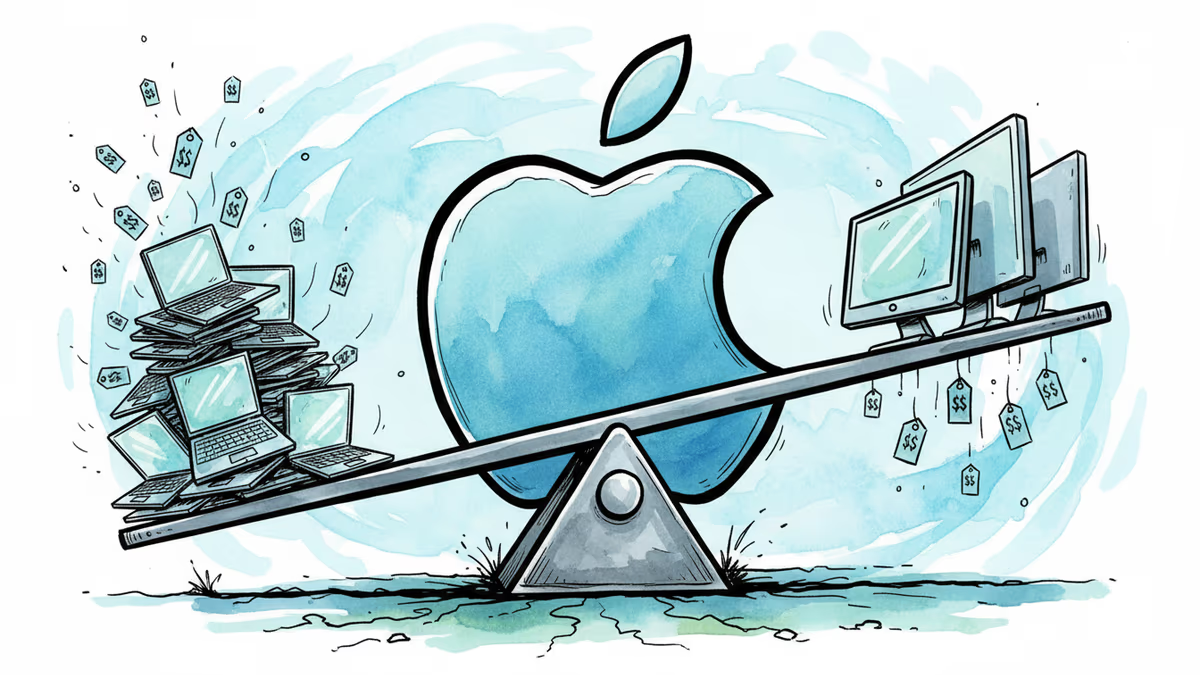
The same day, Apple bumped MacBook Pro prices by $200 across the board. The 14-inch M5 Pro now starts at $2,199, while the 16-inch hits $2,699. Yet simultaneously, Apple slashed the Studio Display XDR by a whopping $1,700. What's the logic behind these seemingly contradictory moves?
Performance Gains vs. Real-World Impact
The M5 Pro delivers 30% better multithreaded performance compared to the M4 Pro, while the M5 Max shows a more modest 15% improvement. Apple claims both chips offer "4X the peak CPU compute for AI" compared to the previous generation.
But here's the catch: most users won't notice these gains in daily tasks. The MacBook Pro design hasn't changed since 2021—same ports, same Mini-LED display, even the same claimed 24-hour battery life. Bloomberg reports that Apple plans a more significant redesign this fall, featuring the M6 chip and an OLED touchscreen.
So why buy now instead of waiting?
The Premium Market's New Playbook

Apple's pricing strategy reveals a fascinating pattern. Entry-level products (MacBook Air) got pricier, while the ultra-high-end (Studio Display XDR) became more accessible. Mid-tier products (MacBook Pro) saw modest increases.
This looks like a deliberate market polarization strategy. Apple is squeezing more money from value-conscious buyers while lowering barriers for those seeking the absolute best. The Studio Display XDR's drop to $3,299 is particularly telling—it now competes directly with sub-$1,500 OLED monitors flooding the market.
What Competitors Should Watch
The most intriguing aspect of Apple's announcement isn't the laptops—it's the display strategy. By standardizing on 27-inch, 5K resolution across both Studio Display models, Apple is making a statement about the future of desktop computing.
Why stick with mini-LED when OLED alternatives offer better contrast and are getting cheaper? Industry insiders suggest Apple is waiting for its own micro-LED technology to mature. This "wait and leap" approach could catch competitors off guard when Apple eventually makes the switch.
Meanwhile, Windows laptop makers have an opportunity. With Apple raising prices, alternatives from Dell, Lenovo, and others become more attractive to price-sensitive buyers.
The Ecosystem Lock-In Reality
Apple's confidence in raising prices stems from something deeper than hardware specs: ecosystem stickiness. The new MacBooks feature Apple's N1 wireless chip with Wi-Fi 7 and Bluetooth 6, ensuring seamless integration with other Apple devices.
This creates a peculiar market dynamic. As Apple products get more expensive, switching costs also increase. Users invested in the Apple ecosystem face a difficult choice: pay premium prices or abandon their digital lives' interconnectedness.
Authors
Related Articles
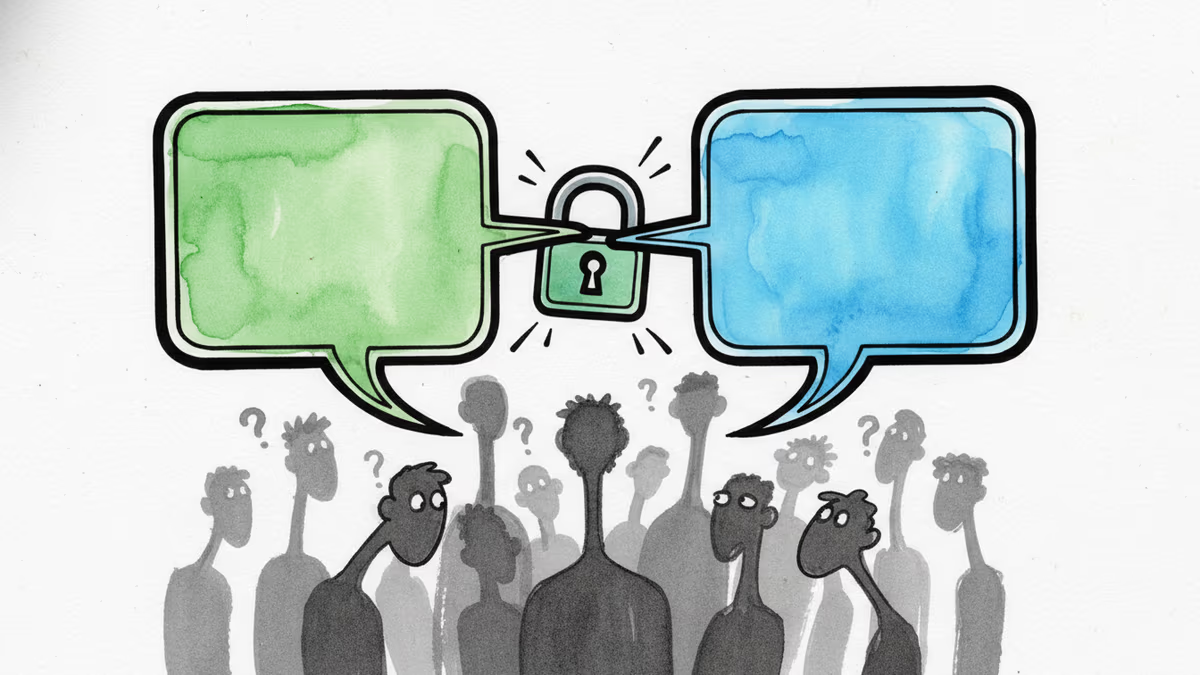
After 15 years of fragmented mobile messaging, Apple and Google are rolling out end-to-end encrypted RCS messaging between iPhones and Android devices. Here's what changed, why it took so long, and what it means for your privacy.
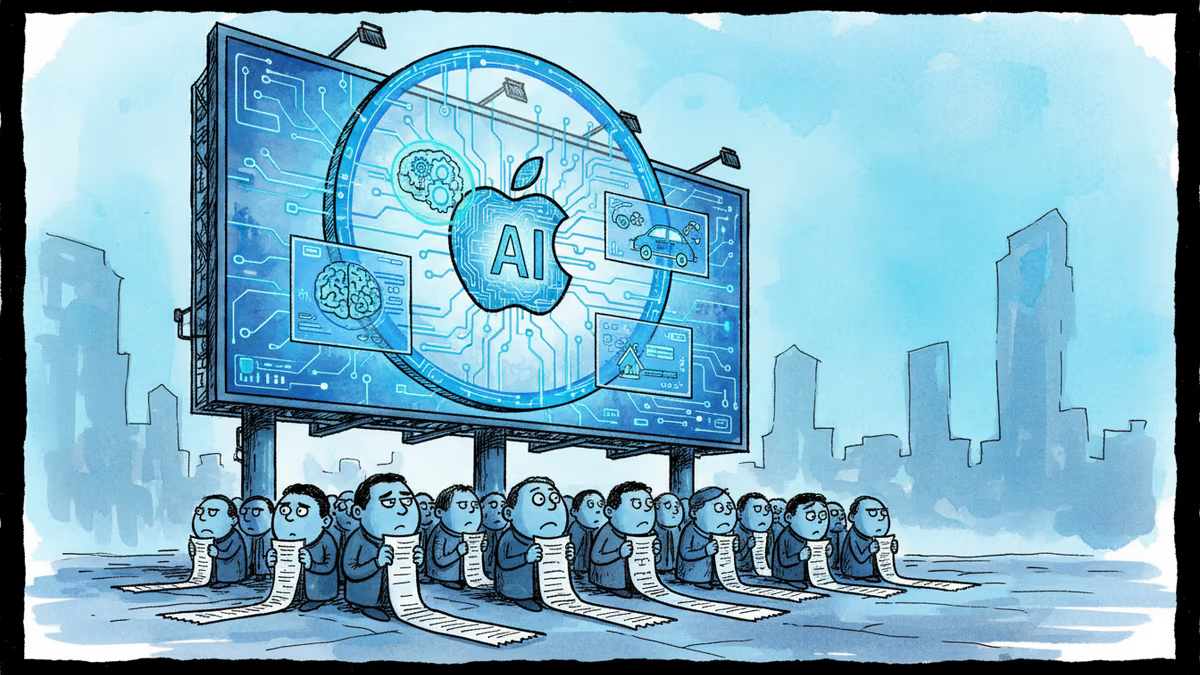
Apple agreed to pay $250 million to settle claims it misled iPhone 16 buyers about Apple Intelligence features. What this means for consumers, Big Tech marketing, and the AI industry.
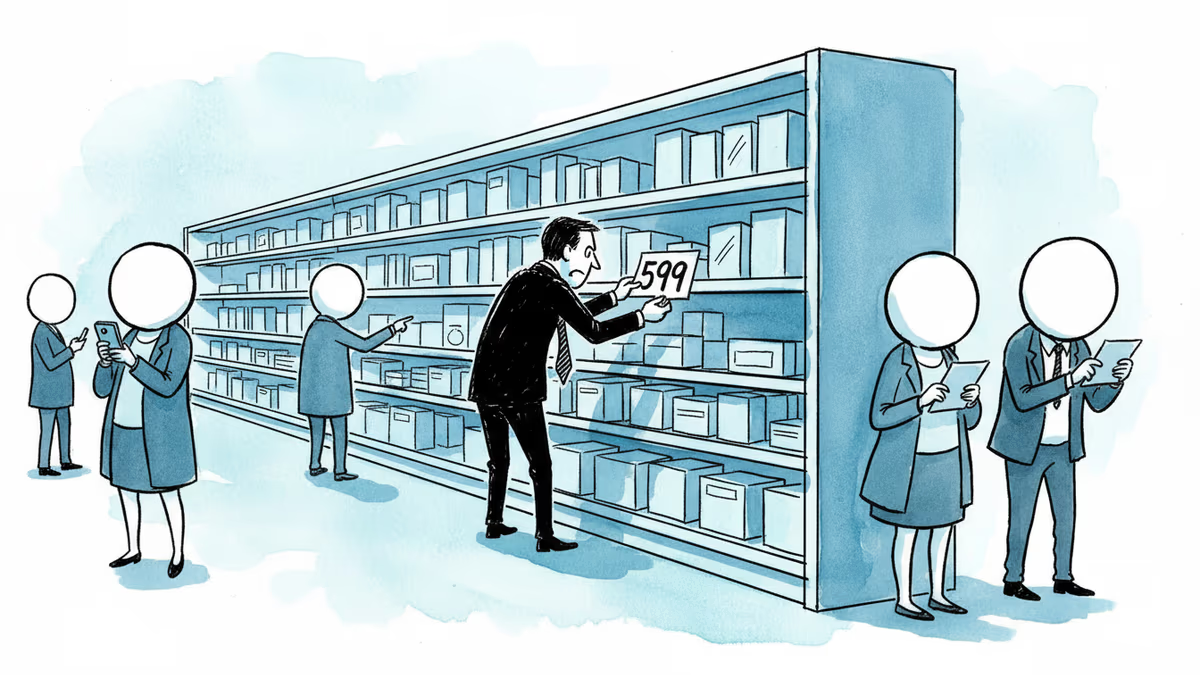
Apple quietly removed the entry-level $599 Mac Mini, raising the starting price to $799 — just one day after Tim Cook warned of chip supply constraints on the earnings call.
Apple names John Ternus, its hardware engineering chief, as the next CEO. The shift from operator to product person signals where Apple thinks its next decade of growth will come from — and raises real questions about what comes next.
After 15 years of fragmented mobile messaging, Apple and Google are rolling out end-to-end encrypted RCS messaging between iPhones and Android devices. Here's what changed, why it took so long, and what it means for your privacy.
Apple agreed to pay $250 million to settle claims it misled iPhone 16 buyers about Apple Intelligence features. What this means for consumers, Big Tech marketing, and the AI industry.
Apple quietly removed the entry-level $599 Mac Mini, raising the starting price to $799 — just one day after Tim Cook warned of chip supply constraints on the earnings call.
Apple names John Ternus, its hardware engineering chief, as the next CEO. The shift from operator to product person signals where Apple thinks its next decade of growth will come from — and raises real questions about what comes next.
Thoughts
Share your thoughts on this article
Sign in to join the conversation